Horse Ranch
- 240.00
- 4.5
- Installs
- 50.00K
- Price
- Free

Screenshots

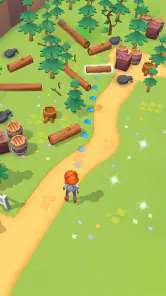

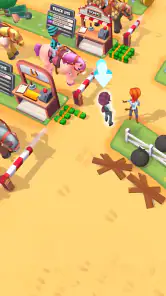
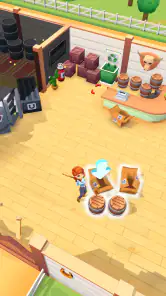


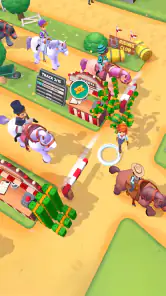
Analysis by Reviewed
Horse Ranch is an arcade game from Ketchapp that caught my attention because it turns the familiar idea of riding horses into a small management routine. Instead of treating riding as a single activity, it asks me to build up a ranch, collect resources, and keep a horse-riding business moving. That combination gives the game a more purposeful rhythm than a straightforward endless rider, while keeping the presentation approachable for casual play.
I found it easiest to enjoy when I treated each short session as one small step toward a better ranch. I was not looking for a deep simulation or a long story. I was looking for something I could open during a break, make a few useful decisions, and leave feeling that the ranch had progressed. That is where its main capability matters: the riding activity is tied to expanding and operating the ranch, so the game gives collected resources a clear reason to exist.
Why the ranch-building loop makes the riding matter
The central idea is simple, but it changes how I approached each action. Riding is not just about moving around for its own sake. The wider goal is to gather what the ranch needs, then use that progress to support a growing horse business. In a typical arcade game, a good run may only mean a higher score. Here, a successful session feels more useful because it contributes to a place I am gradually developing.
That structure suits players who like visible progress but do not want a complicated strategy game. I can focus on the immediate activity first, then think about what the ranch needs next. The result is a gentle loop: play, gather, improve, and return to the riding with a slightly stronger sense of direction. It is not an elaborate economic simulator, and I would not recommend it to someone expecting detailed horse care or a realistic business model. Its appeal is the compact connection between arcade movement and light management.
What I particularly like is that the ranch acts as a reason to keep playing without requiring me to memorize a large system. The game’s identity comes from the relationship between the horse, the resources, and the business. That makes the theme feel more integrated than a decorative horse skin placed on top of an unrelated arcade challenge.
At the same time, the simplicity has a limit. Players who want complex breeding, detailed customization, demanding riding controls, or a large narrative may find the experience too streamlined. Horse Ranch is better understood as a relaxing arcade-management hybrid than as a full equestrian game. Knowing that before installing it makes the choice much easier.
How I approached the resource cycle
In practice, I found it helpful to decide what kind of session I wanted before starting. If I only had a few minutes, I concentrated on gathering and accepted that the ranch would advance in small increments. When I had more time, I paid closer attention to how each improvement affected the next round of play. This prevented the game from feeling like a checklist and made the short-term objective feel more personal.
More From Our News Desk

Clash of Clans Is Won Between the Battles

Android Auto Makes the Case for Quieter Car Software

MobiOffice: Transforming Mobile Productivity with Seamless Integration

EA SPORTS FC™ Mobile Soccer: Redefining Mobile Sports Gaming

How Microsoft OneDrive Became a Mobile Productivity Giant

How Google Translate Breaks Language Barriers Effortlessly
One useful habit is to avoid treating every resource as equally urgent. The temptation in a management game is to spend immediately whenever an upgrade becomes available. I preferred to pause and consider whether the improvement would make my next activity smoother or simply make the ranch look more developed. That distinction matters because casual games can become less satisfying when progress is reduced to automatic tapping.
I also recommend using the riding portion as the active part of the session and the ranch portion as the planning pause. Mixing both mindsets at once can make the loop feel busier than it really is. When I separated them, the game became easier to read: ride and gather first, then make a deliberate decision about the ranch.
This is one of the less obvious strengths of the design. The game does not need a complicated menu of systems to create a decision. The useful choice is often simply whether to continue gathering or spend progress now. For a player who enjoys light planning, that is enough to add texture. For someone seeking constant action, the management pauses may feel like interruptions.
A realistic everyday session
Imagine having a short break between errands or waiting for an appointment. I would open Horse Ranch, complete a compact riding session, gather what I could, and then check whether the ranch had reached a useful improvement point. That makes the game a good fit for fragmented time. I do not need to reserve an entire evening to understand what I am doing, and I can stop after a small accomplishment rather than abandoning an unfinished story mission.
On a longer commute or a quiet evening, the same loop can become more absorbing because I can repeat the cycle and watch the ranch develop. The important distinction is that the game is comfortable in both situations, but for different reasons. Short sessions benefit from the clear resource goal, while longer sessions depend on whether I enjoy repeating the riding and improvement pattern.
I would not choose it for a family member who wants a shared multiplayer activity, nor for a player who measures enjoyment through highly competitive leaderboards. Its strongest everyday use is personal, low-pressure progress. It works particularly well when I want something more purposeful than a basic reflex game but less demanding than a traditional management title.
Where it differs from ordinary arcade alternatives
Compared with a conventional arcade game, Horse Ranch gives my actions a continuing destination. A score-based alternative may offer sharper tension and a more immediate challenge, but its reward usually ends when the round ends. Here, the ranch adds a longer thread. Even a modest session can feel worthwhile because it supports the business I am building.
Compared with a full farming or tycoon game, however, this is much lighter. I would not expect detailed production chains, extensive staffing decisions, or a broad economy. That is not a flaw unless I install it for those reasons. The trade-off is clear: Horse Ranch is easier to pick up, but it offers less room for deep optimization.
It also sits apart from horse-care games. If my priority were grooming, feeding, bonding, or realistic riding technique, I would look elsewhere. Horse Ranch uses the horse theme to frame an arcade progression loop. I think that is a smart choice for accessibility, but it means the emotional side of caring for an individual horse is not the main reason to play.
For me, the best comparison is a casual arcade game with a small business layer attached. The layer is what gives the game personality, while the arcade foundation keeps the controls and goals from becoming intimidating. That balance is likely to appeal to someone who has tried management games but stopped when they became too demanding.
The trade-offs behind the easygoing design
The biggest trade-off is depth versus convenience. Because the game is approachable, I can understand its basic purpose quickly. I do not need a guide before beginning, and the horse-riding business gives the resource gathering an obvious context. But the same clarity may eventually feel repetitive if I want increasingly complex decisions.
Another trade-off concerns spending. The game is free to play, but it includes optional in-app purchases ranging from $0.99 to $49.99 per item. I would start without spending and first decide whether the core loop holds my attention. The lower-cost options may be tempting during a slow stretch, while the higher-priced items deserve extra caution because a casual game can make convenience feel more urgent than it really is.
My practical advice is to treat purchases as optional acceleration, not as part of the basic entry requirement. If I can enjoy a session by gathering resources and improving the ranch gradually, the free starting experience is enough to judge the game fairly. If progress only feels satisfying when it is sped up, that is a sign the pacing may not suit me.
The game is also rated Everyone, which makes it an approachable recommendation for a broad audience. Still, an age rating does not tell me whether every player will enjoy the repetition. Younger players may like the horse theme and immediate goals, while adults may appreciate it more as a calm time-filler than as a serious simulation.
Small tactics that make the loop more satisfying
My first tip is to define a session target before playing. “Gather enough for the next meaningful ranch step” is more useful than playing without a stopping point. This keeps the arcade portion from becoming an endless sequence of nearly identical rounds and gives me a natural moment to put the phone down.
My second tip is to judge an improvement by how it changes the next session, not only by how impressive it looks. A visually larger ranch is satisfying, but an upgrade that supports a smoother resource cycle can make the whole game feel better. Even without complex statistics, this way of thinking adds a little strategy to the otherwise relaxed format.
My third tip is to avoid chasing perfect efficiency from the beginning. The game works better for me when I use the early sessions to learn the rhythm of riding and collecting. Trying to optimize every move immediately turns a friendly arcade game into a chore. Once the basic loop feels natural, I can make more deliberate choices without losing the casual mood.
A final observation is that the business framing changes the value of repetition. Repeating a riding activity can feel empty when it only produces another score. Here, repetition is easier to accept because it supports a place with a recognizable theme. That does not remove the possibility of routine, but it gives the routine a clearer emotional payoff.
Who will get the most from Horse Ranch
I think the best audience is someone who likes short arcade sessions, enjoys watching a simple project grow, and wants a horse-themed game without the weight of a detailed simulator. It is also a good match for players who prefer gradual progress over high-pressure competition. The free entry makes it easy to test whether the riding-and-ranch loop feels satisfying before considering any optional purchase.
The game’s audience is reflected in its reception: it holds a 4.5 average from around 1.5 thousand ratings, with more than 50 thousand installs. Those figures suggest a healthy early interest, though I would still judge it by my own tolerance for repetition rather than by popularity alone. The title launched on July 3, 2025, and version 1.0.15 is the current release, so I would keep the game updated when possible to use the latest available build.
It requires Android 7.0 or later, which covers many older devices. That is useful if I want to install it on a spare phone rather than my newest handset. I would still pay attention to how comfortably the game runs on my particular device, especially if I plan to play for longer sessions, but the minimum system requirement is not especially demanding.
I would skip it if I need a serious horse simulation, a rich story, deep tycoon mechanics, or a game built around intense skill competition. I would also skip it if I dislike resource loops that ask me to repeat a familiar activity before the next improvement. In those cases, a dedicated simulation or a faster arcade alternative would probably be a better use of my time.
My final take after settling into the ranch
Horse Ranch succeeds because it gives a familiar arcade action a practical purpose. Riding and gathering are not isolated activities; they feed into the ranch and its horse-riding business. That connection is the feature I would highlight to a friend, because it is what separates the game from a basic score-chasing title.
I like it most as a calm, repeatable game for short breaks. The controls and goals are easy to approach, the ranch gives progress a visible direction, and the horse theme keeps the experience friendly rather than mechanical. Its limitations are equally clear: the management side is light, repetition may become noticeable, and optional purchases can become expensive at the upper end.
My recommendation is to try the free version with a modest expectation: think of it as a small arcade ranch project, not a complete equestrian world. If that focused loop sounds appealing, I can see it becoming a pleasant daily habit. Its real strength is making each short ride feel connected to something I am building, and that is enough to give this compact game its own character.
Horse Ranch Frequently Asked Questions
Who developed Horse Ranch, and what kind of game is it?
Horse Ranch is an arcade game developed by Ketchapp. It centers on expanding a ranch, gathering resources, and running a horse-riding business, so its appeal is a mix of light management and horse-themed play. If you enjoy games built around gradually growing a business and working toward new goals, its premise offers a straightforward place to start.
What is Horse Ranch, and what can I do in the game?
Horse Ranch is a horse-focused simulation game where you can care for horses, improve their abilities, customize their appearance, and manage your own ranch. During my time with the game, the main appeal came from combining daily animal care with ranch development and progression. Players can usually complete activities, unlock new options, and build a more personalized stable as they continue playing.
Is Horse Ranch free to download and play?
Horse Ranch is free to download, but it includes optional in-app purchases priced from $0.99 to $49.99 per item. You can enjoy the basic experience without spending money, although some features or progress may take more time to unlock. Consider your preferred pace and set purchase controls if children will be playing, since paid items can make spending possible from within the game.
Does Horse Ranch require an internet connection?
The internet requirements may depend on the specific version and feature being used. Basic ranch activities could be available during some offline sessions, but an online connection may be necessary for downloading game data, synchronizing progress, receiving updates, viewing advertisements, or accessing social and event-based content. It is best to launch the game while connected before traveling or attempting to play without reliable internet.
Is Horse Ranch suitable for children and casual players?
Horse Ranch is designed to be approachable, especially for players who enjoy animals, decorating, collecting, and relaxed simulation gameplay. The controls and progression are generally easy to understand, making it suitable for casual users and younger audiences. It has an Everyone content rating, though parents should still review in-app purchases and the applicable store rating before allowing children to play.
Pros
- Relaxing ranch gameplay with a charming horse-focused theme.
- Many horses to care for
- train
- and customize.
- Simple controls make it accessible for casual players.
- Progression encourages regular play and stable management.
- Colorful visuals create a friendly atmosphere for younger players.
Cons
- Some upgrades and items may require considerable grinding.
- Energy or waiting timers can interrupt longer play sessions.
- Limited depth may disappoint experienced simulation fans.
- Optional purchases can speed up progress or unlock extras.
- Performance may vary on older Android and iOS devices.
- Category
- Arcade
- Version
- 1.0.15