Head Ball 2 - Online Soccer
- 31.08K
- 4.4
- Installs
- 100.00M
- Price
- Free
Screenshots
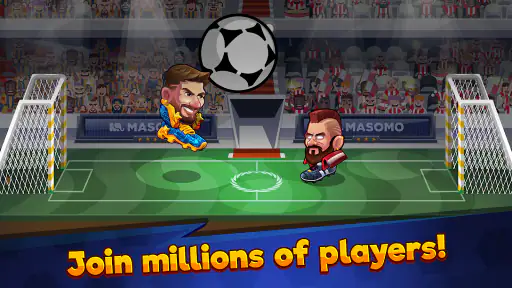
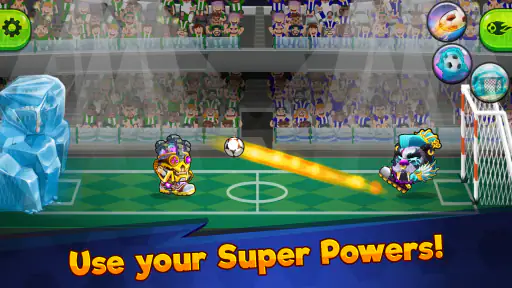
Analysis by Reviewed
I like soccer games that get to the point quickly, and Head Ball 2 - Online Soccer has an easy-to-read premise: face another player, protect your goal, and find a moment to score. Its oversized-headed characters make the sport feel more like a cartoon contest than a simulation. That gives each match a light, cheeky mood, even when the score is close. It is a better fit for quick bursts of competitive play than for recreating the measured tactics of a full soccer match.
A cartoon pitch with a clear visual language
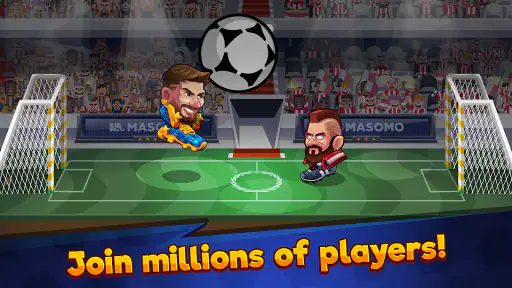
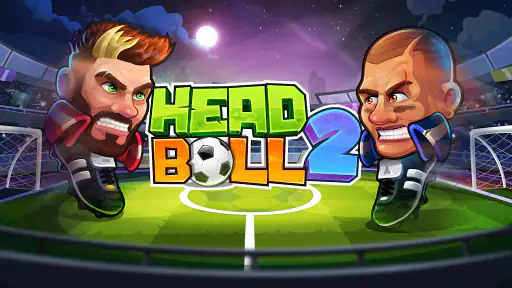
The colorful presentation helps me follow the action without much effort. The exaggerated character proportions make the game’s comic tone obvious, while the compact one-on-one setup keeps the important action in view: the ball, the goals, and the opponent. Rather than asking me to manage a whole team, it focuses attention on the timing of a jump or kick. That simplicity is part of its charm, though it also means players looking for realistic formations and team play should look elsewhere.
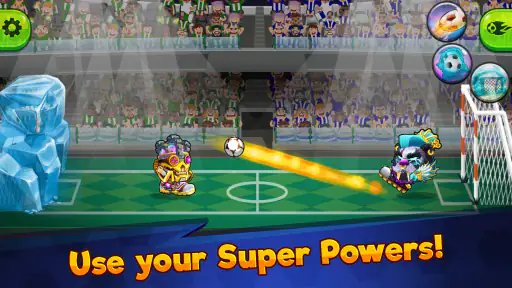
The setting and mechanics work best when treated as one package. Special powers can change the flow of a match, so a moment that seems safe can become a scramble. I find that unpredictability entertaining in short sessions, but it can make the outcome feel less dependent on precise soccer technique than it would in a conventional football simulation. The game’s identity is playful first and sporting second.
Gameplay: Not Your Ordinary Soccer
When I first stumbled upon Head Ball 2, I was intrigued by its unique take on soccer. It's not just about scoring goals; it's about doing it with style and a bit of humor. The game pits you against players from around the world in short, intense matches where you control a character with a disproportionately large head. Sounds fun, right? Well, it absolutely is!
As you dive into the game, you'll find yourself in a one-on-one match where your main goal is to outscore your opponent within a limited time. The controls are easy to grasp, with buttons for jumping, kicking, and using special powers. Yes, you heard it right—special powers! These can range from freezing your opponent to enlarging the goal post. It's these quirky elements that make the game unpredictable and super exciting.
Reading the match rather than mashing buttons
The simplest way to get more control over a duel is to resist pressing every action as soon as it becomes available. I try to keep track of the ball’s position first, then choose whether a jump or kick makes sense. In a one-on-one game, a premature move can leave a clear opening behind me, so patience can matter as much as quick reactions. The screen is busy enough during a close exchange that focusing on one decision at a time makes the action easier to read.
Special powers create a second decision: whether to use one immediately or hold it for a more useful moment. Since powers can disrupt what looks like a stable situation, I avoid treating a lead as secure until the match is over. Waiting can be worthwhile if the opponent is about to make a move, but saving a power indefinitely is no better than using it thoughtlessly. I find the most satisfying exchanges come from combining a basic read of the ball with a well-timed ability, rather than relying on the surprise effect alone.
More From Our News Desk

Weather by Xiaomi Review: Clear at a Glance, Less Clear Up Close

X Under Pressure: Can It Recover When Posting Goes Wrong?

Clash of Clans Is Won Between the Battles

Android Auto Makes the Case for Quieter Car Software

MobiOffice: Transforming Mobile Productivity with Seamless Integration

EA SPORTS FC™ Mobile Soccer: Redefining Mobile Sports Gaming
Customization and Upgrades
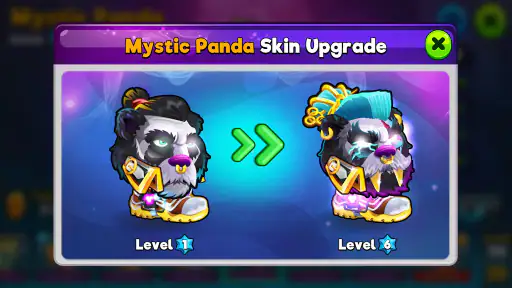
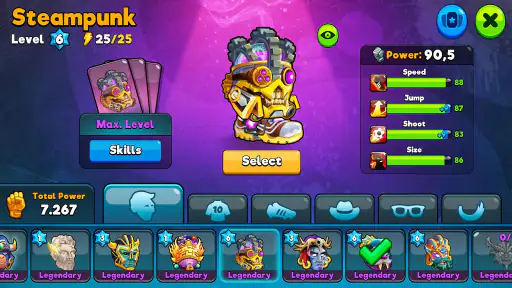
One of the aspects I love about Head Ball 2 is the ability to customize your character. You can choose from a wide array of avatars and unlock various accessories to give your player a unique look. But it's not just about aesthetics. As you progress, you can upgrade your character's skills, making them faster, stronger, and more agile on the field. This adds a layer of strategy as you decide which skills to enhance based on your play style.
My practical advice is to think about what is actually costing you goals before spending effort on upgrades. If you often arrive late to the ball, speed may matter more to your matches than strength; if you can reach it but struggle to turn chances into scores, a different improvement may suit you better. I also like to keep the visual choices separate from competitive decisions: an accessory can make a character feel personal, but the useful question is whether an upgrade supports the way I play. That small bit of self-checking makes progression feel less like tapping through menus and more like learning from each match.
There is a useful trade-off here for players who enjoy building a character. Progression gives you a reason to return and make choices beyond the next score, but it also adds menus and another layer of comparison to a game whose strongest quality is immediate action. I would make upgrades gradually instead of trying to optimize everything before I have a feel for the controls. A few matches can reveal whether I actually need more speed or simply need to stop jumping at the wrong time.
Multiplayer Madness
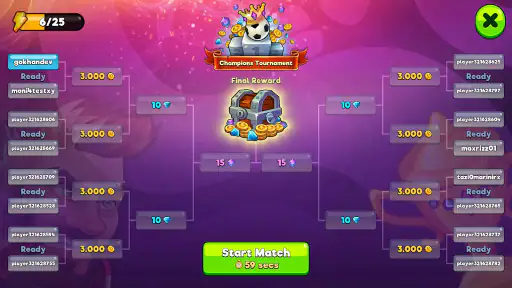
What truly sets this game apart is its vibrant multiplayer mode. Competing against real players adds an extra layer of challenge and excitement. The game features different leagues and tournaments where you can prove your skills and climb the ranks. Trust me, there's nothing more satisfying than seeing your name on the leaderboard!
For me, the best everyday use is a spare moment when I want a direct contest rather than a long session: a short break, a wait before meeting someone, or a few games after work. Because the match is one-on-one, I can concentrate on one opponent instead of coordinating a lineup. The trade-off is that online competition is less predictable than playing against a fixed challenge; an opponent may react in ways that make a comfortable lead disappear. I treat a loss as a prompt to watch my timing, not as proof that an upgrade is urgently needed.
A realistic routine would be to play a couple of matches during a lunch break, then stop when the break ends rather than letting a close result turn into an endless string of rematches. Before starting, I would check that I have enough uninterrupted time for a match and a little breathing room afterward. The quick format suits that kind of gap better than a full team-based soccer game, but an online contest still asks for attention; it is not ideal if I need to put the phone down at any moment.
Online play is also the reason I would not recommend it to someone who wants the same experience every time. Human opponents bring variety, which keeps a familiar pitch from feeling entirely routine, but they can also make a match feel uneven or frustrating. If I am losing repeatedly, changing one habit—such as rushing toward the ball or spending a power too early—is a more useful experiment than assuming that every setback calls for a purchase or a complete change of strategy.
That also makes this a different choice from the usual alternatives. A traditional soccer game is better if I want full squads, formation changes, and a slower tactical build-up. A casual offline sports game is better if I want a predictable round without relying on another person’s decisions. Head Ball 2 sits between those options: it keeps soccer’s goal-scoring tension but compresses it into a comic duel, with special powers adding a layer that a straightforward football match does not have. I would recommend it to someone who enjoys quick head-to-head play; I would steer a realism-first fan toward a conventional soccer simulation.
Moreover, the game regularly updates with special events and challenges, keeping the content fresh and engaging. Whether you're a casual gamer or a competitive one, there's something for everyone in this online soccer universe.
Head Ball 2 also offers a social aspect where you can connect with friends, join teams, and even chat with other players. It's a great way to make new friends who share the same passion for this quirky soccer game.
Those social options can make the game more appealing if I already have friends who want to play or chat about it, but I would not make them a condition for enjoying the core matches. The main contest works as a direct test against an opponent, so a solo player can still get the central appeal from online duels. If I prefer a quiet, private experience with no interaction, though, the social layer and live competition are reasons to choose a different kind of sports game.
Graphics and Sound
The graphics in Head Ball 2 are colorful and vibrant, perfectly complementing the game's playful theme. The characters are well-designed, and the animations are smooth, providing a seamless gaming experience. The sound effects and background music further enhance the excitement, making each match feel like a lively soccer showdown.
That lively presentation is also why I would not choose it for every mood. If I want a quiet, low-stimulation game, the animated match presentation and active online contest may feel busier than I want. I also find that sound is most useful as atmosphere rather than something to rely on for tactical information; the visual action is what I watch to judge where the ball is going. Playing with the sound on makes the contest feel more animated, while lowering it is a sensible option when I am in a shared space and still want to follow the match.
The art direction helps the short format feel coherent: the oversized characters, vivid field, and exaggerated powers all belong to the same playful world. It does not aim for the grounded look of a televised match, and that is a strength when I want light entertainment rather than a serious sports presentation. The pace follows the same idea. A match can move quickly from a calm setup to a scramble, so the game feels lively without needing a long preamble or a complicated tactical plan.
Who will enjoy the match?
Masomo Gaming’s sports game is free to start, rated for Everyone, and has a broad audience: it has an average rating of 4.4 from around 2.4 million ratings, with over 100 million installs. It was released in 2018, and version 1.611 lists Android 5.1 as the minimum operating system. Those figures suggest a well-established mobile game, but they do not make it the right choice for every player. I would try it if I like arcade-style competition, quick controls, character progression, and the give-and-take of human opponents.
The age rating makes it broadly approachable, but the most important question is whether its online, competitive style suits the person holding the phone. I would choose it for someone who enjoys learning a small set of controls and testing them against other people, especially if cartoon presentation is more appealing than a realistic broadcast look. A younger or less competitive player may enjoy the characters and quick action, but the pressure of a close match can still be frustrating if losing is not part of the fun.
It is less suitable if I want a careful simulation, strictly offline play, or a match whose result depends only on familiar soccer decisions. The free entry makes it easy to sample, but in-app purchases range from $0.49 to $249.99 per item, so I would decide on a spending limit before browsing optional purchases. The useful test is whether I enjoy the core duel without feeling pushed to buy something; if I do, the extra customization and progression can remain extras rather than requirements.
Because optional purchases span a wide range, I would take a moment to distinguish a genuine preference from a response to a frustrating loss. If I am tempted to spend after a run of difficult matches, I would pause and see whether a change in timing or positioning improves the next session. That keeps the game’s paid extras in perspective: its appeal should come from the contest itself, not from feeling that a purchase is necessary to enjoy a round.
One small routine helps me get more from a session: before queueing for another opponent, I pause long enough to identify one mistake from the previous match—jumping too early, leaving space, or using a power at the wrong moment. That keeps the game’s fast pace from turning into mindless rematches. If I am playing with friends, I would also treat the social features as a bonus for sharing the experience, not as a reason to expect every opponent to be someone I know. The strongest reason to return is still the immediate challenge of reading a rival and reacting in time.
For anyone deciding whether to install it, I would frame the choice this way: choose this if a compact arcade duel sounds more fun than managing a whole side, and if you are comfortable with the unpredictability of online opponents. Skip it if you need offline matches, realistic team tactics, or a calm game that can be interrupted without consequence. Its free entry makes trying the basic style straightforward, while a spending limit and a willingness to stop after a frustrating streak help keep the experience on your terms.
In conclusion, if you're looking for a game that combines soccer with fun, strategy, and a bit of silliness, then Head Ball 2 - Online Soccer is definitely worth a try. It's a game that will keep you hooked for hours, whether you're playing solo or with friends. So, lace up your virtual boots and get ready to head the ball like never before!
Head Ball 2 - Online Soccer Frequently Asked Questions
Does Head Ball 2 need much space or a powerful phone to run?
Before downloading, it is worth checking whether your device can run the game comfortably. Head Ball 2 requires Android 5.1 or later on Android devices, which gives you a useful baseline for compatibility. If you are using an older phone or tablet, make sure its operating system meets that requirement and that you have enough available storage for the app and its updates.
What kind of matches should I expect in Head Ball 2?
Head Ball 2 focuses on direct, one-on-one online soccer matches rather than full-team simulations. Its store summary describes challenging 1vs1 matches, with the goal of striking, scoring, and becoming a soccer champion. The quick competitive format suits players looking for an arcade-style sports game, while online play means each match is against another player rather than a local offline opponent.
Is Head Ball 2 suitable for younger players?
Head Ball 2 is a sports game with a simple soccer premise: players face opponents in short, competitive matches. Its content rating is Everyone, so it is presented as suitable for a broad audience. Parents may still want to consider the online multiplayer and in-app purchase features when deciding whether the game is right for a child.
What is Head Ball 2 and how does it work?
Head Ball 2 is an online multiplayer soccer game where players control characters with oversized heads to play soccer matches. Players can choose from a variety of characters, each with unique abilities and appearances. The game's objective is to outscore your opponent by using strategic movements and power-ups in a fast-paced 90-second match.
Can I play Head Ball 2 offline?
No, Head Ball 2 requires an internet connection to operate as it is primarily an online multiplayer game. Players compete against others from around the world in real-time matches, making a stable internet connection essential to enjoy all the features and gameplay without interruptions.
Pros
- Exciting real-time multiplayer matches
- Wide variety of characters and accessories
- Simple controls for easy gameplay
- Regular updates with new content
- Engaging graphics and sound effects
Cons
- In-app purchases can be expensive
- Requires stable internet connection
- Limited offline mode options
- Some ads can be intrusive
- Skill-based matchmaking can be uneven
- Category
- Sports
- Version
- 1.611