Getting Over It
- 2.70K
- 3.4
- Installs
- 1.00M
- Price
- $4.99

Screenshots
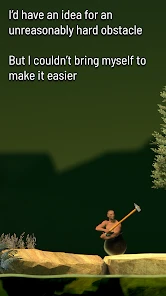

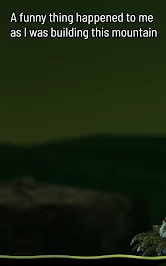
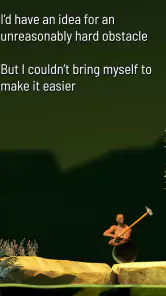
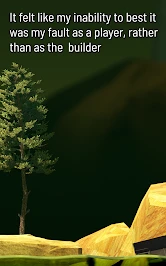
Analysis by Reviewed
I judge Getting Over It less by how quickly I can climb and more by what happens after a mistake. Its defining idea is that one hammer has to do nearly all the work: I use it to grip, push, pull, and swing the character across a steep course. That narrow focus makes every movement feel consequential. It is a simulation game from Noodlecake, but it has little in common with relaxed management or vehicle sims; the challenge is learning to control a physical tool under pressure.
One tool, a demanding learning curve
The hammer is both the whole appeal and the main barrier. Small changes in how I move it can send the character inching upward or flying away from a ledge. Progress comes from building a feel for the motion, not from collecting upgrades or following a stream of uncomplicated wins. I found it useful to treat a difficult stretch as a sequence of modest goals: reach a stable surface, pause, then work out the next swing. Trying to force a big leap when I was already frustrated usually made things worse.
That approach also explains why the controls can feel awkward without being pointless. The game asks for careful, deliberate input, and a slip can undo a lot of hard-won progress. There are no save points to soften a fall, so I would not start a session when I have only a minute or two and expect a tidy stopping point. On the other hand, learning to recover from a shaky landing is part of the skill. A near miss does not always mean the climb is over, and a calm correction can sometimes save a run.
A better fit for focused play than casual breaks
For me, the best time to play is when I can give it attention without needing constant progress. Imagine having a quiet stretch at home and wanting one absorbing challenge rather than a quick round with a guaranteed reward. I can spend that time testing a move, noticing why it failed, and trying again with a lighter touch. If I am tired, irritated, or likely to be interrupted, the same session can turn into an argument with the controls. This is a game I would choose deliberately, not open automatically whenever I have a spare moment.
Compared with the usual simulation games, which often emphasize building, operating, or managing something over time, this one strips the activity down to direct physical control. That makes it unusually personal: the obstacle is visible, the tool is simple, and my own timing is the difference between a foothold and a fall. Players looking for steady unlocks, forgiving checkpoints, or a soothing routine will probably be happier with another kind of sim. Players who enjoy mastering a tricky control scheme may find the starkness refreshing.
What the narration adds—and what it cannot fix
The accompanying narration gives failure a more reflective tone than a silent obstacle course would have. I like that it can make a setback feel like part of the experience rather than just wasted effort, though it does not make the climb easier. If I want to concentrate on a delicate movement, spoken commentary may compete with that focus; if I am in the mood to listen, it gives the repeated attempts a distinct character. The soundtrack is restrained, so the overall presentation supports the climb instead of turning it into a busy spectacle.
The visual design follows the same practical approach. It keeps attention on the character, hammer, and terrain, which helps me judge where I might catch an edge. Its simple look is not the reason to buy it, and anyone expecting a lavish simulation world may be underwhelmed. The stronger draw is the way the sparse presentation leaves room to notice the small physical details that matter during a climb.
More From Our News Desk

Weather by Xiaomi Review: Clear at a Glance, Less Clear Up Close

X Under Pressure: Can It Recover When Posting Goes Wrong?

Clash of Clans Is Won Between the Battles

Android Auto Makes the Case for Quieter Car Software

MobiOffice: Transforming Mobile Productivity with Seamless Integration

EA SPORTS FC™ Mobile Soccer: Redefining Mobile Sports Gaming
Who should take the plunge
I would recommend it to patient players who enjoy turning a hard control problem into a personal skill test, especially those who can laugh at a setback and return with a different plan. It is a poor match if losing progress feels unfair rather than motivating, or if you want a game that reliably relaxes you after a long day. The average rating is 3.4 from around 16,000 ratings, a useful sign that its demanding style is not universally loved; its more than one million installs also show that plenty of players have been willing to try it.
On Android, it costs $4.99, carries an Everyone age rating, and requires Android 5.0 or later. Version 1.9.8 is the current release. I would think of that purchase as paying for a focused, particular challenge rather than a broad collection of activities. Before committing, ask yourself whether you enjoy repeating a difficult movement until it clicks. If the answer is yes, the appeal is clear; if you mainly want quick, low-stress play, the price is better spent elsewhere.
Turning practice into a useful routine
One way I make the climb less chaotic is to treat each attempt as a small experiment. Instead of repeating the same frantic motion, I pick one question: can I place the hammer on that ledge, or can I push off without over-rotating? That gives a failure useful information and keeps me from confusing speed with progress. It is a particularly good approach when returning after a break, because I can rebuild a sense of control on a familiar stretch before taking a riskier move.
There is also a practical stopping rule worth adopting: stop after a clear learning moment, not only after a success. If I have figured out why a maneuver keeps failing, that is a reasonable place to put the phone down, even if I have not advanced far. Otherwise, frustration can tempt me to keep playing with increasingly rough inputs, which is exactly when the hammer becomes harder to control. The game rewards patience, but that does not mean every session has to end at the summit.
For a realistic everyday use case, I would choose it for an unhurried evening when I can focus and am comfortable with an unfinished run. It is less suitable for a commute with frequent interruptions or a short wait when I need to be ready to stop instantly. A phone game often suggests convenient bite-sized play, but this climb can make that expectation misleading: even a brief attempt may leave me wanting to retry a section, while a sudden interruption can break concentration at a delicate moment.
How it differs from other mobile challenges
Against the usual casual physics games, the key trade-off is that this does not soften failure with a constant stream of small rewards. Many mobile games let me make progress through brief rounds, upgrades, or a forgiving retry loop; here, the central reward is improved control and the knowledge that I handled a difficult passage. That can feel more meaningful to me than collecting another item, but it also means there is less comfort if I simply want to unwind without effort.
It is also a different proposition from a conventional climbing or platform game built around jumping, checkpoints, and predictable movement. Here, the hammer is not just a button for reaching the next platform: it is the instrument I must continually position and manage. That makes the game feel closer to a demanding control exercise than a route-planning adventure. If I prefer clear instructions and reliable character movement, a more forgiving platformer is the better pick; if I enjoy learning an unusual physical interaction, this has a stronger identity.
Small decisions that make a run less punishing
When I reach a surface that feels safe, I resist the urge to swing immediately toward the next obstacle. A short pause lets me check where the hammer is resting and choose a controlled direction rather than making a correction in midair. This is not a shortcut around the difficulty; it is a way to stop avoidable panic from turning a manageable position into a fall. I also try to notice which movements are repeatable, since a reliable modest push is often more useful than a dramatic swing I cannot reproduce.
The narration creates another choice: listen closely, or treat it as atmosphere while focusing on the climb. I would not assume that every passage needs my full attention at once. When I am learning a tricky motion, the commentary can compete with concentration; on a familiar stretch, it may make repetition feel less empty. That flexibility is useful, but it does not turn the game into a hands-free or background activity. The physical control still demands my attention.
People often wonder whether this is something they can dip into casually, whether its harshness is the entire point, and whether the paid purchase suits them. My honest answer is that short attempts are possible, but the experience is better when I can accept an uncertain stopping point. The difficulty is central, yet it is not the only attraction: noticing that my own timing has improved is satisfying even before a major breakthrough. At $4.99, I would buy it for that focused challenge, not as a varied collection of modes or a dependable stress reliever.
A distinctive challenge, not a universal recommendation
The game’s audience is narrower than its simple premise might suggest. I think it is especially rewarding for someone who likes deliberate practice, can tolerate repetition, and wants their own control to matter more than a stream of upgrades. It is much less appealing to a player who values frequent checkpoints, fast wins, or a predictable sense of forward motion. That difference is not a flaw to be solved; it is the central decision to make before paying.
Let's dive into the world of Getting Over It, a game that has become a phenomenon for its unique gameplay and challenging nature. This is not your typical mobile game; it’s a test of patience, perseverance, and skill. As a gamer, you might find yourself on a love-hate journey with this one.
Unraveling the Gameplay
At first glance, the game appears deceptively simple. You control a character who’s essentially a man stuck in a cauldron, wielding a hammer to navigate through an obstacle-laden mountain. The mechanics are straightforward: you swing the hammer, using it to push or pull your way over the terrain. But here’s the kicker – there’s no save point. One wrong move, and you could find yourself tumbling back to the start.
The controls are deliberately clunky, adding to the frustration yet oddly making every small victory feel incredibly rewarding. It’s not just a game; it’s a lesson in resilience. The satisfaction of mastering a particularly tricky section is immense, and that’s what keeps players coming back for more.
The Soundtrack and Narration
What sets the game apart is its philosophical narration. As you grapple with the game’s challenges, the voice of Bennett Foddy, the game’s creator, accompanies you with musings on life and failure. It’s like having a conversation with a wise friend, albeit one who’s watching you fail repeatedly. The soundtrack is minimalistic yet complements the game’s tone perfectly, adding to the overall immersive experience.
Graphics and Design
Visually, the game adopts a simple but effective art style. The graphics aren’t groundbreaking, but they don’t need to be. The focus here is purely on the gameplay and the metaphorical journey it represents. The obstacles are designed to frustrate, yet they are beautifully crafted in a way that keeps you engaged. The mountain you climb is as much about overcoming personal hurdles as it is about reaching the summit in the game.
This game may not appeal to everyone, especially those looking for a casual gaming experience. However, for those willing to accept the challenge, it offers an unparalleled sense of achievement. It is more than just a game; it’s a mental boot camp that tests your limits and dares you to persevere.
In conclusion, if you're someone who relishes a challenge and can handle a bit of frustration, the game is definitely worth your time. It’s a game that will test your patience, make you question your life choices, but ultimately, it will offer you a unique gaming experience that few other games can match. So, grab that hammer, and start climbing. Who knows, you might just learn something about yourself along the way.
Getting Over It Frequently Asked Questions
Who developed Getting Over It, and what kind of game is it?
Getting Over It is a simulation game developed by Noodlecake. Its focus is less on a broad collection of activities and more on mastering one demanding climbing challenge through careful movement. The game’s short store description is simply “Getting Over It,” while its summary sets an intentionally mischievous tone: it is made for a certain kind of person, to hurt them. That gives you a fair hint about the experience before you begin.
What devices and operating systems can run Getting Over It?
Getting Over It is a mobile game for Android and iOS, and the Android version requires Android 5.0 or later. Before downloading, check that your device meets the operating-system requirement and has enough room for the game. The controls rely on precise movement, so a touch-screen device is central to the experience.
How much does Getting Over It cost, and is it free to try?
Getting Over It costs $4.99 as a one-time purchase. It is not a free-to-play game, so you pay to download it rather than starting with a free version and unlocking the full experience later. The purchase includes access to the game, and there are no in-game purchases or microtransactions to budget for afterward.
What is Getting Over It and how does it work?
Getting Over It is a unique physics-based platformer game where players control a man named Diogenes, who is stuck in a cauldron and uses a hammer to climb a series of obstacles. The game is known for its punishing difficulty and lack of checkpoints, challenging players to navigate obstacles with precision using realistic physics. The objective is to reach the top of the mountain, but falling can result in losing progress. It is available for both Android and iOS platforms.
How well has Getting Over It been received by players?
Getting Over It has an average rating of 3.4, based on around 16,000 ratings and roughly 2,700 written reviews. Those figures point to a game that inspires strong reactions: its exacting controls and severe setbacks can be a draw for players who want a tough test, but a frustration for anyone expecting a relaxed climb. Reading the premise and considering your appetite for repeated attempts can help you decide whether it suits you.
Pros
- Unique physics-based gameplay
- Challenging and rewarding
- Minimalistic yet engaging graphics
- Encourages perseverance
- Develops strategic thinking
Cons
- Extremely difficult for beginners
- Can be frustrating at times
- Limited storyline
- Repetitive background music
- No multiplayer mode
- Category
- Simulation
- Version
- 1.9.8