Gear Fight!
- 2.47K
- 4.2
- Installs
- 5.00M
- Price
- Free

Screenshots
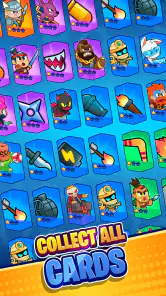

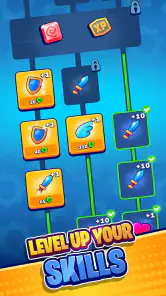

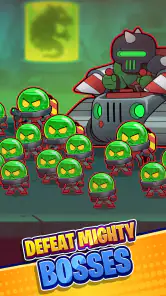
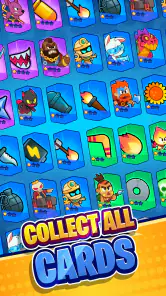


Analysis by Reviewed
Some arcade games ask for quick fingers; Gear Fight! gets its appeal from making a turning gear feel like the decision that matters. I like that simple premise because it gives each short bout a clear focus: watch the threat, adjust your position, and see whether your setup can deal with what comes next. It is an easy game to understand, but its central action gives you more to think about than a one-tap reflex test.
VOODOO’s free arcade game is rated Everyone 10+, and it has built a sizable audience: it has passed five million installs, with an average rating of 4.2 from around 84,000 ratings. Those figures tell me it has found people who enjoy quick, immediately readable action, though they don’t guarantee that its particular rhythm will suit everyone. The important question is whether you enjoy making small positional choices under pressure.
Why turning the gear is the whole point
A compact idea with a tactical edge
The game’s defining capability is the ability to turn gears to fight enemies. That sounds straightforward, and it is meant to be: rather than burying the action in a long explanation, Gear Fight! puts the gear-based idea at the center. The result is an arcade loop where movement and attack are closely tied, so a change in orientation can feel more consequential than simply tapping as quickly as possible.
That distinction matters when deciding what kind of game this is. If you expect a detailed strategy game, the premise may feel too lean. If you want an arcade game that gives your attention one useful job at a time, it has a better chance of clicking. I find the appeal less in mastering a complicated control scheme and more in spotting the moment when a turn could improve the outcome of a fight.
The gear is not just a visual theme pasted over generic action. It gives the game a memorable way to frame its combat: you are thinking about how your position relates to incoming enemies. That makes the central action easy to explain to a friend, while still leaving room for the player to make choices rather than merely watch the screen.
What to pay attention to while playing
In practice, I would treat each encounter as a short observation-and-response exercise. Look at what is approaching before turning, then make a deliberate adjustment instead of repeatedly spinning without a plan. This is a useful habit in a game built around orientation: a turn should have a reason, whether that is lining up a response or avoiding a poor position.
One practical tip is to resist making every decision at the last possible instant. Fast reactions are part of arcade play, but a little attention to the pattern in front of you can make your inputs feel more intentional. If a fight goes badly, ask whether the issue was timing or whether you were turning without considering the enemy’s position. That small distinction helps you learn from a loss instead of treating it as random bad luck.
You May Like

Clash of Clans Is Won Between the Battles

Android Auto Makes the Case for Quieter Car Software

MobiOffice: Transforming Mobile Productivity with Seamless Integration

EA SPORTS FC™ Mobile Soccer: Redefining Mobile Sports Gaming

How Microsoft OneDrive Became a Mobile Productivity Giant

How Google Translate Breaks Language Barriers Effortlessly
Another helpful approach is to keep your attention on the immediate threat. The gear mechanic invites you to think about direction, but there is no benefit in turning the whole encounter into a puzzle if the action is moving quickly. I would make one clear adjustment, check what changed, and then decide again. That keeps the controls from feeling frantic and makes the game’s central idea easier to read.
This is also the kind of design that can work well in short pockets of free time. A quick session while waiting for a drink or taking a brief break does not require you to remember a long plot or reconstruct a complicated plan. I can pick it up, focus on a fight, and put it down again without needing to commit a whole evening. That convenience is one of the strongest reasons to try it.
Where the mechanic works best
The best scenario is a brief break when you want something more engaging than a passive distraction but don’t want to settle into a long session. For example, if I have a few minutes between errands, I can use that time to concentrate on the approaching enemies and make a few considered turns. The game’s core idea is immediately understandable, so there is little barrier to getting started.
That same focused loop can suit players who like arcade challenges but get bored when a game asks only for repeated tapping. Here, turning the gear gives your attention a specific task. The satisfaction comes from making a sensible adjustment at the right moment, not from studying a large set of menus or learning a complicated control layout.
It is less suited to a relaxed, hands-off session. The whole point is to stay aware of threats and react, so opening it while trying to concentrate on a conversation or a separate task may make the play feel choppy. I would choose it when I can give the screen my attention, even if only briefly, rather than expecting it to function as background entertainment.
Tradeoffs: focused action, limited appeal
The same simplicity that makes the game approachable also narrows its appeal. If you want an arcade title with a wide variety of activities, a long narrative, or deep customization, the gear-based combat may not give you enough range. Its identity is concentrated in one action, so your enjoyment depends on whether that action remains satisfying as you play.
There is also a fine line between quick decision-making and repetition. Turning gears to respond to enemies is a clear hook, but players who prefer a fresh mechanic in every encounter may want more variety than this focused premise provides. I would not recommend it as a substitute for a broad action game; I would recommend it as a compact alternative when you want one readable challenge rather than a sprawling set of systems.
Compared with a typical tap-to-attack arcade game, the gear gives you a more positional way to think about combat. Compared with a puzzle game, though, the action keeps the emphasis on responding in the moment rather than spending a long time planning. That middle ground is a strength for people who enjoy light tactical thinking at arcade pace, but it may frustrate anyone looking for either pure reflex speed or deliberate, turn-by-turn strategy.
It is also worth considering the purchase model before settling in. The game is free to download, with in-app purchases ranging from $0.99 to $99.99 per item. You can start without paying, but the available purchases mean it is sensible to keep an eye on spending, particularly if a child is playing. The Everyone 10+ age rating can help families judge the content, while purchase controls on the device are a practical way to avoid accidental spending.
For a quick session, I would also approach the game with a simple personal rule: first see whether the core turning mechanic is fun on its own, before considering any optional purchase. That is a useful way to judge an arcade game fairly. If the basic action already feels satisfying, the game has done its job for you; if it does not, spending money is unlikely to change the fact that the central loop is not a match.
Who is most likely to enjoy it?
I would point it toward people who enjoy short arcade rounds and like having one tactical choice inside a fast-moving encounter. It is especially approachable for someone who wants to understand the basic idea quickly, then improve through attention and timing. VOODOO has kept the premise clear enough that you do not need to be an experienced strategy player to see what the game is asking you to do.
Players who prefer elaborate progression, a substantial story, or a broad collection of modes should look elsewhere. The same applies if you dislike making quick adjustments while enemies are active. A slower puzzle game is a better choice when you want time to think without pressure, while a more traditional arcade game may be preferable if all you want is direct reflex action without a positional decision.
The game was released on February 5, 2025, and its current version is 6.23.0. It supports Android 8.0 or later. Those details make it easier to check whether it fits an older device before installing, while its free entry point makes trying the core idea straightforward. I would still judge it by the mechanic itself, not by the size of its audience: a popular arcade game can be a good fit for quick, attentive play and still not suit someone seeking greater depth.
How I would fit it into a real break
Imagine arriving early for an appointment and having a few minutes to spare. I would open the game for a focused bout, keep my attention on the approaching threat, and stop when I need to check in. That is a more natural fit than starting a game whose enjoyment depends on following a lengthy story or remembering a multi-step objective. The appeal here is that the central decision is easy to return to after a short interruption.
There is a small but useful discipline in setting that boundary. I would not begin a round when I know I have to divide my attention between the screen and something important; the gear choice only feels meaningful when I can notice what is happening. On the other hand, if I have a quiet wait with nothing else demanding attention, the action gives that time a clear focus. It is a better waiting-room companion than a game that requires a long uninterrupted session, provided I am ready to engage rather than play absent-mindedly.
For a first try, I would keep the goal modest: learn how turning changes your response to the enemy, rather than trying to optimize every move immediately. Then, after a failed attempt, change one habit at a time. If you turned too late, try watching the threat sooner; if you turned without a clear purpose, wait until you can identify what you want the adjustment to accomplish. This makes experimentation more useful and keeps a simple arcade game from becoming a blur of frantic inputs.
Choosing it over other arcade styles
The comparison with other arcade games comes down to what you want your hands and attention to do. A classic reflex-focused game rewards speed above all, while a puzzle-focused option usually gives you room to pause and plan. This one sits between those approaches: it asks for a quick response, but the gear gives that response a positional angle. I would choose it when I want action with a little judgment, rather than either pure tapping or slow problem-solving.
That middle position is not automatically better. If you enjoy chasing a high score through repeated, direct inputs, the added decision may feel like an unnecessary interruption. If you enjoy puzzles because you can consider every possibility at your own pace, the pressure of active enemies may be the wrong kind of tension. The useful question is not whether this is more sophisticated than those alternatives; it is whether the particular mix of timing and turning sounds fun to you.
It also makes sense as a change of pace rather than a replacement for every game on your phone. I would keep it in mind for short sessions when I want to be alert, then switch to a puzzle or a longer action game when I have more time or want a different mood. That expectation helps avoid judging the title for not being a campaign or a deep strategy experience it is not trying to be.
Questions worth settling before installing
If you are wondering whether it is suitable for a child, the Everyone 10+ rating is a useful starting point, but I would still consider the child’s comfort with arcade action and the possibility of in-app purchases. The game is free to begin, and individual purchases can range from $0.99 to $99.99. I would review device purchase settings before handing over a phone, so a child can try the core mechanic without an unintended charge.
If you are asking whether paying is necessary to see if the game suits you, the free download gives you a straightforward way to judge its central idea first. I would spend time with the basic turning-and-fighting loop before deciding whether any purchase is worthwhile. That is especially important here because the main appeal is concentrated in the core action: an optional item cannot make that central style more enjoyable if you simply do not like it.
For someone with an older Android phone, the minimum operating system is Android 8.0, so checking the device software is a sensible first step. The current version is 6.23.0. Compatibility is only one part of the decision, of course; even on a supported device, I would install it for the specific promise of quick, attentive arcade play rather than expecting a broad set of activities.
My recommendation
I recommend trying it if the idea of turning a gear to respond to enemies sounds satisfying, especially if you want a compact game for short breaks. My main advice is to play deliberately: watch the threat, make a purposeful turn, and use each encounter to notice what worked. That approach brings out the little bit of tactical thought that separates this from a purely repetitive tapper.
I would skip it if you need a long-form game, a calm experience, or a steady stream of different mechanics. Its strengths and limits come from the same place: it keeps attention on one clear action. For the right player, that focus is exactly what makes it easy to return to. For me, it is a handy arcade option when I want a brief challenge with a small but meaningful decision at its center.
Gear Fight! Frequently Asked Questions
What is Gear Fight!?
Gear Fight! is an action-focused game built around assembling mechanical fighters and putting them into battles. Its central appeal is the mix of creating or upgrading a combat machine and seeing how it performs against opponents. The precise features, modes, and progression options can vary by version, so check the current store listing and in-game descriptions before downloading if you are looking for a particular type of gameplay.
Is Gear Fight! free to download and play?
The availability and pricing of Gear Fight! depend on the platform and the version offered in your region. Even when a game is free to install, it may include optional in-app purchases, advertisements, or other paid content. Review the App Store or Google Play listing for current pricing and payment details, and check the purchase settings on your device if you want to avoid accidental spending.
Can I play Gear Fight! offline?
Offline play is not guaranteed, and requirements may differ between versions or game modes. Some games allow basic play without a connection but need internet access for updates, online battles, account features, or restoring progress. Before travelling or playing without Wi-Fi, check Gear Fight!’s store-page information and test the game on your device with its connection disabled. Avoid assuming that every feature will work offline.
Which devices are compatible with Gear Fight!?
Compatibility depends on the version available for Android or iOS, your device’s operating-system version, and the game’s hardware requirements. Check the official store listing for supported devices and minimum software requirements before installing. If your phone or tablet is older, also consider available storage and performance: a game may install successfully yet run slowly or have limited functionality on hardware that is not fully supported.
Is Gear Fight! suitable for children, and what should parents check?
Parents should review the age rating and content notes shown on the relevant app store, since ratings and available features can differ by region or platform. It is also worth checking whether Gear Fight! includes advertising, in-app purchases, online interactions, or links to external services. Use the device’s parental controls and purchase restrictions where appropriate, and supervise younger players until you know which features are available in the installed version.
Pros
- Quick matches make it easy to play in short sessions.
- Simple controls are approachable for casual players.
- Vehicle battles offer a fun twist on standard action games.
- Unlockable gear gives players goals to work toward.
- The colorful presentation helps the action feel lively.
Cons
- Combat can feel repetitive after several matches.
- Progress may take time if you avoid optional purchases.
- Vehicle upgrades can make some battles feel uneven.
- The small screen can make busy fights hard to follow.
- Players looking for a deep story may find little narrative.

- Category
- Arcade
- Version
- 6.23.0