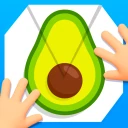
DOP: Draw One Part
- 3.76K
- 4.5
- Installs
- 100.00M
- Price
- Free
Screenshots


Analysis by Reviewed
I often reach for a quick puzzle when I have a few spare minutes, but I don’t always want another grid of matching tiles or a long chain of clues. DOP: Draw One Part takes a different route: it gives me an incomplete picture and asks me to work out what belongs in the gap. That small change makes each puzzle feel like a visual guessing game, and the fun is in deciding what the image is trying to say before I draw.
The first stroke is a guess
When a level appears, I look at the whole illustration before touching the screen. The missing piece might be a literal object, a body part, or something suggested by the scene; the challenge is to read the picture rather than simply copy a shape. I use my finger to sketch the answer, so neat drawing matters less than identifying the idea the puzzle is pointing toward.
That distinction is useful if you’re wondering whether drawing skill is required. I wouldn’t treat this as a drawing app or expect precise freehand work to be the point. It’s a picture-based logic puzzle, and a rough attempt can be enough when the intended answer is clear. If I’m stuck, I try changing my interpretation of the scene before worrying about how to make a cleaner line.
Reading a picture before reaching for hints
A useful habit is to scan the illustration in layers. I first identify what is definitely present, then notice where the empty space sits in relation to the characters and objects. That position can narrow the possibilities: a gap beside a hand suggests a different kind of answer from one above a head or beneath a table. I treat these clues as prompts rather than rules, because the answer can depend on the scene’s joke or visual implication.
This approach also helps when I’m sharing the screen with someone else. Instead of asking, “What should I draw?” I ask what the picture seems to be setting up. That keeps the conversation focused on interpretation, and a second person may notice a detail I overlooked. It is an easy way to make a solitary puzzle briefly social without needing a separate competitive mode.
How the drawing loop keeps moving
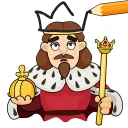
Imagine this: You’re presented with a quirky illustration, but there’s something missing. Your job? Draw the missing part. Sounds easy, right? But here's the catch – sometimes the solution is not what you’d expect. DOP: Draw One Part challenges your logic and creativity by making you think outside the box, literally! It’s like having a mini Picasso moment right on your phone.
Feedback makes each attempt count
The gameplay is as simple as it is engaging. You use your finger as a virtual pencil to complete the drawings. The game provides you with a series of incomplete drawings, and you need to use your imagination and your finger to draw the missing part. Each level brings a new challenge and a new opportunity for creativity. Trust me, it’s harder than it looks!
More From Our News Desk

Weather by Xiaomi Review: Clear at a Glance, Less Clear Up Close

X Under Pressure: Can It Recover When Posting Goes Wrong?

Clash of Clans Is Won Between the Battles

Android Auto Makes the Case for Quieter Car Software

MobiOffice: Transforming Mobile Productivity with Seamless Integration

EA SPORTS FC™ Mobile Soccer: Redefining Mobile Sports Gaming
The important rhythm is: inspect, draw, see whether your interpretation works, then move on or reconsider. That makes it easy to play in short bursts; I can finish a little stretch of puzzles without needing to remember a complicated setup. It also gives the game its main limitation: if a picture’s intended answer doesn’t click for me, the puzzle can feel more like guessing what the creator had in mind than solving a rule-based problem.
What a failed guess can teach you
When an attempt does not land, I try to separate two questions: did I misunderstand the picture, or did I understand it but draw the answer in a way that was hard to recognize? That distinction saves time. If the idea still feels right, I make the drawing clearer; if it does not, I return to the illustration and look for another interpretation. Repeating nearly identical strokes without changing either the idea or the shape is usually the least useful response.
The feedback is satisfying when my reading of the scene is accepted, but it can be less satisfying when I cannot see why one interpretation works and another does not. That is the trade-off behind a very simple control scheme: there is little to learn before playing, yet the answer can sometimes feel dependent on the intended visual joke. I enjoy the surprise more when I can look back at the picture and understand the connection afterward.
When a small win is enough
One of the coolest features of this app is its simplicity. The user interface is clean and intuitive, making it easy for anyone to jump right in and start playing. Plus, the graphics are charmingly funny and colorful, keeping you visually entertained as you puzzle out each drawing.
That makes it a handy choice for a short break, a quiet wait, or a casual moment when someone nearby wants to join in and suggest an answer. I like that the basic task is easy to explain: look at the image and draw what seems absent. For a family setting, the Everyone content rating is reassuring, though younger players may still appreciate an adult helping them interpret a particularly indirect picture.
A good fit for brief, low-pressure play
For me, the best everyday use is a pause that is too short for a full round of a more demanding game but long enough to want a small distraction. Waiting for food to heat, sitting before an appointment, or taking a quiet break between tasks are all natural moments for this format. I can focus on one picture, make a decision, and stop without keeping track of a plot or a complicated board state.
That convenience has a boundary. If I want a puzzle that rewards planning across several moves, or one that gives me a carefully explained deduction to work through, this is not the choice I’d make. Its pleasure comes from interpreting a single image and responding to it, not from building a strategy over a long session. Players who prefer that longer arc may be happier with a logic game built around linked clues or a campaign of increasingly layered problems.
Who will enjoy it—and who may not
If you enjoy a good challenge and love using your imagination, this game is a must-try. DOP: Draw One Part is perfect for all ages – whether you're a kid just learning about shapes or an adult who enjoys a bit of doodling, this game has something for you. It’s a great way to pass the time while giving your brain a workout.
Another thing I love about this game is its unpredictability. You’d think drawing a missing part is straightforward, but the solutions can be surprisingly creative, sometimes even hilarious! It’s this unpredictability that keeps the game fresh and exciting.
For a realistic use case, I’d pick it up while waiting for a kettle or sitting through a short commute: each picture gives me a self-contained question, so I can put the phone down without losing a story or a complex plan. If I want deep deduction, a long campaign, or a puzzle with several steps that build on one another, I’d choose a different kind of game. Compared with familiar match-three puzzles, this asks me to interpret a scene instead of spotting combinations; compared with classic riddles, it gives me a visual prompt and lets me answer by drawing.
How it compares with other quick puzzles
The closest alternative is not necessarily another drawing game; it is any phone puzzle that can be picked up and put down quickly. Compared with a word riddle, this one asks me to read shapes, relationships, and context rather than search for a verbal trick. Compared with a conventional picture puzzle, it is less about assembling pieces and more about deciding what the image is missing. That makes it a nice change of pace if those familiar formats have begun to feel predictable.
On the other hand, a match-three game may suit someone who wants a clear set of repeatable moves, while a crossword or logic puzzle is a better choice for someone who wants its reasoning to be explicit. Here, the small drawing action is part of the answer, and that is precisely what makes the game feel distinct. The trade-off is that a visual punchline can be harder to infer than a rule with a single, plainly stated solution.
Small habits that help
I get more out of a tricky level by pausing before my first mark and naming the parts I can already see. Then I ask what object or action the scene seems to imply. This is a better starting point than making several random scribbles, because the challenge is usually about the missing idea, not artistic precision. If the first interpretation fails, I reconsider what the illustration could mean rather than repeating the same outline with tiny changes.
I also try to keep my first drawing simple. A clear, recognizable outline makes it easier to tell whether the concept was wrong or whether I merely made an unclear mark. When the image is ambiguous, I look for the most ordinary completion first, then consider whether the scene is inviting a more playful reading. This two-step approach gives me a way to think through a level without turning every puzzle into a long debate.
For a child or a new player, I would encourage explaining the scene aloud rather than taking over the drawing. Naming what is visible can help them spot what is absent, while leaving the final guess to them preserves the satisfying moment of recognition. If the intended answer feels obscure, a gentle nudge toward another interpretation is more fun than immediately giving it away.
It’s also a game I’d share selectively. A friend can offer a fresh reading of an odd picture, which makes a confusing level more amusing, but someone looking for competitive multiplayer or a social feature should not choose it for that purpose. The appeal is the quick, personal puzzle-and-response loop, not a large set of modes or a sustained narrative.
What to expect before installing
SayGames Ltd made this free puzzle game, which has a 4.5 average from around 352,000 ratings and more than 100 million installs. It is rated Everyone, and the current version is 1.2.34, with Android 8.0 as the minimum operating system. In-app purchases are listed at $1.99 per item, so I’d check the purchase prompts and device settings if I’m handing the phone to a child. The headline price is free, but that does not mean every optional purchase is included.
For a parent deciding whether to let a child try it, the Everyone rating and simple drawing interaction make it approachable, but I would still stay nearby if the child is very young or easily frustrated by abstract pictures. The purchase details are another practical reason to use the device’s normal purchase safeguards before handing over a phone. The game’s basic idea is easy to explain; the interpretation of a particular image may be the part that needs a little help.
It runs on Android devices with version 8.0 or later, so checking the operating system is a sensible first step before installing. The game is free to start, while individual in-app items have a listed price, so I would not assume every optional element is included at no cost. That is a small but useful distinction for anyone setting expectations for a child or trying to keep a casual download free of surprise purchases.
The uncomplicated format is its strength, but it can also make the experience feel repetitive if I want a more substantial puzzle session. Its best fit is someone who likes quick visual problems and can enjoy an occasional unexpected answer; it is a weaker fit for players who need every solution to follow a strict, transparent logic. If a level feels unfair, taking a brief pause can help me return with a different interpretation, though the game’s basic appeal remains the same simple act of completing a picture.
Where it fits among puzzle games
In a world flooded with cookie-cutter puzzle games, DOP: Draw One Part stands out with its unique concept and engaging gameplay. It’s a refreshing twist on the traditional puzzle genre, offering something new and exciting for players of all ages. So if you’re looking for a game that’s both fun and challenging, give this one a download. You won’t regret it!
In conclusion, whether you're in it for the challenge, the fun, or just to see what crazy solutions you can come up with, DOP: Draw One Part is sure to provide hours of entertainment. So grab your virtual pencil and start drawing!
My verdict on the repeat-play loop
The reason I start another session is simple: the game keeps the commitment low while giving each picture a new little question. A successful answer gives me a quick sense of completion; a confusing one can make me curious enough to try a different reading. That loop works best when I treat the drawings as playful visual prompts rather than tests with perfectly formal logic.
I would recommend it to someone who wants an easy-to-explain puzzle for spare moments, especially if they enjoy interpreting cartoons and do not mind occasional ambiguity. I would steer a player seeking deep strategy, a long-form challenge, or consistently transparent solutions toward another puzzle style. For the right mood, though, this is a pleasant pocket-sized diversion: look closely, make a guess, see how the picture responds, and decide whether you have time for one more.
DOP: Draw One Part Frequently Asked Questions
Can I play DOP: Draw One Part in short sessions, or does it require a long time commitment?
DOP: Draw One Part is built around individual picture-completion puzzles, so it suits a quick break as well as a longer stretch of play. You can focus on a level, work out what the illustration is missing, and draw your answer without needing to settle in for a lengthy session. Its simple premise makes it easy to pick up when you have a little free time.
Do I need drawing experience to enjoy DOP: Draw One Part?
No special art training is needed. The challenge is to notice what an illustration is missing and make a recognizable sketch, rather than create a polished drawing. If you enjoy visual riddles and trying unexpected ideas, the basic drawing mechanic should feel approachable. The game’s central task is to use clues in each picture to decide what belongs there.
Is DOP: Draw One Part free to download, and does it include optional purchases?
DOP: Draw One Part is free to download and play, so you can try its drawing puzzles without paying upfront. It also offers in-app purchases priced at $1.99 per item. These purchases are optional; the core idea is to solve each puzzle by drawing the missing part. Check purchase settings on your device if you want to prevent accidental spending.
What kind of puzzles and drawing skills does DOP: Draw One Part involve?
DOP: Draw One Part is a puzzle game built around completing pictures: each level shows an illustration with a missing element, and you draw what you think belongs there. It is more about noticing clues and thinking creatively than producing polished artwork, so you do not need to be an experienced artist to enjoy the challenge.
What is the main objective of DOP: Draw One Part?
DOP: Draw One Part is a puzzle game where players are tasked with completing drawings by sketching the missing parts. Each level presents a partially finished illustration, and players must use their creativity and problem-solving skills to figure out what element is missing. The game is designed to challenge your brain while providing an entertaining and artistic experience.
Pros
- Engaging and creative puzzles.
- Simple and intuitive controls.
- Satisfying sound effects.
- Great for casual gaming sessions.
- Encourages creative thinking.
Cons
- Ads can be intrusive.
- Limited hints available.
- Levels can feel repetitive.
- No offline mode.
- May drain battery quickly.
- Category
- Puzzle
- Version
- 1.2.34