Thief Puzzle: to pass a level
- 6.67K
- 4.6
- Installs
- 100.00M
- Price
- Free

Screenshots
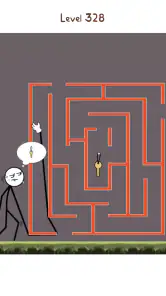
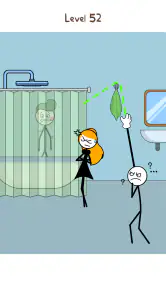
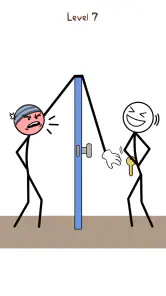
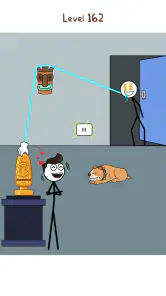
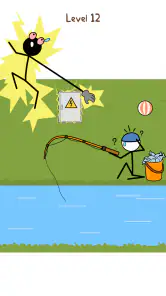
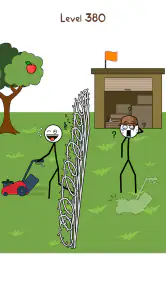
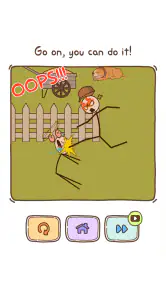
Analysis by Reviewed
I usually judge a puzzle game by its first few moves: can I understand what I’m meant to do, and does a mistake teach me anything? In Thief Puzzle: to pass a level, I guide a thief’s hand toward a target while trying to avoid what stands in the way. That simple action makes each puzzle feel like a small plan rather than a quiz with a written answer. I can see why this free puzzle game from TapNation has reached over 100 million installs, though its appeal is more about quick, playful problem-solving than deep strategy.
A quick move, then a useful reaction
The basic interaction is easy to grasp, so I can start experimenting without learning a complicated control scheme. The interesting part is choosing a route: a direct reach may be blocked, while a longer one can bring the hand into contact with an obstacle or a guard. When an attempt fails, the result makes me reconsider the path instead of asking me to memorize a rulebook. That action-and-feedback rhythm is the main reason I’m willing to try again.
The game suits the odd spare minute particularly well. I might open it while waiting for a kettle to boil, make a few attempts, and put my phone away when the next task calls. A level can also hold my attention longer if I want to test different approaches. I wouldn’t choose it for a long, uninterrupted story session; its pleasure is in solving one compact situation at a time.
Getting Started with a Sneaky Adventure
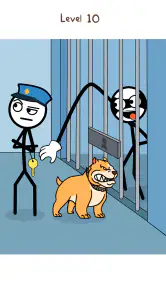
From the moment I downloaded Thief Puzzle: to pass a level, I was intrigued by its quirky concept. The game is all about solving puzzles by moving a thief's hand to grab treasures. But beware! It's not as easy as it sounds. You have to dodge obstacles, avoid traps, and outsmart the guards. The interface is straightforward, allowing you to jump right into the action without any tedious tutorials. Trust me, the first few levels are just the warm-up!
The Art of Outsmarting
Each level presents a unique challenge that requires out-of-the-box thinking. The designs are clever, and often, I found myself scratching my head, pondering the best route to success. The satisfaction of finally figuring out a tricky puzzle is unmatched! The game continuously introduces new elements, like moving platforms and switches, which keep the gameplay fresh and engaging. It's like a mental workout, but in the best way possible.
Visuals and Gameplay Experience
Visually, the game is a treat. The graphics are vibrant, and the animations are smooth, making every level a delightful experience. The characters have a cartoonish charm that adds a light-hearted feel to the otherwise brain-teasing gameplay. Plus, the sound effects and background music are perfectly in sync with the game's theme, enhancing the overall immersion. It's easy to lose track of time when you're so engrossed in escaping with the treasure!
Challenges and Levels
As you progress, the levels become increasingly challenging, demanding more strategic planning and precise timing. But don't worry, the game offers hints to guide you when you're stuck. However, I recommend using them sparingly—there's a certain thrill in solving a puzzle on your own! Whether you're playing during a short break or diving into a longer gaming session, the game offers a perfect balance of difficulty and entertainment.
More From Our News Desk

Weather by Xiaomi Review: Clear at a Glance, Less Clear Up Close

X Under Pressure: Can It Recover When Posting Goes Wrong?

Clash of Clans Is Won Between the Battles

Android Auto Makes the Case for Quieter Car Software

MobiOffice: Transforming Mobile Productivity with Seamless Integration

EA SPORTS FC™ Mobile Soccer: Redefining Mobile Sports Gaming
Who will enjoy the loop?
I’d recommend it to people who like visual puzzles, quick retries, and the small satisfaction of spotting a route that was easy to overlook. It’s also a reasonable pick for a casual shared moment: one person can suggest a path while the other makes the move, turning a stuck level into a low-pressure bit of teamwork. The Everyone age rating fits its light presentation, although younger players may still appreciate an adult nearby if they get frustrated by a tricky puzzle.
The comparison with familiar puzzle games is useful. Unlike a word puzzle, there’s no vocabulary or trivia to lean on; unlike a conventional match-style game, the task is not to clear a board by repeating a pattern. Here, I focus on space, obstacles, and where the hand can travel. That makes it a better choice when I want a concrete visual problem, but a weaker choice if I’m looking for layered logic, a long campaign narrative, or a competitive challenge against other players.
How I approach a stubborn level
When I get stuck, I try to separate the target from the route: first identify what must be reached, then trace a path that avoids the obvious hazards. I also change one part of my approach at a time. If I alter the starting direction and the timing together, I can’t tell which change helped. This simple habit makes retries feel like experiments rather than random swipes, and it can reduce the urge to use a hint immediately.
Hints are helpful when I’ve genuinely run out of ideas, but leaning on them too early can take away the moment of discovery that makes these puzzles satisfying. I treat them as a way to get moving again, not as the default solution. The trade-off is straightforward: if I want every level to unfold through my own reasoning, I need patience; if I only want fast progress, I may find the pauses frustrating.
What to expect before installing
The game is free to download, with in-app purchases ranging from $0.99 to $10.99 per item. I’d keep that in mind if I’m installing it for a child or if I prefer games with no purchase options at all. It is rated Everyone, and it runs on Android 7.0 or later; its current version is 1.17.1. The game has a 4.6 average from around 684,000 ratings and around 6,700 written reviews, which suggests a broad audience, but popularity alone won’t make every puzzle style a personal fit.
TapNation released the game on January 24, 2021, and its familiar format remains easy to pick up: attempt a route, see what happens, and decide whether to try again or step away. If a level is getting under my skin, closing the game and returning later is often better than repeating the same failed move. That reset is part of the appeal: there’s little setup to resume, and a fresh look can make a previously awkward path seem obvious.
Where it fits into an ordinary day
I find the best time for this kind of puzzle is a small, predictable gap: waiting for a ride, sitting through a short break, or winding down before bed. The important distinction is that the game gives me a clear stopping point after a solved challenge. I can finish one, put the phone down, and feel that I completed something rather than leaving a complicated task halfway done. If I have only a moment, I can also stop after a failed attempt and return when I’m less distracted.
That convenience comes with a small attention trade-off. A puzzle that looks simple can invite one more try, especially when I feel close to finding the route. I would avoid opening it when I need to focus on a task that can be interrupted easily or when I have only seconds before an appointment. For a planned short break, though, the concise setup is a strength: I don’t need to remember a plot or rebuild a strategy from a previous session.
Reading the puzzle before making a move
One useful habit is to pause before dragging and scan the whole scene instead of staring only at the treasure. I look for the obvious barrier, then check what else might change the route or make a direct reach risky. This doesn’t reveal a solution by itself, but it turns the first attempt into a deliberate test. If the hand meets an obstacle, I have a better idea of what that result tells me, rather than simply repeating the same movement with more force or speed.
I also try to treat the animation as feedback, not just decoration. A failed move can show which part of a route is unsafe, while a near miss can help me narrow down where a different curve might work. That makes the loop more satisfying for players who enjoy learning from small pieces of information. If I prefer puzzles with a single written clue and a carefully formal chain of deductions, this visual trial-and-adjust style may feel too casual.
What kind of puzzle player should choose it?
This is a good fit if I want a casual puzzle game that uses an immediately readable scene and lets me act on an idea. It also works for people who like to talk through a problem together without turning a break into a serious competition. A friend can suggest a different route, and the player holding the phone can test it. That shared approach is especially useful when one person spots a hazard the other has overlooked.
I would steer away from it if I wanted a long-form narrative, complex systems that build across many hours, or a hard logic game where every step depends on a strict rule set. The appeal here is more immediate and physical: see the target, plan a reach, and respond to what happens. Compared with a standard jigsaw or number puzzle, it asks for spatial imagination and experimentation rather than patience with a large board or repeated calculations. The right alternative depends on what kind of thinking I want that day.
Small trade-offs that affect the experience
The bright, cartoon-style presentation helps keep failure light, but it also means the game is not aiming for realism or a serious heist atmosphere. I see that as a sensible choice for a playful puzzle, though it may not appeal to someone who wants a tense stealth game. Likewise, short challenges are convenient but don’t promise the feeling of a long campaign with a continuing story. I would choose it for bite-size problem-solving, not as a replacement for a deeper adventure.
There is also a difference between enjoying retries and wanting frictionless progress. If I like testing hypotheses, a failed route is useful information and the next attempt feels earned. If I become impatient when the answer is not obvious, the same repeated cycle can feel like a stall. In that case, taking a pause or using a hint is more sensible than making several nearly identical attempts. The game is at its best when I’m willing to make each try a little more thoughtful than the last.
Deciding when to use a hint
I save hints for the point where I can no longer explain what I would change in my next attempt. Before that, I test one clear idea at a time: perhaps the route needs to bend around an obstacle, or perhaps I have overlooked how a moving element affects the timing. This approach protects the reward of solving a level independently without turning every puzzle into a long standoff. If I’m playing only to relax, using help sooner can be a fair choice; there is no need to turn a casual game into homework.
For families, the practical question is less about the controls and more about how a child handles getting stuck and whether in-app purchases need adult supervision. The Everyone rating makes the presentation broadly accessible, but it doesn’t mean every player will find each challenge equally easy. I’d let a younger player try it while staying available to help them pause, think through the scene, or step away rather than repeatedly tapping in frustration.
A sensible choice among puzzle games
Among visual puzzle games, this one stands out through its hand-reaching premise: the action is easy to understand, but the route is where the problem lives. I’d pick it over a word or trivia game when I want to reason from a picture, and over a match-style game when I’m not in the mood to chase a repeating board pattern. I’d choose something else if I wanted a competitive scoreboard, a deep story, or elaborate puzzles that reward keeping notes across a long session.
The free download lowers the barrier to trying it, while the listed in-app purchases are worth remembering if I prefer to avoid games with optional spending. A 4.6 average from around 684,000 ratings and more than 100 million installs show that many people have taken to its straightforward loop, but the more useful question is whether that loop suits my habits. If I enjoy short visual challenges and don’t mind retrying, it has a clear place in my casual-game rotation.
In conclusion, Thief Puzzle: to pass a level is a fantastic app for anyone who enjoys a good brain teaser. It's accessible, fun, and incredibly addictive. If you're up for a challenge and love a game that keeps you on your toes, give it a try. Who knows, you might just become the ultimate puzzle master!
Thief Puzzle: to pass a level Frequently Asked Questions
Is Thief Puzzle free to download, and what should I know about optional spending?
Thief Puzzle is free to download, so you can try its stickman-stealing puzzles without paying upfront. It also offers in-app purchases, with items priced from $0.99 to $10.99. Consider those optional costs if you prefer to avoid spending while playing, and check purchase settings on your device if children will use the game.
Is Thief Puzzle suitable for short, casual play sessions?
Thief Puzzle is a puzzle game focused on finding a way around obstacles to reach an item, making it a natural fit for players who enjoy thinking through individual challenges. Its premise is easy to understand, but the puzzles call for planning rather than simply tapping through. That makes it worth considering if you want a casual game built around problem-solving.
What kind of game is Thief Puzzle: to pass a level?
Thief Puzzle: to pass a level is a puzzle game built around helping a stickman thief reach and take an item. Its store description invites players to test their skills in thief puzzles and become a stealth expert. If you enjoy working out how to get around obstacles rather than relying on quick reactions, this premise gives you a clear idea of the game’s focus.
What is the main objective of Thief Puzzle: to pass a level?
Thief Puzzle: to pass a level is a unique puzzle game where your primary goal is to help a thief steal items without getting caught. The game challenges your problem-solving skills by presenting various obstacles and traps that you must navigate through using strategy and timing. Each level offers a distinct puzzle that requires careful planning and execution to succeed.
Are there any in-game purchases in Thief Puzzle?
Yes, Thief Puzzle offers in-game purchases that enhance the gaming experience. These purchases can include hints, special tools, or additional levels that provide more complex challenges. While the game can be played for free, these purchases offer optional benefits for players who wish to advance more quickly or enjoy additional content. The game is free to download, and optional purchases are priced from $0.99 to $10.99 per item, so it is worth keeping that in mind before playing.
Pros
- Engaging puzzles that challenge your mind.
- Simple controls make it easy to play.
- Unique levels keep the experience fresh.
- No need for constant internet connection.
- Suitable for all ages and skill levels.
Cons
- Ads can interrupt gameplay frequently.
- Limited hints available for difficult levels.
- Some levels feel repetitive over time.
- In-app purchases can be expensive.
- Graphics are basic and not very detailed.
- Category
- Puzzle
- Version
- 1.17.1