DOP 2: Delete One Part
- 8.45K
- 4.5
- Installs
- 100.00M
- Price
- Free

Screenshots

Analysis by Reviewed
In my first few sessions, DOP 2: Delete One Part works best as a pocket-sized change of pace: look at a scene, decide what detail is causing the problem, and erase it. That simple interaction makes it easy to try when I have a spare minute, while the visual riddles give me a reason to pause before swiping. Its opening appeal is the mix of quick progress and small “aha” moments, not a complicated system I need to learn.
That also sets expectations for its staying power. I would not treat it as a deep puzzle campaign that demands a long, uninterrupted evening. I reach for it when I want a brief mental nudge, then put it down when I’m ready to do something else. If that kind of stop-and-start play fits your routine, the format is immediately welcoming; if you want sustained strategy or a story to follow, a more involved puzzle game is likely a better match.
The first week: learning to look before swiping
The quickest way to get more from the early puzzles is to treat each picture as a whole scene rather than hunting for an obviously removable object. I scan the people, objects, and relationships between them, then ask what would change if one detail vanished. That habit makes the puzzle feel less like guessing and more like interpreting a visual joke. It also helps me avoid the common trap of erasing the first unusual-looking thing simply because it stands out.
Reads About DOP 2: Delete One Part
For a realistic everyday use, I might open it while waiting for a takeaway order or sitting through a short gap between appointments. I can attempt a handful of pictures, stop without needing to remember a complex chain of moves, and return later in the same casual frame of mind. That makes it a better fit for fragmented downtime than a puzzle that asks me to keep several rules or a long solution in working memory.
Getting Started
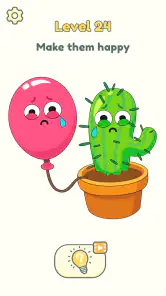
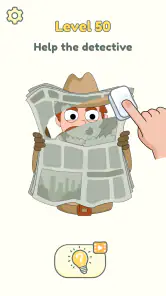
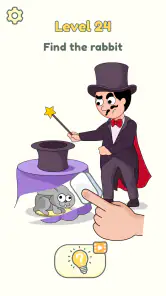
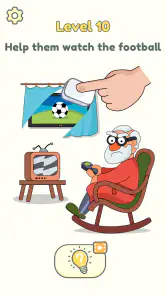
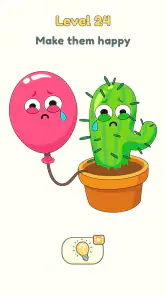
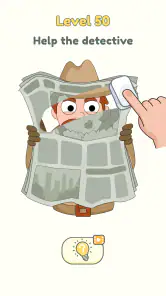
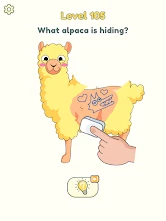
From the moment you launch DOP 2: Delete One Part, you’re greeted with a simple yet inviting interface. The game’s objective is straightforward: each level presents you with a picture and a challenge to delete one part of it to solve the puzzle. Sounds easy, right? Well, think again! The game cleverly tricks your mind with its misleading visuals and requires a keen eye for detail.
Gameplay and Mechanics
As you dive deeper into the game, you quickly realize that it’s not just about mindless swiping. Each level is a new challenge, and the puzzles get progressively trickier. The beauty of DOP 2 lies in its simplicity. You’re given a picture, and with a swipe of your finger, you can erase parts of it. The twist? Sometimes what you need to erase isn’t immediately obvious. This is where the game shines, pushing you to think creatively and sometimes take wild guesses to proceed.
What I love about this game is its ability to keep you engaged. Whether you’re on a short break or killing time during a commute, the game’s bite-sized puzzles are perfect for quick gameplay sessions. Moreover, the satisfaction of figuring out a particularly tough puzzle? Oh, it’s immensely rewarding!
More From Our News Desk

Clash of Clans Is Won Between the Battles

Android Auto Makes the Case for Quieter Car Software

MobiOffice: Transforming Mobile Productivity with Seamless Integration

EA SPORTS FC™ Mobile Soccer: Redefining Mobile Sports Gaming

How Microsoft OneDrive Became a Mobile Productivity Giant

How Google Translate Breaks Language Barriers Effortlessly
Making Each Short Session Count
For a practical routine, I’d play a few puzzles while waiting for a coffee or between errands, rather than opening it when I need to concentrate for a long stretch. The drawing itself is the clue: I look for the detail that changes the scene’s meaning, then erase a small area instead of sweeping broadly. That deliberate first attempt helps me test an idea without turning the level into random trial and error. When I’m stuck, I take a moment to inspect the whole picture again; staring at one suspicious object can make me miss how it relates to the rest.
This is also a useful choice for casual play alongside someone else. One person can describe what seems odd while the other suggests what to remove, which turns the visual puzzle into a quick conversation. I wouldn’t choose it as a serious two-player game, but it works as a low-pressure way to share a few riddles without needing a long session or a complicated setup.
Returning Without Making It a Chore
Its recurring value depends on whether picture-based riddles are the kind of small challenge I naturally enjoy, not on turning play into a daily obligation. I would keep it available for spare moments, but I would not set myself a target to clear levels on a schedule. That distinction matters: the game’s compact format is convenient precisely because I can leave after a short session, and forcing longer sessions can make the repeated erase-and-check rhythm feel more like a task.
A useful personal rule is to stop when I start making the same kind of guess repeatedly. I can close the game and come back with fresh eyes rather than spending the rest of a break tapping at the same picture. This is not a shortcut to a solution; it is a way to preserve the pleasure of noticing the clue. If I want a puzzle I can steadily practice and measure my improvement in, a game with more persistent systems may serve that purpose better.
Where the Novelty Can Wear Thin
The central mechanic is also the main limitation: every puzzle asks me to interpret an image and erase a part, so players who want varied controls or layered logic may feel they have seen the main idea early. A wrong guess can be frustrating when the intended visual trick is not the one I noticed first. I find that a brief pause is better than repeated rapid swipes; if I’m no longer enjoying the act of looking closely, it is a good time to stop rather than push through just to clear more levels.
Compared with number grids, word riddles, or puzzles built around moving pieces, this game puts more weight on visual interpretation and a single gesture. That makes it easier to pick up than many traditional logic games, but it offers less room for planning several moves ahead. I’d recommend it to people who enjoy spotting details and playful picture-based problems. If your favorite puzzles are demanding, rule-heavy challenges, another game in the genre will probably hold your attention longer.
Visuals and Design
Visually, the game is a treat. The graphics are clean and colorful, making each level pleasing to the eye. The animations, when you erase the correct part of the image, are smooth and satisfying, adding to the overall enjoyment of the game. Plus, the game’s sound effects are gentle and not intrusive, complementing the gameplay without being overwhelming.
That uncluttered presentation matters over repeated visits: the picture stays at the center of the task, so I can focus on the visual clue instead of learning a busy interface. I also like that the gentle sound design doesn’t demand attention, which suits a quick break in a shared or quiet place. Still, the bright, simple look is part of the game’s casual style, not a reason to expect the visual variety or atmosphere of a larger adventure.
Practical Fit and Purchase Expectations
One question I would ask before installing a casual game is whether it is free to try and whether optional spending is part of the experience. This puzzle is free, with in-app purchases priced at $1.99 per item. I would approach it as a no-cost starting point, pay attention to any purchase prompts, and decide for myself whether an optional item is worth buying rather than treating spending as necessary to enjoy the basic idea.
Compatibility is another practical consideration: the current version is 1.3.8 and requires Android 8.0 or later. The age rating is Teen, so I would not assume the game is automatically suitable for every child just because its simple drawing mechanic looks approachable. For parents choosing a game, that rating deserves more weight than the casual presentation; for adults looking for a quick visual puzzle, it is a straightforward detail to check before downloading.
Who It Suits, and What to Expect
SayGames Ltd made this free puzzle game for a broad casual audience, though its Teen age rating is worth keeping in mind when choosing something for a younger player. It has a 4.5 average from around 722,000 ratings and more than 100 million installs, so it has clearly found a large audience. The game was released on December 10, 2020, and version 1.3.8 is the current release; it requires Android 8.0 or later. In-app purchases are available at $1.99 per item, so I’d treat it as free to start and check purchase prompts rather than assume every optional item is included.
For someone deciding whether to keep it installed, the useful question is not whether it can fill an entire evening, but whether its particular kind of five-minute puzzle is welcome in the week. I would keep it around if I enjoy returning to picture riddles during small gaps. I’d skip it if I’m trying to avoid impulse taps, if I want puzzles with a wider range of mechanics, or if I prefer a game with a clear long-term progression goal.
Why You Should Try It
If you enjoy games that challenge your brain without being too demanding, DOP 2: Delete One Part is definitely worth a download. It’s one of those games that’s easy to pick up but hard to put down. Not to mention, it’s free to play, so there’s really nothing to lose. And if you’re like me, who loves a good puzzle that gets the gears in your head moving, this game will not disappoint!
In conclusion, DOP 2 offers a delightful blend of challenge and entertainment. It’s perfect for all ages, providing a fun way to pass the time while giving your brain a little workout. So why not give it a try and see if you can delete your way to victory?
Long-Term Verdict
My recommendation is deliberately modest: I would keep it installed if I like visual riddles and often have short stretches of idle time, but I would not count on it as my main puzzle game. Its strongest lasting quality is convenience—the central action is easy to understand, and a single picture gives me a contained problem to think about. Its weakest point is the same narrow focus, which can make the experience feel familiar once the surprise of the mechanic fades.
That makes the choice fairly clear. Pick it when you want a light, stop-and-start puzzle that rewards noticing details; choose a word, number, or multi-step logic game when you want more variety, deeper planning, or a stronger sense of long-term progression. For me, it earns a place as an occasional break rather than a permanent daily habit, and that is a perfectly worthwhile role for a free casual game.
DOP 2: Delete One Part Frequently Asked Questions
Can I play DOP 2: Delete One Part offline?
DOP 2: Delete One Part is built around self-contained drawing puzzles: you inspect a scene and erase a part to uncover the solution. That makes its core activity feel suited to quick, casual play, whether you have a few minutes or want to work through several puzzles. If you expect to play without an internet connection, check the game’s behavior on your device before relying on offline access.
What kind of gameplay and controls should I expect?
The central interaction is straightforward: look closely at an illustrated scene and use touch to erase the part you think is hiding the answer. There is no complicated control scheme to learn, but the challenge comes from interpreting each picture rather than simply tapping at random. The erase-and-reveal idea gives the puzzles a playful, visual feel, making the game approachable while still asking you to think creatively.
Is DOP 2: Delete One Part free to download, and does it offer purchases?
DOP 2: Delete One Part is free to download and play, but it also includes in-app purchases, priced at $1.99 per item. The game’s simple erase-to-solve format makes it easy to try without an upfront cost, while purchases are an optional part of the experience. Consider your preferences for spending in games before downloading, especially if children will be playing.
What is the main objective of DOP 2: Delete One Part?
DOP 2: Delete One Part is a puzzle game where the main objective is to solve challenges by deleting specific parts of the drawings. Each level presents a unique scenario where players must figure out which part to erase in order to reveal the hidden solution. The game tests your logic and creativity, offering a fun and engaging way to improve problem-solving skills.
Is DOP 2: Delete One Part suitable for all ages?
DOP 2: Delete One Part is marked Teen, so it may not be suitable for every age group. Its intuitive mechanics and illustrated puzzles are approachable, but parents and caregivers should consider that age guidance before letting younger children play. The game’s straightforward premise is easy to understand, while solving each scene can still give older players a light mental challenge.
Pros
- Engaging puzzle mechanics
- Intuitive controls
- Variety of levels
- Creative challenges
- Regular updates
Cons
- Ads can be intrusive
- Some puzzles feel repetitive
- Occasional bugs
- Limited replay value
- In-app purchases can be pricey
- Category
- Puzzle
- Version
- 1.3.8