Drive Mad: Physics Racing
- 833.00
- 4.7
- Installs
- 10.00M
- Price
- Free

Screenshots





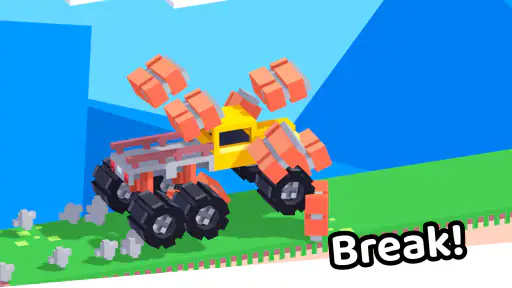
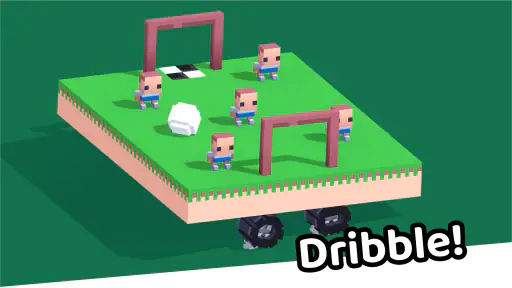

Analysis by Reviewed
I can see the appeal of Drive Mad within a few minutes: it turns a racing game into a test of patience, timing, and small corrections. Instead of chasing a familiar lap around a track, I’m trying to get a car across awkward, uneven routes without flipping it over. That makes each attempt feel closer to solving a quick physical puzzle than competing in a conventional race.
That unusual focus is also the game’s main question for me: does the surprise last beyond the first handful of challenges? My answer is that it can, especially if you enjoy short bursts of trial and error. It is less convincing as a permanent go-to for players who want deep vehicle tuning, realistic driving, or a strong sense of progression. The fun comes from handling each obstacle, not from building a racing career.
Why the first attempts are so compelling
More balance than speed
Although it sits in the racing category, speed is not the only thing I’m thinking about. The road itself is the opponent: a slope, gap, or abrupt change in height can turn a confident run into a tumble. I have to judge how much momentum to carry and when to ease off. That shift from “go faster” to “stay controlled” gives the game its own identity among mobile racers.
The basic idea is easy to understand, which makes it approachable for a quick play session. The challenge comes from execution. A route that looks simple can demand a surprisingly careful approach, and repeating a section often teaches me something concrete: a gentler input, a better launch, or a little more patience before the next obstacle. When a retry immediately feels more informed than the last one, the game is at its best.
That learning loop suits short breaks. I can open it while waiting for food or during a quiet moment, try a few runs, and put it down without needing to remember a complex plot or manage a lengthy race. It also works well when I want a small challenge rather than a long session. The compact premise is easy to return to because the next attempt is understandable even if I have not played for a while.
Useful habits for tricky runs
My most practical tip is to treat a failed attempt as feedback rather than immediately repeating it at full speed. If the car tips at the same point, I change one part of my approach at a time. I might slow down before a rise, or carry a little more momentum into a gap. Changing several things at once makes it harder to tell what helped, while one deliberate adjustment gives the retry a purpose.
Another useful habit is to look at the shape of the route before committing. The instinct to accelerate through every section is often the wrong one here. A brief pause to notice where the ground changes can be more valuable than trying to recover once the car is already unstable. That is a small but meaningful distinction from many arcade racers, where maintaining speed is usually the obvious objective.
I also find it helps to set a stopping point. If I am repeating the same obstacle without changing my technique, the session has stopped being a satisfying puzzle and become a grind. Taking a break can make the next attempt feel fresh, and it prevents a game designed for quick retries from turning a spare moment into an unexpectedly frustrating stretch.
What keeps it worth opening later
Novelty can turn into a small routine
The long-term value depends on whether I enjoy the act of figuring out the route itself. This is not the kind of racing game I would keep returning to for a garage full of upgrades or a deep competition structure. Its recurring pleasure is more immediate: face a physical problem, try a solution, and refine it after a mistake. For players who like that rhythm, the short-session format can remain handy well after the first novelty fades.
In an everyday scenario, I would reach for it while waiting for a train or taking a brief break between tasks. I would not start a session expecting to settle in for a major event; I would play until I have cleared a tricky stretch or until I notice my retries becoming careless. That distinction matters. The game fits spare pockets of time better than it fits a planned evening of serious racing.
Compared with familiar mobile racers built around laps, overtaking, and a sense of speed, this one asks for more control and less competitive focus. That makes it a good change of pace if standard track racing feels repetitive. On the other hand, if I want to compare times, race opponents, or steadily improve a vehicle, I would choose a game centered on those activities instead. Drive Mad’s appeal is the obstacle, not the broader racing package.
There is also a natural limit to how much variety this premise can provide for an individual player. Once I understand the kind of careful driving a challenge demands, repeated failures can feel less amusing and more like friction. The design is strongest when a new obstacle makes me rethink my approach; it is weaker when I am simply retrying without a clear sense of progress. That is why I see it as a satisfying occasional game rather than an automatic daily habit for everyone.
Low upkeep, with a few practical caveats
There is little to maintain in the usual management sense: I am not being asked to organize a team or keep track of a complicated racing schedule. That simplicity is a genuine advantage. I can return after a gap and focus on the driving challenge instead of catching up on systems. For someone who wants an uncomplicated game to dip into, that low mental overhead helps it earn a place on a phone.
Still, a simple game is not automatically a friction-free one. The central loop relies on repeated attempts, so impatience is the main maintenance burden. If I play when I am distracted, I am more likely to rush, fail, and blame the game rather than make a useful adjustment. It rewards a little attention, even though it does not demand a long session. Players who dislike retry-based challenges may find that small demand tiresome.
The game is free to download, while optional in-app purchases range from $0.99 to $22.99 per item. I would approach those purchases as optional rather than assume they are necessary to enjoy the basic idea. If I am unsure whether the repeated obstacle-solving suits me, I would try the free experience first and decide based on how often I genuinely want to return. Spending makes little sense if the core loop is already wearing thin.
For offline play, the store summary explicitly presents the game as playable without an internet connection. That is useful for travel, waiting rooms, or places where a connection is unreliable. I would still check that the game opens and behaves as expected before relying on it for a long trip, rather than discovering a problem when there is no alternative entertainment. The offline angle makes the short-session use case more practical, but it does not change the retry-heavy nature of the driving.
Who is likely to tire of it
The main source of fatigue is repetition. A difficult obstacle can be rewarding when each attempt teaches me something, but repeated resets are less appealing if I want a constant sense of forward motion. I would skip it if my preferred racing games are about realistic handling, long events, multiplayer competition, or detailed car customization. Those expectations point toward a different kind of game, and this one should not be judged by how well it imitates them.
I would also be cautious about recommending it to someone who gets annoyed by imprecise-looking outcomes. The appeal depends on reading movement and adjusting inputs, and a failed crossing can feel abrupt when I expected a clean run. For me, that is tolerable when I can identify what went wrong. If I cannot, the same challenge quickly becomes irritation rather than a satisfying lesson.
On the positive side, the audience is broad: its content rating is Everyone, and its simple premise is easy to explain to a friend. WebVentures B.V. is the developer, and the game has a 4.7 average from around 84,000 ratings, with over 10 million installs. Those figures suggest that its compact, challenge-first approach has found a substantial audience, though they do not guarantee that every player will enjoy the repetition.
My verdict after looking beyond the first week
Drive Mad: Physics Racing earns lasting space when I treat it as a quick skill challenge, not as a complete racing hobby. Its first-week appeal is immediate: unusual routes, easy-to-grasp goals, and the urge to take one more run after a near miss. Its month-to-month value is more personal. If I enjoy learning through small corrections, I can keep returning; if I need new systems and long-term progression, the premise may run out of steam.
The current version is 2.3.2, it is free, and it runs on Android 7.0 or later. For me, the sensible recommendation is to try it when I want a lightweight offline game and judge it by whether the retries feel like puzzles or chores. I would keep it around for waiting time and short breaks, but not make it my main choice for racing. That is a useful niche, and the game does its best work when I let it stay one.
Drive Mad: Physics Racing Frequently Asked Questions
What is Drive Mad: Physics Racing?
Drive Mad: Physics Racing is a vehicle-based driving game built around short obstacle courses and physics-driven challenges. Rather than focusing on realistic racing or long tracks, it asks you to steer, accelerate, and control your vehicle across uneven terrain, ramps, gaps, and other hazards. The main aim is to reach the finish without flipping over or crashing, making careful movement as important as speed.
How do you play Drive Mad: Physics Racing?
The basic gameplay is easy to understand: use the on-screen controls to move your vehicle and try to cross each course safely. The challenge comes from judging when to accelerate, slow down, or adjust your movement so the vehicle can handle jumps and rough surfaces without tipping over. Levels are generally designed for quick attempts, so expect to retry sections while learning how each obstacle affects your vehicle.
Is Drive Mad: Physics Racing suitable for children?
The game’s straightforward controls and cartoon-style vehicle challenges may appeal to younger players, and its main focus is navigating courses rather than realistic combat or complex simulation. However, the difficulty can increase as obstacles become less forgiving, which may frustrate some players. Parents should also check the store listing and the version available in their region for current age guidance, advertising, and any in-app purchase information.
Can I play Drive Mad: Physics Racing offline?
Offline availability can depend on which edition of Drive Mad: Physics Racing you download, since games with similar names may be offered by different publishers or through different platforms. Check the app’s official store description for its current internet requirements before installing. If offline play matters to you, it is sensible to test the game without a connection after installation, as updates, ads, or other features may still require internet access.
Is Drive Mad: Physics Racing free to download, and what should I check before installing it?
The price and monetization details may vary between the Android and iOS versions, so review the listing for your device before downloading. Check whether the game includes advertisements, optional purchases, or other payment features, and confirm that your device meets its requirements. Downloading from the official Google Play Store or Apple App Store also helps ensure you get the intended version and can receive available updates.
Articles Related to Drive Mad: Physics Racing
Clash of Clans Is Won Between the Battles
Its raids are quick; its community is a long-term project of coordination, teaching, rivalry, and shared responsibility—with all the friction that entails.
Android Auto Makes the Case for Quieter Car Software
The car interface is no longer judged by how much it can do, but by how quietly it helps. Android Auto shows what drivers now expect—and what still gets in the way.
MobiOffice: Transforming Mobile Productivity with Seamless Integration
MobiOffice: Word, Sheets, PDF is redefining mobile productivity with a surprising blend of functionality and innovation.
EA SPORTS FC™ Mobile Soccer: Redefining Mobile Sports Gaming
Dive into EA SPORTS FC™ Mobile Soccer, where immersive gameplay and strategic depth transform mobile sports gaming.
Pros
- Quick restarts make it easy to retry a difficult level.
- Short stages suit brief gaming sessions.
- Vehicle handling feels responsive to taps and holds.
- Varied obstacles keep the driving challenges from feeling repetitive.
- Simple controls are easy for new players to understand.
Cons
- Physics can feel unpredictable
- especially on narrow obstacles.
- Some levels rely on trial and error to find the right approach.
- Frequent crashes may frustrate players who prefer steady progress.
- The minimal presentation offers limited visual variety.
- Ads may interrupt play
- depending on the version and platform.

- Category
- Racing
- Version
- 2.3.2