Bubble Pop! Cannon Shooter
- 3.60K
- 4.7
- Installs
- 10.00M
- Price
- Free

Screenshots
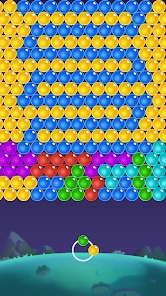

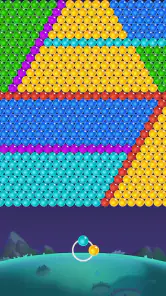
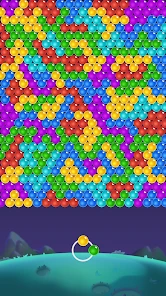
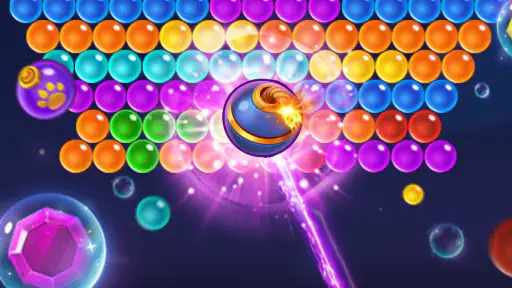

Analysis by Reviewed
I usually reach for a simple puzzle game when I have a few spare minutes and don’t want to commit to a long session. Bubble Pop! Cannon Shooter is built for that sort of break: you aim a cannon, choose a shot, and try to clear bubbles. Its appeal is easy to understand, but the more interesting question is whether that familiar loop stays satisfying once the opening novelty wears off.
Where it fits in the puzzle-game lineup
This is a free bubble-shooter puzzle game from Infinite Joy Ltd., with an Everyone age rating. I’d put it in the same broad corner of mobile gaming as other aim-and-match shooters: more deliberate than a fast reflex game, but lighter than a logic puzzle that asks you to study a board for several minutes. The basic action is clear quickly, which makes it a practical choice for a short break or a casual evening session.
That simplicity is also a useful filter. If you enjoy judging angles and planning a shot or two ahead, the format gives you something to think about without asking you to learn a complicated rule set. If you want a story, a deep character system, or a puzzle experience built around entirely new mechanics, this probably isn’t the right fit. I’d choose a different kind of puzzle game when I’m looking for variety beyond aiming and clearing bubbles.
Small decisions make the shots matter
The useful skill here is not simply firing as quickly as possible. I get more out of treating each shot as a choice: look for a route that can reach a useful cluster, and consider whether clearing one area will leave a better angle for the next turn. That approach makes the cannon feel like part of the puzzle rather than just a way to tap away at the screen. When a level gets awkward, I find it helps to pause briefly and assess the board instead of spending shots in a hurry.
Power-ups can change how I approach a difficult stretch, but I wouldn’t treat them as a substitute for aiming. Saving a helpful boost for a genuinely troublesome moment can be more satisfying than using it just because it is available. The trade-off is that a power-up may make a tough board easier without teaching me the shot that would have solved it. Players who enjoy working out a route themselves may prefer to hold off until they’ve tried a careful attempt.
A sensible fit for everyday play
For example, if I’m waiting for a bus and have only a few minutes, I can open the game, focus on a level, and stop when I need to go. That makes it easier to fit around the day than a game that depends on a long uninterrupted run. At home, it also works as a low-pressure alternative to scrolling when I want a small challenge but don’t have the energy for a more demanding game.
The main limitation is the narrowness of the central loop. Aiming and popping bubbles is the point, so players who tire of that rhythm may find that the puzzle framing alone doesn’t provide enough change. The leaderboard can add a competitive reason to keep playing, but it matters most if comparing progress motivates you; it won’t replace new kinds of gameplay for someone who prefers fresh systems over score chasing.
More From Our News Desk

Clash of Clans Is Won Between the Battles

Android Auto Makes the Case for Quieter Car Software

MobiOffice: Transforming Mobile Productivity with Seamless Integration

EA SPORTS FC™ Mobile Soccer: Redefining Mobile Sports Gaming

How Microsoft OneDrive Became a Mobile Productivity Giant

How Google Translate Breaks Language Barriers Effortlessly
It has attracted a sizeable audience, with over 10 million installs and an average rating of 4.7 from around 65,000 ratings. Those figures suggest that the straightforward format has broad appeal, though they don’t tell me whether it will suit a player who wants a deep or highly varied puzzle game. I’d treat them as context, not a guarantee that every level or session will land equally well for me.
How it plays and what to expect
Hey there, fellow gaming enthusiast! Have you ever found yourself stuck in a waiting room or on a long commute, searching for something fun to pass the time? Well, let me introduce you to Bubble Pop! Cannon Shooter – the game that’s been making my idle moments a whole lot more exciting. If you’re a fan of casual games that don’t require a ton of commitment but offer loads of fun, this one might just be your new favorite.
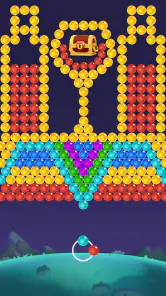
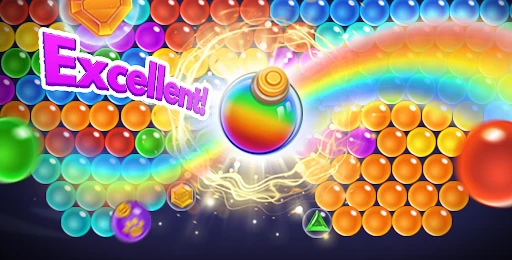
Right from the get-go, the game reels you in with its vibrant colors and simple mechanics. The premise is pretty straightforward – you aim, shoot, and pop bubbles. But trust me, it’s not as easy as it sounds! The game challenges you to strategically aim your cannon to burst as many bubbles as possible, and as you progress, the levels get trickier and trickier. It’s like solving a puzzle, where each level is a new challenge to conquer.
Graphics and sound
First off, let’s talk graphics. The developers have done a fantastic job at creating a visually appealing environment without overwhelming the senses. The colors are bright and cheerful, which is exactly what you want in a game that’s meant to lighten up your mood. The sound effects are on point too – they’re not too intrusive but add just the right amount of excitement to keep you engaged. Every pop is satisfying, and the background music is soothing enough to keep you in the zone without getting annoying.
Gameplay and features
The gameplay is where the game truly shines. It’s easy to pick up, but mastering it is a whole different ball game. The game offers a variety of levels, each with its own unique challenges and obstacles. As you advance, you’ll encounter special bubbles that can either help or hinder your progress, adding an extra layer of strategy. There’s also a nifty leaderboard feature where you can compete with friends or other players around the world. Nothing like a little friendly competition to keep the adrenaline pumping!
And let’s not forget the power-ups. Oh, the power-ups! They can be real game-changers, allowing you to clear large sections of bubbles with a single shot or slow down time to plan your next move. These little boosts add an exciting twist to the game, making every level feel fresh and full of possibilities.
Version, cost, and the longer view
The game first appeared on April 28, 2021, and its current version is 3.7.0. That gives existing players a simple point of reference when checking which build they’re using; I wouldn’t read a version number on its own as proof of a particular change to the levels or features. For someone deciding whether to start now, the important practical point is that the core appeal remains the cannon-and-bubble puzzle, rather than a promise of a different style of game.
It is free to download, with optional in-app purchases ranging from $0.99 to $99.99 per item. That range is worth knowing before handing the phone to a child or letting a casual session turn into a purchase decision. I’d start by playing without spending and see whether the regular aiming challenge is enjoyable on its own. If you prefer games with no optional purchases at all, this may not be your ideal choice; if you’re comfortable ignoring them, the free entry point makes it easy to try.
For device compatibility, the listed minimum is Android 6.0. The game is rated for Everyone, which suits its approachable puzzle premise, though I’d still use the usual device purchase controls if children play. It has 3.6K written reviews alongside its ratings, but I’d look for comments that match my own priorities—such as session length or how much I enjoy repeating a core mechanic—rather than relying on broad praise alone.
Who should give it a try?
I’d recommend it to people who like a clear objective, short sessions, and the small satisfaction of finding a better angle. It can also suit someone who wants a casual game to share the phone with a friend or family member, since the basic action is easy to explain. On the other hand, players who dislike aiming puzzles, want every session to introduce a new mechanic, or are strongly opposed to games with optional purchases should look elsewhere.
One helpful habit is to use a failed attempt as information: notice which shot opened a useful route and which one left the board harder to manage. That turns a retry into a small adjustment rather than a blind repeat. I also wouldn’t judge the game solely by a leaderboard position; for me, the more satisfying measure is whether I can solve a board with fewer wasted shots. Competitive players may enjoy the rankings, while puzzle-first players can simply use them as an extra reason to return.
Making each short session count
A useful way to approach a level when time is tight is to decide what you want from that attempt before firing: are you trying to clear a troublesome cluster, create a cleaner route, or simply see how far you can get? That modest goal makes it easier to stop after one or two tries without feeling that a session was wasted. It also helps me notice whether I’m making progress through better aim or just relying on a lucky opening.
When I have a longer pause, I’m more willing to experiment. I can test a less obvious angle, observe how it changes the board, and carry that lesson into a retry. This is one of the game’s quiet strengths: the same simple control can reward different levels of attention. But it is still a focused bubble shooter, not a collection of unrelated puzzles, so the extra satisfaction comes from refining decisions within the same basic format.
Choosing it over other puzzle styles
Compared with a match-three game, this asks me to think more about trajectory and where a shot can reach than about swapping pieces to make a pattern. Compared with a pure logic puzzle, it feels more immediate and forgiving of casual attention, while still giving me a reason to consider the next move. That makes it a good middle ground when I want to engage my brain without settling in for a long, tightly structured challenge.
The trade-off is that players looking for a steady stream of radically different tasks may prefer a puzzle collection or a game whose rules change more dramatically. Here, variety comes through different boards, obstacles, special bubbles, and the choices those layouts create. I find that enough when I’m in the mood for aiming, but it won’t satisfy everyone who uses “puzzle game” to mean a fresh mechanic every few levels.
What to keep in mind as you progress
When a shot goes badly, I try to identify the decision that caused the trouble rather than immediately repeating the same sequence. Perhaps I aimed at the obvious cluster instead of preserving a route, or used a boost before the board really demanded it. This small review of the last attempt is more useful than treating every failure as bad luck, and it can make retries feel purposeful even when the underlying puzzle remains familiar.
There is also a balance between chasing progress and enjoying the act of solving. A leaderboard can make a result feel more meaningful if friendly competition is your thing, but I wouldn’t let it turn a relaxed game into a chore. If rankings are motivating, they offer a reason to return; if they aren’t, the board itself is enough to set a personal challenge, such as finding a cleaner solution or avoiding an unnecessary power-up.
My overall take
All in all, this is an enjoyable option when I want a straightforward bubble-shooting puzzle rather than a large game to sink hours into. Its cheerful presentation, accessible controls, and room for careful shot planning make it easy to recommend to casual players, while its focused loop is the main reason some people may move on. I’d keep expectations grounded: it is best when I’m in the mood for this particular kind of puzzle, not when I’m searching for a constantly changing set of challenges.
If you’re deciding whether to install it, I’d give it a try when you have a spare moment and see whether planning the shots feels rewarding to you. Just keep optional purchases in mind, and don’t expect a bubble shooter to become a different genre as you progress. For the right player, that focused design is exactly the point; for someone craving broader variety, another puzzle game will be a better match.
What I would watch for over time
For returning players, the version number is a practical way to tell which build is installed, but I’d judge the game’s ongoing appeal by what I actually notice during play: whether its boards continue to make me consider new routes, whether the power-ups still feel like a choice rather than a necessity, and whether I’m enjoying the challenge rather than merely repeating attempts. Those are more useful personal signals than assuming that a newer build automatically changes the experience.
If I were deciding whether to keep it on my phone, I’d ask a simple question after a few sessions: do I still enjoy lining up shots when I have a spare moment? If the answer is yes, the modest, repeatable format is doing its job. If I’m hoping for new modes, a campaign, or a broader variety of puzzle mechanics, I’d choose a different game instead of waiting for this one to turn into something it isn’t.
My recommendation is therefore fairly specific: try it if you like aiming-based puzzles and appreciate a game you can pick up without a long warm-up. Keep purchases under your control, use boosts selectively, and approach retries as a chance to adjust your plan. Bubble Pop! Cannon Shooter is at its best when a small, thoughtful shot is enough to make a short break feel satisfying.
Bubble Pop! Cannon Shooter Frequently Asked Questions
What kind of game is Bubble Pop! Cannon Shooter?
Bubble Pop! Cannon Shooter is a puzzle game built around shooting bubbles with a cannon. If you enjoy casual games that invite you to aim carefully and think about each move, its central idea may appeal to you. The store summary describes it as a bubble shooter for enjoying puzzle-game time, giving you a straightforward sense of its style before you download.
Who makes Bubble Pop! Cannon Shooter, and what age rating does it have?
Bubble Pop! Cannon Shooter is developed by Infinite Joy Ltd. Its content rating is Everyone, so it is intended for a broad audience, including children and adults. The simple puzzle-game premise makes it easy to understand, but parents may still want to consider the optional in-app purchases and set device purchase controls if children will be playing.
Is Bubble Pop! Cannon Shooter free to download, and does it include optional purchases?
Bubble Pop! Cannon Shooter is free to download, so you can try its bubble-shooting puzzles without paying upfront. Optional in-app purchases are available, with prices ranging from $0.99 to $99.99 per item. These purchases are not required to enjoy the basic game. If children use your device, consider setting purchase controls before handing it over.
What is Bubble Pop! Cannon Shooter and how does it work?
Bubble Pop! Cannon Shooter is an engaging puzzle game where players use a cannon to shoot and pop bubbles. The objective is to match three or more bubbles of the same color to clear them from the board. The game includes various levels with increasing difficulty, power-ups, and challenges to keep players entertained. It’s perfect for those who enjoy strategic thinking and quick reflexes.
Is Bubble Pop! Cannon Shooter available for both Android and iOS devices?
Yes, Bubble Pop! Cannon Shooter is available for download on both Android and iOS platforms. Players can find the app on the Google Play Store for Android devices and the Apple App Store for iOS devices. Make sure to check the system requirements to ensure compatibility with your device before downloading. The Android version requires Android 6.0 or later.
Pros
- Addictive gameplay keeps users engaged.
- Visually appealing graphics.
- Simple controls make it easy to play.
- Frequent updates with new levels.
- Supports multiplayer mode.
Cons
- Contains ads that can be intrusive.
- In-app purchases can be expensive.
- Requires internet connection.
- Limited free levels available.
- Can drain battery quickly.

- Category
- Puzzle
- Version
- 3.7.0