Bridge Race
- 24.10K
- 4.3
- Installs
- 100.00M
- Price
- Free

Screenshots
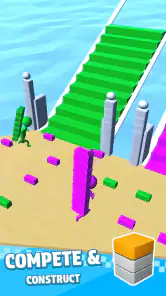

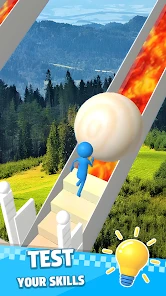
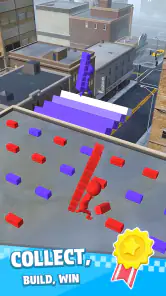
Analysis by Reviewed
I like casual games that explain themselves almost immediately, and Bridge Race has a clear hook: gather blocks, then use them to make a crossing before your rivals do. That simple goal gives each round a small burst of urgency without asking me to learn a long rulebook. It works best when I want a quick distraction, not a deep project to manage between sessions.
Why the idea clicks quickly
The appeal is easy to understand even if you have not played a racing game built around collecting. You can see what the blocks are for, watch the route take shape, and judge whether you are ready to move on. I do not need to memorize a set of abilities before the first attempt becomes enjoyable. The visual goal is right there on the course, which makes the game accessible when I have only a moment to spare.
That clarity also gives it a different feel from a typical casual puzzle. A puzzle asks me to stop and work out a solution; here, I make small decisions while moving. The pace is more immediate, and the satisfaction comes from seeing my actions change the path in front of me. If I want a quiet mental challenge, I would pick a puzzle instead. If I want something that feels active without demanding a long learning curve, this is the stronger fit.
The quick loop and its small decisions
Each race asks me to balance collecting blocks with getting onto the bridge. Gathering more of my color can feel safer, but spending time collecting also gives competitors a chance to get ahead. I found that the fun is less about complicated planning and more about judging when I have enough to move. That tiny trade-off makes the action feel active even though the controls and objective are easy to grasp.
One useful way to approach a round is to keep an eye on the route as well as the pile of blocks I am carrying. It is tempting to collect until the area looks cleared, but that can waste time when a direct push toward the crossing is the better choice. I would treat each attempt as a quick read of the race rather than follow one rigid strategy; the right moment to switch from gathering to building depends on what is happening around me.
A second practical habit is to resist treating the block pile as a score to maximize. More collected material can feel reassuring, but it is only useful if it helps me make progress on the crossing. I get more from watching the changing situation than from following a fixed route every time. That small adjustment makes the loop feel less automatic: I can gather briefly, check how the race is developing, then decide whether to commit.
Gameplay that Keeps You on Your Toes
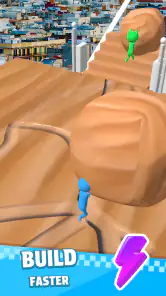
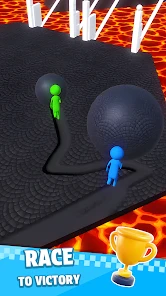
So, what's the deal with Bridge Race? At its core, the game is all about collecting blocks and building bridges. Sounds simple, right? But don't be fooled. The challenge lies in the race against other players, each trying to build their bridge faster than you. You start by picking up blocks of your color scattered across the path and then strategically placing them to create a bridge over water. The thrill of outsmarting your opponents while simultaneously trying to manage your resources is what makes this game a standout.
More From Our News Desk

Clash of Clans Is Won Between the Battles

Android Auto Makes the Case for Quieter Car Software

MobiOffice: Transforming Mobile Productivity with Seamless Integration

EA SPORTS FC™ Mobile Soccer: Redefining Mobile Sports Gaming

How Microsoft OneDrive Became a Mobile Productivity Giant

How Google Translate Breaks Language Barriers Effortlessly
Readable action without a complicated setup
Visually, the game is a treat. The vibrant colors and straightforward interface make for a seamless user experience. The developers have done a stellar job in maintaining an intuitive design that caters to both new players and seasoned gamers. The graphics are not overly complicated, which is a plus because it keeps the focus on the gameplay itself.
The clear color coding is more than decoration: it helps me identify what to collect at a glance, which matters when the race is moving quickly. If I am playing in a noisy place or only glancing at the screen between other tasks, that immediate visual readability is a genuine advantage. It is also why the game suits a short break better than a title that expects me to follow a story or remember several layers of menus.
There is a trade-off in keeping the presentation this direct. The clean look helps me understand what is happening, but it does not turn the game into a rich visual world to explore. I see the course and the immediate contest first, rather than a setting or story that invites me to linger. That is right for quick play, though anyone choosing a game for atmosphere, characters, or a long-form narrative should look elsewhere.
When a quick round fits—and when it does not
For an everyday use case, I can imagine opening it while waiting for a coffee or sitting through a brief commute delay, playing a round, then putting my phone away. The short-match format does not demand a big time commitment, though I would still avoid starting when I know I must stop at a precise second: a race is more enjoyable when I can finish it rather than abandon it midway. If interruptions are frequent, the sensible approach is to play when there is a little breathing room.
That distinction matters for people who play in very small gaps. A queue that may move at any moment is less suitable than a settled wait, because the game’s central pleasure comes from seeing a race through to its result. I would open it while waiting for a friend who is running late, for example, but not while crossing a busy station or trying to listen closely to a conversation. It is simple to pick up, yet the action still deserves enough attention to make the decisions feel worthwhile.
Compared with familiar casual alternatives such as endless runners or simple puzzle games, Bridge Race gets its tension from competing for materials and completing a route, rather than chasing a high score or solving a board. That makes it more immediately social in feel, even if what matters to me is the on-screen race itself. If I want a calm puzzle with deliberate moves, I would choose something else; if I want quick movement and a visible contest, this is a better fit.
Against an endless runner, the difference is that I am not simply trying to survive a stream of obstacles or beat my own distance. The bridge gives each race a visible task and makes collection purposeful. Against a puzzle, the difference is pace: I make decisions on the move instead of pausing over a board. Neither comparison makes this a universal winner. It is a good middle ground for someone who finds runners too reflex-focused and puzzles too still, but less appealing to anyone who wants either deep planning or uninterrupted action.
How the replay loop holds up
One of the coolest features is the variety of skins and customization options available. Earning these through gameplay adds an extra layer of motivation. Plus, the game regularly updates with new challenges and levels, keeping things fresh and exciting. It's one of those games where "just one more round" turns into hours of fun.
That replay pull is also the main caution. The core action stays centered on gathering blocks and building, so players who need a new mechanic or a deeper campaign every time may find the loop repetitive. I would enjoy it in short visits and let the quick wins be enough, rather than expect it to replace a longer game. A useful self-check is whether I still enjoy making the same gather-or-build decisions; if not, it is a good moment to close it and come back another day.
Cosmetic goals can give a session a little direction when I want one, but they are best treated as optional seasoning. I would choose a simple stopping point before I start—one completed race, for instance—rather than letting an unlock target decide how long I stay. That keeps the reward system from turning a light diversion into a chore. If I am not enjoying the race itself, a skin is unlikely to fix that for me.
Another factor that plays into its appeal is the quick match times. You can easily squeeze in a game or two during a short break, making it perfect for killing time without diving into long, drawn-out gameplay sessions.
Who will get the most from it
I think the best audience is someone who likes a clear objective, quick movement, and a little competition but does not want a demanding strategy game. It can also work for a player who often abandons lengthy mobile games because the next step is hard to remember: here, the collecting-and-building loop is straightforward enough to resume without studying a complicated plan. It is less suitable if you want every session to introduce a fresh system, or if you prefer games that can be left untouched at any second without losing the thread.
For a shared break, I would describe the appeal in one sentence: collect your color, then decide when to build. That makes it easy to offer to someone who has not played it before, without giving a long explanation. Still, the game’s competitive pressure may not be relaxing for everyone. If you prefer activities where there is no rival to outpace, a gentle puzzle or a slower-building game will probably be a better match.
Availability and who it suits
Made by Supersonic Studios LTD, this free casual game is rated Everyone and has earned a 4.3 average from around 2.1 million ratings, with over 100 million installs. It launched on February 13, 2021, and version 3.74 lists Android 6.0 as the minimum operating system. Optional in-app purchases range from $0.99 to $12.99 per item, so I would treat spending as a choice, not a requirement to try the basic game.
The free entry point makes it easy to see whether the core race suits me before deciding if I want to spend anything. I would approach purchases as optional extras rather than a shortcut to enjoyment: the central question is whether gathering and placing blocks feels satisfying on its own. The game is rated for Everyone, but that does not mean every player will like its pace. A younger or less experienced player may appreciate the simple visual goal, while someone who dislikes competitive pressure may still prefer a gentler activity.
I would recommend it to someone who likes short, colorful contests and enjoys a little tactical timing without a complicated setup. It is less suited to players looking for a quiet, interruption-proof activity, an elaborate story, or a steadily expanding set of mechanics. The large audience makes it a familiar pick in the casual space, but popularity alone is not a reason to keep playing if the central loop stops being satisfying.
One practical tip is to decide before a break whether I am playing for a quick round or aiming to unlock something; the latter can make “one more” stretch longer than intended. Skins are a light goal, but I would not chase every customization option if collecting starts to feel like a chore. The game is at its best when the race itself, not the reward afterward, is enough to make another attempt appealing.
Final Thoughts
If you're looking for a game that's easy to pick up but hard to put down, Bridge Race is definitely worth a try. It's a perfect mix of strategy, speed, and fun that will keep you entertained whether you're on a commute or just lounging at home. If you haven't yet, download it and see for yourself why it's capturing the hearts of mobile gamers everywhere. Trust me, you won't regret it!
A grounded verdict
My recommendation comes with a simple boundary: try it for the quick races, not because you expect a deep strategy game or endless variety. The balance of collecting and building gives a short session enough purpose, while the repeated loop means it is easy to set aside when the novelty fades. For a free pick-up-and-play option, that is a worthwhile trade-off. Just keep the session as short as the game’s best moments, and it is more likely to stay fun.
In practical terms, I would keep it as a small option for gaps in the day rather than make it my main mobile game. It suits the moment when I want a visible objective and a quick decision, but not the moment when I need calm, a story to follow, or a fresh challenge with every return. That is the honest reason I would recommend it to a friend: it knows how to make a short race feel purposeful, and it is easiest to enjoy when I let that be enough.
Bridge Race Frequently Asked Questions
Who developed Bridge Race, and how popular is it?
Bridge Race is a casual game developed by Supersonic Studios LTD. It has attracted a large audience, with over 100 million installs and an average rating of 4.3 from around 2.1 million ratings. That popularity makes it easy to see why the quick, colorful bridge-building concept appeals to many players, though whether the racing and collecting loop suits you will depend on your own preferences.
When was Bridge Race released, and what version is available?
Bridge Race was released on February 13, 2021, and its current version is 3.74. If you are deciding whether to download it, these details can help you identify the game and the version currently offered. The core idea remains focused on gathering bricks and building bridges to reach the winning stage, making it a straightforward casual option for short play sessions.
Is Bridge Race free to download, and what should I know about purchases?
Bridge Race is free to download and play, so you can try its bridge-building races without paying upfront. The game also offers optional in-app purchases, with items ranging from $0.99 to $12.99. These purchases are described as ways to get coins, customization options, or other features; consider your preferences before buying, particularly if children will be playing.
What is Bridge Race, and what is the basic gameplay like?
Bridge Race is a casual game from Supersonic Studios LTD, built around collecting colored bricks and racing to construct a path across platforms. Its premise is easy to understand, making it approachable for players looking for a quick game rather than a complicated simulation. The store summary captures the central idea: build bridges until you reach the winning stage.
What is the main objective of Bridge Race?
Bridge Race is a competitive multiplayer game where the primary goal is to collect bricks of your assigned color and use them to build a bridge to reach the next platform. As you progress through levels, the competition intensifies, and strategic collection and placement of bricks become crucial to winning each race.
Pros
- Engaging and challenging gameplay.
- Bright and colorful graphics.
- Smooth and responsive controls.
- Frequent updates with new content.
- Suitable for all age groups.
Cons
- Ads can be intrusive.
- In-app purchases are pricey.
- Levels may become repetitive.
- Requires internet connection.
- Battery drain can be significant.

- Category
- Casual
- Version
- 3.74