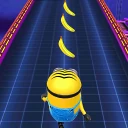
Tall Man Run
- 4.77K
- 4.1
- Installs
- 100.00M
- Price
- Free

Screenshots


Analysis by Reviewed
When I have only a few minutes to spare, I want a game that makes sense almost immediately and doesn’t demand a long setup. Tall Man Run aims squarely at that kind of break: steer a changing stick figure through obstacles, react to what’s ahead, and enjoy the quick satisfaction of a run going well. Its central twist gives the familiar runner format a visual goal you can understand at a glance, which makes it easy to try while waiting for a coffee or filling a short lull in the day.
Quick Decisions, Short Sessions, and a Shape-Shifting Runner
Imagine a game where you’re in charge of a stick figure who can grow tall and thin or short and wide, depending on the obstacles ahead. Sounds intriguing, right? That’s precisely the magic of Tall Man Run. It’s a game about navigating through various hurdles while collecting points to increase or decrease your height and width. The controls are super intuitive – a simple swipe left or right will have you dodging obstacles like a pro.
That changing shape is more than a visual gag: it gives each quick decision a clear consequence. I find it helps to look a little ahead instead of reacting only to the nearest obstacle, because a tempting pickup may leave your runner in a less convenient shape for what comes next. If you’re playing one-handed during a brief wait, keep your thumb movements deliberate; the appeal is in making small adjustments, not wrestling with a complicated control scheme.
That makes the game unusually easy to explain to someone who has never played it: move across the course, pay attention to the figure’s changing proportions, and choose a path that leaves room for the next obstacle. The trick is not simply to swipe whenever something appears. I get better results when I treat each change in height or width as a quick planning prompt, rather than as a reward I should collect automatically. It adds a modest layer of judgement to a format that otherwise asks for fast reactions.
For a first attempt, I’d concentrate on understanding how the route responds to the choices in front of me instead of trying to make a perfect run. That small adjustment in expectations matters. A simple runner can look as though it should be effortless, but the changing body shape means a careless choice can make the next moment harder. When I focus on learning the visual cues, a short run feels like a useful practice rather than a failed attempt.
Colorful presentation, without a crowded screen
The visuals are delightfully minimalistic with vibrant colors that pop, making the gameplay visually appealing without overwhelming your senses. The background music is catchy, adding to the excitement without being a distraction. You’ll find yourself bobbing your head to the beat as you maneuver through the game’s challenges.
The clean presentation also helps when I’m playing in a busy place: the main action is easy to follow without asking me to study a crowded screen. That makes the game a natural fit for a quick break, though it isn’t the best choice if you want a quiet, contemplative puzzle or a story to settle into. I treat the sound as part of the fun when I can listen, but the visual movement is what keeps the run readable.
More From Our News Desk

Weather by Xiaomi Review: Clear at a Glance, Less Clear Up Close

X Under Pressure: Can It Recover When Posting Goes Wrong?

Clash of Clans Is Won Between the Battles

Android Auto Makes the Case for Quieter Car Software

MobiOffice: Transforming Mobile Productivity with Seamless Integration

EA SPORTS FC™ Mobile Soccer: Redefining Mobile Sports Gaming
There’s a practical advantage to that clarity: I can glance back at the screen after looking away briefly and understand the immediate problem without decoding a complicated interface. That does not mean every interruption is harmless. If I look away at the wrong moment, I can still miss a useful opening or react too late. But the screen’s uncluttered look lowers the effort of getting oriented again, which is valuable for a game meant to fit into scattered moments.
If you play somewhere noisy or prefer to keep your phone quiet, the visual cues carry much of the experience. I wouldn’t choose the game for an audio-focused session, and I wouldn’t expect its presentation to provide the atmosphere of a detailed adventure. Its strengths are legibility and momentum: the shape-changing runner stays at the center of attention, and the bright style makes the action feel lively without turning it into a visual puzzle.
How the run rewards attention
The gameplay is where this app truly shines. The levels are cleverly designed to test your reflexes and decision-making skills. The variety of obstacles keeps you on your toes, and the thrill of collecting power-ups to help you grow taller or shorter adds an extra layer of strategy. Plus, the leaderboard feature is a fantastic way to engage in a little friendly competition with your pals, driving you to improve with each run.
That leaderboard angle gives a run a purpose beyond simply reaching the end: I can use a spare minute to chase a better result, then stop without needing to commit to a longer session. Still, the basic loop remains the main draw. If you usually prefer runners with extensive progression, a deep narrative, or a wide range of systems to master, this may feel light beside those alternatives. Tall Man Run is better understood as a compact reflex game than as a long-term project.
A practical way to play is to focus on the next safe route rather than trying to collect everything. Pickups can be tempting, but a clean path is often the more satisfying choice when an obstacle is close. That little trade-off gives the simple controls some thought without turning each attempt into homework. It also means the game works well for casual players who want a small challenge, while someone who dislikes quick reactions may find the pace frustrating.
One useful habit is to separate “a good run” from “a run where I collected the most.” The two goals can pull in different directions, especially when the next obstacle makes a pickup look risky. I find it more satisfying to choose a route I can read clearly than to chase every opportunity and then lose control of the shape I need. That is a small but meaningful choice: the game gives you room to be cautious, even while its pace encourages you to act quickly.
It also helps to use early attempts as a way to notice how the course is asking you to respond, rather than judging yourself only by the result. The changing silhouette is a useful visual reminder of what you have chosen, so I pay attention to whether a pickup makes the upcoming route easier or more awkward. This is not deep strategy, and that is the point. It gives quick play a little texture without demanding a guide, a long tutorial, or a plan to memorize.
Among casual runners, this sits closer to the instantly readable, reflex-led side than to games built around a growing collection of systems or a long campaign. Compared with a slow puzzle game, it offers more movement and immediate pressure, but less room to stop and think through a problem. Compared with a more involved runner, it is easier to dip into, yet may not provide the same sense of long-term variety. I’d choose it when I want a clear objective and quick decisions, not when I want to spend a whole evening exploring a deep progression system.
Who will enjoy it, and who may not
Now, I know what you’re thinking. “Do I really need another game on my phone?” Trust me, Tall Man Run is worth the download. It’s one of those games that’s easy to pick up but hard to put down. Whether you’re a casual gamer or someone who loves a good challenge, this game has something for everyone. And let’s be honest, who doesn’t love the satisfaction of seeing their name climb up the leaderboard?
It suits the everyday gaps that are too short for a lengthy game: I might start a run while waiting for a drink, put my phone away when it’s ready, and return later when another pause appears. The straightforward premise makes it easy to remember what I’m doing after an interruption. I wouldn’t choose it when I need a game that saves a complex plan or rewards a long uninterrupted sitting; its pleasure comes from quick reactions and an easy restart, not from elaborate preparation.
That kind of stop-and-start use is the strongest reason I’d recommend it to a friend who wants a casual game. You can open it without first recalling a plot, choosing a character build, or getting back into a complicated task. A short wait in a queue or a quiet moment before heading out is enough time to try a run. If the moment ends suddenly, the game’s basic idea is simple enough that returning later does not feel like picking up a conversation halfway through.
There are exceptions. I would skip it if my main priority were a game that can be played with almost no attention, because avoiding obstacles calls for active timing. I’d also look elsewhere if I wanted a relaxing activity with no pressure to react, or if I needed a substantial story to make repeated sessions feel different. This is a better fit for someone who likes small bursts of focus and does not mind repeating a familiar loop to improve their decisions.
For a realistic everyday example, I can picture opening it while waiting for a friend who is running late. I have enough time for a quick attempt, but I may need to stop as soon as they arrive. The straightforward objective makes that kind of casual use practical: I do not have to prepare for a session or remember a complicated sequence when I come back another day. The trade-off is that a brief session may end before I feel I have made much progress, so it is most satisfying when I treat the attempt itself as the entertainment.
Supersonic Studios LTD makes this free casual game, which is rated Everyone 10+ and has reached over 100 million installs. Its average rating is 4.1 from around 486,000 ratings, with roughly 4,800 written reviews. The current version is 1.80, and it runs on Android 6.0 or later. Optional in-app purchases range from $3.49 to $8.99 per item, so I’d treat it as a free game to try and decide for yourself whether anything beyond the basic experience is worth buying. Those purchases are a consideration for anyone who prefers games with no paid extras at all.
Since it is free to try, I’d give the basic play a chance before deciding whether any optional purchase has value for me. The existence of paid items is worth keeping in mind if you prefer to avoid in-app spending, especially when choosing a game for a younger player. The Everyone 10+ rating is also useful context for that decision. I would not treat a purchase as necessary to understand the central appeal: the part that makes the game distinctive is the quick read of obstacles and the figure’s changing shape.
Replay value depends on what you enjoy. I like the small challenge of improving my choices from one attempt to the next, but the same run-and-dodge rhythm can become repetitive if you expect every session to introduce a new kind of activity. Compared with slower casual games, it asks for more attention in the moment; compared with complex runners, it offers a lighter, more immediately readable loop. That middle ground is its strength and its limit.
For me, repetition is not automatically a problem here. The loop is short enough that repeating it can feel like a quick rematch with myself, especially when I know one decision could have been cleaner. It becomes less compelling when I am no longer interested in improving my timing or choosing a safer route. If the core pleasure for you is discovering new mechanics every time you play, this may run out of surprises sooner than a broader casual game would.
There is a useful way to decide whether it is holding your interest: notice whether you are restarting because you want to make a better choice, or simply because the previous run ended. If you find yourself adjusting how you approach the next obstacle, the repeated structure is doing its job. If every attempt feels interchangeable, it may be time to switch to a puzzle, a story-led game, or another casual option with a different kind of goal. The game’s focused design is appealing, but that focus also sets a natural limit on variety.
Overall, I see it as a small, easy-to-understand reflex game rather than an all-purpose mobile distraction. Its shape-changing idea gives ordinary dodging a more memorable hook, and the clear presentation helps it work in brief sessions. At the same time, the quick reactions and repeating structure are not for everyone. I’d recommend it to players who want a lively way to fill a few spare minutes, while pointing anyone after slower play or deeper progression toward a different kind of game.
In conclusion, Tall Man Run is a delightful mix of fun, challenge, and creativity. It brings a unique twist to the endless runner genre, and its charming simplicity is refreshing. So, if you’re ready to embark on a fun-filled adventure, give this game a shot. You might just find yourself hooked!
Tall Man Run Frequently Asked Questions
Can I play Tall Man Run offline?
Tall Man Run is built around quick obstacle-course runs, so it may appeal if you want a casual game to pick up for short sessions. Whether it works without an internet connection can depend on the game version and device setup. If offline play is important to you, check the game after installing it and before relying on it while traveling.
How much storage space does Tall Man Run need?
The space required for Tall Man Run can vary with the device and the version you install. Before downloading, check the amount of available storage shown on your device’s app store, and leave room for the game and any later updates. This is especially useful if your phone or tablet is already close to its storage limit.
Is Tall Man Run free to download, and what should I know about spending?
Tall Man Run is free to download and play, so you can try its obstacle-course gameplay without paying upfront. Optional in-app purchases are available, with items priced from $3.49 to $8.99. These purchases are not required to enjoy the game, but parents may want to review purchase settings before children play.
What kind of game is Tall Man Run, and who developed it?
Tall Man Run is a casual mobile game developed by Supersonic Studios LTD. Its central idea is summed up by the phrase “Run tall, run wide!”: guide a character through a course, collect growth power-ups, and avoid obstacles on the way to the finish. The straightforward premise makes it easy to understand before starting a run.
What is Tall Man Run?
Tall Man Run is an engaging mobile game where players guide a character through various obstacle courses. The main objective is to grow taller and larger by collecting power-ups while dodging obstacles to reach the finish line. With its simple yet addictive gameplay, it offers hours of entertainment for players of all ages.
Pros
- Engaging and addictive gameplay.
- Simple and intuitive controls.
- Visually appealing graphics.
- Challenging levels increase replay value.
- Free to download and play.
Cons
- Contains in-app purchases.
- Frequent ads can be disruptive.
- Limited character customization.
- Requires internet connection.
- Can be repetitive over time.
- Category
- Casual
- Version
- 1.80