Blossom Match - Puzzle Game
- 2.45K
- 4.9
- Installs
- 10.00M
- Price
- Free

Screenshots

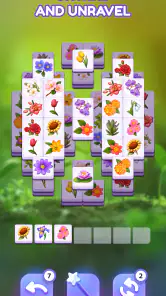

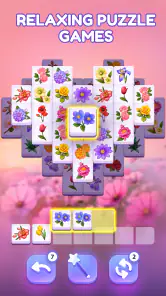
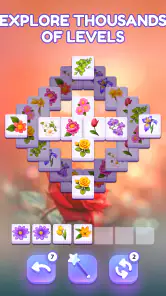
Analysis by Reviewed
I tend to judge a casual puzzle game by what it feels like in a short break, not by how many hours it can claim to fill. Blossom Match - Puzzle Game suits that kind of check-in: its flower-matching play is easy to grasp, while the changing boards give me a reason to pause and think rather than tap without looking. Tripledot Studios Limited makes this free game, and its Everyone age rating makes it approachable for a broad audience. The current version is 2.68.01, and it runs on Android 6.0 or later.
How the puzzle fits into everyday play
In practice, I’d reach for Blossom Match while waiting for a kettle to boil or during a quiet stretch between errands. A level gives that small, contained puzzle-solving focus that works well when I don’t want to commit to a long session. The main trade-off is that a quick game can turn into “one more level”; I’d set it aside before opening it if I needed to stay focused on something else.
Its audience response is strong: it has a 4.9 average from around 432,000 ratings, with more than 10 million installs. Those figures suggest broad appeal, but they don’t tell me whether every player will enjoy its pace. I’d especially recommend trying it if you like matching games with a gentle presentation and occasional decisions to weigh. If you want a demanding strategy game, a head-to-head contest, or a puzzle built around elaborate logic, a different style is likely a better fit.
Small windows of play, and who they suit
The best use case, in my view, is a break that has a natural endpoint: waiting for a ride, taking a breather after a chore, or settling down before bed when I want a little engagement without starting a sprawling story. I would not open it during a meeting, while crossing a busy street, or when I need to keep my attention on a timer. The appeal is calm, but matching still asks me to look at the board and choose; it is not a background activity.
For a realistic routine, I might play one board while lunch is heating, then stop when the food is ready instead of treating a streak or a run of levels as an obligation. That boundary matters because light puzzle games are good at making the next task feel close at hand. If I’m prone to losing track of time, deciding on a stopping point before I begin is more useful than relying on willpower after a satisfying clear.
The casual format also makes it easy to share the general idea with a younger family member, though I’d still keep age suitability separate from supervision and device rules. The Everyone rating signals a broad content classification, not a guarantee that every child will enjoy the challenge or that every household will want the same screen-time routine. For adults, it can be a pleasant low-stakes diversion; for someone looking for a deep campaign, a narrative payoff, or a serious competitive ladder, I’d point them elsewhere.
Progress without turning every session into a chore
As boards introduce obstacles, I find it helps to scan the whole layout before making the first match. That quick check can reveal which flower groups are useful to clear early and which moves might open room for later choices. When I get stuck, I’d treat a hint as a nudge rather than an automatic answer: first look for a move that changes the board in a meaningful way, then use help if I’m still spinning my wheels.
More From Our News Desk

Clash of Clans Is Won Between the Battles

Android Auto Makes the Case for Quieter Car Software

MobiOffice: Transforming Mobile Productivity with Seamless Integration

EA SPORTS FC™ Mobile Soccer: Redefining Mobile Sports Gaming

How Microsoft OneDrive Became a Mobile Productivity Giant

How Google Translate Breaks Language Barriers Effortlessly
A useful habit is to identify the board’s immediate constraint before looking for the prettiest or most obvious match. If a blocked area or a narrow opening is shaping the available choices, I’d prioritize moves that change that bottleneck, even if another match looks more satisfying in the moment. This is a small shift in approach, but it can make a puzzle feel less like random tapping and more like a sequence of deliberate decisions.
I also try not to judge a move only by what disappears. A match can be valuable because of the space or options it creates next, not just because it clears a group. When the board feels crowded, I’d pause after each move and read the new layout again rather than planning several steps ahead from a position that has already changed. That makes the game easier to approach in a short session, because I can make one considered choice at a time.
The reward loop can make progress feel satisfying, but coins and power-ups also create a practical question: when is it worth spending a limited resource? I’d save help for a board where I’ve considered the available matches and still can’t see a useful route, rather than using it simply because a level takes longer than expected. That approach keeps the puzzle itself at the center and makes each assist feel deliberate.
There is a trade-off in that restraint: saving every resource can make a difficult stretch feel slower, while spending freely can remove some of the satisfaction of working through a board myself. I’d choose a personal rule before a tricky level, such as using assistance only after a genuine scan and a second attempt. The point is not to preserve a perfect stockpile; it is to make sure a boost solves a real sticking point rather than becoming the first response to mild impatience.
I also wouldn’t assume that a tricky level means I need to spend money. The game is free to download, but that alone doesn’t establish what optional purchases are available or how they work. I’d check the purchase details shown on the device before buying anything, and decide whether an extra item would genuinely improve my play or just shorten a frustrating moment. The game’s 2.5K reviews offer a sizable pool of player feedback, but personal experience still matters more than a headline score when judging whether its rhythm suits you.
What payment and progress tell me—and what they don’t
The practical purchase context is simple: I can start without paying to download it. That is useful if I want to test whether flower matching and its pace suit me before making any commitment. A free download, though, is not the same as a promise that every optional item or route through the game is free. I’d read any on-screen purchase description carefully and avoid buying in the middle of a frustrating board, when impatience can make a small convenience seem more valuable than it is.
For a fair personal test, I’d play long enough to encounter the ordinary rhythm of boards, then ask whether I’m enjoying the decisions themselves or mainly chasing the next reward. If progress feels satisfying without extra spending, there is little reason to buy something just because it is offered. If an item is presented, I’d compare its cost and effect in the purchase flow on my own device rather than assume what it includes. I can’t give a reliable account of purchase options beyond that verified free-to-download starting point.
Progress pressure can come from more than payment. A board that takes several attempts may tempt me to treat finishing as a task I owe the game, even when I only opened it for a short pause. I’d rather stop and return later than let a casual puzzle dictate the length of my break. That approach is especially helpful if I’m playing near bedtime: a calm presentation does not automatically mean I’ll stop after one level.
What kind of match is it?
Compared with a basic match-three game that emphasizes rapid clears, Blossom Match’s appeal is the calm visual mood paired with boards that ask for a little planning. Compared with a pure logic puzzle, it is more immediately accessible and less suited to someone seeking a long, quiet problem with one exact solution. I’d choose it for a light reset, not as a substitute for a deep strategy challenge.
That comparison is about the kind of attention each format asks for. A fast arcade-style match game is a better fit when I want quick reactions and a brisk tempo; a traditional logic puzzle suits me when I want to work through a fixed problem at length. Here, the useful middle ground is short visual decisions with enough variation to make me look twice. If that middle ground sounds less appealing than either speed or deep deduction, the game’s gentle approach may feel too mild rather than relaxing.
It also differs from competitive puzzle play in what I would personally use it for. I see its value as a private challenge and a way to pass a spare moment, not as a place to prove skill against friends. That makes it easier to enjoy at my own pace, but it also means I would not choose it to satisfy a craving for rankings, direct matches, or a clear measure of who solved something better.
That distinction also matters for fairness. I can assess the visible puzzle choices and the free download, but I can’t responsibly claim that purchases affect competition or that the game has a particular competitive system. If you prefer games where skill is measured directly against other players, this may not satisfy that preference; if you simply want a personal matching puzzle, that concern is less central.
Where the unknowns matter
I don’t want to turn gaps in what I can verify into guesses. The free download is clear, but it does not by itself answer what optional purchases may appear, how they are priced, or what each one changes. I’d treat any purchase screen as the place to make that decision, checking the details before confirming and keeping the device’s purchase controls in mind if someone else uses it.
The same care applies to fairness. I can describe the matching decisions and the game’s suitability as a personal casual puzzle, but I have no basis for claiming that paid items make a player stronger in a contest, or even for describing a competitive mode. If your decision depends on those points, I’d verify them in the game before investing time or money. For someone who only wants a solo puzzle break, they may not be decisive; for a player who values equal conditions in head-to-head play, they should be.
Another practical question is whether its atmosphere and board style will hold my interest over time. A rating of 4.9 from around 432,000 ratings and more than 10 million installs show that many people have chosen to try it, but neither figure predicts my own tolerance for repeated matching. I’d use a few sessions as a test: if I still enjoy thinking through the boards after the novelty of the flowers wears off, it has earned a place in my casual rotation. If I’m only continuing because I expect the next reward, I’d move on.
A grounded recommendation
Have you ever found yourself with a few spare minutes and thought, "I wish I had something fun and relaxing to do"? If so, let me introduce you to Blossom Match - Puzzle Game. This app has become my go-to whenever I need a little mental escape. It's a delightful blend of strategy and relaxation, which is a rare gem in the puzzle game universe.
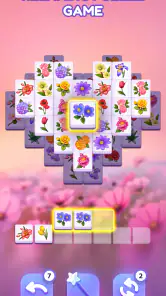
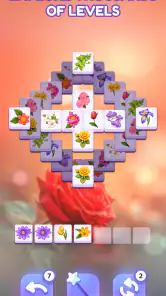
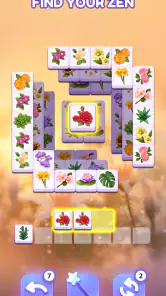
At its core, Blossom Match - Puzzle Game is all about connecting flowers. The premise is simple: match three or more flowers of the same type to make them bloom. The vibrant graphics and smooth animations make each match satisfying, almost like popping bubble wrap. And let's be honest, who doesn't love that?
But don't let the simplicity fool you. As you advance through the levels, the game introduces new challenges and obstacles that require a bit of brainpower. You'll encounter different types of blooms, each with its own unique characteristics, making every level a new adventure. And just when you think you've mastered it, the game throws in a surprise element to keep you on your toes.
Why Blossom Match Stands Out
One of the standout features of this game is its stunning visual design. The colorful flowers and serene backgrounds create a calming effect, making it perfect for unwinding after a long day. The developers have clearly put a lot of effort into making the game aesthetically pleasing, and it pays off.
Another aspect worth mentioning is the game's soundtrack. It’s soothing and complements the gameplay perfectly. There's something incredibly relaxing about hearing a gentle melody as you strategize your next move. It's like having your own personal zen garden right in your pocket.
The game is also quite generous with its rewards. Completing levels earns you coins and power-ups, which are essential for tackling the more difficult stages. And if you're ever stuck, the game offers hints to help you out. It's these little touches that make Blossom Match - Puzzle Game not just a game, but an experience.
Final Thoughts
So, if you're looking for a puzzle game that offers more than just mindless tapping, give Blossom Match a try. It's a game that challenges your brain while also soothing your senses. Plus, it's free to download, so there's really nothing to lose!
In a world full of fast-paced games that often demand too much of our attention, Blossom Match is a breath of fresh air. Whether you're a seasoned puzzle enthusiast or just looking for something new to try, this game is sure to become a favorite. So go ahead, download it, and let your worries blossom away!
Blossom Match - Puzzle Game Frequently Asked Questions
Can I play Blossom Match - Puzzle Game in short sessions?
Yes. Blossom Match - Puzzle Game is a casual puzzle game designed around tile-matching challenges, making it a natural fit for a quick break or a more relaxed stretch of play. Its focus on matching flowers gives each session a clear, approachable activity, while the brain-game element offers something to think through as you play.
What kind of puzzles and gameplay should I expect?
The game centers on matching tiles, with a floral theme and puzzles intended to provide a relaxing challenge. The store summary describes it as a way to unwind with tile-matching puzzles and brain games. If you enjoy spotting matches and thinking through a puzzle rather than playing an action-focused game, that style is likely to suit you.
Is Blossom Match - Puzzle Game available for my device?
Blossom Match - Puzzle Game supports Android devices running Android 6.0 or later. Before downloading, check that your device meets this minimum operating-system requirement. The game is a casual title, so its straightforward puzzle format may appeal to players looking for an accessible game on a compatible phone or tablet.
How does Blossom Match - Puzzle Game look and feel while playing?
Blossom Match - Puzzle Game is a casual game with a floral theme, built around tile-matching puzzles and brain games. Its central appeal is the opportunity to unwind while working through matching challenges. If you enjoy calm, approachable puzzle games, its focus on flowers and simple matching makes the premise easy to understand before you start.
Who developed Blossom Match - Puzzle Game, and how popular is it?
Blossom Match - Puzzle Game is developed by Tripledot Studios Limited. It has an average rating of 4.9 from around 432,000 ratings, with about 2,500 written reviews and more than 10 million installs. Those figures suggest that many people have tried it, though your enjoyment will depend on whether you like relaxed tile-matching puzzles.
Pros
- Engaging puzzles with increasing difficulty.
- Colorful graphics enhance user experience.
- Frequent updates with new levels.
- No intrusive ads during gameplay.
- Smooth performance on most devices.
Cons
- Limited lives can slow down gameplay.
- In-app purchases can be pricey.
- Requires internet connection to play.
- Some levels feel repetitive.
- Long waiting times for extra lives.

- Category
- Casual
- Version
- 2.68.01