Annoying Uncle Punch Game
- 521.00
- 4.5
- Installs
- 10.00M
- Price
- Free

Screenshots
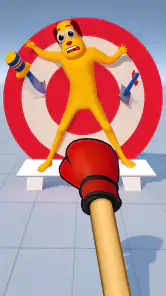
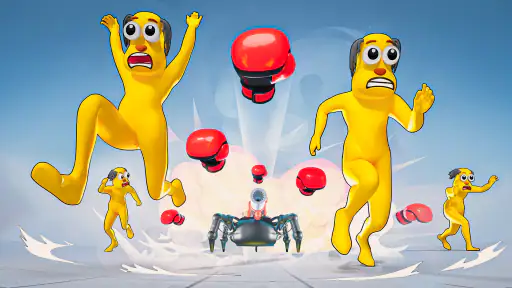
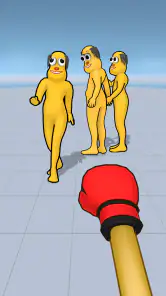
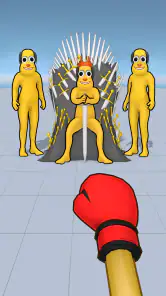
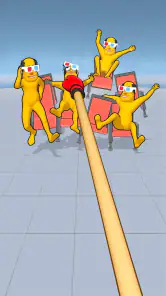
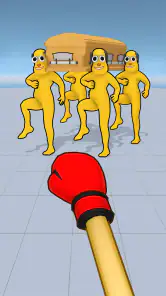
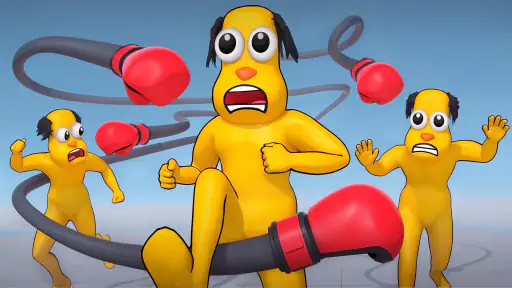
Analysis by Reviewed
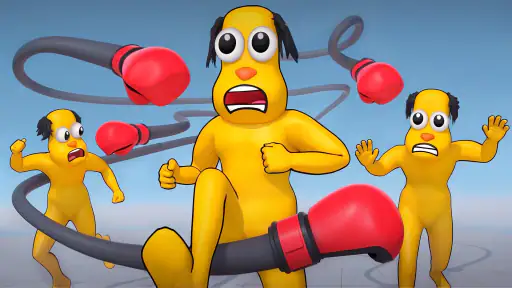
My first impression of Annoying Uncle Punch Game is that it works best as a quick, deliberately silly distraction, not as a deep simulation. Its joke is immediately clear: an irritating uncle becomes the target of comic, virtual punches. That premise gives the game a goofy edge, though the humor will land better if you enjoy exaggerated family-gathering jokes rather than realistic action or a serious story.
In the ordinary play loop, I draw, aim, and release, trying to make each attempt count. The appeal is in the small rhythm of lining up a shot and seeing how the gag plays out, rather than in a sprawling set of goals. I’d treat it as something to open for a short break, especially when I want a game that does not ask me to learn a complicated world before the fun starts.
A simple routine that suits short breaks
For a first session, I’d focus on getting comfortable with the aiming gesture before worrying about speed or chasing a high score. A steady, repeatable motion is more useful than hurried swipes: make one deliberate attempt, notice what happened, then adjust the next one. That turns the basic interaction into a small skill loop instead of a string of random gestures.
It also makes the game easier to pick up between other tasks. If I had a few minutes while waiting for a drink or taking a break from a long day, I could play a little without needing to remember a complicated plot. The trade-off is that a focused, simple loop can feel repetitive once the central joke has done its work. I’d recommend it to players who like quick comic distractions, but not to anyone looking for a long campaign or intricate simulation systems.
A real-life moment for a quick round
Imagine you are waiting for a friend who is running late, with only a short stretch of time to fill. This is the sort of moment when I’d open the game: one or two attempts can give the hands something to do without asking me to follow a story or manage a complicated session. I’d keep the sound low or off if I were around other people, and stop when the joke stopped feeling fresh rather than trying to turn every spare minute into a high-score chase.
That use case also points to a practical trade-off. The simple interaction makes it easy to pick up, but aiming still asks for a little attention; it is not the best choice if I need to keep my eyes on a conversation or divide my focus. A quiet puzzle or an idle game would suit that situation better. Here, the payoff is the physical gesture and comic result, so I’d give it a few focused minutes instead of treating it as background entertainment.
Getting to Know Your Annoying Uncle
So, the premise of Annoying Uncle Punch Game is simple: your uncle is, well, annoying, and your job is to punch him—virtually, of course. Now, before you start questioning the morality of it all, it’s worth mentioning that the game is purely satirical and meant for comedic relief. You get a bunch of hilarious scenarios and settings where your uncle spouts the most ridiculous lines. It's like a sitcom, but with a punch!
You May Like

Clash of Clans Is Won Between the Battles

Android Auto Makes the Case for Quieter Car Software

MobiOffice: Transforming Mobile Productivity with Seamless Integration

EA SPORTS FC™ Mobile Soccer: Redefining Mobile Sports Gaming

How Microsoft OneDrive Became a Mobile Productivity Giant

How Google Translate Breaks Language Barriers Effortlessly
Gameplay and Features
Diving into the mechanics, the game is pretty straightforward. You tap your screen to deliver punches as your uncle delivers his quirky monologues. The faster your reactions, the higher your score. There are different levels, each with escalating difficulty and more complex dialogues. The animations are cartoonish, which adds to the light-hearted vibe. Plus, the background music? Absolute gold, with catchy tunes that make the experience even more engaging.
One of the coolest features is the customization. You can dress up your uncle in various outfits, from an Elvis impersonator to a medieval knight. It's a fun twist that keeps things fresh and gives you a good laugh. The game also incorporates leaderboards, so you can compete with friends to see who has the best reaction time and scores.
What to check before settling in
I wouldn’t assume a settings screen has lots of fine-grained controls. Before a longer session, it is sensible to check the options the game actually presents and make sure the sound suits where you are playing. The uncle’s monologues and music are part of the comic tone, but spoken jokes are not ideal in a quiet waiting room; lowering the volume, if the game offers that control, is a practical courtesy rather than a gameplay trick.
For a more comfortable run, I’d also hold the phone in the position that gives my aiming hand room to move, then keep that posture consistent. This is a small habit, but it helps separate a genuine change in aim from a change caused by shifting grip. I would not chase a supposed hidden shortcut: the useful improvement here is making each attempt deliberate and learning from the result.
Making customization part of a repeatable routine
Because outfits are available, I’d use them as a light way to change the feel of a session rather than as a reason to expect a different kind of game. Pick an outfit before you start, settle into the same comfortable grip, and then pay attention to how your aim changes from attempt to attempt. Keeping one variable steady makes it easier to tell whether a better result came from a more controlled gesture rather than simply from changing how you hold the phone.
The leaderboard gives a social angle, but I’d treat it as an optional comparison, not the main measure of whether a session was worthwhile. Scores can make a short game more replayable for someone who enjoys friendly competition; they can also make the gag feel like a chore if you keep restarting just to beat a number. I’d share a result with a friend who likes this kind of humor, then move on rather than letting the ranking dictate the whole experience.
Where the joke works—and where it wears thin
The comic target makes this different from the usual simulation game built around managing a place, a job, or a collection of resources. Here, the central attraction is a quick, absurd interaction, so it is a better fit for someone who wants an unserious diversion than for a player hoping to build something over many sessions. Compared with a conventional arcade game, the uncle theme supplies the personality; the basic appeal still depends on whether repeating the core action stays amusing for you.
That distinction matters when deciding whether to keep it installed. If the joke makes you smile and you enjoy trying to improve a short run, it has a clear purpose. If you mainly want layered progression, strategic decisions, or a story that develops over time, I’d choose a different game in the simulation category. The comedic premise is the point, not a disguise for a deep management system.
Choosing it over other quick games
Among casual mobile options, I’d place this closer to a reaction-based arcade diversion than to a typical life or business simulation. A puzzle game usually rewards planning a chain of moves, while an idle game is designed to occupy attention lightly; this one asks me to make an active gesture and enjoy the comic payoff. That makes it a better match for a short, hands-on break than for playing while multitasking.
It is also more specific in tone than a broad slapstick game. The uncle premise is the hook, so a player who enjoys that family-comedy setup may find it more memorable than a generic target game. If that joke is not your kind of humor, the simple loop probably will not compensate. I’d choose a conventional arcade title for more varied challenges, or a management simulation for decisions that build on one another over time.
Why You'll Keep Coming Back
What makes Annoying Uncle Punch Game stand out in the crowded mobile game market is its humor. It's unapologetically silly, and sometimes, that’s exactly what you need. The developers have clearly put a lot of thought into crafting dialogues that are both funny and reminiscent of those family gatherings we all know too well.
Another reason to keep playing is the regular updates. The game often introduces new scenarios and outfits, ensuring that players always have something to look forward to. It keeps the game from getting stale and adds a layer of excitement for long-time players.
Who I’d recommend it to
I can see this working as a casual pick for someone who likes cartoonish slapstick, short sessions, and jokes about an overbearing relative. It could also suit a quick pass-around moment with a friend, as long as you are both comfortable with the premise and the phone stays in one person’s hands while aiming. For a low-pressure break, that is a more natural use than treating every session like a serious score challenge.
On the other hand, I’d skip it if the uncle-as-a-punching-bag gag feels uncomfortable, or if you need a game with a quiet, subtle tone. It is rated Teen, so I would keep that audience rating in mind when choosing a game for younger players. The game is free, which makes trying the idea easy, but free does not automatically mean it will suit every taste; the humor is a very specific part of the deal.
Getting a fair sense of whether it suits you
If you are unsure about the premise, I’d make the first session a small test rather than expecting the game to win you over through a long progression. Notice whether the uncle’s antics make you smile, whether the aiming feels comfortable, and whether you want to take another turn after a few tries. Those are more useful signals than assuming a free game must be worth keeping just because it costs nothing to try.
I’d also separate “I like the joke” from “I like competing.” Someone can enjoy the cartoon humor without caring about scores or leaderboards, while a score-focused player may want more variety in the challenge. The game has room for both approaches, but its strongest fit is a player who is happy with a compact comic loop rather than someone waiting for a broad set of modes to emerge.
Practical details and staying power
GOOD TO SEE YOU makes this simulation game, which has an average rating of 4.5 from around 34,000 ratings and more than 10 million installs. It launched on August 14, 2024, and version 0.2.9 is the current release. It runs on Android 6.0 or later. Those details make it easy to judge basic compatibility, while the much more personal question is whether the central gag stays funny after the first few attempts.
If you are wondering whether it is a good fit for a tiny gap in your day, I’d say yes, provided you enjoy the premise and do not expect a large, evolving simulation. If you are wondering whether to play with sound, I’d use the setting that suits your surroundings and avoid assuming the spoken comedy is appropriate everywhere. And if you are deciding between this and a more traditional simulation, choose this one for the joke and quick interaction; choose the other for longer-term planning and progression.
What makes a session feel finished
I find it helpful to give a short game a natural stopping point. Here, that might be a few deliberate attempts, a quick look at how the score compares with a friend’s, or simply the moment the uncle gag no longer gets a reaction from me. That approach preserves the game’s role as a break instead of turning repetition into an obligation. It also helps a new player judge the core appeal without assuming that more time automatically unlocks a deeper experience.
For anyone deciding whether to return, the useful question is not only whether the first round was amusing, but whether the aiming-and-reaction loop itself stayed satisfying. The comedy can make an introduction memorable, while repeat play depends more on enjoying that small skill challenge. If both parts work for you, it can earn a place among your quick diversions; if only the first joke lands, it may be better as a brief try than a regular habit.
Final Thoughts
In a world where mobile games often take themselves too seriously, Annoying Uncle Punch Game is a breath of fresh air. It’s not about achieving epic quests or saving the world. Instead, it’s about letting loose, having a laugh, and maybe venting a little bit of that familial frustration. So, if you’re looking for a way to unwind and enjoy a good chuckle, this game might just be worth a download. Trust me, you’ll be quoting your virtual uncle’s lines at the next family get-together!
Annoying Uncle Punch Game Frequently Asked Questions
What kind of humor and gameplay should I expect from Annoying Uncle Punch Game?
Annoying Uncle Punch Game leans into comic, slapstick humor rather than realistic fighting. Its central interaction is to draw, aim, and release a punch toward the uncle character, creating a brief, playful payoff. If you enjoy exaggerated cartoon mischief and uncomplicated interactions, that premise may suit you; if you prefer a story-heavy game or realistic combat, its light approach may feel limited.
Is Annoying Uncle Punch Game appropriate for players who dislike cartoon violence?
The game’s premise centers on punching an annoying uncle character, and its humor includes cartoon-style violence. That makes it worth considering your comfort level with slapstick before downloading, even though the presentation is playful rather than realistic. Players who would rather avoid games built around comic hitting may prefer a different kind of casual entertainment.
Is Annoying Uncle Punch Game free to download?
Annoying Uncle Punch Game is free to download, so you can try its draw-and-release punching gameplay without paying for the initial download. The game is a simulation built around a simple comic premise: aim your action at the annoying uncle character and let it play out. If you are deciding whether it suits you, keep in mind that a free download does not necessarily mean every optional feature is free.
Who developed Annoying Uncle Punch Game, and what kind of game is it?
Annoying Uncle Punch Game is a simulation game developed by GOOD TO SEE YOU. Its short, direct premise is captured by the phrase “Draw, Aim and Release. Punch The Annoying Uncle,” which gives a sense of the playful, slapstick style before you start. It is aimed at players looking for a light, humorous game rather than a realistic fighting experience.
What is the objective of Annoying Uncle Punch Game?
The main objective of Annoying Uncle Punch Game is to provide a fun and humorous experience by allowing players to virtually "punch" an annoying uncle character. Players navigate through various levels, each presenting different challenges and obstacles, to deliver a satisfying punch. It's a casual game designed for stress relief and entertainment.
Pros
- Engaging combat mechanics
- Humorous storyline
- Variety of levels
- Responsive controls
- Colorful graphics
Cons
- Can become repetitive
- Occasional bugs
- Ads can be intrusive
- Limited character customization
- Initial load times are lengthy

- Category
- Simulation
- Version
- 0.2.9