 About Masha and the Bear Pizza Maker
Masha’s Pizza Parlor Is a Make-Believe Kitchen, Not a Social Network
A pizza game starring Masha and the Bear sounds like an invitation to a bustling little community: children swapping recipes, comparing creations, and returning to see what friends have made. The reality is quieter, and that is the useful distinction. Masha and the Bear Pizza Maker is built around a small, personal ritual of preparing food, not a visible network of players. Its social life comes mainly from the way children perform the game for someone nearby, so its strongest community is often a family room rather than an online feed.
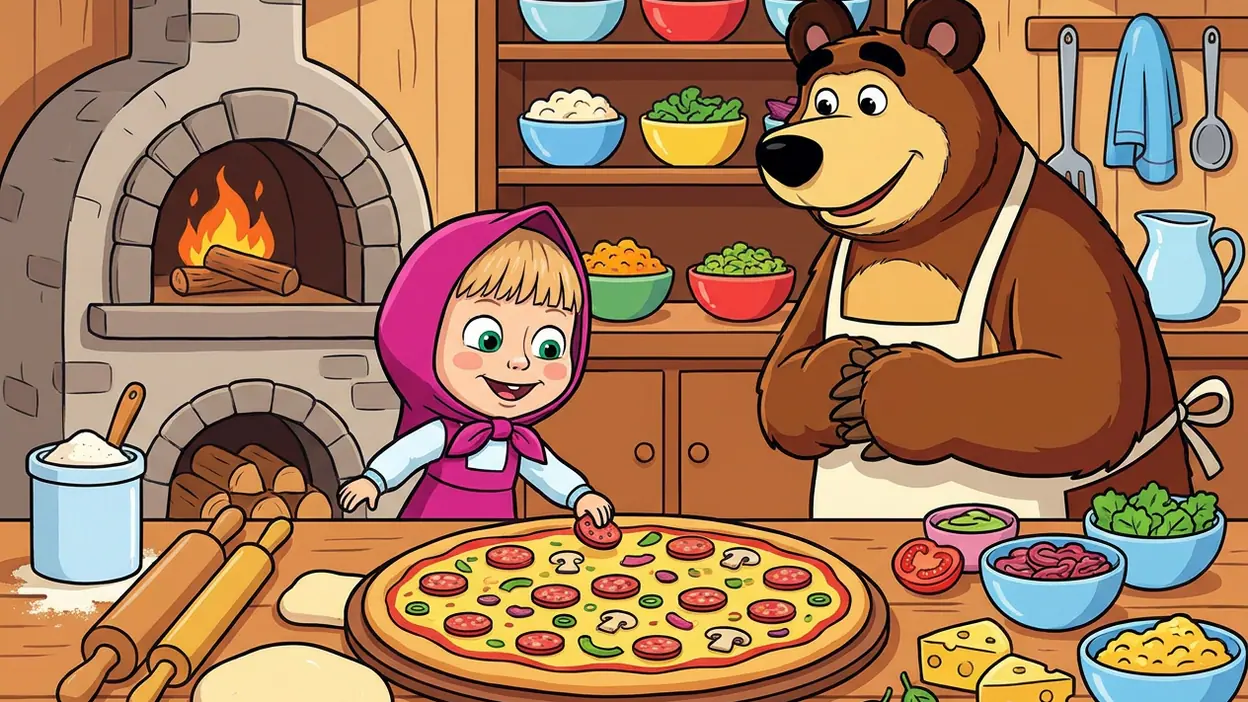
That modest scale suits the premise. Masha brings her familiar restless energy to a make-believe kitchen, and pizza supplies an easy sequence of choices: prepare a base, add toppings, and make a meal that looks like the player’s own. The pleasure is less about mastering a system than about taking charge of a playful task. For a child who wants to imitate cooking without handling a hot oven, that is a clean, legible invitation.
A small play space with a human audience
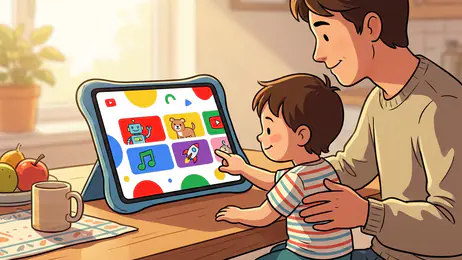
The game’s community hook is not a chat room or a competitive ladder. It is the moment a child finishes a pizza and turns the screen toward a parent, sibling, or friend. That informal audience gives each creation a little ceremony: look what I made, choose what goes on next time, and perhaps ask someone else to judge the result. This is real social play, but it happens around the device rather than through a network the game itself appears to cultivate.
That difference matters in a report about participation. Games such as UNO! make other players central to the activity, while Masha’s pizza-making premise can work perfectly well alone. Here, the nearby viewer is an optional extra, not a required teammate. The game invites children into a familiar pretend role, then leaves them room to narrate what they are doing. Its charm lies in that low-pressure performance.


The participation model
Participation is direct and bounded. The player makes decisions about the pizza and follows the kitchen activity, with the character and food providing the imaginative frame. There is no need to learn a complex ruleset, negotiate turns, or build a public identity before getting started. The game’s contribution model is therefore personal: each child supplies attention, choices, and a bit of make-believe.
That simplicity gives the experience a useful rhythm. A topping choice becomes a tiny decision; the finished dish gives the sequence a stopping point. A child can repeat the process because another combination is possible, but the loop does not demand a long session or a daily commitment. It feels closer to replaying a favorite pretend scenario than maintaining an account in a sprawling game community.
How newcomers enter
Newcomers enter through recognition and action. Masha is already a familiar character to many children, while pizza is a task they can understand without reading a manual. That combination lowers the social and cognitive barriers: nobody has to explain the world before the play can begin. The first useful instruction is simply to start making something.
Latest News

Parents and older siblings can make that entry smoother by sitting beside a younger player, naming ingredients, or asking what the Bear might like. This is not a feature that should be mistaken for in-game cooperation; it is a natural use of a simple game in a shared space. A child who has watched someone else play can also copy the basic gestures, then make independent choices. The threshold is low, though the game’s appeal still depends on a child enjoying pretend cooking and the show’s characters.
Recurring rituals and the limits of replay
The repeatable ritual is easy to picture: open the kitchen, make another pizza, show the result, and start over with a new idea. Such repetition can be comforting for younger players, who often enjoy returning to a known sequence more than chasing a stream of new challenges. A familiar character and a predictable task make the game approachable on a short break.
But repetition is not the same as a durable social ritual. The game does not appear to provide a public calendar, scheduled events, or a shared challenge that gives players a common reason to return on the same day. Nor is there an obvious evolving objective that turns each session into progress toward a larger community goal. Its replay value rests on the child’s imagination and appetite for rearranging the activity. Once that appetite fades, there may be little beyond the core loop to pull them back.
What players contribute
In a creator ecosystem, players might publish levels, recipes, or artwork for others to discover. In this game, the more grounded contribution is the individual pizza and the story attached to it. A child may invent a name for the dish, decide who it is for, or explain why a particular topping belongs there. These contributions enrich the play, even if they do not become searchable community content.
That distinction keeps expectations honest. I found no basis for treating the game as a platform for sharing recipes or showcasing a public gallery, and an article should not promise those features without verification. The value is in making and imagining, not in exporting a polished creation to an audience of strangers. Children can still share socially by showing the screen or describing a pizza, but that sharing is informal and depends on the people around them.
Competition without a ladder
There is room for friendly comparison: whose pizza looks funniest, who chose the most toppings, or what the Bear might prefer. Yet those contests are invented by players and caregivers rather than enforced by a ranking system. That is a meaningful contrast with Dominoes, where a shared ruleset naturally invites a contest and makes opponents part of the point.
Without visible standings, the pizza-making loop avoids turning a child’s creativity into a score. That can be a welcome choice for a young audience. It also means the game has little built-in reason for players to meet, cooperate, or compete across households. Any rivalry stays local, playful, and easy to abandon when the next pretend idea arrives.
Social friction, moderation, and safety
A small, solitary design can reduce some familiar online pressures. If a game does not foreground public chat, player-to-player messaging, or an open publishing feed, it has fewer obvious spaces for strangers to argue or post harmful material. That is a structural observation, not a guarantee about every version, platform, or connected feature. Families should check the current app listing, permissions, and device settings rather than assume that a quiet-looking game has no data or advertising considerations.
Moderation is difficult to assess from the play loop alone. I cannot confirm the full scope of data collection, parental controls, advertising, or any platform-specific safety tools without current, version-specific documentation. The lack of a prominent social layer may limit the need for community moderation, but it does not answer questions about privacy or purchases. Those details deserve a parent’s attention before handing the game to a young child.
There is also a softer kind of friction: the game may be too limited for children who want more choices, longer progression, or a way to share results with friends. A parent hoping for a genuinely cooperative activity may find that the child is playing beside them, not with them in any structured sense. That is not a safety flaw; it is a mismatch between a simple pretend game and a more social expectation.
Where network value appears
The network value is mostly cultural and domestic. Recognition of Masha and the Bear helps a child feel at home quickly, and that familiarity can make the game an easy handoff between siblings or a shared activity during a quiet moment. The value grows when an adult joins the make-believe, asks questions, or encourages the child to invent a recipe. In that setting, the game acts as a prompt for conversation rather than a destination for community traffic.
That is a smaller kind of network, but not a meaningless one. The game can give a child and caregiver a common reference point, and its straightforward loop makes it easy to explain to another person. Unlike a homework tool such as Brainly, it is not built around exchanging answers; unlike ibis Paint X, it does not appear to place creative work in a creator-facing ecosystem. Its social potential is closer to passing a toy across the table.
Can the ecosystem last?
A lasting community usually needs more than a recognizable character. It needs recurring reasons to participate, useful ways to find other people, and contributions that reward both the maker and the audience. The pizza game’s core loop supplies an accessible first step, but it does not appear to provide those wider structures. Unless the surrounding product adds events, sharing tools, or new activities, its community is likely to remain small and informal.
That may be entirely appropriate. Not every children’s game needs to grow into a social platform, and adding public profiles or chat would bring costs and risks that this premise does not require. The better question is whether the make-and-serve activity stays enjoyable long enough to earn a place in a child’s routine. Its answer depends on the child’s love of Masha, food play, and repetition, rather than on a network effect.
The honest community verdict is that this is a social game only in the room where it is played. Masha and the Bear Pizza Maker gives children an approachable little stage for making, pretending, and showing off a finished pizza, but it does not establish a rich player ecosystem on the evidence available. Its strongest contribution is a low-stakes shared ritual between a child and whoever is close enough to watch. If that is what a family wants, the smallness is part of the appeal; if they expect online cooperation, creator sharing, or lasting community events, they should look elsewhere.