YourSecret - Match by Mindset.
- 21.00
- 4.3
- Installs
- 10.00K
- Price
- Free

Screenshots


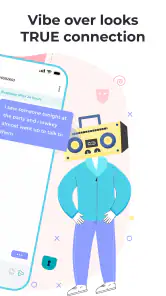
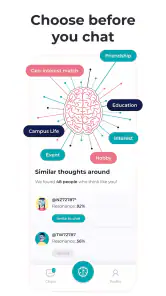

Analysis by Reviewed
I approached YourSecret - Match by Mindset as a social app for people who want to share thoughts, moods, and interests without building a public identity around them. That distinction matters. Most social platforms begin with a profile, a photo, a follower count, and a steady pressure to present yourself in a certain way. This app takes the opposite route: the idea is to let what you are thinking or feeling lead the interaction.
That makes the first experience feel less like joining another network and more like testing whether a shared mindset can create a useful connection. I found the concept appealing for quiet users, people who dislike profile-based browsing, and anyone who wants a conversation to begin with an idea rather than an image. At the same time, the profile-free approach creates expectations that are important to understand before installing it.
What to expect from a profile-free social app
YourSecret is listed in the social category and is developed by FARNORA LIMITED. It is free to use, carries a Teen content rating, and supports devices running Android 7.0 or later. The current release is version 1.1.3, while the app has passed the ten-thousand-install mark and holds a 4.3 average from roughly forty ratings. Those figures suggest a small but active early audience rather than a huge established network.
The short store wording, “YourSecret,” points toward a private-feeling identity, but I would not interpret that as a promise that every interaction is automatically intimate, confidential, or emotionally safe. The more practical reading is that the app removes the usual profile layer. You are not expected to make a polished personal page before taking part, so the quality of an exchange depends more heavily on the thought, mood, or interest you put forward.
That changes how I recommend using it. I would not open it expecting the endless, highly personalized feed found in mainstream social networks. I would open it with one clear subject in mind: a feeling I want to express, an interest I want to explore, or a question that might resonate with someone else. The app makes more sense when treated as a place for meaningful starting points, not as a replacement for every social platform on your phone.
The strongest benefit is the reduction of first-impression bias. A person who would be overlooked because of a photograph, age assumption, follower count, or carefully written biography may have a better chance when the initial focus is their mindset. That can make participation less intimidating, especially for someone who normally reads social content without posting.
The trade-off is that anonymity or reduced identity can also make context thinner. If you connect with someone based on a single mood or interest, you may know very little about how consistent that person is, what they want from the conversation, or whether the apparent match has lasting potential. I see that as the central tension in the app: less social pressure at the door, but also less information for judging a connection.
More From Our News Desk

Clash of Clans Is Won Between the Battles

Android Auto Makes the Case for Quieter Car Software

MobiOffice: Transforming Mobile Productivity with Seamless Integration

EA SPORTS FC™ Mobile Soccer: Redefining Mobile Sports Gaming

How Microsoft OneDrive Became a Mobile Productivity Giant

How Google Translate Breaks Language Barriers Effortlessly
Who is likely to enjoy it
I think the app is best suited to users who want to lead with inner experience rather than personal branding. It may appeal to someone processing a difficult day, exploring a niche interest, or looking for people who understand a particular perspective without having to explain their entire background first.
It is also a reasonable choice for a first-time social-app user who feels uncomfortable with public posting. Starting from a thought or mood can feel more manageable than designing a profile and wondering how strangers will judge it. If you prefer slow discovery and small conversational openings, the concept has a natural advantage.
I would be more cautious about recommending it to someone who needs verified identity, professional networking, local community coordination, or a dependable record of past interactions. A profile-centered service is usually better when trust depends on knowing who a person is. Likewise, users looking primarily for short videos, broad entertainment, or a large creator ecosystem will probably find more value elsewhere.
Getting started without overthinking the first post
After installing the app, my advice is to resist the urge to write something vague simply because the space feels unfamiliar. “I am bored” may be honest, but it gives another person very little to respond to. A more useful opening combines the current feeling with a subject, such as wanting to understand why a favorite hobby has become less enjoyable or feeling motivated to return to a neglected creative project.
This is the first non-obvious lesson: specificity matters more when profiles are absent. On a conventional network, a profile can supply background and make a short post understandable. Here, the thought itself has to carry enough context to invite a meaningful response. You do not need to reveal personal details; you simply need to make the idea concrete.
I would begin with one topic rather than several. If you mix work stress, music, travel, and a personal question in the same opening, any potential match has too many directions to follow. A single, clearly framed interest gives the app a better chance to connect you with the kind of mindset you actually want to meet.
Another helpful preparation is to decide what kind of interaction you want. Are you looking for someone who relates to a mood, someone who can discuss an interest, or someone who sees a situation differently? The app’s concept supports all three, but your wording should make the intended path visible. A person seeking discussion should phrase an idea with room for another viewpoint; someone seeking emotional recognition may benefit from describing the feeling more directly.
Because the app is aimed at a Teen audience, I would also treat every exchange with ordinary online caution. Avoid sharing information that identifies your home, school, workplace, daily route, or other sensitive details. A profile-free environment can feel safer than a public network, but the absence of a visible profile does not remove the need for boundaries.
A practical first-session routine
For a calmer start, I would use this simple sequence:
Choose one current thought, mood, or interest instead of trying to represent your whole personality.
Write enough context for a stranger to understand what you mean.
Leave an opening for a response, such as a question, comparison, or invitation to share a different angle.
Read replies for relevance and tone before deciding whether a connection deserves more attention.
Keep the first exchange light until the other person has shown consistency and respect.
This routine avoids a common mistake: treating the first interaction as a test of personal popularity. The goal is not to attract the largest possible reaction. It is to find one response that genuinely fits the thought you shared. That is a much more realistic measure of success for an app built around mindset rather than audience size.
Finding the first meaningful success
For me, the app’s first meaningful success would be a reply that adds something rather than merely agreeing. A useful match might share a similar mood but describe it differently, connect an interest to an unexpected experience, or ask a question that helps clarify what you meant. That kind of response is more valuable than a fast but empty interaction.
To improve the odds, write as though you are opening a small door instead of making a public announcement. Rather than saying that you like reading, mention the kind of reading mood you are trying to find. Rather than saying you feel stressed, explain whether you want advice, distraction, or simply recognition from someone who has experienced something similar.
This is where I see a practical strength that a generic description would not reveal: the app rewards emotional and conversational precision. You do not have profile fields doing the work for you, so the wording of one contribution becomes a compact introduction. A thoughtful sentence can communicate more than a long biography if it gives the other person a clear way in.
There is also a useful workflow for users who are hesitant to post immediately. Spend a little time observing the kinds of thoughts and interests that attract responses, then shape your own contribution around a similarly clear level of detail without copying anyone’s wording. This helps you understand the tone of the community before making yourself visible within it.
When a promising exchange appears, do not rush to disclose personal information just because the conversation feels unusually comfortable. Let the quality of the interaction establish itself over time. A good match should remain respectful when you disagree, accept a slower reply, and respond to what you actually wrote rather than pushing the conversation toward unrelated personal details.
I would also avoid judging the entire app from one quiet session. A mindset-based service depends on whether the current pool of users happens to overlap with your interests and emotional state. If your first contribution receives little attention, try a clearer angle at another time rather than making the post increasingly personal. More vulnerability is not automatically a better strategy.
Where first-time users may become confused
The biggest possible confusion is the difference between “no profiles” and “no identity concerns.” A profile-free design can reduce performance pressure, but it may also make conversations feel less predictable. You may not have the usual background cues that help you decide whether to continue, so your own boundaries and judgment become more important.
Another point to understand is that a mindset match is not necessarily a friendship, a romantic connection, or a solution to a personal problem. Shared interests can create a promising beginning, but they do not guarantee compatible communication. Two people can feel the same mood and still want completely different kinds of interaction.
Some users may also expect the app to provide instant results because matching is its central idea. I would set a more modest expectation. The quality of a connection depends on how clearly you express yourself and on whether another user happens to be looking for the same kind of exchange. If you want a guaranteed audience or immediate replies, a larger established network may feel more dependable.
The lack of a conventional profile can create a second trade-off: continuity. If you enjoy remembering a person’s interests, following their updates, or building a detailed sense of their identity, a standard social platform may serve you better. YourSecret’s appeal lies in the present thought or mood, not in creating a complete public history of someone.
Privacy-minded users should make a careful distinction between sharing feelings and sharing identifying details. You can describe being overwhelmed by exams, a difficult project, or a change in routine without naming the institution, employer, location, or people involved. That approach preserves the emotional value of the post while reducing unnecessary exposure.
Safety is another reason to keep early conversations grounded. If someone pressures you, asks for sensitive information, tries to move the interaction elsewhere too quickly, or dismisses your boundaries, the shared mindset is not enough reason to continue. The app can help begin a conversation, but it cannot replace your judgment about the person on the other side.
How it compares with familiar social alternatives
Compared with a profile-led social network, this app is less useful for browsing a person’s history and more useful for discovering a single point of resonance. That makes it feel lighter and potentially less judgmental, but also less informative. If your priority is following known friends, creators, or communities over time, the conventional option remains stronger.
Compared with a group forum, YourSecret appears better suited to personal starting points than to organized discussion. Forums are usually easier when you want searchable threads, established communities, specialist answers, or a visible archive. This app is more appealing when the emotional or personal angle matters as much as the subject itself.
Compared with a messaging app, it offers a way to begin from a shared mindset rather than from an existing contact list. That can broaden discovery, but messaging is still better for dependable conversations with people you already know. I would use this app for finding an initial connection and a familiar messenger for ongoing contact only when trust has been earned and moving elsewhere feels appropriate.
Compared with dating-oriented services, the mindset-first approach may feel less appearance-driven, but it should not automatically be treated as a dating tool. If you want explicit relationship filters, detailed compatibility information, or clear intentions, a dedicated service is likely a better fit. Here, the attraction is the conversation prompt itself, not a complete matching profile.
Making the next step worthwhile
Once you have found a response that feels relevant, the next step is not necessarily to expand the conversation as quickly as possible. Ask one focused follow-up question, acknowledge the part that resonated, and see whether the other person can maintain the same level of thoughtfulness. This creates a better test of compatibility than exchanging a long series of quick reactions.
A useful habit is to return to the kind of subject that produced your best interaction, but approach it from a new angle. If a mood-based post led to a thoughtful exchange, you might later describe what helped you handle that mood rather than repeating the original statement. If an interest-based post worked well, introduce a specific challenge or disagreement instead of simply naming the interest again.
That gives the app a practical role in everyday life. Imagine finishing a long day and feeling disconnected from friends who are busy. Instead of posting a polished update for a broad audience, you could share a carefully worded thought about the one issue occupying your mind. A relevant reply might not solve the problem, but it can make the evening feel less isolated and give you a new perspective.
For a student, the same approach could mean sharing anxiety about choosing a direction while asking how others handled uncertainty. For a hobbyist, it could mean looking for people who enjoy the learning process rather than merely displaying finished results. For someone who usually stays silent online, the lack of a profile can make one honest, limited contribution feel less exposing than joining a public conversation.
I would skip the app if you need a strong identity system, dependable moderation context, professional credibility, or a large network of people you already know. I would also skip it if you are currently looking for a structured support service for serious emotional difficulties. A social connection can be comforting, but it is not a substitute for qualified help or trusted personal support.
For everyone else, the best way to evaluate it is to give it a fair, focused trial: write one specific thought, look for a response that genuinely engages with it, and judge the experience by the quality of that exchange. Do not measure it by the habits of a conventional feed. The app works best when you bring a clear mindset, realistic expectations, and firm personal boundaries.
My overall impression is cautiously positive. FARNORA LIMITED has built a distinctive social concept around removing the profile as the main entry point, and that can make sharing feel more direct for the right person. The approach is not ideal for every kind of connection, and the smaller audience means results may vary, but it offers a refreshing alternative to identity-heavy platforms. If you want to be met first through a thought, mood, or interest, YourSecret is worth trying as a focused experiment rather than another endless social feed.
YourSecret - Match by Mindset. Frequently Asked Questions
What does “No profiles” mean in YourSecret, and how does the app present people?
YourSecret’s short description is “Thoughts. Moods. Interests. No profiles.” The app is built around sharing aspects of how you think and feel rather than making traditional profile pages the main focus. That can appeal to people who prefer discovering common ground through personal perspectives, though the experience still depends on what you choose to share and the people available to connect with.
Who is YourSecret - Match by Mindset intended for?
YourSecret is a social app for people interested in meeting others through thoughts, moods, interests, and outlooks. Its mindset-led approach may suit users who want conversation and compatibility to matter more than a conventional profile-first experience. The app has a Teen content rating, so users should consider that rating and their own comfort with social interactions before downloading or using it.
What is YourSecret - Match by Mindset?
YourSecret - Match by Mindset is a social and dating app focused on connecting people through their personality, opinions, interests, and emotional outlook rather than relying only on profile photos. During testing, the concept felt designed for users who want more meaningful conversations and compatibility-based connections. The exact experience may vary depending on your location, available users, and the information you choose to add to your profile.
How does matching work in YourSecret - Match by Mindset?
The app uses the mindset information you provide, such as preferences, opinions, interests, and answers to personal questions, to help suggest potentially compatible people. Instead of judging a profile exclusively by appearance, users are encouraged to discover shared values and ways of thinking. Matches can still depend on age, location, activity, and privacy settings, so results may differ from one user to another.
Is YourSecret - Match by Mindset free to download and use?
YourSecret - Match by Mindset can generally be downloaded without an upfront charge, but some features may be limited or connected to optional in-app purchases, subscriptions, or premium access. Before creating a long-term account, review the pricing details shown in the App Store or Google Play and inside the application. Subscription terms, renewal rules, and available features can change over time.
Pros
- Matches focus on personality and values
- not just profile photos.
- Private
- low-pressure interactions can feel more comfortable for shy users.
- Simple interface makes browsing and connecting easy for new users.
- Useful filters help narrow potential matches by interests and preferences.
- Encourages more meaningful conversations than swipe-only dating apps.
Cons
- The user base may be smaller than on major dating platforms.
- Some features or interactions may require in-app purchases.
- Match quality depends heavily on how honestly users complete their profiles.
- Limited activity in smaller cities can reduce the number of available matches.
- As with any dating app
- fake profiles and unwanted messages remain possible.
- Category
- Social
- Version
- 1.1.3