Vola: Cash Advance & Credit
- 2.05K
- 4.7
- Installs
- 500.00K
- Price
- Free

Screenshots


Analysis by Reviewed
I see Vola: Cash Advance & Credit as a practical finance app for people who occasionally need help smoothing out the gap between payday and an unavoidable expense. Its appeal is not that it replaces a full banking setup; it is that it brings short-term cash access, credit-building tools, budgeting, and spending awareness into one mobile experience. After using it, my main takeaway is simple: it can be useful when treated as a carefully managed safety valve, but it is a poor fit for someone looking for a permanent answer to recurring money shortages.
The app is free to download and is made by Vola inc. It belongs to the finance category, carries an Everyone age rating, and has attracted a 4.7 average from around 11 thousand ratings, alongside more than 500 thousand installs. Those figures suggest that it has found a sizeable audience, but they do not change the most important question: whether an advance and the app’s budgeting tools match your own cash-flow habits.
How Vola works in everyday money management
The first thing I noticed is that Vola is designed around immediacy. Rather than presenting itself as a traditional long-term loan platform, it focuses on access to cash when timing is the problem. That distinction matters. If your income is reliable and a bill arrives a few days before your next deposit, an advance may help you avoid a late payment or an overdraft. If your income is already too low to cover regular expenses, borrowing again can simply move the pressure forward.
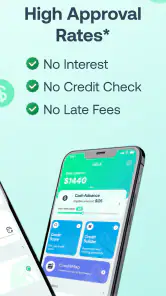
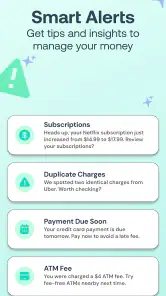
The app’s wider purpose is what makes it more interesting than a basic cash-advance tool. Its store summary combines instant cash access with no credit check, credit-building support, budgeting, and spending tracking. In practice, I would approach those elements as separate tools that work best together. The advance addresses an immediate gap, while the tracking and budgeting features are meant to show why that gap appeared in the first place.
That combination gives the app a more useful role than an emergency button alone. I found it easier to think about a cash advance responsibly when I also looked at upcoming spending and recurring patterns. The advance should have a defined job: covering a particular short-term need, not making an otherwise unaffordable month appear comfortable.
A realistic payday-gap scenario
Imagine that your phone bill and a necessary prescription fall due shortly before your regular income arrives. You know the money is coming, but paying both immediately would leave too little for transport and food. In that situation, Vola can be considered as a temporary bridge. The sensible workflow is to identify the exact amount required, check when repayment will affect the next budget, and then use the spending view to avoid treating the remaining balance as spare money.
That last step is easy to overlook. A cash advance can make the current account look healthier for a short time, even though the next pay cycle is already partly committed. I would therefore use the app before accepting an advance, not only after the money arrives. Looking at recent spending first helps separate a genuine timing issue from a budget that is consistently falling short.
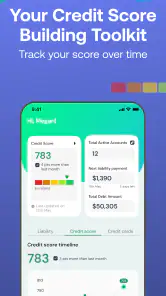
This is also where Vola’s credit-building angle needs a measured interpretation. I would not install it expecting a quick transformation in my credit profile. Credit-related progress generally depends on responsible financial behavior over time, and the app should be treated as one part of that process rather than a shortcut. The useful mindset is to borrow only what can be handled comfortably and to use the budgeting side to improve future decisions.
Why the budgeting and tracking tools matter
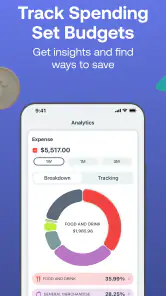
The most valuable feature set for many users may not be the advance itself. Spending tracking can reveal small, repeated purchases that are difficult to notice when checking a bank balance casually. A balance tells you what remains; a spending view can help explain where the money went. That difference is especially helpful when the same shortfall seems to happen every month.
I recommend reviewing transactions at a calm moment rather than waiting until an urgent bill appears. Grouping attention around essentials, flexible spending, and recurring commitments creates a clearer picture of what can actually be adjusted. Even without making dramatic cuts, knowing which expenses are movable can reduce the need to request an advance for a smaller gap.
A useful habit is to compare the app’s spending picture with the date of your next income. If most of the remaining money is already allocated, an advance may only postpone the problem. If the issue is a single unusual expense and the next pay cycle can absorb the repayment, the decision is more defensible. This is a practical trade-off that a short store description cannot explain.
I also like the idea of using the app as a review point after repayment. Instead of closing it once the immediate need is solved, I would check what caused the shortage and set a modest rule for the next cycle. For example, a user might decide to leave a small buffer untouched or review subscriptions before accepting another advance. The app becomes more useful when it changes the next decision, not just the current one.
The strongest case for using it
Vola’s strongest case is convenience combined with context. Many cash tools focus almost entirely on obtaining money quickly. Vola presents the advance alongside ways to budget and monitor spending, which can encourage a more complete look at the situation. For a user who is organized enough to review the numbers but occasionally hit by inconvenient timing, that combination is genuinely appealing.
The no-credit-check positioning may also matter to people who are worried that a conventional credit application will be unsuitable or unnecessarily complicated. Still, I would avoid interpreting that phrase as “risk-free.” Any borrowing decision deserves attention to repayment timing, account balance, and the effect on the following weeks. The absence of a traditional credit check does not remove the need for a personal affordability check.
Another strength is accessibility. The app is available to a broad audience under an Everyone rating, and its free entry point makes it easy to explore the budgeting and tracking experience before deciding whether its advance function is relevant. I appreciate that distinction because a person may benefit from the financial organization tools even if borrowing is never appropriate.
The current version is 3.4.15, and the app has been available since January 23, 2019. That gives it a longer presence than a newly launched experiment, while the version number indicates an actively maintained product line. I still judge it by how clearly it presents decisions in the moment, because financial apps need to be understandable when the user is already under pressure.
The friction I would not ignore
The central weakness is built into the concept: an advance solves timing, not income. If I needed help month after month for rent, groceries, or other basic costs, I would not rely on Vola as the main solution. Repeated advances can create a cycle in which each payday begins with money already spoken for. The budgeting features may help expose that cycle, but they cannot make an unsustainable budget sustainable on their own.
There is also a psychological risk. Seeing available cash in an app can make an urgent decision feel easier than it really is. I would be especially careful not to request the maximum amount simply because it is available. The better question is what minimum amount solves the specific problem, and whether the next income can cover both normal expenses and the repayment without another advance.
The credit-building promise also requires patience and realistic expectations. Users who want a fast, guaranteed credit improvement may feel disappointed if they approach the feature as a shortcut. I would use it with the same caution I apply to any financial product: read the in-app terms carefully, understand the timing, and avoid making a decision based only on the headline benefit.
Another limitation is that an all-in-one financial app can encourage users to do too much in one place without comparing alternatives. A standard bank account may offer better day-to-day visibility for someone who mainly needs ordinary money management. A traditional credit product may be more suitable for a planned expense, provided its total cost and repayment terms are clearly understood. A nonprofit budgeting service or direct conversation with a bill provider may be better when the underlying issue is persistent financial hardship.
For that reason, I would not describe Vola as a replacement for a bank, a full credit counselor, or an emergency fund. It is narrower and more tactical. Its value depends heavily on whether the user can make a short-term advance fit inside a realistic plan.
Who will get the most from it
I think the best audience is someone with relatively predictable income, an occasional timing mismatch, and enough discipline to inspect the next budget before taking money. That person can use the cash function for a defined need while using spending tracking to reduce the chance of repeating the same situation. The app is also reasonable for users who want a simple way to bring budgeting and short-term cash decisions together rather than switching between several financial tools.
It may suit a person who is new to tracking expenses and needs a low-friction starting point. The free price makes experimentation less intimidating, and the broad age rating keeps the app approachable for general household money management. I would still encourage new users to begin with observation: review spending, identify recurring commitments, and learn the repayment impact before making an advance part of their routine.
I would skip it if your income changes sharply from week to week and you cannot confidently predict what will remain after essential spending. I would also look elsewhere if you need a large, planned loan, detailed investment management, joint household banking, or a comprehensive debt-repayment program. Those needs call for tools built specifically around them, not a short-term advance app.
People already using a bank’s strong budgeting dashboard may gain little from duplicating the same tracking in another application. In that case, Vola’s main reason to remain installed would be its cash-access function, and that alone may not justify adding another financial relationship to your routine. I would compare the convenience with the obligations before committing to regular use.
Practical habits that make the app safer to use
My first recommendation is to write down the purpose of an advance before requesting it. “Cover the electricity bill until payday” is specific; “have more money available” is not. A clear purpose makes it easier to request only what is necessary and to recognize when the app is being used to support discretionary spending.
Second, check the budget for the entire period after repayment, not only the day the money arrives. The most important number is not the temporary balance but the amount left after essentials, transportation, food, and existing commitments. This simple adjustment prevents the common mistake of solving today’s shortage by creating next week’s shortage.
Third, use spending tracking to search for patterns rather than blame yourself for individual purchases. If the same category repeatedly causes a shortfall, make one realistic change at a time. Canceling every small pleasure may be impossible to maintain, while moving one recurring expense or setting a limit on one flexible category may have a more durable effect.
Finally, treat repeated borrowing as a signal to pause. If an advance becomes part of every pay cycle, I would stop and compare alternatives: negotiating a bill date, building even a modest buffer, seeking free financial counseling, or finding a more sustainable income-and-expense plan. Vola can help identify the problem, but the solution may need to happen outside the app.
How it compares with familiar alternatives
Compared with a normal banking app, Vola is more focused on the moment when cash flow becomes tight. A bank app is usually the better home for deposits, transfers, account history, and everyday payments. Vola is more specialized around short-term access and the behavior surrounding it. If your finances are stable and you only want a clean account overview, your existing bank may be enough.
Compared with a credit card, an advance can feel more direct because it is aimed at a short gap rather than ongoing revolving spending. However, a credit card may offer broader payment flexibility, while also creating its own risks if balances are carried. I would compare the actual terms and repayment demands rather than assuming one is automatically cheaper or safer.
Compared with a standalone budgeting app, Vola’s distinction is the connection between spending awareness and cash access. A dedicated budgeting product may provide deeper planning for users who enjoy detailed categories, long-term goals, or household forecasting. Vola makes more sense for someone who wants a simpler, immediate relationship between what they spend and whether they need a bridge to the next payday.
That comparison leads to my clearest advice: choose the app for the problem you actually have. If the problem is a short-lived timing mismatch, Vola may be a useful option. If the problem is that essential expenses exceed income, a cash advance is unlikely to be the right primary tool, regardless of how convenient the interface feels.
My final recommendation
After weighing the convenience against the risks, I would recommend Vola: Cash Advance & Credit selectively, not universally. Its strongest feature is the way it puts short-term cash access beside budgeting and spending awareness. That makes it more thoughtful than a tool that only encourages users to obtain money quickly. The free download, approachable design goal, and broad audience also make it easy to investigate without immediately treating it as a permanent financial solution.
My reservation is equally clear: convenience can hide the fact that repayment changes the next budget. Anyone considering an advance should understand the exact need, review the following pay cycle, and use the tracking tools to address the cause of the shortage. If those checks show that the money will not comfortably fit, I would choose a different route.
For occasional emergencies and predictable income, Vola can be a helpful financial companion. For recurring deficits, large borrowing, or complex financial planning, I would look to a bank, a specialized budgeting service, or qualified debt support instead. Use Vola as a short-term bridge with a plan, not as a substitute for a stable budget.
That is why my verdict is positive but measured. The app offers a useful blend of cash advances, credit awareness, budgeting, and spending tracking, yet its real value depends on the decisions made around the advance. Used deliberately, it can help manage an awkward week and encourage better money habits. Used automatically, it may only push the same problem into the future.
Pros
- Fast access to small cash advances when eligible
- Simple application process completed entirely from your phone
- No traditional credit check required for some users
- Clear repayment dates shown before accepting an advance
- Can help cover unexpected expenses between paychecks
Cons
- Advance limits may be low for new or occasional users
- Eligibility and available amount can change without notice
- Fees may apply depending on the advance or service used
- Repayment is typically due quickly
- leaving little flexibility
- Requires access to financial and personal information

- Category
- Finance
- Version
- 3.4.15