Vidy-Real-Time AI Model
- 39.00
- 4.2
- Installs
- 10.00K
- Price
- Free

Screenshots







Analysis by Reviewed
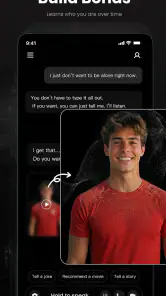
I approached Vidy as an entertainment app with one central question in mind: does a real-time generative AI experience feel useful and comfortable enough to keep in my everyday app rotation? Its store summary points to a real-time generative AI model, while the short description simply identifies it as Vidy. That makes the app sound more like an interactive creative tool than a conventional video library, and that distinction matters when deciding what to expect.
My overall impression is cautious but interested. The appeal is immediate: generative tools can turn a passing idea into something visual without the slower process associated with traditional editing apps. At the same time, this kind of app asks me to think more carefully about what I type, what I upload, and whether the result is worth the time or any optional spending. I would recommend trying it to curious users who enjoy experimenting, but I would not treat it as a replacement for a dependable editor or a private place for sensitive material.
How Vidy fits into real everyday use
Vidy is listed in the Entertainment category and is developed by SILICONWORLD PTE. LTD. It is free to install, carries an Everyone content rating, and currently appears as version 1.3.2. The app requires at least iOS or Android 11, so anyone using an older device should check compatibility before planning around it.
The free entry point is helpful because generative AI is difficult to judge from a description alone. I prefer being able to explore the interface and understand the style of interaction before deciding whether it belongs in my routine. Optional in-app items range from $39.99 to $99.99 each, which places a meaningful boundary around experimentation: the free access is useful for discovery, but I would be especially careful before approving a purchase.
The app has an average rating of 4.2 from 185 ratings and 39 written reviews. That suggests a generally positive early response, although I would read those signals as an invitation to test it personally rather than as proof that every workflow will be smooth. With over 10K installs, it has enough public presence to be more than an entirely unknown download, but it still feels like a product I would evaluate on my own device and habits.
What the real-time approach changes
The phrase “real-time” sets a different expectation from a standard streaming service or a normal editing suite. Instead of browsing a fixed catalog, I would expect the interesting part to happen during interaction: entering an idea, adjusting direction, and watching the system respond. That makes Vidy potentially engaging for quick creative sessions, but it also means the quality of the experience depends on how clearly I communicate what I want.
A practical scenario would be planning a small social post after a day out. I might use a broad concept first, inspect the result, then narrow the mood, subject, or visual direction in a second attempt. The advantage is speed during the idea stage. I do not need to open a full desktop editor just to discover whether a concept has any visual appeal.
That same workflow has a trade-off. Generative output is not automatically a finished asset. I would check details closely before sharing anything publicly, especially text inside an image or video, recognizable faces, hands, logos, and other elements that can look convincing at a glance but fail under inspection. Vidy may help me move from a blank page to a starting point, yet I would still reserve final judgment for myself.
Who will get the most from it
I see the best fit in people who enjoy visual experimentation, need quick inspiration, or want to explore an idea without learning a complex timeline editor. It may also suit someone who likes trying several creative directions before choosing one. The entertainment category is important here: I would approach it as a playful tool for discovery, not as a guaranteed production system.
It is less suitable for a user who needs exact brand consistency, frame-by-frame control, predictable exports, or a strict professional workflow. A conventional editor is usually better when the result must match a script, a set duration, a fixed color palette, or a client’s detailed instructions. Likewise, someone who dislikes iterative prompting may find the experience less satisfying than a template-based app where the available choices are clearly defined from the beginning.
Families should also remember that an Everyone rating describes the broad age suitability of the app, not the wisdom of sharing every possible prompt or personal image. I would still guide younger users toward general creative subjects and supervise any purchase decisions. The rating makes the app approachable, but it does not remove the need for ordinary digital judgment.
Trust begins with what I can actually verify
When I use a generative AI app, trust is not just about whether the output looks good. I want to know what the app asks me to provide, which controls are visible, whether an account is required, and how easily I can stop using it. With Vidy, I would make those checks directly in the app’s permission dialogs, settings, and purchase screens rather than assuming that a creative feature is harmless by default.
I would pay attention to every permission request and ask whether it matches the action I am trying to perform. If I am only exploring a text-based idea, a request for access to unrelated device content would deserve a pause. If I choose to work with photos or video, I would prefer selecting individual items rather than granting broad access where the operating system offers that choice.
Visible controls matter more to me than reassuring language. I would look for account settings, sign-out options, deletion controls, notification switches, and a clear route for managing purchases. If those choices are easy to find, I feel more comfortable experimenting. If they are buried or confusing, I would keep my use limited even if the generated results were impressive.
How I would handle personal or sensitive material
My strongest practical advice is simple: begin with fictional prompts and non-sensitive media. I would not use private documents, identity details, confidential work material, children’s personal images, or anything that could cause harm if it were processed outside my device. This is not a claim about Vidy’s specific data handling; it is a sensible boundary for any generative service when the exact journey of content deserves careful attention.
Before adding a photo, I would inspect the image for background details that are easy to overlook, such as addresses, school logos, badges, screens, or other people. Cropping or using a deliberately staged image can reduce unnecessary exposure. I would also avoid pasting a full name, phone number, email address, or private conversation into a prompt when a neutral description would achieve the same creative result.
One useful habit is to separate experimentation from publication. I would first test an idea with generic wording, then decide whether the concept is strong enough to justify using more specific material. This two-step approach reduces the amount of personal information involved in failed attempts and helps me judge the app’s value before committing more time or content.
I would also review the final result for accidental disclosures. A generated scene can include details that resemble a real person, location, or organization even when I did not intend that association. If the result is for a public post, I would remove or revise anything that could mislead viewers or expose someone else without permission.
Keeping control over spending and routine use
The free installation makes an initial trial straightforward, but the listed purchase range means I would not tap a payment button casually. I would check exactly what an item unlocks, whether the purchase is one-time or recurring, and whether the operating system requests confirmation. I would also keep purchase authentication enabled, particularly on a shared device.
My preferred testing method would be to set a small personal limit before opening the app. I would try several different creative tasks, note which ones genuinely save time, and only then decide whether a paid item has a clear purpose. If I cannot explain what the purchase changes in my workflow, I would skip it. Generative apps can make repeated experimentation feel productive even when the results are not useful, so a limit protects both money and attention.
I would treat notifications in the same way. If the app offers reminders or promotional messages, I would keep only the alerts that help me return to an unfinished creative task. Entertainment apps can become distracting when every prompt to reopen them looks urgent. A quieter setup makes it easier to judge whether I am using Vidy because I enjoy it or simply because it keeps asking for attention.
A more reliable way to experiment
My first session would not begin with a complicated request. I would start with a clear, harmless idea and observe how the app responds. Then I would change one element at a time rather than rewriting everything. This makes it easier to understand which wording affects the result and prevents me from confusing a better prompt with a random improvement.
I would keep a short note of prompts that produce useful directions, but I would avoid storing personal information in that note. A compact description of the visual goal is enough. Over time, this creates a reusable creative process without turning the app into a repository of sensitive material.
Another helpful trade-off is deciding when to stop iterating. If several revisions are only making minor cosmetic changes, I would export or save the strongest version and finish the work elsewhere. The real-time nature of Vidy encourages another attempt, but endless adjustment can be less efficient than moving into a normal editor for cropping, timing, captions, or final review.
I would also compare the output with the original purpose before sharing it. For a private joke or mood board, an imperfect result may be exactly what makes it entertaining. For a public announcement, school project, or business post, accuracy and clarity matter more than novelty. In those cases, a traditional app with direct controls may be the better choice, even if Vidy gets me to the first concept faster.
Where alternatives still have the advantage
Compared with a conventional video editor, Vidy’s likely strength is idea generation rather than precise assembly. An editor gives me predictable control over clips, transitions, audio, text, and timing. If I already know exactly what I want, that predictability is valuable. Vidy makes more sense when I am still deciding what the visual direction should be.
Compared with a template-driven entertainment app, the generative approach may offer more room for unusual concepts, but it can also require more patience. Templates are faster when I want a familiar format with minimal decisions. Vidy is more appealing when I want to explore something that does not fit a preset. I would keep both types of tools available rather than expecting one app to handle every creative situation.
Compared with a general-purpose AI assistant, a dedicated entertainment app may feel more focused for visual play. However, I would still judge Vidy by the controls it exposes, the clarity of its permissions, and the usefulness of its results—not simply by the presence of AI in its description. A specialized label does not automatically mean better privacy, better output, or better value.
My cautious verdict after weighing the trade-offs
I would recommend trying Vidy if you want a free starting point for real-time generative entertainment and are comfortable treating the results as experiments. Its current version, 1.3.2, gives interested users a concrete build to evaluate, while the Everyone rating keeps the app broadly approachable. The strongest reason to install it is curiosity: it can help turn a vague visual idea into something you can react to.
I would skip it if your priority is complete editing control, guaranteed consistency, or a workflow involving confidential material. I would also avoid paying for an item until the free experience has shown a specific benefit in your own routine. The higher purchase range makes deliberate testing more important than impulse experimentation.
My final advice is to use Vidy with clear boundaries. Start with fictional prompts, grant only permissions that match the task, inspect account and purchase controls, and review every generated result before sharing. The best way to use this app is as a fast creative springboard, not as an automatic substitute for your judgment. With that mindset, it is an interesting entertainment tool worth exploring; without it, the novelty of real-time generation can easily outweigh the practical value.
Pros
- Generates realistic AI videos with impressive visual quality.
- Real-time processing makes experimentation quick and interactive.
- Useful for creators testing ideas
- scenes
- and visual concepts.
- Can reduce the time needed for basic video production tasks.
- Suitable for users exploring modern generative video technology.
Cons
- Output quality may vary depending on the prompt and source material.
- Real-time generation can require a powerful device or stable connection.
- AI results may include unnatural motion or visual inconsistencies.
- Advanced features may have usage limits or require paid access.
- Generated content can raise copyright and privacy concerns.

- Category
- Entertainment
- Version
- 1.3.2