VectorVest Stock Advisory
- 626.00
- 4.5
- Installs
- 500.00K
- Price
- Free

Screenshots
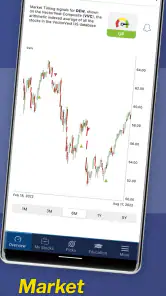
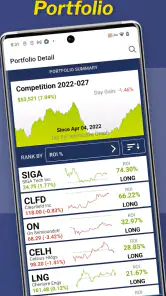

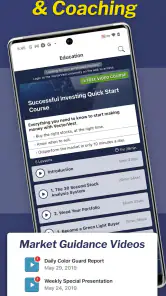
Analysis by Reviewed
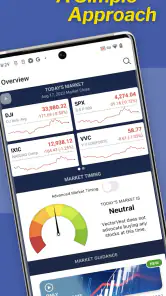
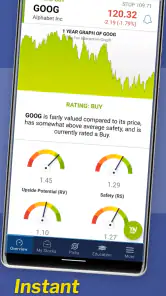
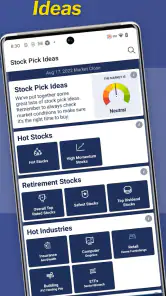
I approached VectorVest Stock Advisory as a finance app for people who want to study shares away from a desktop. Its central promise is straightforward: it puts stock analysis in a mobile setting so I can check ideas, review market information, and make a more deliberate decision before acting. That sounds simple, but the real question is whether a tool like this remains useful after the first burst of curiosity. In my experience, it can, although only when I treat it as a research companion rather than a shortcut to effortless investing.
Developed by VectorVest, Inc., the app is free to install and is rated for Everyone. It has built a sizeable audience, with more than half a million installs and an average rating of 4.5 from roughly 2.6 thousand ratings. Those figures suggest that it has found a practical role for many users, but they do not remove the need to understand its working style. Stock analysis is still work, and this app is most valuable when it helps organize that work instead of encouraging impulsive decisions.
From first-week curiosity to a repeatable research habit
The first week is likely to feel productive because the app gives a focused reason to open it. Rather than using a general finance app that mixes news, prices, alerts, and unrelated market content, I can approach VectorVest Stock Advisory with a specific question: which shares deserve a closer look? That narrower purpose is useful when I am trying to move from vague interest to a shortlist.
I would not use the opening session to decide what to buy. A better first step is to choose a small group of companies I already understand, then compare them consistently. The important benefit is not a single result on the screen; it is learning how the app frames a stock and whether that framework makes sense alongside my own research. This prevents the common mistake of treating an app’s presentation as a complete investment case.
One practical workflow is to use the app after reading a company announcement or noticing unusual market activity elsewhere. I can search for the company, examine the available analysis, and write down what still needs checking before I form an opinion. That makes the app a filter for attention. It helps me decide where to spend time, rather than pretending that a quick glance is enough.
The mobile format is especially convenient for short sessions. I might review a watchlist during a commute, revisit a company after work, or check an idea while planning my weekend research. These moments are useful because they turn stock analysis into smaller tasks. I do not need to sit down for a long session every time, but I still need discipline: a phone screen can make a complex decision feel deceptively easy.
For a new investor, the first-week appeal comes from having a dedicated place to explore stocks instead of jumping between a broker, a news reader, and scattered web pages. For a more experienced investor, the appeal is different. The app can serve as a mobile checkpoint when I want to review an idea without opening a full desktop setup. It is less about replacing every other tool and more about making the first pass faster.
That distinction matters when comparing it with ordinary brokerage apps. A broker is designed primarily for account management and transactions, while a general market app often emphasizes live quotes, headlines, and broad tracking. VectorVest Stock Advisory belongs closer to the analysis side of the category. I would use a brokerage app to place an order, but I would prefer a research-focused tool when I am still deciding whether an order deserves to exist.
How I would use it during an ordinary week
Imagine I am considering adding a consumer company to my long-term watchlist. On Monday, I use the app to locate the share and note the analysis that attracts my attention. On Tuesday, I compare that impression with the company’s recent reports and business outlook. Later in the week, I return to see whether my original reasoning still holds. The app is useful in this scenario because it creates a repeatable review point, not because it eliminates the need for outside reading.
A less obvious advantage of this routine is that it exposes inconsistency in my own thinking. If I keep changing my reason for liking a stock every time I reopen the app, that is a warning sign. I may be reacting to presentation or short-term movement rather than following a clear plan. Used this way, the app becomes a mirror for my process. That is a more durable benefit than simply finding an interesting ticker.
I also recommend separating discovery from conviction. During the first pass, I can use the app to identify candidates. During the second pass, I should ask whether the company fits my time horizon, risk tolerance, and portfolio balance. This two-stage workflow is important because a strong-looking analysis screen does not automatically answer personal questions about position size or financial goals.
What remains useful after the novelty fades
After the first month, the app has to earn its place through repeated usefulness. Its lasting value depends on whether I can return to the same research habits without feeling that every session is just another search for a new idea. The best use is ongoing review: maintaining a manageable watchlist, checking whether a thesis has changed, and deciding which companies deserve deeper attention.
This is where a dedicated stock-analysis app can outperform a news-heavy alternative. News applications are good at showing what is happening now, but they can encourage a reactive rhythm. I may open them because a headline is loud, not because the company matters to my plan. A research tool gives me a better chance of returning to a defined list and asking a calmer question: has anything important changed?
There is also value in using it as a pre-trade pause. Before I place an order through my broker, I can revisit the stock and check whether I am buying because of a considered thesis or because I am afraid of missing a move. That extra step is small, but it can improve decision quality. The app does not need to make the decision for me to be valuable; it only needs to slow down a careless one.
Still, month-to-month value depends on the user’s willingness to maintain context. If I only open the app when I want confirmation for a purchase, it becomes a confirmation machine rather than a research tool. I get more from it when I record why a stock entered my watchlist and what would make me remove it. Even a simple note outside the app can make later reviews more honest.
The current version is 1.33.72301, and the app supports devices running Android 6.0 or later. That broad compatibility makes it approachable for people using older Android hardware, although the experience will naturally depend on the phone’s screen, speed, and system condition. I would check that my device handles financial apps comfortably before building a daily routine around it.
The real maintenance burden
The maintenance burden is not mainly technical; it is mental. A stock-analysis app can be easy to open but difficult to use well. I need to keep my watchlist focused, revisit old assumptions, and resist turning every new result into an action. If I follow too many companies, the app may create more noise than clarity.
I would begin with a compact list linked to a clear purpose. For example, I might separate companies I already own from companies I am researching and from companies I am watching only for learning. That separation prevents a speculative idea from quietly receiving the same status as a holding that affects my finances. It also makes short review sessions more meaningful because I know what each item is doing on the list.
A useful maintenance habit is to schedule reviews rather than checking constantly. A weekly session can cover the main names, while a deeper monthly session can challenge the reasons behind them. This approach reduces the temptation to react to every movement. It also answers a common concern about mobile investing tools: I do not need to stare at the app all day for it to be useful.
Another important habit is to pair the app with primary information. I would not let a mobile analysis screen replace company filings, official announcements, or careful reading of a business’s financial position. The app can help me choose where to look, but it should not be the only source supporting a serious investment decision. This is particularly important for unfamiliar companies, volatile sectors, and any purchase that would materially affect my budget.
The price structure also deserves attention. The application itself is free, while in-app purchases range from $4.99 to $399.99 per item. That broad range means I would examine the purchase screen carefully before assuming that the free installation provides every part of the experience I want. A free download is useful for trying the workflow, but it should not be confused with a promise that every advanced element is included without payment.
My advice is to test the basic routine first. I would spend enough time deciding whether the app’s analysis style fits me before considering any optional purchase. If I cannot explain how the tool improves my process, paying for more access is unlikely to solve the problem. This is one of the clearest trade-offs: the app may become more useful as a paid research resource, but the value depends on regular, informed use rather than enthusiasm during the first session.
Where fatigue begins
The first source of fatigue is the amount of interpretation required. Investors often want a clean answer, but stock analysis rarely works that way. If the app presents a stock as attractive, I still have to ask why, for how long, and under what conditions that view could change. Users looking for a simple green-light-or-red-light experience may find this frustrating.
The second source is repetition. Reviewing the same watchlist can feel routine, especially when there is no meaningful change in the companies being followed. That is not necessarily a flaw in the app; it is a sign that good investing often contains quiet periods. Even so, a mobile tool can encourage unnecessary checking because it is always close at hand. I need to decide in advance what information would justify a new action.
A third issue is the danger of overconfidence. A polished analysis interface can make a decision feel more objective than it really is. I remind myself that an organized screen does not remove market risk, business uncertainty, or the possibility that my assumptions are wrong. The app is strongest when it improves my questions, not when I treat it as an authority.
There is also a fit problem for users whose main need is trading execution. If I want fast order entry, account balances, tax documents, or a simple portfolio overview, a conventional brokerage application may be the better daily tool. VectorVest Stock Advisory makes more sense before the transaction, during research and review. Using it as a replacement for every financial app would create unnecessary friction.
Likewise, casual users who only want a quick price check may find the dedicated analysis approach more than they need. A lightweight quote app can be faster for that narrow task. The trade-off is that a simple quote tool usually gives me less structure for evaluating an idea. I would choose based on the job: quick monitoring favors simplicity, while deliberate stock research favors a more specialized environment.
Beginners should also be realistic about the learning curve. The app may help introduce a more systematic way to look at shares, but it cannot provide personal financial advice or decide how much risk is appropriate for an individual. I would start with companies and concepts I can explain in plain language, then use the app to support learning. If a result is confusing, that is a reason to research further, not a reason to act quickly.
Small practices that improve the experience
My first practical tip is to write a one-sentence thesis before revisiting a stock. It might say that I am interested because of the company’s business quality, valuation, growth prospects, or another specific reason. After using the app, I ask whether its analysis strengthens, weakens, or leaves that thesis unchanged. This keeps the session focused and reduces the habit of browsing without a decision framework.
Second, I would compare like with like. Looking at a technology company, a bank, and a utility through exactly the same expectations can produce misleading conclusions because their businesses behave differently. The app can help me organize candidates, but I still need sector context. A result is more useful when I understand what kind of company I am evaluating and what risks are normal for that industry.
Third, I would use a cooling-off period before acting on a newly discovered idea. I can mark it for later review, read independent material, and return when the initial excitement has faded. This is particularly helpful on a phone, where discovery and action may feel only a few taps apart. The most valuable feature in my routine is the pause between finding an idea and funding it.
Fourth, I would treat the watchlist as a research queue, not a collection of predictions. A company can remain interesting without being suitable for purchase today. That mindset makes the app less emotionally demanding. I do not need every stock to produce an immediate verdict; I only need to know which ones deserve attention next.
Finally, I would review paid options with a specific question in mind. If an optional purchase costs anywhere from $4.99 to $399.99, I want to know what recurring task it improves and how often I will use that improvement. The exact amount is less important than whether the purchase supports a sustainable habit. Spending more on a tool I open rarely is not a productivity gain.
Who should make room for it?
I think the app suits investors who enjoy researching individual companies and want a mobile companion for that process. It is also a good match for people who feel that a standard broker gives them too little analytical structure. Someone building a watchlist, reviewing possible purchases, or trying to replace impulsive headline reading with a repeatable routine may find a lasting role for it.
It is less suitable for someone who wants a fully automated investing experience, a guaranteed recommendation, or a single app for trading, banking, budgeting, and portfolio administration. It is also not my first choice for a person who only wants current prices with minimal interpretation. In those situations, a broker, a simple quote service, or a broader personal-finance app may be more efficient.
Because it is free to install and carries an Everyone age rating, the barrier to trying it is low. The more important barrier is willingness to learn how to use analysis responsibly. I would not recommend installing it merely to collect more market information. I would recommend it when I have a clear process that the app can support.
My long-term verdict
VectorVest Stock Advisory earns lasting space on my phone when I use it as a structured checkpoint between curiosity and action. Its strongest quality is not that it makes investing effortless; it is that it can give stock research a repeatable mobile home. That remains useful after the novelty fades, provided I keep the watchlist focused and continue checking ideas against independent information.
The limitations are equally clear. The app does not remove the need for judgment, and its specialized focus may feel excessive for quick price checks or everyday brokerage tasks. Optional purchases require careful consideration, especially because the in-app price range is wide. A user who expects instant certainty may become tired of the interpretation and maintenance that responsible investing demands.
My recommendation is therefore measured but positive. Try the free version with a small research routine, not with the expectation of finding instant answers. Use it to compare companies, challenge your assumptions, and create a cooling-off step before a trade. If that habit becomes part of the way you invest, the app can justify returning to it month after month. If you only want execution or headlines, another finance app will probably serve you better.
In short, this is a finance app for people prepared to do some thinking. I would keep it installed because it can turn scattered stock interest into a more organized review process, but I would keep my expectations grounded. Its recurring value comes from disciplined use, not from novelty or a promise of effortless investing.
Pros
- Provides data-driven stock ratings and market analysis tools.
- Helps compare stocks using consistent fundamental and technical metrics.
- Includes portfolio tracking and watchlist features for ongoing monitoring.
- Offers market timing signals that may support more disciplined decisions.
- Educational resources can help users understand investment concepts.
Cons
- Subscription costs may be high for casual or small-scale investors.
- The volume of indicators can feel overwhelming for beginners.
- Signals are not guarantees and investments can still lose value.
- Some features may require higher-tier plans or additional payments.
- Real-time data availability may vary by subscription and market coverage.

- Category
- Finance
- Version
- 1.33.72301