Universe Splitter
- 37.00
- 4.4
- Installs
- 5.00K
- Price
- $1.99
Screenshots
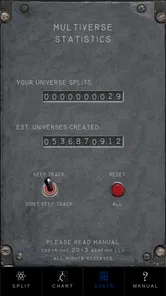
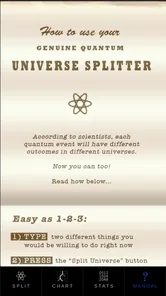
Analysis by Reviewed
I’d treat Universe Splitter as a playful decision aid, not a serious way to settle choices with real consequences. Its premise makes an ordinary either-or question feel like a small experiment, which is exactly where I think the app is most enjoyable: when the stakes are low and you’re happy to let chance provide a nudge.
When the choice is the easy part
The tricky moment is often not entering two options but deciding whether the question is suitable for a random pick. “Which film should we watch?” is a good fit; “Should I accept this job?” deserves more thought than a tap can provide. I’d use the app to break a tie after weighing the important factors, rather than as a substitute for that judgment.
It also works best when the alternatives are clear and genuinely comparable. If one option is vague or bundles several decisions together, the result may not help much. Before using it, I’d rewrite the question so each choice describes one specific action. That small step makes the outcome easier to act on and avoids treating an unclear prompt as a meaningful answer.
Why the setup matters
Before opening the app, I’d settle on the two options you are genuinely willing to choose. This sounds obvious, but it prevents a common kind of friction: entering a choice you do not really want, then feeling annoyed when it comes up. A random result is only useful if both outcomes are acceptable enough to act on.
Keep the options parallel in scope. “Take a walk now” and “stay in and read” are concrete alternatives; “get healthier” and “watch one episode” are not. In the second pairing, one side is a long-term goal and the other a single activity, so the outcome cannot fairly resolve the larger question. Narrow the broad option until the two sides describe comparable next steps.
I’d also use the app after, not during, a conversation about a shared decision. If two people are choosing dinner, first agree on choices that work for both of you, then use the result to break the tie. That makes the app a fun finishing move rather than a way to sidestep someone’s preferences or pressure them into accepting an outcome.
What the experience is built around
Ever wondered what it would be like to make decisions based on the principles of quantum physics? Well, the Universe Splitter app has got you covered! This quirky and intriguing app claims to split the universe every time you make a decision, offering a unique take on decision-making that's as entertaining as it is thought-provoking.
More From Our News Desk

 Gmail
Gmail in a Busy Inbox: Who Benefits Most?
From first account to crowded workday, Gmail earns its place through dependable search and flexible sorting—but its best fit depends on how much inbox maintenance you can tolerate.

 Prime Video
Switching to Prime Video: What Changes in Your Viewing Routine
Prime Video can make a compelling second home for streaming, but switching means learning a different catalog, rental layer, and route from browsing to playback.

 Universal TV Remote Control
 Works Best as a Reliable Backup
A phone remote earns its place through quick setup and reliable habits. Here is how to get more from Universal TV Remote Control—and where its limits show.

 Weather - By Xiaomi
Weather by Xiaomi Review: Clear at a Glance, Less Clear Up Close
Xiaomi’s weather app makes everyday forecasts quick to scan, but its calm surface can leave useful details and recovery paths harder to find than they should be.

 X
X Under Pressure: Can It Recover When Posting Goes Wrong?
A resilience-focused review of X, examining setup, mistaken posts, interruptions, weak connections, and the gaps that matter when recovery needs to be dependable.

 Clash of Clans
 Is Won Between the Battles
Its raids are quick; its community is a long-term project of coordination, teaching, rivalry, and shared responsibility—with all the friction that entails.
Latest News



Made by Aerfish LLC, this entertainment app costs $1.99, so I’d think of it as a small paid novelty rather than a free utility. It has a 4.4 average from around 130 ratings, with over 5,000 installs. It’s rated for Everyone, and version 1.73 requires Android 6.0 or later. Those details make it easy to judge whether it fits your device and whether the price makes sense for an occasional bit of fun.
What can trip up a decision
So, here's the scoop: Universe Splitter is an app that uses the concept of quantum superposition to help you make decisions. You input two choices you're torn between, and the app supposedly splits the universe, creating an alternate reality for each option. While we can't confirm the actual science behind it, it's a fun way to add a little spice to your decision-making process.
The most useful setup check is the wording of your choices: keep them short, distinct, and on the same level. “Cook at home” versus “order dinner” is easier to interpret than a broad plan on one side and a tiny detail on the other. If an outcome feels confusing, I’d first simplify the prompt and try again only if the choice is still genuinely low stakes. That is more helpful than repeatedly tapping in the hope of getting a preferred answer.
A simple workflow for everyday use
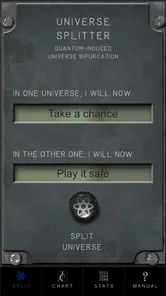
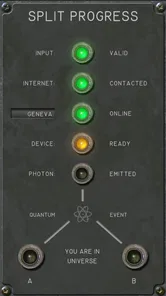
Using Universe Splitter is a breeze. Once you fire up the app, you're prompted to enter two decisions. For example, "Should I go to the gym today or watch Netflix?" With a simple tap, the app consults a quantum device in Geneva, Switzerland, to determine which universe you'll follow. It's all about embracing the randomness and enjoying the ride!
For a realistic use, imagine a friend and me spending too long choosing between two nearby lunch spots. I’d enter the actual options, accept the result as a tiebreaker, and move on instead of reopening the debate. If the answer exposes that I was hoping for the other choice, that reaction is useful too: it gives me a clue about my preference, even if I don’t follow the result.
A useful habit is to decide in advance what you will do with the outcome. For example, if the result points to one of two meals, treat it as the plan and stop comparing menus; if you notice immediate reluctance, take that as information about what you actually want. This keeps a quick choice quick and stops the app from becoming another step in an endless loop of reconsidering.
Compared with a coin toss, the app makes the act feel more memorable and gives the decision a conversation-friendly framing. A notes app or pros-and-cons list is better when the options need careful comparison; asking a friend is better when their knowledge or perspective matters. This is for the moment when you have already narrowed things down and want a playful way to finish.
When another tool is the better fit
The alternatives are useful for different reasons. A coin toss is immediate and free of presentation; a random-picker tool can be more convenient if you have several options rather than two. A list is more work, but it lets you compare costs, timing, and consequences. Universe Splitter sits in a narrower space: it gives a two-choice decision a distinctive science-fiction-like framing, which can make a mundane tie-breaker more entertaining.
That framing is also the main trade-off. If you enjoy the concept, the experience may feel worth paying for even when a coin could technically do the same job. If you only care about getting a random answer as quickly as possible, the added theme may not justify the cost. I would decide based on whether I want the novelty itself, not on expecting more analytical help than a random choice can offer.
It is particularly suited to small decisions that are reversible: picking a playlist, choosing a casual activity, or deciding which of two simple chores to do first. For a choice involving a deadline, a budget, or someone else’s wellbeing, random selection can hide the factors that should guide the decision. I would use a written comparison or ask someone who understands the situation instead.
Who will enjoy it—and who should pass
If you're someone who struggles with decision paralysis, this app might just be your new best friend. By taking the pressure off making the "right" choice, it turns decision-making into a fun experiment. Plus, it's a great conversation starter at parties. Who wouldn't be intrigued by an app that claims to alter the fabric of reality?
I’d recommend it to curious users who enjoy unusual science-themed ideas, quick social games, or a light nudge for everyday choices. I’d skip it if you expect a detailed decision coach, evidence-based advice, or a tool that explains the pros and cons of each option. The paid price also makes less sense if you only want a plain random picker and would be satisfied with a coin toss.
It can also be a poor fit for anyone who dislikes leaving even minor choices to chance. If you already know that you will reject one result, the app is unlikely to resolve the indecision; it may simply add another moment to debate. In that situation, choosing based on mood, convenience, or a clear personal preference is more direct.
On the flip side, if you're a skeptic who needs concrete evidence, you might find the app's premise a bit out there. But hey, it's all in good fun, and sometimes that's all that matters.
My practical verdict
In a world where choices abound and decisions can be daunting, Universe Splitter offers a playful escape. It's perfect for those moments when you just can't decide and need a little nudge from the cosmos. Whether you believe in its quantum claims or just enjoy the novelty, the app is a delightful addition to your digital toolkit. So, next time you're caught in a decision-making bind, why not let the universe decide for you?
Remember, life is full of possibilities, and with Universe Splitter, you're only one quantum decision away from a whole new adventure.
My advice is to treat the result as a prompt, not a command. If the app does not seem to respond as expected, I’d check that the two choices are entered distinctly and that the app is running on a compatible Android version before assuming the idea itself has failed. If a decision depends on health, money, safety, or another person’s needs, pause and use better information instead. For a light tie-breaker, though, its particular mix of randomness and quantum-themed presentation is the point—and that makes it more charming than a bare coin flip for the right kind of user.
If the result does not help
When an outcome feels unusable, I would not keep rerunning the same question until I see the answer I prefer. That turns a tiebreaker into a way of chasing a preferred result and makes the decision less clear. First check whether the wording describes two distinct actions and whether you are willing to accept either. If not, revise the choices or make the decision another way.
If the app appears not to respond, I’d keep troubleshooting simple: confirm that the device meets the Android requirement, close and reopen the app, and try a short, clearly worded pair of choices. These are general checks rather than a guarantee of a fix. If the issue continues, it may be more sensible to choose another method for that decision than to rely on an app that is not behaving as expected.
Keeping the novelty in perspective
The quantum language is part of the fun, but I would separate the story around the choice from the quality of the choice itself. The app can make a lunch decision feel theatrical; it cannot tell you whether a restaurant is open, whether you have enough time, or whether the option suits everyone involved. I’d check those practical details first and use the result only after both choices remain viable.
That distinction is why I see it as entertainment rather than advice. It can help move a small decision along, and its unusual framing gives friends something to react to, but it is not a replacement for research, planning, or a conversation. Used within those limits, it has a clear purpose without asking the random result to carry more weight than it should.
Universe Splitter Frequently Asked Questions
Who develops Universe Splitter, and what kind of app is it?
Universe Splitter is an entertainment app developed by Aerfish LLC. Its central idea is to use quantum physics as a playful way to split your universe into two timelines, making it a lighthearted option for people who enjoy unusual decision-making concepts. If you are looking for a practical planning or science-learning tool, its entertainment focus is worth keeping in mind before downloading.
What is Universe Splitter and how does it work?
Universe Splitter is a unique app that uses the concept of quantum physics to help you make decisions. It operates by splitting the universe into two parallel universes every time you make a decision, offering you an outcome in each universe. This app is for those who like to explore the fun side of decision-making with a twist of scientific theory.
Is Universe Splitter scientifically accurate?
While Universe Splitter is based on real scientific theories of quantum mechanics and parallel universes, it is primarily designed for entertainment. The app doesn't provide scientifically proven outcomes, as the idea of parallel universes remains theoretical and unproven in practical terms. Users should enjoy it as a fun tool rather than a serious scientific application.
Can I use Universe Splitter to make serious life decisions?
Universe Splitter is intended for entertainment and should not be relied upon for making significant life decisions. While it offers a creative approach to decision-making by simulating the splitting of universes, it is not a substitute for careful consideration and judgment in real-life scenarios. Use it for fun and lighthearted decisions instead.
Do I need an internet connection to use Universe Splitter?
Yes, Universe Splitter requires an internet connection to function. The app connects to a quantum server to generate outcomes for your decisions, simulating the splitting of universes. Ensure you have a stable internet connection to enjoy uninterrupted use of the app's features and explore its unique decision-making process.
Pros
- Offers unique quantum physics-based concept
- User-friendly interface with simple navigation
- Provides a fun and interactive experience
- Encourages curiosity and learning
- No intrusive ads during use
Cons
- Limited features in free version
- Might not appeal to non-science enthusiasts
- Requires internet connection
- Occasional bugs with updates
- No multiplayer or social sharing features