True Religion | Since 2002
- 463.00
- 4.8
- Installs
- 100.00K
- Price
- Free

Screenshots



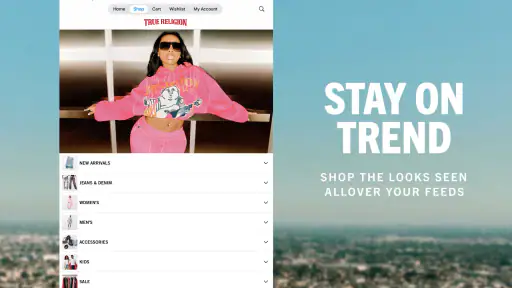
Analysis by Reviewed
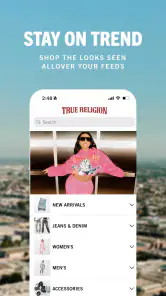
I approached True Religion as a shopping app for one clear purpose: browsing premium denim and streetwear from my phone without turning the experience into a general marketplace search. That focus is its main appeal. Rather than mixing thousands of unrelated labels, the app keeps attention on True Religion’s own men’s and women’s clothing, which makes it easier to explore a particular look and decide whether a piece fits my wardrobe.
The app is free, developed by True Religion Sales LLC, and aimed at everyone from a content-rating perspective. It runs on Android 8.0 or later, so it remains accessible on many older phones as well as newer devices. Its current version is 2025.AW-1.1.2, and the app has passed the 100K-install mark. Those details matter less than the browsing experience itself, but they do show that this is an established retail app rather than a temporary promotional download.
My overall impression is positive, especially if I already know the brand or specifically want denim with a recognizable streetwear identity. The app does not try to replace every fashion retailer. Instead, its value comes from narrowing the shopping trip to a single label and making that label’s range easier to inspect. That sounds simple, but it changes how I shop: I spend less time filtering out irrelevant brands and more time comparing the cuts, colors, and styling direction that actually interest me.
Focused browsing makes the brand easier to shop
The capability that matters most
The strongest capability here is brand-focused mobile shopping. When I open a broad fashion marketplace, I usually begin with a vague search such as “men’s jeans” or “women’s denim,” then face a long list of competing labels, slightly different fits, and inconsistent presentation. True Religion’s app takes the opposite approach. It puts one fashion identity at the center, so the browsing task becomes choosing among that brand’s denim and streetwear rather than discovering a label from scratch.
That focus is useful when I have a particular aesthetic in mind. True Religion is associated with statement denim and casual streetwear, so I am not using the app to find understated basics from dozens of designers. I am using it to see how the brand expresses its style across different pieces. The distinction is important: the app works best when the brand itself is part of the decision, not merely a name attached to an otherwise interchangeable pair of jeans.
I also found that a dedicated app can make a shopping session feel more intentional. On a marketplace, I may save several items simply because they look interesting beside one another. Within a single-label catalog, I can compare products with a clearer question in mind: do I want a louder pair of denim, a more relaxed streetwear piece, or something that can work with clothes I already own? That narrower frame helps reduce casual scrolling and makes the app more useful for planned shopping.
The real benefit is not simply convenience; it is reduced decision noise. I can concentrate on silhouette and styling instead of repeatedly checking which seller is responsible for an item or whether two products belong to completely different quality levels. For someone who already likes the label, that can be more valuable than having the largest possible catalog.
More From Our News Desk

Clash of Clans Is Won Between the Battles

Android Auto Makes the Case for Quieter Car Software

MobiOffice: Transforming Mobile Productivity with Seamless Integration

EA SPORTS FC™ Mobile Soccer: Redefining Mobile Sports Gaming

How Microsoft OneDrive Became a Mobile Productivity Giant

How Google Translate Breaks Language Barriers Effortlessly
What the focused catalog changes
A single-brand catalog also makes it easier to build a coordinated wardrobe. If I am looking for denim first and then want a top or another streetwear layer to support it, I can stay within the same visual language. That does not guarantee that every item will suit me, but it gives the browsing session more coherence than a generic search result page.
There is a trade-off, though. The same focus that makes the app tidy also limits discovery. If I am comparing True Religion with several other denim labels, I still need another retailer or brand app open elsewhere. This is not a weakness in the app’s basic purpose, but it affects how I plan a purchase. I would use it for evaluating True Religion’s own range, then use a broader shopping service when I need a market-wide comparison of cuts, materials, or prices.
The app is therefore best understood as a direct route into one brand’s shopping experience, not as a universal fashion search engine. That distinction should guide expectations before installing it. People who enjoy browsing one label in depth will likely appreciate the concentration. People who want to search by budget across many competing brands may find the experience too narrow.
How I would use it in practice
My preferred workflow starts with a specific wardrobe gap rather than an open-ended browse. For example, I might decide that I need a new pair of jeans for casual weekends, then use the app to inspect the denim range before moving on to streetwear that can be worn with it. This keeps the session practical. I am less likely to buy a visually striking item that has no place in my existing rotation.
A useful habit is to judge a product in two passes. First, I look at whether the overall shape and design fit my taste. Then I pause and ask whether I can name at least three outfits I would wear with it. This is particularly important with expressive denim, where a strong design can dominate an outfit. The app makes inspiration easy, but I still have to do the wardrobe math myself.
I would also avoid treating the first appealing image as a final decision. Clothing photos are good for understanding the intended look, but fit is personal. Before buying, I would carefully review the available sizing information and compare it with a pair of jeans or a garment I already own. That extra step is more important in an app-based purchase because I cannot try the item on while browsing.
A realistic everyday shopping scenario
Imagine I am getting dressed for a casual event and realize that my current jeans are either too plain or too worn. I have a limited break during the day, so visiting a store is inconvenient. I open the app, browse the denim selection, and look for a pair that gives my usual sneakers and plain shirt a stronger focal point. Once I find a promising style, I check whether the rest of the brand’s streetwear offers a layer that works with it.
That scenario shows where the app earns its place. I am not wandering through every fashion category on the internet. I already know the kind of brand language I want, and the app lets me investigate it quickly from my phone. If I am uncertain about the boldness of the design, I can step back and compare it with more restrained choices in the same catalog rather than jumping between unrelated stores.
The same workflow can help with gifts, although I would be more cautious. Denim sizing is difficult to guess for another person, and a distinctive streetwear item depends heavily on personal taste. I would use the app to understand the available styles, but I would only buy for someone else if I knew their preferred fit and the type of statement they were comfortable wearing.
Where it sits beside ordinary shopping alternatives
Compared with a physical True Religion store, the app is more convenient for browsing at home and easier to revisit when I am not ready to buy. A store offers the advantage of seeing fabric and trying on clothing, while the app is better for quiet comparison without sales-floor pressure. I see the two experiences as complementary rather than interchangeable.
Compared with a large fashion marketplace, the app feels more focused and brand-consistent. A marketplace wins when I want to compare several labels, search for a lower-cost alternative, or combine products from different retailers in one order. The dedicated app wins when I have already narrowed my choice to True Religion and want to explore that collection without unrelated results competing for attention.
Compared with a mobile browser, the app’s main advantage is having a dedicated destination for repeat visits. If I already shop the brand, opening its app is more direct than searching for the official store again. If I only plan one quick visit, however, the difference may not be dramatic enough to justify adding another shopping app to my phone. The value increases with repeated browsing and a genuine interest in the label’s range.
The practical trade-offs before buying
The biggest limitation is the unavoidable distance between viewing clothing on a screen and wearing it. Denim is especially sensitive to rise, leg shape, stretch, and personal proportions. A product can look excellent in an image and still feel wrong once I move around. The app helps me discover and compare, but it cannot remove the need for careful sizing or the possibility that a fit will not match my expectations.
Another trade-off is style intensity. True Religion’s identity is part of the attraction, yet that identity may not suit someone building a quiet capsule wardrobe. If I prefer minimal branding and neutral basics, a broader essentials retailer may be a better starting point. I would not recommend downloading this app simply because it sells clothing; I would recommend it when the brand’s denim and streetwear direction already appeals to me.
There is also a risk of overbuying when browsing a tightly curated brand catalog. Because the pieces share a recognizable look, several items can seem to belong together even when I do not need all of them. My solution is to choose the anchor item first, then consider supporting pieces only if they fill a real gap. This keeps the app from turning a focused search into an impulse-heavy session.
For shoppers who need extensive cross-brand research, the app may feel incomplete by design. I cannot use a single-brand environment to answer every question about the wider denim market. If my priority is finding the best value, comparing many fits, or checking alternatives from different designers, I would start with a marketplace or a multi-brand retailer instead, then return here if True Religion remains a serious option.
Who gets the most from the app
The best audience is someone who already recognizes True Religion’s style and wants a direct way to browse its men’s or women’s denim and streetwear. It is also a good fit for people who prefer making clothing decisions from a phone, especially when they want to revisit a collection over several short sessions rather than complete a purchase immediately.
I think it can be useful for style-led shoppers who build outfits around one standout piece. The app supports that kind of browsing because I can begin with denim and then consider complementary streetwear within the same brand world. It is less suitable for someone whose first question is, “Which label offers the cheapest acceptable pair of jeans?” That shopper needs comparison breadth more than brand depth.
The app is free to download, and its Everyone age classification makes it broadly accessible as a shopping destination. Its average rating is 4.8 from around 4.4 thousand ratings, with roughly 463 written reviews, which suggests a strong reception among people who have chosen to use it. I treat those figures as encouraging rather than decisive: a rating cannot tell me whether the catalog suits my taste or whether a particular fit will work for my body.
My buying advice for new users
Before installing, decide whether you want a True Religion shopping destination or a general fashion comparison tool. That single question will prevent disappointment. If you want the former, the app’s narrow focus is a strength. If you want the latter, it will probably be more efficient to begin with a multi-brand service and use this app only for closer inspection.
Once inside, I would start with a concrete need, save myself from browsing every category, and compare potential purchases against clothes already in my wardrobe. For jeans, I would measure a pair that fits well and use that as a reference rather than relying on a familiar size label alone. For streetwear, I would consider whether the item is an everyday layer or a statement piece, because those serve very different roles in an outfit.
I would also give myself a pause between finding an item and purchasing it. A short break makes it easier to distinguish genuine wardrobe value from the excitement of a strong product image. This is one of the advantages of mobile shopping when used deliberately: I can close the app, think about the purchase, and return later without needing to repeat a store visit.
Final assessment
After using it as a focused shopping tool, I see True Religion as a sensible choice for people who want direct access to the brand’s premium denim and streetwear. Its best quality is concentration: it removes the clutter of a general marketplace and lets me evaluate one distinctive fashion identity on its own terms.
That focus comes with clear boundaries. The app cannot replace trying on denim, and it is not the right destination for broad price comparison or multi-brand discovery. Still, for a shopper who already likes True Religion’s look, those limitations are reasonable. I would recommend it to a friend who wants to explore the label carefully from a phone, especially when the goal is to find one strong wardrobe piece rather than browse fashion without a plan.
My verdict: install it when brand-specific browsing is what you need. Use it as a considered route to True Religion’s clothing, not as a substitute for the entire fashion-shopping world. That expectation matches the app’s strongest capability and gives the experience its best chance to be genuinely useful.
True Religion | Since 2002 Frequently Asked Questions
Is True Religion | Since 2002 free to download, and what devices can run it?
True Religion | Since 2002 is free to download and is a shopping app for browsing the brand’s clothing and accessories. It supports devices running iOS 8.0 or later, so it’s worth checking your device’s operating system before installing. The app is aimed at people who want to explore True Religion styles and shop from a mobile device.
Who develops True Religion | Since 2002, and is it suitable for all ages?
The app is developed by True Religion Sales LLC and has an Everyone content rating. Its shopping focus makes it relevant to people browsing the brand’s products, while the age rating indicates that its content is considered suitable for a general audience. As with any shopping app, purchases and account activity should be managed by the person responsible for the device.
What is True Religion | Since 2002?
True Religion | Since 2002 is the official shopping experience for the True Religion brand, known for premium denim, casual clothing, footwear, and accessories. The app or mobile shopping platform lets you browse current collections, view product details, check available sizes and colors, and place orders from a mobile device. It is designed for customers who want convenient access to the brand’s latest styles and promotions.
Can I shop for men’s, women’s, and children’s clothing through the app?
Yes, the True Religion shopping experience generally includes collections for men, women, and children, although the exact categories and available inventory may change over time. You can browse denim, tops, jackets, loungewear, footwear, bags, and other accessories. Product availability, sizes, and colors depend on the current stock, so some popular items may sell out quickly or be available only in selected regions.
Does True Religion | Since 2002 offer discounts or special promotions?
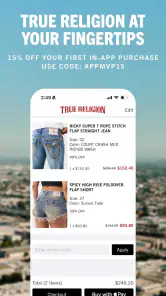
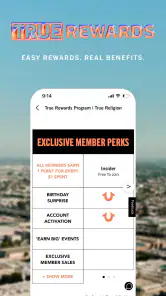
The app may feature seasonal sales, limited-time promotions, member offers, first-order incentives, and special discounts on selected products. Promotions can vary according to your location, account status, and the campaign period. Before completing a purchase, review the offer’s terms, expiration date, exclusions, and any minimum spending requirement. Some discounts may not apply to sale items, limited releases, or shipping charges.
Pros
- Easy access to the brand’s latest clothing and accessory collections.
- Product photos make it simple to inspect styles before buying.
- Mobile shopping lets you browse the catalog wherever you are.
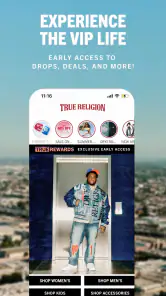
- Useful for discovering limited releases and seasonal promotions.
- A convenient way for True Religion fans to keep up with new drops.
Cons
- The catalog may focus mainly on premium-priced fashion items.
- Some products or sizes may sell out quickly after release.
- App usefulness is limited if you rarely shop True Religion products.
- Shipping costs and delivery times can vary by location.
- Promotional content may feel excessive for users who browse casually.
- Category
- Shopping
- Version
- 2025.AW-1.1.2