Trading Ideas
- 13.00
- 4.3
- Installs
- 10.00K
- Price
- Free

Screenshots



Analysis by Reviewed
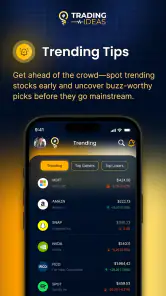
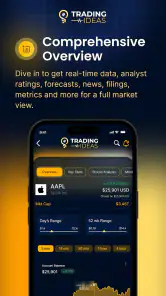
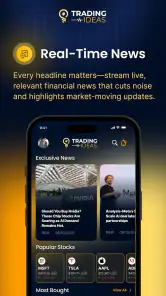
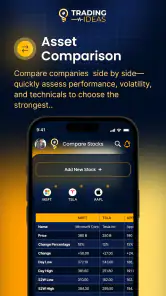
Trading Ideas is a free news and magazines app from Life Water Media that I found most useful when I wanted a quick view of market activity without opening a full desktop-style research platform. Its focus is clear: trading ideas, market movements, trends, instant alerts, news, and deeper intelligence gathered into one mobile experience. That makes it more purposeful than a general news reader, but also more specialized than an app designed for casual headlines.
I approached it as a reader rather than as a replacement for a broker. That distinction matters. The app can help me notice topics worth researching, follow developing market stories, and build a routine around financial news. It does not remove the need to check primary sources, understand risk, or make independent decisions. For me, its value is in shortening the distance between “something is happening” and “I know what I should investigate next.”
The app sits in the News & Magazines category, carries an Everyone content rating, and is available at no cost. It has passed the early stage of being an unknown download, with over ten thousand installs and a 4.3 average from roughly forty ratings. Those figures suggest a small but generally positive audience rather than a long-established mass-market service, so I would treat it as a focused tool worth testing rather than an authority on its own.
How Trading Ideas works for a market-news routine
Readability and navigation during a quick check
The strongest part of the concept is its narrow purpose. Instead of asking me to browse every section of a broad newspaper, Trading Ideas points attention toward market-related information. That focus can make a difference when I have only a few minutes. I can open the app with a question in mind—what is moving, which trend is attracting attention, or whether a developing story deserves a closer look—and use the available news and intelligence as a starting point.
I also like the separation between fast-moving information and deeper material implied by the app’s presentation. Instant alerts suit a user who wants to notice changes quickly, while deeper intelligence is more appropriate when I have time to examine context. These are different reading modes, and mixing them together can make a financial app feel noisy. A useful habit is to treat an alert as a prompt, not as a conclusion: read it, identify the underlying subject, and then look for enough context before acting.
For readability, financial language is naturally denser than ordinary news. Abbreviations, company names, sector terminology, and rapid price-related discussion can be difficult for a newcomer to scan. I found the app better suited to someone who already understands basic market vocabulary. A first-time investor may still use it, but should expect to pause and look up terms rather than assume every item is self-explanatory.
My practical advice is to avoid opening the app with no purpose at all. A short routine works better: first scan the main market stories, then select only one or two subjects for closer reading. This prevents the common problem of turning a useful news tool into an endless stream of headlines. It also makes the app easier to use for people who find crowded information environments tiring.
Motor and sensory considerations in everyday use
On a phone, financial news is often consumed in brief sessions: standing in a queue, commuting, or checking a notification between tasks. That makes simple scrolling and clear touch targets important. Trading Ideas is most comfortable for me when I can give it my full attention for a few minutes, rather than trying to interact with it while walking or handling something else. Anyone with limited dexterity should test whether the app’s controls feel forgiving on their particular device before making it part of a time-sensitive routine.
People with visual sensitivities may also want to control how and when they consume market information. Alerts can be useful, but frequent interruptions can become distracting, especially when several stories concern the same theme. I would begin with a restrained notification habit and check the app deliberately instead of allowing every update to dictate my attention. That approach is helpful not only for accessibility, but also for making calmer decisions.
For users who enlarge text or rely on device-level display settings, the important question is whether the reading experience remains comfortable at the preferred size. News apps can become awkward when larger text causes excessive scrolling or hides context, so I would test a few article screens rather than judge the experience from the opening page. Users who depend on screen readers or other assistive technology should likewise try the primary reading and navigation paths directly, because the usefulness of a market app depends on being able to reach the actual story content, not merely its surrounding controls.
Audio is another consideration for people who cannot comfortably read for long periods. I would not choose Trading Ideas on the assumption that every item can be consumed hands-free. Its central purpose is written market information, and users who need a fully audio-first news workflow may find a dedicated spoken-news service more suitable. That is not a criticism of the app’s subject matter; it is a reminder that the best financial tool is the one that fits the way a person can reliably receive information.
Situational access for work, travel, and focused research
A realistic use case for me is the start of a workday. I can spend a few minutes checking the latest market themes, note which stories appear connected, and then decide whether any deserve a longer look elsewhere. This is more efficient than jumping between unrelated general-news sections, particularly when I already know I am looking for trading-related material. The app works as a first filter in that workflow.
Another scenario is a quiet evening review. Rather than reacting immediately to every alert, I can return to the topics that caught my attention and read them with a notebook or research document open. This is where the combination of current news and deeper intelligence becomes more useful. I can separate observations from decisions: the app supplies material to consider, while my own process determines whether the information is relevant, reliable, and actionable.
Travel creates a different challenge. A small screen, poor concentration, glare, and intermittent connectivity can all reduce the quality of financial reading. I would avoid making an important decision from a rushed glance at an alert while on public transport or in a noisy place. Trading Ideas is more useful as a quick awareness tool in those settings, followed by careful verification when I can focus.
The app may also suit users who want a shared discussion starter. I can send a market topic to a friend or colleague in conversation, but I would still explain the difference between a news item and a recommendation. That distinction is especially important for less experienced readers, who may interpret confident trading language as a direct instruction. The app’s value increases when it encourages questions rather than impulsive action.
How it compares with ordinary alternatives
Compared with a general news app, Trading Ideas has a clearer financial identity. A mainstream reader may offer broader coverage of politics, culture, technology, and business, but it can take longer to find the market stories that matter to me. Trading Ideas is the better fit when finance is the reason I opened the app in the first place.
Compared with a broker’s application, its role is different. A broker is built around accounts, orders, holdings, and portfolio actions. Trading Ideas is better understood as an information layer. I would use it before opening a brokerage app, not instead of one. The separation can actually be healthy: research and execution are less likely to blur when I do not treat a news alert as an automatic trading command.
Compared with a specialist research terminal or a highly established financial-news service, the appeal here is approachability and focus. A professional platform may provide more tools, data views, and advanced workflows, but it can also demand more time and knowledge. Trading Ideas is easier to position as a mobile starting point for market awareness. The trade-off is that serious users may eventually need other sources for detailed verification, historical analysis, portfolio context, or specialized research.
One non-obvious advantage of keeping this app separate from a trading account is psychological. When I read a market story without immediately seeing a buy or sell button, I have a better chance of treating it as information instead of pressure. For readers who are prone to impulsive reactions, that distance may be more valuable than a longer list of features.
What the current version means for new users
The current release is version 1.8.9, and it supports devices running Android 8.0 or later. That makes it reachable for people who do not have the newest phone, although the actual comfort of reading will still depend on screen size, display settings, and device performance. I would check compatibility before planning a daily workflow, especially if I rely on an older handset or accessibility settings that place extra demands on an app.
Because the app is free, trying it carries little financial commitment. That makes a short evaluation period sensible: install it, read several different kinds of market items, observe whether the alert style fits your routine, and decide whether it improves your information process. “Free” should not be confused with “complete.” I would still compare important claims with company announcements, regulatory material, and more than one reputable source before taking action.
The Everyone rating makes it broadly approachable from an age-classification perspective, but financial content can still be demanding. Younger readers or beginners may need help understanding uncertainty, volatility, and the difference between commentary and evidence. The app can introduce market topics, but it should not be the only educational resource for someone learning how investing works.
Remaining barriers and points of friction
The biggest limitation is not the idea itself but the risk of information overload. Alerts and fast market updates are useful only when they improve awareness. If they interrupt too often, repeat the same theme, or encourage me to chase every movement, the app becomes a source of noise. I would build a habit of reviewing notifications in batches and keeping a short list of questions rather than responding to every headline.
Another barrier is interpretation. A trading idea can sound persuasive while still depending on assumptions about timing, risk, liquidity, or the wider market. Readers who want direct, personalized instructions may be disappointed, and they should be. No news-focused app can replace an understanding of personal goals and tolerance for loss. The most responsible use is to gather leads, test the reasoning, and decide independently.
Accessibility can also vary by person and device. Someone with low vision, limited dexterity, attention-related needs, or a preference for audio may experience the app differently from me. I would not promise that every user will find the layout equally comfortable. Instead, I would recommend testing the real tasks that matter: opening an alert, locating the related story, adjusting the text view through device settings, and returning to a previous item without losing place.
There is also a workflow limitation for advanced users. If I need a complete investment dashboard, detailed charting, order execution, tax records, or a unified portfolio view, this is not the tool I would center my process around. Its strength is the discovery and reading stage. Adding too many expectations would make the app seem weaker than it is, when the more accurate conclusion is that it serves a specific part of the journey.
My inclusive verdict on Trading Ideas
Trading Ideas is most useful as a focused market-news companion, not as a standalone investment system. I would recommend it to readers who want trading-related stories, trend awareness, alerts, and a path toward deeper research in a mobile format. The free price makes experimentation easy, and the focused subject matter is more convenient than a broad news app when financial markets are the main reason for checking the phone.
I would recommend a different option to someone who mainly needs hands-free news, highly advanced research tools, portfolio management, or a direct connection to trading actions. I would also be cautious about suggesting it as a first and only resource for a complete beginner. Its content may spark useful questions, but learning the foundations and verifying important information require additional sources.
For inclusive use, I see the best results coming from a deliberate setup: reduce interruptions, read in a comfortable environment, enlarge the display if needed, and test the essential navigation with your own assistive tools. That approach respects different abilities without assuming that one interface works identically for everyone. It also makes the app calmer and more practical for users who simply dislike frantic financial feeds.
Life Water Media has positioned this app around a clear need, and my experience is that the focus helps when I want a quick market briefing or a research lead. Its limitations are equally clear: alerts need discipline, financial language needs context, and serious decisions need verification beyond the app. If you treat it as a doorway into informed research rather than a shortcut to a trade, Trading Ideas can earn a useful place in a thoughtful daily routine.
Pros
- Discover trade setups and market ideas shared by other investors.
- Follow experienced creators to build a personalized ideas feed.
- Useful charts and analysis help explain the reasoning behind each idea.
- Commenting features make it easy to discuss strategies with the community.
- Available ideas cover multiple markets
- assets
- and trading approaches.
Cons
- Some ideas may be speculative and should not be treated as financial advice.
- The quality of analysis can vary significantly between different creators.
- Frequent market updates may lead to information overload for beginners.
- Some advanced features or content may require a paid subscription.
- Ideas can become outdated quickly when market conditions change.

- Category
- News & Magazines
- Version
- 1.8.9