Together Loans
- 272.00
- 4.3
- Installs
- 100.00K
- Price
- Free

Screenshots


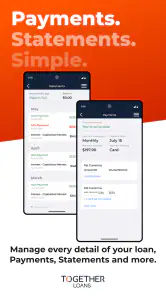

Analysis by Reviewed
Managing a loan is rarely something I want to make more complicated than it already is. That is where Together Loans makes a sensible first impression: it is a finance app from Transform Credit Inc built around keeping a loan in one place. I found the appeal less in flashy extras and more in having a focused destination for checking and handling the loan relationship instead of searching through emails, browser tabs, or paper records.
Together Loans is free to install, aimed at everyone, and available for devices running Android 7.0 or later. It has passed the early trust test for many users, with an average rating of 4.3 from over 600 ratings and more than 100K installs. Those figures do not make it automatically right for every borrower, but they do suggest that the app has found a practical role for people who want a mobile route into their loan management.
What the first week feels like
During the first week, the main benefit is concentration. Instead of treating a loan as something handled only when a payment is due, I can approach it as an account that deserves a regular, visible place in my financial routine. That change sounds small, but it matters when money is tight or when several bills compete for attention.
The app’s purpose is deliberately narrow. Its store summary describes an all-in-one way to manage a loan with Together Loans, so I would not approach it expecting a complete budgeting suite, an investment dashboard, or a replacement for a general banking app. The focused design is useful if my immediate concern is the loan itself. It is less useful if I want to see every account, subscription, and household expense on one screen.
One practical early habit is to open the app when I receive a payment reminder, rather than waiting until the deadline is almost over. That gives me a chance to check the account and confirm that I am looking at the right loan information before making a decision. I also prefer using the same phone and login routine each time, because finance apps become frustrating when access details are treated as something to reconstruct at the last minute.
A realistic example would be a borrower checking the app on payday. They can review the loan account before allocating money to groceries, transport, and other bills. The value is not that the app magically improves the household budget; it is that the loan gets considered at the right point in the monthly routine. For someone who tends to remember repayments only after seeing a late reminder, that visibility can be genuinely helpful.
The first-week experience is also a good time to decide whether this narrow focus suits me. If I mainly need access to loan information and account management, a dedicated app feels more direct than navigating a full website. If I am searching for detailed financial planning tools, credit education, or a unified view of debts from several providers, I would probably need another service alongside it.
Useful habits that are easy to miss
The most valuable workflow is to connect the app with an existing money-check routine rather than opening it randomly. I would pair it with a weekly review of upcoming bills, then use the loan app to verify the loan side of that review. This prevents the common mistake of treating an app as a reminder tool while never changing the behavior around it.
Another useful approach is to check the account after any action involving the loan, not only before a payment. That creates a personal record of what I intended to do and what the account now shows. It is a simple way to catch confusion early, especially for anyone who manages money across more than one bank account or shares household expenses with another person.
I would also keep the app’s role clearly defined. It should be the place I use for the Together Loans relationship, while my bank app remains the place for available cash and scheduled transfers. Mixing those jobs in my head can create false confidence: seeing a loan account does not necessarily mean I have enough money in my bank account to cover the next obligation.
These are not dramatic features, but they are the difference between installing a finance app and actually using it. The app earns its place during the first week when it reduces searching and supports a repeatable check. If it becomes just another icon that I open only after a problem appears, its value drops quickly.
Month-to-month value and everyday usefulness
After the novelty fades, a loan-management app has to justify itself through repetition. Together Loans can do that for borrowers who want a consistent mobile checkpoint for their loan. The recurring value comes from reducing friction around routine account checks, not from offering entertainment or a stream of new content.
I see the strongest fit for someone who already uses a smartphone as the center of their financial life. That person is more likely to appreciate a dedicated app than a borrower who prefers statements, phone calls, or a desktop browser. The app’s free price also lowers the barrier to trying it, although free access should not be confused with the cost-free nature of borrowing itself. The loan’s own terms and obligations remain the important financial consideration.
Compared with a standard banking app, Together Loans has a more specific job. A bank app is usually better for checking cash flow, moving money, and seeing everyday transactions. Together Loans is more relevant when I want to focus on the loan relationship itself. Compared with a website, a mobile app can be quicker for a short check, especially when I am away from a computer. The trade-off is that a website may feel more comfortable for reading lengthy information or handling a complicated task.
Compared with a budgeting app, the difference is even clearer. A budget tool can help me plan the whole month, but it may not provide the same direct connection to a particular loan provider. Together Loans should therefore be judged as a focused companion, not as a complete financial command center. I would keep a broader budgeting method if I needed to understand debt alongside rent, utilities, savings, and discretionary spending.
One non-obvious advantage of this separation is mental clarity. When I open a general finance app, the loan can be buried among transactions. A dedicated loan app makes it harder to pretend that the balance or repayment task is not part of the month. For borrowers who benefit from seeing one obligation without the noise of their entire financial life, that focus can be more useful than a larger feature list.
There is also a trade-off. A separate app creates one more maintenance point. I have to remember that loan information lives in one place and daily banking information lives in another. If I stop checking either one, the separation becomes inconvenient rather than helpful. The app works best when I accept that it is a specialist tool and build it into a simple routine.
Who benefits most over several months
I would recommend it most readily to an existing Together Loans customer who wants a mobile way to stay connected with the loan. It is also a reasonable choice for someone who prefers short, regular checks over occasional paperwork. The app can support a monthly review before a payment date, a weekly glance during a period of tighter finances, or a quick confirmation after handling an account task.
I would be more cautious about recommending it to someone who has loans with several providers and expects one app to combine them all. A dedicated provider app is not automatically a debt-management system. In that situation, I would use Together Loans for its own account and a separate overview method for the rest, while taking care not to confuse a summary with official account information.
It may also be the wrong choice for a person who rarely uses mobile finance tools or who feels more secure speaking directly with a lender. An app cannot replace the reassurance of a conversation when the issue is unusual, urgent, or difficult to explain through a screen. Its best role is routine management; exceptional problems may call for a different channel.
Maintenance, friction, and the reasons usage can fade
The maintenance burden is fairly easy to understand. I need a compatible device, a reliable way to access the account, and the discipline to keep the app in my regular money routine. The current version is 9.1.2, which indicates that the product is being maintained as an active app rather than left as a one-time download. Still, an updated app does not remove the need for me to keep my own contact, login, and payment habits organized.
Finance apps also carry a higher attention burden than casual apps. I do not want to rush through a screen simply because I am standing in a queue or distracted by other tasks. A better habit is to check the loan when I have enough time to read what I am seeing and compare it with my bank balance separately. That extra care is especially important when a mistake could affect a repayment.
Another source of friction is the app’s limited scope. If I open it expecting a full picture of my finances, I may feel that something is missing even though the app is doing the job it was designed to do. The solution is not to force it into a broader role. I would use it alongside a bank app or a basic budget, then judge it on whether it makes the Together Loans part easier to manage.
There is a subtler maintenance issue too: repeated checking can become either useful or obsessive. A borrower who checks once before a planned payment may gain clarity. A borrower who repeatedly refreshes without a specific reason may gain anxiety instead. I prefer a scheduled review with a clear purpose: confirm the account, verify my own funds elsewhere, and record any follow-up action.
The app’s everyone age rating makes it broadly accessible from a content perspective, but financial responsibility still depends on the individual using it. Younger or less experienced users may need help understanding loan obligations, because an easy mobile interface does not make borrowing simple. I would treat the app as an access tool, not as a substitute for reading loan documents or asking questions when the terms are unclear.
What can cause long-term fatigue
The biggest risk is that the app becomes a passive reminder of debt rather than an active aid. If every opening produces the same anxious feeling and no clear next step, I may start avoiding it. To prevent that, I would only open it as part of a practical task: reviewing the month, checking an account detail, or preparing for a repayment.
Another fatigue point is duplication. If I already receive reminders, monitor my bank account, and keep a written budget, Together Loans adds value only if it provides a more direct view of the loan. If it simply causes me to repeat the same check in several places without improving my understanding, I would reduce the routine to the method that is clearest and most reliable.
People can also lose interest when they expect visible progress from an app itself. Loan progress depends on payments and the underlying agreement, not on how often I open the screen. The app can help me stay informed, but it cannot make an unaffordable repayment affordable or turn a complicated financial decision into a one-tap solution. That boundary is important to keep in mind.
For privacy-conscious users, the right question is not whether a finance app looks polished, but whether they are comfortable using a mobile channel for this relationship. I would install it only on a device I control, protect access to the phone, and avoid reviewing sensitive information on a shared screen. Those are sensible precautions for any loan-management tool, but they matter more here than they would for a simple game or weather app.
My long-term verdict
After the first-week appeal wears off, Together Loans remains worthwhile when I use it as a focused monthly checkpoint. Its lasting value is practical: it gives a Together Loans borrower a dedicated place to manage the loan instead of relying entirely on scattered reminders or a general banking interface. That is a modest promise, but it is a useful one when it matches the way I handle money.
I would not choose it as my only financial app. It does not replace a bank account, a household budget, or a broader debt overview. I would also skip it if I do not have a Together Loans relationship to manage, since its narrow purpose is precisely what makes it useful for the right audience and limited for everyone else.
The strongest long-term workflow is simple. I would keep the app available, check it at a consistent point in the month, compare the loan information with my separate bank balance, and write down any action that needs follow-up. That routine avoids both extremes: ignoring the loan until a deadline and opening the app constantly without a plan.
Transform Credit Inc has positioned this as a dedicated finance companion rather than an all-purpose money manager. In my experience, that focus is its main strength and its main limitation. If I want direct, repeatable access to my Together Loans account on a supported Android device, the free app is easy to justify. If I need consolidated finances, detailed planning, or personal help with an unusual situation, a bank app, budgeting tool, website, or direct support channel may serve me better.
My final view is positive but measured: the app earns lasting space when it turns loan management into a calm, repeatable habit. It does not need constant novelty to be useful. It needs to make the right account easy to reach at the right moment, and for the borrower it is built to serve, that is enough to remain relevant month after month.
Pros
- Simple way to explore shared borrowing options in one place.
- May help users compare loan offers from multiple providers.
- Online application process can save time and reduce paperwork.
- Useful for borrowers seeking alternatives to traditional bank loans.
- Loan details and eligibility requirements are usually easy to review.
Cons
- Approval
- rates
- and terms depend on the selected lending partner.
- Some applicants may receive high interest rates or additional fees.
- Sharing financial information online may raise privacy concerns.
- Not all users will qualify for an offer after submitting details.
- Loan inquiries could affect credit decisions
- depending on the provider.

- Category
- Finance
- Version
- 9.1.2