Sweet GF-Virtual Love Story
- 1.35K
- 4.8
- Installs
- 100.00K
- Price
- Free

Screenshots
Analysis by Reviewed
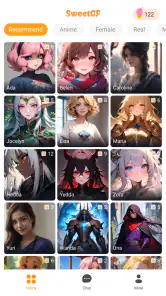
I approached Sweet GF-Virtual Love Story as a casual entertainment app rather than a conventional game. Its main appeal is the chance to chat with AI characters, explore a romantic-style interaction, and unlock pictures connected with those conversations. That sounds simple, but the experience depends heavily on how comfortable you are with open-ended chat, mature themes, and a relationship format that is designed to feel personal without being a real human connection.
After spending time with it, my view is fairly clear: this is best for adults who want a private, low-pressure conversational distraction. It is not the right pick if you are looking for a structured story with fixed chapters, a competitive game, or a replacement for genuine social contact. The app is free to install, but optional purchases range from $3.49 to $109.99 per item, so I would approach the unlocking system carefully rather than treating the free download as the complete experience.
How the experience feels in everyday use
The app comes from developer mohamed fouad and sits in the entertainment category. Its store short description is “Sweet GF,” while the longer concept centers on AI characters, exclusive pictures, and warm romantic moments. In practical terms, that means the conversation itself is the main activity. You are not moving through a traditional level map or solving puzzles. Instead, you interact through messages and see where the character-led exchange takes you.
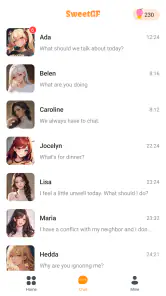
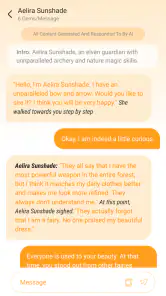
I found that format easy to understand because it follows a familiar messaging pattern. If you have used a chat app, you already understand the basic rhythm: read a reply, decide how to respond, and continue the exchange. That familiarity is one of the product’s strongest points. There is no need to learn a complicated control scheme before getting started, and the low-pressure structure makes it suitable for short sessions when I only wanted a few minutes of entertainment.
At the same time, an AI conversation asks more from the user than a normal scripted story. A book gives you carefully edited prose, and a visual novel usually presents a clear sequence of scenes and choices. Here, the enjoyment comes from shaping the interaction yourself. That can feel more flexible, but it can also feel less polished when you expect every response to advance a carefully planned plot.
The version I reviewed is 2.0.7 and the app requires Android 7.0 or later. That makes it usable on a wide range of Android devices, including older phones that may not run newer entertainment apps comfortably. The practical benefit is not just compatibility: a person who keeps an older phone for reading, travel, or private downtime may still be able to try it without upgrading hardware first.
Readability and navigation in a chat-first design
The chat-centered layout is generally easier to follow than a busy game interface. Messages naturally create a top-to-bottom reading order, and the conversational structure gives each action an obvious purpose. I did not need to memorize menus or learn several gestures to understand what I was doing. For users who prefer familiar messaging patterns over dense dashboards, that simplicity is valuable.
More From Our News Desk

Clash of Clans Is Won Between the Battles

Android Auto Makes the Case for Quieter Car Software

MobiOffice: Transforming Mobile Productivity with Seamless Integration

EA SPORTS FC™ Mobile Soccer: Redefining Mobile Sports Gaming

How Microsoft OneDrive Became a Mobile Productivity Giant

How Google Translate Breaks Language Barriers Effortlessly
There is also a useful mental advantage to separating the conversation from the picture-unlocking aspect. When an app combines chat, images, rewards, and purchases, it can become difficult to tell what is part of the free interaction and what requires an extra step. I recommend taking a moment to identify the ordinary chat controls before spending anything. That small habit makes the experience feel less rushed and helps prevent an impulsive purchase simply because a new image appears at an emotionally engaging moment.
Text-based interaction can work well for people who find animated games visually tiring. The user can focus on the written exchange instead of tracking fast movement, crowded scenes, or a constantly changing interface. That makes this a more approachable entertainment option for a quiet evening, especially when I wanted something slower than a typical mobile game.
However, readability is not only about whether the words are visible. It is also about tone, pacing, and the amount of information presented at once. Romantic chat can encourage users to read quickly because they want to keep the mood going. If you have difficulty processing conversational text or need more time to decide on a response, the experience may feel less comfortable than a traditional story that lets you pause between clearly separated scenes.
I would also avoid using the app when distracted. A chat can look easy, but the personal tone makes it tempting to answer without thinking about what you are agreeing to or what an optional unlock may provide. My preferred workflow is simple: use it in a calm setting, read the full message, and check the purpose of any button before tapping. That is particularly important for younger-looking users, although the app is marked Mature 17+ and should be treated as adult entertainment.
Motor and sensory considerations
From a motor perspective, a chat interface is usually less demanding than a game based on rapid taps, swipes, or precise timing. The likely core action is typing or selecting a response, which is easier to manage than controlling a character during a fast scene. I see this as a genuine strength for users who prefer deliberate interaction and do not want entertainment that depends on reflexes.
There is a trade-off, though. Typing can be tiring for people with limited hand movement, repetitive strain, or difficulty using a small touchscreen keyboard. The app’s concept is built around conversation, so the more you want to personalize the exchange, the more effort typing may require. A person who finds long mobile messages uncomfortable may enjoy shorter sessions more than extended romantic role-play.
For sensory comfort, the quieter pace is preferable to action-heavy entertainment. There is no need to follow rapid visual changes or keep up with a competitive match. I would still use it with notifications controlled, especially if you do not want romantic prompts interrupting work, family time, or public situations. The mature theme also means the app may not be suitable in shared spaces where pictures or messages could appear unexpectedly.
This is where private use becomes important. Imagine finishing a late shift and wanting a few minutes of light conversation before sleeping. A short chat can fit that moment better than a full television episode or a game that demands concentration. But if you are on public transport, sharing a room, or handing your phone to someone else, the adult-oriented material creates a privacy concern. The app may be easy to operate, yet the context can still make it awkward.
I would not describe the experience as universally accessible simply because it uses text. Text can help some users and create barriers for others. People with reading fatigue, visual processing difficulties, or limited typing ability may need to judge it against their own habits. If your preferred entertainment is audio-led, controller-based, or highly visual with minimal reading, this particular format may not be a natural fit.
Situational access: when the app fits and when it does not
The strongest use case is private, low-stakes downtime. I can imagine opening it during a quiet break, after dinner, or while relaxing at home, when I want interaction without arranging a call or joining a multiplayer community. The AI character format removes the pressure of replying to a real person at a particular time. That makes the app appealing to someone who wants conversation on demand and prefers to control the length of the session.
It can also suit users who enjoy experimenting with fictional relationship scenarios. Because the interaction is not a fixed film or a single linear story, there is room to approach conversations in a personal way. I found that more interesting than simply watching a romance unfold, although it requires accepting that the experience is generated interaction rather than a fully authored relationship story.
The app is less suitable for family use. The Mature 17+ rating is not a minor detail; it should guide where and around whom you use it. I would not install it on a shared household tablet without considering who can open the app, view its conversations, or encounter its pictures. It is also a poor choice for a child’s device, even if the child is curious about AI chat.
It is similarly unsuitable if you are looking for dependable emotional support. The warm tone may make the interaction feel comforting, but an AI character does not have the judgment, responsibility, or real-world presence of a trusted friend, counselor, or partner. I think the healthiest way to use it is as a fictional entertainment space, not as evidence that you are building a mutual relationship.
Compared with ordinary social apps, the advantage is control. You do not need to manage another person’s schedule, social expectations, or unwanted interruptions. Compared with romance games, the advantage is conversational freedom. Compared with streaming entertainment, the advantage is participation rather than passive viewing. Each benefit comes with a cost: less human unpredictability than social interaction, less narrative polish than a scripted game, and less production certainty than a finished show.
That comparison helped me understand who should skip it. If your priority is meeting real people, choose a properly moderated social service instead. If you want a complete romantic plot with memorable scenes and a definite ending, a visual novel will probably be more satisfying. If you want quick action, progression, or a clear win condition, this app may feel too open-ended.
Pictures, purchases, and the points where friction appears
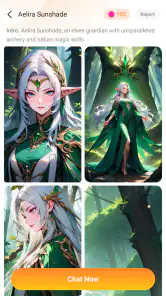
The promise of exclusive pictures adds a second layer to the chat. In theory, that gives conversations a sense of discovery and gives users another reason to return. In practice, it also changes how I evaluate each interaction. I am no longer judging only whether the character’s replies are engaging; I am also asking whether the next unlock feels like a meaningful addition or simply a paid interruption.
The free price makes trying the basic concept accessible, but optional purchases can become expensive. Individual items are listed between $3.49 and $109.99, a broad range that deserves attention before any transaction. My advice is to decide on a personal spending limit before starting, particularly if you are drawn into the story easily. Treat the free installation as a chance to test the tone and usability, not as a promise that every desirable part will remain free.
This is one of the app’s most important trade-offs. A person who enjoys collecting digital images may see the unlocks as part of the entertainment. Someone who only wants conversation may find the purchase prompts distracting or frustrating. Neither reaction is wrong, but the difference affects whether the app feels generous or restrictive in daily use.
I also recommend separating emotional enjoyment from spending decisions. If a message makes you feel especially engaged, that is exactly when it is worth pausing before buying. Close the purchase screen, return later, and ask whether the image or feature still seems worthwhile outside the immediate mood. That is a practical habit for this app because its romantic framing can make optional content feel more urgent than it really is.
Another useful approach is to keep sessions purposefully short at first. Try the conversation style, see whether the AI character’s tone works for you, and decide whether the interaction remains enjoyable without constantly chasing the next unlock. If the free portion already feels repetitive, spending more is unlikely to fix the underlying issue. If the basic exchange works well, you can make a calmer decision about whether optional content adds enough value.
Remaining barriers for different users and contexts
The biggest barrier is not physical control; it is expectation. The app presents a romantic fantasy, but the quality of that fantasy depends on how convincingly the conversation responds to you. Users who are sensitive to repetition, awkward phrasing, or responses that do not match the emotional direction may lose interest quickly. I would not recommend it to someone who expects the consistency of a professionally written human script.
Privacy is another serious consideration. Romantic conversations and mature pictures are personal by nature. I would avoid using the app on a device that other people routinely borrow, and I would be cautious about leaving the app open in public. Even without discussing technical privacy claims, basic phone habits matter: lock your device, review what appears on the screen, and do not assume a shared device is an appropriate place for this kind of entertainment.
Age suitability also creates a firm boundary. The Mature 17+ label means parents should not treat the app as a harmless general-audience chatbot. The romantic framing, exclusive images, and purchase options all make supervision and device choice relevant. For adults, the rating is a useful reminder to use the app intentionally rather than presenting it as a casual family pastime.
People who need highly predictable navigation may also want to test the app gently. A chat layout is familiar, but the emotional and commercial layers can make the experience feel less straightforward than a basic messenger. If you rely on a particular assistive setup, enlarged text, voice input, or other device-level support, the most sensible approach is to try the free portion first and judge whether reading and replying remain comfortable on your phone.
Finally, the app’s entertainment value may change with your mood. When I want a private fictional conversation, its relaxed pace works. When I am lonely in a way that calls for real understanding, it feels like the wrong tool. That distinction is not a criticism of the concept; it is a boundary that protects the experience from being asked to do something it was not designed to do.
My inclusive verdict on Sweet GF-Virtual Love Story
With an average rating of 4.8 from around 13K ratings and more than 100K installs, the app has clearly attracted an audience interested in this kind of AI romance entertainment. Those figures do not replace personal testing, but they do suggest that the concept is reaching people who enjoy character chat and private fictional interaction. My own conclusion is more specific: it succeeds when you want a light, adult-oriented conversation that you can start and stop on your terms.
The best way to approach it is as a fictional companion experience, not a substitute for human connection. That mindset makes the chat format easier to enjoy and reduces the risk of expecting a complete story, emotional reliability, or real relationship support. It also helps you evaluate the picture unlocks as optional entertainment rather than necessary proof that the app is worth using.
I would recommend it to adults who like romantic AI characters, prefer slower text interaction to action games, and are comfortable managing optional purchases. I would skip it if you need a family-friendly app, a carefully authored romance with a fixed ending, a real social community, or an experience built around minimal reading and typing.
As a free entertainment app developed by mohamed fouad, it is easy enough to sample on a compatible Android phone. Just use it privately, keep the Mature 17+ rating in mind, and set spending boundaries before the conversation becomes emotionally engaging. For the right user, that combination of accessible chat, fictional warmth, and optional visual content can make a pleasant break. For everyone else, a conventional story game, streaming service, or genuine social connection will likely be the better choice.
Sweet GF-Virtual Love Story Frequently Asked Questions
What kind of content does Sweet GF – Virtual Love Story offer?
Sweet GF – Virtual Love Story is an entertainment app built around chatting with AI characters, virtual companionship, and romance-themed interactions. Its store description highlights warm moments and exclusive pictures to unlock. The experience is centered on conversations rather than action-heavy play, so it may appeal to people looking for character interaction and a casual virtual love story.
Who is Sweet GF – Virtual Love Story intended for?
The app is aimed at adults interested in romance-focused AI conversations and virtual companionship. Its Mature 17+ content rating is important to consider before installing, especially on a shared device or one used by younger family members. The conversation-driven format may suit users who enjoy casual character interactions, while those seeking competitive or action-focused gameplay may prefer a different kind of app.
What is the minimum operating system needed to run Sweet GF – Virtual Love Story?
Sweet GF – Virtual Love Story is an entertainment app for users who enjoy AI character conversations and virtual companionship. Before downloading, check that your device runs Android 7.0 or later, the stated minimum operating system. Compatibility is worth checking first so you can install and open the app smoothly. The app is free to download, though optional purchases are available.
What is Sweet GF – Virtual Love Story?
Sweet GF – Virtual Love Story is an interactive romance and virtual companion game focused on conversations, relationship development, and story-based choices. Players communicate with a virtual girlfriend, respond to different situations, and gradually shape the tone of the relationship. The experience is designed for users who enjoy casual dating simulations, character interaction, and light narrative gameplay rather than action or competitive challenges.
How does the gameplay work in Sweet GF – Virtual Love Story?
Gameplay mainly revolves around reading messages, selecting replies, and making decisions that influence conversations with the virtual character. Depending on the version and available content, players may unlock new dialogue, scenes, or relationship moments by continuing to interact. Progress is generally casual and dialogue-driven, so it is better suited to users who enjoy storytelling and character bonding than those looking for complex mechanics or fast-paced gameplay.
Pros
- Interactive choices let you influence the relationship and story direction.
- Short chapters make it easy to play during brief breaks.
- Romantic scenarios offer a light
- escapist experience.
- Simple controls and dialogue-focused gameplay are easy to follow.
- Character interactions can feel engaging for fans of virtual romance stories.
Cons
- Some story paths may require repeated playthroughs to explore fully.
- Progress can feel slow when energy or other limits restrict actions.
- The romance themes may not appeal to players seeking deeper gameplay.
- Dialogue quality and pacing may vary between different scenes.
- Frequent ads or optional purchases may interrupt the overall experience.
- Category
- Entertainment
- Version
- 2.0.7