SpeedCash: Play & Earn Money
- 1.46K
- 4.4
- Installs
- 100.00K
- Price
- Free

Screenshots



Analysis by Reviewed
I approached SpeedCash: Play & Earn Money as an entertainment app rather than as a dependable income source. Its basic idea is easy to understand: spend time playing selected mobile games and work toward cash or gift-card rewards. That makes it appealing to anyone who already enjoys trying new games, but the important question is how comfortable the experience is for different people, devices, and everyday situations.
After looking at the way the app presents its offer and the practical decisions a user has to make, my view is fairly balanced. SpeedCash can add a small reward layer to casual gaming, especially for patient users who are happy to treat progress as a bonus. I would not recommend installing it with the expectation of replacing paid work or producing predictable earnings. The entertainment value comes first, and the reward element needs realistic expectations.
How SpeedCash feels to use in everyday situations
Readability and navigation matter more than the headline promise
SpeedCash is listed in the Entertainment category and comes from Leaps Gaming. The app is free to install, which removes the first barrier for curious users, and its mature age rating of 17+ is an important part of the decision. I would not treat it as a family-friendly rewards app simply because the activity involves games. Parents should make their own decision about whether it belongs on a teenager’s device.
The first thing I would look for in an app like this is a clear separation between available games, progress, rewards, and any action needed to claim them. That separation is especially important for people who read slowly, have attention difficulties, or are using a smaller phone. A busy rewards interface can turn a simple choice into a guessing exercise, so I recommend taking a moment to identify the main navigation areas before starting a game.
Users with low vision may find small labels, dense cards, or weak contrast tiring, particularly during a long session. I would increase the phone’s system text size and display scaling before deciding whether the app is comfortable. That test is more useful than judging the interface from a quick glance: a screen that seems fine at default settings can become difficult when progress details and reward conditions are shown together.
I also suggest reading each offer slowly instead of tapping the first attractive game. Reward apps often depend on the user understanding the exact action being tracked, and a rushed tap can lead to disappointment if the activity does not match what the user intended. This is one of the less obvious skills needed with SpeedCash: the best experience comes from treating each offer as a small task with conditions, not as a simple download-and-play button.
For people who use screen magnification, voice controls, or a screen reader, the practical question is whether every important control is named and reachable in a predictable order. I would test the app with those tools before investing significant time. I would also avoid assuming that a standard Android layout automatically means complete assistive-technology support; comfort can vary considerably from one device and operating-system configuration to another.
More From Our News Desk

Clash of Clans Is Won Between the Battles

Android Auto Makes the Case for Quieter Car Software

MobiOffice: Transforming Mobile Productivity with Seamless Integration

EA SPORTS FC™ Mobile Soccer: Redefining Mobile Sports Gaming

How Microsoft OneDrive Became a Mobile Productivity Giant

How Google Translate Breaks Language Barriers Effortlessly
Motor and sensory considerations during play
SpeedCash itself is a gateway to other games, so the physical demands will not be identical from one activity to another. Some games may suit a user who prefers simple taps, while others may require rapid reactions, repeated swipes, or precise control. That variation is both a strength and a limitation: users can potentially choose something that matches their abilities, but the app does not turn every game into an accessible experience.
Someone with limited dexterity should favor games that allow slower interaction and avoid offers that appear to depend on constant fast input. A useful personal rule is to stop testing an activity as soon as the controls cause strain. The reward is not worth aggravating hand, wrist, or finger discomfort, especially when the same time could be spent on a less demanding option.
Players who are sensitive to flashing effects, rapid motion, loud audio, or crowded visual scenes should inspect each game separately. The reward platform is not a guarantee that the games it presents will suit every sensory profile. Lowering media volume, using the phone’s motion or animation settings where available, and taking short breaks can make a session easier, but those adjustments will not solve every design issue inside a third-party game.
This is where SpeedCash differs from a conventional entertainment app. With a streaming service, I can usually choose content and adjust playback. With a reward-based game app, I am also evaluating whether the interaction itself is physically and mentally comfortable. The reward can encourage me to continue beyond the point where a normal player would stop, so I think users should set a time limit before beginning rather than letting progress dictate the length of the session.
Situational access: where the app fits and where it does not
A realistic use case would be a person waiting for an appointment with a phone, a stable connection, and a few spare minutes. SpeedCash can give that idle time a purpose without requiring a separate purchase. I would choose one short, manageable activity, play only while waiting, and stop when the appointment approaches. That approach keeps the app in its proper role: a casual distraction with a possible reward, not a commitment.
It may also suit someone who likes sampling mobile games but dislikes searching through an entire app store. The curated reward context can provide a reason to try something unfamiliar. The trade-off is that the financial incentive may make an average game feel more valuable than it really is. I recommend asking whether I would still enjoy the activity without the reward; if the answer is no, I would keep the session brief.
SpeedCash is less suitable when the phone is being used in a low-connectivity environment, when battery life is critical, or when the user cannot comfortably switch between the reward app and a game. I would not start an offer immediately before boarding transport, entering a meeting, or going somewhere without reliable access. Interruptions can make any progress-based activity frustrating, and the pressure to finish can encourage poor decisions.
It is also not a good fit for shared devices or phones used by several family members. A rewards workflow needs consistent personal use, and mixing accounts, profiles, or play habits can make progress harder to understand. Anyone who values strict separation between entertainment and personal information may prefer a normal game or streaming app instead of adding a reward layer to the experience.
What the current scale and version suggest
The app has an average rating of 4.4 from around 6.6 thousand ratings, with roughly 1.5 thousand written reviews and over 100 thousand installs. Those figures show that SpeedCash has attracted a meaningful audience, but they should not be read as a promise that every user will have the same experience. Rewards apps can feel very different depending on the games offered, the user’s patience, the phone being used, and how clearly the person understands the requirements.
SpeedCash was released on December 6, 2024, and the current version is 1.4.1. It requires Android 7.0 or newer, so owners of older supported phones may be able to try it without buying a recent device. That broader compatibility is useful for users who rely on an older handset, although the games connected to the service may place heavier demands on performance than the minimum operating-system requirement suggests.
I would keep the app updated through the normal store process and check whether the phone has enough free space for the games it presents. The reward app may be lightweight enough to open comfortably while the selected games are not. This is a practical distinction many first-time users miss: compatibility with SpeedCash does not automatically mean that every associated game will run smoothly on the same phone.
Remaining barriers and the real cost of participation
The biggest barrier is not necessarily a button or a font. It is the amount of attention required to make the reward model worthwhile. Users need to choose carefully, remember what they started, monitor progress, and decide when the time spent no longer feels justified. That mental workload can be tiring for people with memory difficulties, attention conditions, or limited energy.
I would recommend keeping a simple personal note of which game I started and why. This avoids installing several activities at once and then forgetting which one was meant to produce progress. It is a small workflow change, but it prevents the common mistake of spreading time across too many offers without finishing any of them.
Another useful habit is to treat reward progress as uncertain until it is actually available for use. I would never spend money inside a game merely to accelerate a reward, and I would avoid sharing more personal information than is necessary for the service to function. Free installation does not mean that time, attention, device storage, battery, and privacy are free resources.
Users who need predictable income should skip SpeedCash. The app’s entertainment focus makes it better suited to optional spare time than to budgeting. A regular job, established freelance platform, or clearly paid task service is a more appropriate choice for someone who needs reliable compensation. Likewise, someone who wants uninterrupted gaming may prefer downloading a favorite game directly, without tracking progress or thinking about redemption.
There is also a motivational trade-off. The prospect of a reward can help a hesitant user try games they would otherwise ignore, but it can also make a repetitive activity feel difficult to leave. I would use a timer and decide in advance how much time I am willing to give an offer. If the experience stops being enjoyable, the correct decision is to quit rather than chase sunk time.
Who benefits most from the app
I see the strongest fit for adults who already enjoy casual mobile games, have realistic expectations, and are comfortable comparing effort with a small potential benefit. The app can be interesting for people who like experimenting with different game styles and who view gift cards or cash rewards as an occasional extra rather than a guaranteed return.
It can also work for users with flexible schedules who want a structured way to fill short breaks. The key is choosing activities that match the available time. A person with only a few minutes should not begin something that demands a long uninterrupted session. Someone with a longer quiet period can evaluate an offer more carefully, but should still stop if the controls or sensory presentation become uncomfortable.
I would be cautious recommending it to people who are easily drawn into repetitive tasks, users with strict data or battery limits, and anyone who finds reward conditions confusing. The 17+ rating also means it is not an automatic recommendation for younger players. For those groups, a conventional free game with no reward tracking may provide a calmer and more transparent experience.
My inclusive verdict on SpeedCash
SpeedCash is a reasonable experiment for an adult Android user who wants to combine casual gaming with the possibility of rewards. Its free price, support for Android 7.0 and newer, and growing audience make it easy to consider. I also appreciate that the concept can give idle moments a little structure without asking the user to commit to one specific game.
Still, accessibility here depends heavily on the individual games, the phone’s settings, and the user’s tolerance for tracking progress. I would not describe it as universally comfortable for people with visual, motor, cognitive, or sensory needs. Instead, I would test one activity at a time, enlarge text if necessary, reduce distracting effects where possible, and stop at the first sign of physical or mental strain.
My final recommendation is therefore conditional: try it if you genuinely enjoy mobile games and can treat rewards as a bonus. Skip it if you need dependable income, a completely predictable interface, or a low-stimulation experience. The smartest way to use SpeedCash is to protect your time first and pursue the reward second. That mindset makes the app more enjoyable for suitable users and prevents its promise from overshadowing the practical limits of reward-based entertainment.
SpeedCash: Play & Earn Money Frequently Asked Questions
Is SpeedCash free to download, and which devices can run it?
SpeedCash: Play & Earn Money is a free entertainment app from Leaps Gaming. Its current version is 1.4.1, and it requires Android 7.0 or later. The app is aimed at adults, with a Mature 17+ content rating. Before downloading, check that your device meets the operating-system requirement and use the official app store listing.
Who is SpeedCash intended for, and what should younger users know?
SpeedCash is intended for adults: its content rating is Mature 17+. Parents and guardians should consider that rating before allowing a younger person to download or use the app. The app focuses on playing games and earning rewards, and users should take time to read the terms and conditions for each activity before participating.
What is SpeedCash: Play & Earn Money, and how does it work?
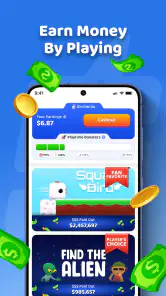
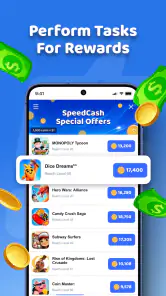
SpeedCash: Play & Earn Money is a rewards application that lets users earn points or cash by completing activities such as playing selected games, trying offers, answering surveys, or reaching specific in-app goals. After creating an account, you can browse the available tasks, check their requirements, and track your progress. Rewards and available activities may vary depending on your country and the current offers.
Can you really make money with SpeedCash, and how much can users earn?
SpeedCash may provide small rewards for completing qualifying activities, but it should not be considered a reliable source of income. Earnings depend on the number of offers available, the time required, eligibility conditions, and whether a task is successfully tracked. Some activities can take considerable time, and not every user will qualify for every offer. Results are therefore likely to differ from one person to another.
How do withdrawals work in SpeedCash, and is there a minimum payout?
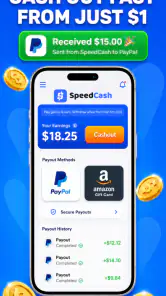
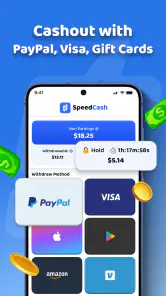
Before using SpeedCash, check the current withdrawal methods, minimum cash-out threshold, and processing conditions shown inside the app. Reward options can include digital payments, gift cards, or other supported services, depending on your location. You may need to verify your account or provide payment details before requesting a withdrawal. Processing times and availability can change, so always review the latest information in the app.
Pros
- Simple games make it easy to start earning rewards.
- Short play sessions suit users with limited free time.
- Clear reward goals help track progress toward cashouts.
- Lightweight design should work well on many Android devices.
- No specialized skills are needed to participate.
Cons
- Earnings may be very small compared with the time invested.
- Cashout eligibility can depend on minimum balance requirements.
- Reward availability may vary by country or region.
- Frequent ads can interrupt gameplay and reduce overall value.
- Withdrawal processing may take time and require account verification.
- Category
- Entertainment
- Version
- 1.4.1