Soundbooth
- 311.00
- 2.8
- Installs
- 100.00K
- Price
- Free

Screenshots


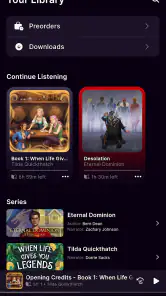


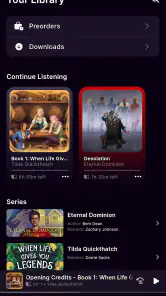


Analysis by Reviewed
I approached Soundbooth as an entertainment app for people who want more from listening than a standard audiobook recording. Developed by Soundbooth Theater, it is built around audiobooks and immersive audio stories, so the appeal is easy to understand: instead of treating a book as nothing more than spoken text, it aims to make the listening session feel more like a produced performance. After spending time with it, I found that its biggest strength is also the thing that demands the most from the listener. The experience depends heavily on how, where, and when you listen.
The app is free to install, carries a Teen content rating, and has attracted over 100 thousand installs. Its average rating sits at 2.8 from around 600 ratings, with more than 300 written reviews. Those figures suggest a divided audience rather than a universally smooth experience. My own impression is similar: Soundbooth can be absorbing when the connection is reliable and the production suits your taste, but it is less forgiving than a simple audiobook player when you are moving between weak networks, busy environments, or limited mobile data.
How Soundbooth fits into real listening habits
The first thing I noticed is that this is not really aimed at someone who only wants a quiet voice reading a book in the background. The “immersive” approach makes the audio itself more noticeable. Performance, atmosphere, and the sense of a larger production become part of the reason to keep listening. That makes the app a natural fit for fantasy, science fiction, dramatic fiction, and other material where sound can add mood and character.
That same focus changes the way I use it. With a conventional audiobook app, I can often listen while doing something that takes a little attention, such as tidying a room or walking a familiar route. With Soundbooth, I am more likely to give the story a clearer slice of my attention. When several voices, effects, or changes in atmosphere are contributing to a scene, treating the recording as background noise can make the experience feel flatter and harder to follow.
I would describe it as an entertainment app rather than a productivity tool. It is not the choice I would make for quickly consuming a nonfiction title during a commute if my main goal were to retain facts. It makes more sense when I want to settle into a story and let the production carry me along. That distinction is useful because the app’s value is not simply the number of books or listening hours it may offer; it is the way the material is presented.
Where the network becomes part of the experience
Connectivity has a direct effect on how comfortable the app feels. A stable connection makes browsing and starting a listening session straightforward, while an inconsistent connection can turn the beginning of a story into a sequence of pauses, loading moments, or uncertainty about whether playback is ready. I found this especially important when switching from home Wi-Fi to cellular data. The change itself is easy to overlook, but an audio app can expose it quickly when a large or richly produced recording needs to begin.
This is one of the main differences between Soundbooth and a basic local music player. A music player working with files already on the device is largely insulated from changes in reception. Soundbooth is more closely tied to the conditions around me, so the listening environment matters. In a strong signal area, that relationship is barely visible. In a basement, a crowded station, an elevator, or a rural road, it can become the defining part of the session.
More From Our News Desk

Clash of Clans Is Won Between the Battles

Android Auto Makes the Case for Quieter Car Software

MobiOffice: Transforming Mobile Productivity with Seamless Integration

EA SPORTS FC™ Mobile Soccer: Redefining Mobile Sports Gaming

How Microsoft OneDrive Became a Mobile Productivity Giant

How Google Translate Breaks Language Barriers Effortlessly
My practical advice is to open the app and get the title ready before leaving a dependable connection. I would not wait until the moment a train doors close or a flight is about to begin to decide what I want to hear. That habit reduces the chance of discovering a connectivity problem at the exact moment I have no time to troubleshoot it. It also gives me a chance to check whether the app is behaving normally before I rely on it for a long journey.
Another useful habit is to avoid judging the service from a single failed start. A brief network interruption can make any connected listening experience look worse than it is. I usually close the immediate distraction, check whether other online services are working, and then try the title again. If everything else is also struggling, the issue is probably the connection rather than the story itself. If only Soundbooth is affected repeatedly in the same place, I treat that location as a poor listening spot for the app.
Using it on a phone during ordinary mobile moments
Soundbooth makes the most sense on a phone because that is where many listening opportunities appear: a walk, a quiet lunch, household chores, or an evening when I want a story without looking at a screen. The mobile format is convenient, but it also means the app competes with calls, notifications, battery limits, and changing network conditions. The best experience comes when I create a little space for it instead of expecting it to disappear completely into the background.
For a short walk through a familiar neighborhood, I like the idea of choosing a story before I leave and keeping the phone accessible without constantly checking it. For a longer trip, I become more cautious. I want to know that playback has started properly before putting the phone away, and I prefer not to depend on a weak signal while crossing areas where reception changes quickly. This is less about the app being complicated and more about recognizing that mobile listening is not the same as listening beside a router.
There is also a social and practical side to immersive audio. In a quiet room, the production can feel engaging. In a noisy bus, detailed voices and effects may be harder to separate, especially if I am trying to keep the volume low. That can make a straightforward narration easier to follow than a layered performance. I would choose Soundbooth for a focused walk with familiar surroundings before choosing it for a loud commute where I need every sentence to remain clear.
Battery planning is another small but important part of the mobile experience. Any extended listening session keeps the phone active, and reconnecting repeatedly in a weak-signal area can be more frustrating than listening in a stable location. I therefore avoid beginning a long session when the phone is already low on power. This is not a special feature of the app, but it is a real trade-off for anyone using a phone as a primary entertainment device.
What I do when playback or access goes wrong
The most useful way to handle a problem is to separate three possibilities: the connection, the app session, and the specific title. If the app is slow to respond, I first check whether the phone has a usable signal. If the network looks fine, I try leaving the current screen and returning to it rather than repeatedly tapping the same control. When a title still will not begin, I give the app a fresh start before assuming the content itself is unavailable.
This recovery process matters because immersive audio creates higher expectations. If a simple spoken recording takes a moment to begin, I may tolerate it without much thought. If I am waiting for a carefully produced scene, interruptions are more noticeable because they break the mood. I have learned to treat the first minute as a setup period: confirm that the audio is actually progressing, keep the phone still for a moment, and only then move into another task.
I also recommend keeping a backup plan for important journeys. That does not mean abandoning Soundbooth; it means not making any connected audio service the only entertainment option when a delay would be costly. A podcast, music playlist, or another already-prepared listening choice can prevent a network problem from ruining a long trip. This is particularly relevant for travelers who expect to pass through tunnels, underground platforms, or areas with unreliable reception.
The app’s rating of 2.8 indicates that other users have encountered enough friction to affect their overall impression. I would not use that number as proof that every session will be troublesome, but I would take it as a reason to test the app in my own routine before buying into a long-term listening habit. A service can work well in one person’s home and feel unreliable in another person’s daily travel pattern.
Being careful with mobile data
Audio is usually less demanding than video, but long listening sessions can still matter when cellular data is limited. Soundbooth’s richer presentation makes me more conscious of how often I start and restart content while away from Wi-Fi. I avoid repeatedly opening a title just to preview it in a weak-signal area, because failed attempts can waste time and may use data without giving me a satisfying session.
My preferred workflow is simple. I browse and decide what I want while connected to Wi-Fi, then begin listening before I leave. If I am unsure whether I will enjoy a title, I test it during a short local outing rather than committing to hours of mobile listening immediately. That gives me a realistic sense of whether the performance works for me and whether my usual route has enough connectivity for comfortable use.
It is also worth remembering that free installation does not mean every part of the experience is free. The app includes in-app purchases ranging from under a dollar to nearly 60 dollars per item. I would approach the catalog with a clear spending limit, especially if I am exploring several stories. The free entry point is useful for trying the service, but the purchase model means the cost of becoming a regular listener can depend on which titles I choose.
For families, the Teen rating is a helpful starting point, but it is not a substitute for checking the suitability of individual stories. Immersive productions can make tense or dramatic material feel more immediate than a plain text description suggests. I would choose titles together with a younger listener rather than assuming that the general age label tells me everything about a particular recording.
Who will enjoy it, and who should choose something else?
I think Soundbooth is best for listeners who enjoy performance-driven audio and are willing to give a story their attention. It is a strong candidate for someone who finds ordinary narration too plain, wants a more theatrical atmosphere, or likes the idea of listening as an event rather than as background sound. It can also suit a person who already enjoys audio drama and wants audiobook-style storytelling with more production around it.
I would be more hesitant to recommend it to someone who mainly listens in places with unstable reception. If your normal routine includes long stretches without dependable connectivity, a player centered on content already stored on the device may be a safer choice. I would also steer a very casual listener toward a simpler audiobook service if the goal is only to press play and forget about the technology.
The comparison with ordinary audiobook apps comes down to priorities. Standard services often feel more predictable because their central promise is straightforward narration, bookmarks, and a library designed for long-form listening. Soundbooth’s attraction is the extra sense of production. That can make a favorite scene more memorable, but it can also make interruptions more obvious and noisy surroundings more damaging to comprehension.
For people who listen while studying, I would not make Soundbooth my first recommendation unless the material is specifically suited to that kind of attention. The expressive delivery may be enjoyable, yet it can compete with reading, writing, or problem-solving. For evening relaxation, a walk, or a focused listening session, the same qualities become advantages.
Version, cost, and the decision to keep it installed
The current Android version is 3.0.18 and it requires Android 8.0 or later. That makes the app accessible to many existing Android phones, though anyone using an older device should check compatibility before planning around it. I would also keep the app updated when possible, since connected services can become less predictable when the application is far behind its current release.
Soundbooth has been available since October 28, 2020, and its continued presence gives it the feel of an established app rather than a brand-new experiment. Still, the modest average rating and the mixed practical experience mean I would treat installation as a trial, not a commitment. The free starting point makes that approach reasonable: test browsing, begin a story on Wi-Fi, take it into your normal mobile environment, and see whether the connection and production style suit you.
My own rule would be to purchase only after I know that three things work together: I like the specific performance, my regular listening locations have dependable connectivity, and the price of the chosen content fits my budget. The range from $0.49 to $59.99 per item is wide enough that casual experimentation deserves some restraint. A low-cost test can be sensible, while a larger purchase deserves more confidence than the free installation alone provides.
After using it in different everyday situations, my verdict is cautiously positive. Soundbooth offers a distinctive way to enjoy audiobooks and immersive audio stories, and its productions can feel more involving than a conventional reading. But the experience is shaped by the network more than I would want from a completely dependable travel companion. Choose it for focused, performance-led listening on a reliable connection, not as a guaranteed solution for every offline or low-signal moment.
That conclusion explains the app’s appeal and its limitation at the same time. If you want atmosphere, character, and a more dramatic listening style, Soundbooth is worth trying. If your priority is predictable playback everywhere, minimal data concerns, or a simple library-first experience, a traditional audiobook alternative may fit your routine better. I would keep it installed for the right stories and the right setting, while keeping a second listening option ready for the places where connectivity cannot be trusted.
Soundbooth Frequently Asked Questions
What is Soundbooth Theater, and what kind of listening experience does it offer?
Soundbooth Theater is an entertainment app for audiobooks and immersive audio stories. Its short store description is “Soundbooth,” while its broader purpose is to offer a better way to hear spoken-word content. If you enjoy listening to narrated stories rather than reading on a screen, this is the app’s central appeal. The content rating is Teen, so consider that when choosing an app for younger listeners.
What devices can run Soundbooth?
Soundbooth requires Android 8.0 or later, so check your phone’s operating system before downloading. The app is developed by Soundbooth Theater and is available for free, though optional in-app purchases are offered. Confirm that you are viewing the correct Soundbooth Theater app in your device’s app store, especially if you are searching by its short name, “Soundbooth.”
What is Soundbooth, and what can I use it for?
Soundbooth is an audio-focused application designed for creating, editing, organizing, or enjoying sound content, depending on the version available on your device. Its interface is generally aimed at making audio tasks approachable for beginners while still offering useful controls for more experienced users. Before downloading, check the store description carefully because features may differ between Android and iOS releases.
Is Soundbooth free to download and use?
Soundbooth may be available as a free download, but some features, content, or usage limits can depend on in-app purchases or a subscription. I recommend reviewing the pricing section in the Google Play Store or Apple App Store before installing it. Also check whether the app includes advertisements, trial periods, renewal terms, or separate charges for premium audio tools.
Does Soundbooth work offline, or does it require an internet connection?
Some Soundbooth functions may work without a constant internet connection, particularly basic playback or editing of files already stored on your device. However, downloading content, synchronizing projects, accessing online libraries, signing in, or using cloud-based tools may require internet access. If offline use is important to you, verify the current app description and test the specific features you need.
Pros
- Clean interface makes browsing and managing audio projects straightforward.
- Useful editing tools support quick trimming
- mixing
- and sound adjustments.
- Audio previews help users check changes before exporting a project.
- Suitable for experimenting with sound effects and short creative recordings.
- Organized project handling makes it easier to revisit previous audio work.
Cons
- Some advanced features may feel limited compared with professional audio editors.
- Large audio projects can require considerable storage space on the device.
- Export options may not provide enough format or quality choices for experts.
- The learning curve can increase when working with layered or complex projects.
- Performance may vary on older phones when processing multiple audio tracks.
- Category
- Entertainment
- Version
- 3.0.18