Social Lifestyle
- 40.00
- 2.5
- Installs
- 10.00K
- Price
- Free

Screenshots

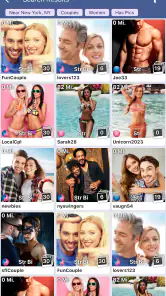
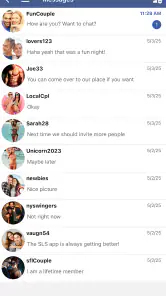
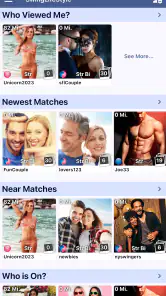
Analysis by Reviewed
I approached Social Lifestyle as a way to meet people who share a particular relationship style, rather than as another general-purpose social feed. That distinction matters. The app is aimed at finding lifestyle friends, and its mature audience gives conversations a more adult context than the usual friendship platforms. In my experience, that makes the first decision less about collecting contacts and more about deciding how much of my personal life I want to bring into a new conversation.
The app is free to install, but it includes purchases ranging from around twenty-five dollars to two hundred dollars per item. I would keep that in mind before becoming invested in the community. The basic entry point is easy enough to understand, yet the possible cost of paid options means I would first test whether the people and communication style suit me. I would not treat payment as a shortcut to trust, compatibility, or a better social experience.
Finding a More Specific Kind of Social Connection
The communication need here is quite different from the one served by a normal messaging app. A regular social network is usually built around existing friends, family, colleagues, or public content. Social Lifestyle is more useful when I want to find people who are open to a shared lifestyle context and who may be comfortable discussing subjects that would feel out of place on a conventional platform.
That focus can reduce one common problem with broad social apps: having to explain the entire reason for connecting before a conversation can even begin. A more specific setting gives people a possible starting point. I can think about what kind of friendship I want, what level of openness feels reasonable, and whether I am looking for casual conversation or a longer-term connection.
At the same time, a focused community does not automatically make every interaction meaningful. A matching theme can create an initial point of contact, but it cannot guarantee compatible personalities, communication habits, or intentions. My advice is to use the shared lifestyle as an opening subject, not as proof that someone is trustworthy or that the friendship will work.
The mature 17+ rating is important for setting expectations. I would not recommend this as a general social app for younger users, and parents should not treat it as one. Adults who are curious about the community may appreciate the more direct atmosphere, while anyone wanting an entirely neutral, family-friendly friendship space should choose a different category of app.
Social Lifestyle comes from Swing, LLC, and it is available for devices running Android 6.0 or later. The current version is 9.1.03. Those details make it accessible to people using older Android hardware, although I would still keep the application updated when possible because social apps depend heavily on reliable messaging and account behavior.
More From Our News Desk

Clash of Clans Is Won Between the Battles

Android Auto Makes the Case for Quieter Car Software

MobiOffice: Transforming Mobile Productivity with Seamless Integration

EA SPORTS FC™ Mobile Soccer: Redefining Mobile Sports Gaming

How Microsoft OneDrive Became a Mobile Productivity Giant

How Google Translate Breaks Language Barriers Effortlessly
What I Would Clarify Before Starting
Before creating a profile, I would write down a private answer to three questions: what kind of people do I want to meet, what topics are off limits, and how quickly do I want conversations to become personal? This small preparation changes the quality of communication. Without it, the pace is usually set by whoever sends the most direct message first.
I would also avoid presenting my entire identity in the opening profile. A useful profile needs enough detail to start a conversation, but not so much that a stranger can immediately build an overly complete picture of my routine, location, or relationships. The best balance is a clear sense of personality and intent with room for gradual discovery.
One practical workflow is to separate curiosity from commitment. I can browse and learn what kinds of conversations appear in the community without promising anyone ongoing access to me. If a conversation becomes uncomfortable, I should not feel obliged to continue simply because I initiated contact. That is especially important in a mature social environment, where direct questions may arrive earlier than I expect.
How Conversations Feel When the Pace Is Set by People
The strongest part of this kind of app is potentially the conversation flow. Unlike a feed that constantly pushes new posts, a lifestyle-friend platform is more dependent on deliberate exchanges. That can feel calmer when both people communicate clearly. It can also feel awkward when one person expects quick replies and the other prefers a slower, more thoughtful rhythm.
I found it helpful to treat the first exchange as a screening conversation rather than an audition. I would ask open but ordinary questions about interests, communication preferences, and what friendship means to the other person. This reveals more than jumping immediately into sensitive subjects. Someone who respects a simple boundary early is giving me more useful information than someone who is merely enthusiastic.
There is also a trade-off between being direct and revealing too much. Direct language prevents misunderstandings, especially in a community where people may arrive with different assumptions about the word “lifestyle.” However, I would keep personal details general until the other person has shown consistency. Clarity about intentions is healthy; surrendering privacy is not the same thing.
A realistic everyday scenario would be using the app after work for a short, planned conversation rather than leaving it open all evening. I might spend fifteen minutes replying to one or two people, then close the app and return to my routine. This approach keeps the interaction intentional. If I answered every notification immediately, the app could turn a small social activity into a background obligation.
For people who enjoy long conversations, the platform may offer a useful starting place for friendships that would be difficult to find locally. For people who prefer rapid-fire chat, constant public posting, or a large entertainment feed, a mainstream social network may feel more natural. Social Lifestyle is better understood as a focused meeting space than as an all-purpose replacement for every social app.
Useful Conversation Habits
I would use a gradual sequence: begin with shared interests, move to communication preferences, and only then discuss more personal subjects. This is not about being formal. It simply prevents the first message from carrying too much emotional weight. It also gives both people several natural opportunities to slow down or end the exchange.
Another useful habit is to notice whether questions go both ways. If I am doing all the explaining while the other person only requests details, the conversation may be unbalanced. Conversely, if someone refuses to answer basic questions while pressing for personal information, I would treat that as a reason to pause. The app can introduce people, but I still have to judge the quality of the exchange.
I would also avoid moving the conversation elsewhere too quickly. A request to switch platforms is not automatically suspicious, but it removes some of the context that helped me evaluate the interaction. Staying within the app for a while gives me more control over timing and makes it easier to disengage without expanding access to other parts of my life.
Attention, Notifications, and the Hidden Cost of Social Availability
The main attention cost is not necessarily the time spent reading a message. It is the mental space created by waiting for one, wondering whether to reply, or feeling that a conversation has been left unfinished. Social apps can make availability feel like a personal duty. I would use Social Lifestyle more comfortably if I decided in advance when I am available instead of allowing every message to interrupt the day.
That boundary is especially valuable when conversations involve intimate or emotionally charged subjects. A reply written while tired, hurried, or distracted can communicate something I did not intend. Taking a pause protects both sides. It also changes the tone from reactive messaging to deliberate conversation, which is a better fit for finding a genuine friend.
I would avoid opening the app during work, meals, or time with a partner unless I had a specific reason. Even a free social platform can become expensive in attention. The cost is not only measured by any optional purchase; it can also appear as fragmented focus and the feeling that I must remain socially reachable.
A simple routine helps: check messages at a chosen time, answer the conversations that deserve an answer, and leave the rest for later. If someone reacts badly to a reasonable delay, that reaction itself tells me something about compatibility. A friendship that requires constant proof of interest is unlikely to feel relaxed over time.
The app’s average rating is two and a half stars from around sixty ratings, with roughly forty written reviews. I would read that as a reason to approach the experience with realistic expectations rather than as an automatic rejection. A smaller community can feel personal when the right people are present, but it can also mean that the quality of available conversations varies more from user to user.
When Paid Options Enter the Decision
Because in-app purchases can reach roughly two hundred dollars for an item, I would not spend money during the first session. I would first understand the free experience, see whether conversations are active enough for my needs, and decide whether any paid feature solves a problem I actually have. Paying because I feel overlooked or impatient is usually a poor social decision.
I would also compare the purchase against the real outcome I want. If my goal is to meet one compatible friend, a paid option cannot guarantee that result. If the free experience already lets me communicate comfortably, paying may add little value. On the other hand, someone who uses the app regularly and finds a clearly useful upgrade may judge the cost differently, provided the purchase fits their budget.
The most important rule is to keep money separate from emotional momentum. A promising conversation can make an upgrade feel urgent, but trust should develop independently of spending. I would never use payment as evidence that I am serious, generous, or entitled to a faster response.
Boundaries, Privacy, and Knowing When to Walk Away
My biggest recommendation is to establish boundaries before the first difficult conversation, not during it. Decide what personal information stays private, what topics require trust, and what behavior ends the exchange. This is particularly important for a mature social platform, where users may have very different comfort levels and expectations.
I would keep identifying details broad at first. General interests are enough to start a friendship; precise routines, home information, workplace details, and private relationship matters can wait. I would also be cautious with photos or stories that reveal more than I intended through backgrounds, schedules, or other people.
A clear “no” should not require a long explanation. If someone keeps pushing after I have declined a topic, I would stop replying and use the app’s available account-safety controls rather than negotiating. I would not assume that a friendly tone cancels out repeated pressure. Consistency matters more than charm.
Meeting someone offline requires an additional step beyond messaging. I would choose a public place, tell a trusted person where I am going, arrange my own transport, and keep the first meeting short enough to leave comfortably. These precautions are not an accusation against every user; they are sensible boundaries whenever an online introduction becomes an in-person encounter.
The app is not the right choice for someone seeking guaranteed anonymity, a tightly moderated professional network, or a family-oriented community. It may also disappoint users who expect a huge stream of instantly available contacts. The focused purpose is an advantage only when the people present match the kind of connection I want.
How It Compares With Familiar Alternatives
Compared with a general social network, Social Lifestyle offers a more specific reason to start talking, but it gives up the broad mix of public content and established contacts. Compared with a standard messaging app, it helps with discovery rather than merely communication. Compared with a dating-focused service, its stated emphasis on lifestyle friends suggests a friendship-oriented approach, although I would still clarify each person’s intentions instead of assuming everyone defines friendship the same way.
Those differences affect communication rhythm. General networks encourage frequent checking because the feed never really ends. Messaging apps are efficient when I already know whom I want to contact. A focused social platform sits between those models: it can introduce new people, but the value depends on whether I am willing to invest attention in slower, more selective conversations.
If I wanted public discussion, broad news, or easy contact with existing friends, I would choose a conventional network. If I wanted private conversations with people already in my address book, I would use a messenger. I would choose Social Lifestyle when the missing piece is finding adults who may understand a particular lifestyle context and are open to building a friendship around it.
My Social Verdict
Social Lifestyle is most useful when I treat it as a deliberate introduction tool, not an endless source of attention. Its mature focus can make it easier to find relevant conversations, and the free entry point lowers the barrier to trying the community. The developer, Swing, LLC, has positioned it for a specific social need rather than for general browsing, and that specificity is its clearest reason to exist.
My reservations are equally practical. The modest average rating, the possibility of costly in-app purchases, and the unpredictable quality of one-to-one conversations mean I would test it patiently before paying. I would also protect my time and privacy from the beginning. A focused community can help people communicate with more context, but it cannot remove the need for judgment.
I would recommend it to an adult who wants to meet lifestyle-minded friends, is comfortable setting firm boundaries, and prefers intentional conversation over a noisy public feed. I would skip it if I wanted a family-friendly app, a guaranteed match, a large entertainment timeline, or a service where communication stays completely separate from mature topics.
My final view is cautiously positive for the right user. The app can change social communication for the better when it encourages clearer intentions and slower trust-building. It becomes less appealing when notifications, pressure, or spending begin to dictate the pace. I would install it for exploration, keep my expectations measured, and let the quality of repeated behavior—not the excitement of a first message—decide whether a new connection deserves my time.
With over ten thousand installs and a free download, it has enough presence to be worth investigating, especially for people who do not find their preferred social circle through ordinary networks. I would remember that its content rating is Mature 17+, and I would approach every new interaction as an adult choice with adult responsibility. Used that way, Social Lifestyle has a reasonable place among specialized social apps, even if it is not a universal substitute for the platforms I already use.
Social Lifestyle Frequently Asked Questions
Is Social Lifestyle intended for adults, and should I check its content rating before downloading?
Yes. Social Lifestyle is intended for a mature audience and carries a 17+ age rating, so it may not be suitable for younger users. Parents and guardians should consider that rating before allowing access, while prospective users should check the app-store page and make sure the audience and social setting fit their expectations.
Who develops Social Lifestyle, and is it an established social app?
Social Lifestyle is developed by Swing, LLC, and is presented as a platform for finding lifestyle friends. It has over 10,000 installs, with 61 ratings and 40 written reviews, and its average rating is 2.5. Those figures offer a quick snapshot of its reception, but individual experiences can vary, so it is worth reading recent reviews before deciding whether it suits you.
What is Social Lifestyle, and what can I use it for?
Social Lifestyle is designed to help users discover, share, and engage with lifestyle-related content and communities. Its store summary describes it as a social platform for finding lifestyle friends. Depending on the available features, you may be able to follow interests, exchange ideas, view recommendations, and interact with other users. It can be useful for finding inspiration about entertainment, fashion, wellness, events, or everyday activities in one convenient social environment.
Is Social Lifestyle free to download and use?
The application is free to download, but some features can depend on optional in-app purchases, which range from $24.99 to $199.99 per item. Before registering or confirming a payment, review the pricing information shown in the app store and inside the application. Check what a purchase includes and whether it fits your budget before proceeding.
Do I need to create an account to use Social Lifestyle?
Many social applications allow limited browsing before sign-up, while interaction features usually require an account. Social Lifestyle may ask for details such as an email address, phone number, username, or profile information so it can personalize the experience and connect you with other users. Read the registration screens carefully and avoid sharing more personal information than necessary.
Pros
- Helps users discover local events and activities quickly.
- Encourages social interaction through shared interests.
- Offers convenient ways to organize meetups and plans.
- Can introduce users to new communities nearby.
- Useful for finding lifestyle inspiration and recommendations.
Cons
- Some features may require creating a detailed personal profile.
- Local content can vary greatly depending on your location.
- Notifications may become distracting without careful settings.
- Privacy concerns may arise when sharing activities or interests.
- Popular events and groups can fill up quickly.
- Category
- Social
- Version
- 9.1.03