Simple Checkbook Ledger
- 1.24K
- 3.4
- Installs
- 100.00K
- Price
- Free

Screenshots
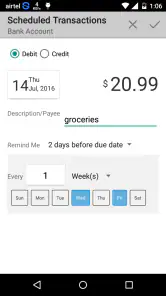
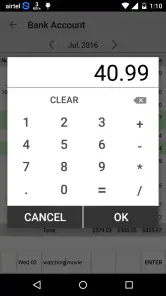
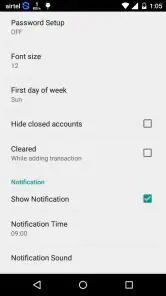
Analysis by Reviewed
I like finance apps that stay out of the way. When I open a checkbook ledger, I usually want to record a payment, check what remains in an account, and move on without building a complete financial plan. Simple Checkbook Ledger is aimed at exactly that kind of use. It is a free finance app from Teelu Apps, and after spending time with it, I see its main appeal clearly: it treats everyday account tracking as a running ledger rather than turning it into a full budgeting project.
That focused approach is both its strength and its limitation. If you still think in terms of deposits, withdrawals, checks, and a current balance, the app feels more natural than many modern budgeting tools. If you expect automatic bank connections, elaborate charts, shared household planning, or a broad investment dashboard, this is probably not where I would start. Its store summary, “Manage your accounts with ease,” is a fair description of the intended experience, while the short description, “Simple Checkbook Ledger,” is even more revealing about its boundaries.
How the ledger feels in everyday use
A practical replacement for the paper checkbook
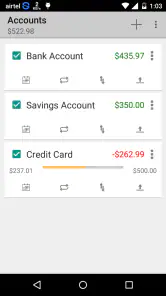
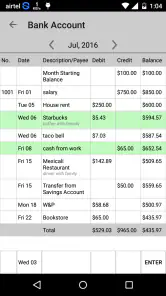
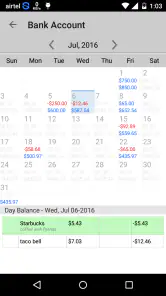
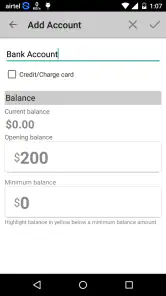
The central idea is straightforward: create or manage an account, enter money coming in or going out, and use the ledger to keep a running view of the balance. I find this especially useful for people who do not want their bank credentials connected to another service. Instead of waiting for transactions to import, I can record an item at the moment I make a payment or when a deposit clears.
That manual process requires discipline, but it also gives the user control. A checkbook-style record makes each entry visible, which can be helpful when a bank balance looks different from the amount I believe is available. Pending card payments, scheduled bills, and checks that have not cleared can be tracked deliberately rather than silently blended into an automatic feed. For someone who wants to understand why a balance changed, that directness is more valuable than a colorful dashboard.
A realistic example is a household member who pays rent, utilities, groceries, and occasional checks from one main account. After each payment, they can enter the transaction instead of keeping receipts in a drawer and trying to remember everything later. At the end of the week, reviewing the ledger can reveal whether an item was forgotten before the account balance becomes a surprise. The app is most useful when it becomes a small daily habit, not something opened only after a problem appears.
Where it fits among finance alternatives
Compared with a spreadsheet, Simple Checkbook Ledger is less flexible but more purpose-built. A spreadsheet can create categories, formulas, forecasts, and custom reports, yet it also demands setup and maintenance. This app is better for someone who wants a ready-made transaction record without designing a workbook. On the other hand, a spreadsheet remains the stronger choice for a user who needs extensive analysis or a highly customized household system.
Compared with bank applications, the ledger offers a different kind of control. A bank app is the authority for cleared balances and official transaction history, while this app can serve as a personal record of what I have committed to spend. I would not treat the ledger as a substitute for checking the bank itself. I would use both: the ledger for intentional tracking and the bank app for confirmation.
It also differs from full budgeting services. Those tools often focus on spending categories, goals, automatic synchronization, and long-term planning. Simple Checkbook Ledger is more immediate. It answers questions such as “Did I record that payment?” and “What should my working balance be after this withdrawal?” That narrower purpose makes it easier to understand, but it gives up the broader guidance that a budget planner can provide.
Small workflows that make manual entry worthwhile
One useful habit is to record a transaction before leaving the place where it happened. If I buy groceries, I can enter the amount while the receipt is still in my hand. This avoids the common problem of collecting several receipts and guessing which amount belongs to which day. For recurring bills, I would also enter the payment as soon as I schedule it, then adjust the record if the final amount changes.
A second practical technique is to use the ledger as a “committed money” view rather than relying only on the bank’s cleared balance. A payment that has not cleared can still reduce what I safely have available. Recording it early helps prevent spending the same money twice. The trade-off is that the ledger becomes dependent on my accuracy: if a payment is canceled, duplicated, or changed, I must correct the entry myself.
A third is to reconcile at a fixed point in the week. I would compare recent entries with the bank statement, mark anything that has cleared in my own notes or workflow, and investigate differences immediately. This is more reliable than opening the app randomly and hoping the balance still makes sense. The app’s simplicity works best when paired with a consistent routine.
What the current release tells me
The current version is 3.5, and the product has been available since Aug 3, 2016. That history matters because this is not a brand-new experiment trying to redefine personal finance. It is an established ledger concept that has had time to remain useful for people who prefer manual account management.
I would describe the present state as functional and focused rather than ambitious. The app’s identity has not been diluted by trying to become a banking hub, a credit monitor, or an investment platform. That can be reassuring for a user who wants a small tool with one job. At the same time, a long-running app must be judged by how comfortably it fits current habits, and some users may find its traditional checkbook model less convenient than automatic tools.
The app is free to use, with in-app purchases priced at $1.99 per item. That makes it easy to try without committing money at the start, although I would still check which optional functions are behind those purchases before building a long-term workflow around them. The presence of paid items does not change the basic appeal, but it is worth considering if you want every part of your tracking routine available without extra decisions.
Who will get the most from it
I would recommend it first to people who want a private-feeling manual ledger, users who still write checks, and anyone who finds full budgeting applications overwhelming. It can also suit a person who needs a separate record for a spending account, a small side activity, or an account where automatic synchronization is unavailable or undesirable.
It may be particularly comfortable for someone transitioning from a paper checkbook. The mental model is familiar: enter the transaction, keep the running balance current, and review the sequence when something looks wrong. That is less intimidating than starting with categories, targets, net-worth screens, and financial goals all at once.
I would be more cautious about recommending it to couples who need simultaneous collaboration, people managing several complex financial products, or users who want automatic categorization. It is also not my first choice for someone whose main goal is debt reduction or monthly cash-flow forecasting. Those needs call for tools built around planning rather than recording.
Age rating, reach, and device considerations
The app is rated for Everyone, which matches its uncomplicated financial-recording purpose. It has passed the point of being a niche download, with over one hundred thousand installs and around a three-point-four average from roughly two thousand five hundred ratings. Those figures suggest that people have found a reason to try it, but the middling average also tells me to keep expectations realistic rather than assuming universal polish.
There are around one thousand two hundred written reviews, so prospective users have a meaningful body of public feedback to examine alongside their own trial. I would pay special attention to comments about the exact workflow I need: account handling, correcting entries, and the experience of maintaining a ledger over time. A finance app can seem fine during a five-minute test and become frustrating after several weeks of repeated manual input.
The minimum operating system requirement is version 11. Before installing it on an older device, I would confirm that the phone or tablet meets that requirement. This is a small detail, but it matters more for a ledger than for a casual app because users often want to keep the same record available on a dependable device for a long period.
Where the experience can become frustrating
Manual entry is the obvious friction, but it is not the only one. The real cost is the attention required to maintain trust in the balance. Miss one transaction and the app may still look tidy while no longer representing reality. That means the app rewards careful users and punishes irregular habits more than an automatically synchronized service would.
There is also a difference between recording money and understanding money. A ledger can show that spending happened, but it does not automatically explain whether groceries are consuming too much of the monthly allowance or whether a subscription is gradually becoming a problem. I can make those judgments myself, but the app is not designed to replace that analysis.
I would also avoid treating the displayed balance as an official bank balance. A personal ledger is a planning aid. The bank’s records determine what has actually cleared, while my entries represent what I have chosen to record. That distinction is important when a check is pending, a card payment is reversed, or a deposit is delayed.
How existing users may experience the evolution
For someone who has used the app for years, the move to version 3.5 is best understood as the current point in an established product rather than a reason to expect a completely different system. The release history gives the app continuity, but the available facts do not justify assuming that every modern finance feature has been added. I would approach an update with the expectation of refinement within the ledger model, not a transformation into a full financial suite.
That continuity can be positive. Existing users who already know how they record transactions are less likely to face a steep learning curve than they would with a redesigned budgeting platform. Their main question should be whether the current version remains comfortable on their device and whether its account workflow still matches their habits.
New users should take a slower approach. Rather than importing their entire financial life immediately, I would start with one account and a short period of regular entries. That trial reveals whether manual tracking feels manageable, whether the balance is easy to interpret, and whether the app’s available options fit the way the user actually pays bills.
Questions I would settle before relying on it
Can it replace my bank app? I would say no. It can complement a bank app by giving me a personal running record, but it should not be treated as the source of truth for cleared funds. I would continue checking the bank whenever a payment, deposit, or balance is important.
Is it suitable for budgeting? Only in a limited, hands-on sense. It can help me observe money entering and leaving an account, but anyone looking for automatic category analysis, goal tracking, or detailed forecasts should compare it with a dedicated budget application before switching.
Is it useful without checks? Yes, the checkbook idea can still work for card payments, cash withdrawals, transfers, and deposits because the underlying need is transaction tracking. However, users who want automatic imports may find the manual model too slow, especially if they make many small purchases every day.
Should I pay for the optional items? I would first use the free experience long enough to identify a real limitation. Paying $1.99 for an item makes sense only if it removes a specific obstacle in my routine; I would not buy extras simply because they are available.
What I would watch before making it my long-term ledger
The main thing I would watch is whether the app continues to serve modern payment habits without losing its simple checkbook character. Users now mix checks, cards, transfers, cash, and recurring digital bills. The more varied the payment routine, the more important it becomes for a manual ledger to make corrections and reviews feel effortless.
I would also watch how well the current version supports long-term consistency. A finance tool succeeds when I can return to it months later and still understand the account history. Clear records, dependable balance handling, and an uncomplicated correction process matter more to me than decorative charts.
My final view is favorable but specific. Simple Checkbook Ledger is not a universal personal-finance solution, and I would not recommend it to someone seeking automation or comprehensive financial planning. For a person who wants a focused, manual record of account activity, however, it offers a sensible alternative to paper, spreadsheets, and feature-heavy budgeting services. Its best quality is the direct connection between each transaction and the balance I am trying to manage. If that is the way you prefer to think about money, Teelu Apps’ finance app is worth trying; if you want the app to do the tracking for you, I would choose a different category of tool.
Pros
- Clean
- distraction-free interface for recording income and expenses
- Works well for users who prefer manual control over their budget
- Ledger-style entries make transactions easy to review chronologically
- Useful for tracking personal spending without complex budgeting tools
- Lightweight design should run smoothly on most Android devices
Cons
- Manual entry can become time-consuming with frequent daily transactions
- May feel too basic for users wanting bank account synchronization
- Limited automation means recurring payments may need repeated attention
- No advanced investment
- debt
- or savings-planning features
- Users should verify backup options before relying on it for important records

- Category
- Finance
- Version
- 3.5