SayHi : Chat Now
- 1.19K
- 4.8
- Installs
- 100.00K
- Price
- Free

Screenshots






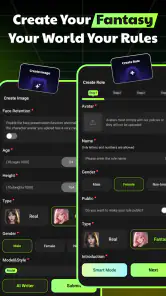
Analysis by Reviewed
I approached SayHi: Chat Now as an entertainment app for people who want conversational role-play rather than a conventional messaging service. Its central idea is simple: interact with AI characters and collect character cards while the conversation develops. That makes it feel closer to a private, interactive fiction space than to a social network where real people are waiting for replies.
My first impression was that the app is easiest to understand when you stop treating it like a general-purpose assistant. It is not primarily about searching for facts, organizing tasks, or replacing a real conversation. Its appeal comes from choosing a personality, setting a tone, and seeing how the exchange unfolds. If you enjoy character-driven stories, improvisation, or casual escapism, that focus is a strength. If you want reliable research or genuine human contact, I would look elsewhere.
What I considered before recommending it
The first decision is whether you want open-ended role-play or a more predictable entertainment format. A streaming app gives you finished shows, while a traditional game gives you rules and goals. SayHi sits between those experiences: I supply the direction through my messages, but the character’s replies create enough uncertainty to keep the interaction moving. That makes the quality of the experience depend heavily on the kind of conversation I start.
The second criterion is comfort with an adult-oriented environment. The app carries a Mature 17+ age rating, so I would not present it as a casual family chat tool. That rating matters even if a particular conversation begins innocently. Anyone sharing a device with younger users should treat the app accordingly and avoid assuming that a character-card collection automatically makes it suitable for all ages.
I also looked at how much patience the format requires. A role-play chat can be enjoyable when I give the character a situation, a goal, or a personality cue. It is less satisfying when I expect the app to create a complete story without any input from me. In practice, the best results come from treating each exchange as collaborative improvisation rather than pressing a button for instant entertainment.
Finally, I considered whether the collectible layer adds value or merely encourages browsing. The character cards give the experience a sense of discovery, but collecting is not automatically a reason to keep chatting. For me, the card matters when it leads to a distinctive conversation. If I am only opening profiles and moving on, the collection becomes a distraction from the app’s more interesting feature: the interaction itself.
How the character-chat experience works in everyday use
A realistic use case is a quiet evening when I want something interactive but do not have the energy for a full game. I can choose a character, begin with a small scenario, and let the exchange develop at my pace. For example, instead of asking for a generic greeting, I might establish a setting, explain what my character wants, and give the other character a problem to react to. That small amount of direction usually makes the conversation feel more intentional.
More From Our News Desk

Clash of Clans Is Won Between the Battles

Android Auto Makes the Case for Quieter Car Software

MobiOffice: Transforming Mobile Productivity with Seamless Integration

EA SPORTS FC™ Mobile Soccer: Redefining Mobile Sports Gaming

How Microsoft OneDrive Became a Mobile Productivity Giant

How Google Translate Breaks Language Barriers Effortlessly
This is also where the app differs from ordinary chat apps. In a normal messenger, the other person brings a real history, personal intentions, and an unpredictable schedule. Here, the appeal is that the character is available for a fictional interaction. I can experiment with different tones without worrying about social pressure, delayed replies, or accidentally interrupting someone’s day. That privacy of the role-play space is one of its clearest entertainment benefits.
The collectible cards provide a useful starting point when I do not know what kind of scenario I want. Rather than inventing every detail from scratch, I can use a character concept as a prompt and build from there. My practical tip is to treat the card as a doorway, not a script. The more specific my opening message is about mood, setting, or conflict, the less likely the conversation is to feel like a sequence of interchangeable greetings.
Another useful workflow is to keep separate conversations for different moods instead of forcing one character to do everything. A light exchange, a dramatic scene, and a reflective conversation need different expectations. Separating them helps me notice which character concepts actually hold my attention and which ones look appealing only while I am browsing the collection.
I would also avoid judging the app after a single short exchange. AI role-play often needs a little direction before its personality becomes clear. When a reply feels flat, I get better results by adding an action, a boundary, or a concrete question rather than simply saying that the answer is boring. That is an important trade-off: the app gives me freedom, but it also makes me responsible for shaping the experience.
Where SayHi wins over more familiar entertainment apps
The strongest advantage is immediacy. A show asks me to follow a story created by someone else, while a conventional game may require learning systems before it becomes enjoyable. SayHi lets me enter a scenario through conversation, which makes it approachable when I want a low-effort creative activity. I can participate actively without needing the time commitment of a long session.
It also wins for people who like replayable situations. A fixed episode has the same broad sequence every time, but a character chat can move in a different direction depending on what I say. That does not make every reply brilliant, and it does not guarantee a coherent long-term plot, but it does give the experience a personal quality that passive entertainment cannot provide.
The character-card idea adds another layer that a standard AI assistant usually lacks. A general assistant is built around usefulness and broad questions. Here, the card collection encourages me to think in terms of personalities and scenarios. That framing makes it easier to switch from practical conversation to imaginative play without pretending that the interaction is a real relationship.
I also appreciate that the app is free to start. That lowers the barrier for someone who is curious about AI role-play but does not yet know whether the format suits them. Its public reception is strong, with an average rating of 4.8 from around 19 thousand ratings, and the app has passed 100 thousand installs. Those figures do not replace personal testing, but they do suggest that the basic concept has found an audience.
The developer is listed as Maju bersama, and the app was released on April 23, 2025. It is currently on version 2.7.6 and supports devices running Android 7.0 or later. For someone using an older Android phone, that minimum requirement is worth checking before getting invested in the idea. On a supported device, the app’s appeal is less about technical spectacle and more about whether its conversational format matches the way you like to relax.
Where other categories may fit better
I would choose a regular social app instead if my main goal were meeting real people, maintaining friendships, or receiving emotionally accountable advice. An AI character can respond in a convincing style, but it does not offer the mutual history and responsibility of a human relationship. SayHi can provide a private role-play outlet; it should not be mistaken for a substitute for people who know me.
A general AI assistant is a better choice when accuracy, productivity, or structured problem-solving matters. SayHi’s entertainment-first design is useful precisely because it does not feel like a work tool. That becomes a limitation when I need dependable research, careful planning, or a response that stays focused on facts rather than character performance.
Interactive fiction or story games may suit me better when I want polished writing, consistent world-building, and a clear ending. SayHi offers flexibility, but that flexibility can produce uneven pacing. A conversation may become surprisingly engaging, or it may lose momentum because the exchange depends on both the character’s reply and the quality of my prompts. Readers who prefer authored plots should keep that trade-off in mind.
Likewise, a conventional collection game may be more satisfying for someone who wants explicit progression, objectives, and a defined reward loop. The cards here support discovery, but the main activity remains chatting. If collecting is the only feature that interests me, I would first ask whether I actually enjoy the conversations that make the collection meaningful.
There is also a personal-boundary question. Because the app is rated Mature 17+, I would skip it for children and would be cautious about recommending it to anyone who is uncomfortable with adult-oriented themes or emotionally immersive role-play. Even for adults, it helps to remember that the character’s apparent warmth is part of the designed interaction, not evidence of a real person behind the messages.
Free access, purchases, and the cost of changing habits
SayHi is free to use, but it includes in-app purchases ranging from $3.49 to $109.99 per item. That pricing range makes it important to decide early whether I am exploring casually or becoming a committed collector. My advice is to use the free experience as a genuine trial: spend enough time testing different character styles and conversation types before paying for anything.
The main cost is not only money. It is attention. An app built around collectible characters can encourage me to keep searching for a more appealing card instead of developing a good conversation with the one I already chose. I get more value when I set a purpose for a session, such as trying a particular story prompt or comparing how two character concepts handle the same situation. That turns browsing into a deliberate creative exercise.
Switching from a normal entertainment app also has a learning cost. With video, I press play; with a game, I follow its systems. Here, I need to learn how to prompt naturally, correct a scene without breaking the mood, and recognize when a conversation has reached a satisfying stopping point. The reward is more personal control, but users who want effortless consumption may find that extra participation tiring.
I would be especially careful with purchases made during an emotionally absorbing exchange. The role-play format can make a character feel more compelling than it seemed during a quick preview. Taking a pause before buying helps separate genuine long-term interest from the excitement of a single conversation. That is a small habit, but it matters more here than it would in a purely functional utility app.
Small techniques that make the app more worthwhile
My first technique is to open with three ingredients: a setting, a relationship or purpose, and an immediate problem. “We are in a station during a storm, you know something I need, and the last train leaves soon” gives the conversation somewhere to go. It is more effective than asking the character to entertain me because it creates a situation the reply can act upon.
My second technique is to correct direction early. If the character becomes too dramatic, too familiar, or too vague, I say what tone I want and continue the scene. Waiting several messages before steering it back usually makes the exchange harder to recover. This is one of the hidden skills of the app: the best sessions are not passive tests of the AI but guided collaborations.
My third technique is to use cards as experiments rather than commitments. I can compare how different personalities respond to the same prompt and learn which style I actually enjoy. This is more revealing than choosing a card solely because its description sounds attractive. A character that seems less flashy may produce better conversations because its role leaves more room for me to participate.
I also recommend ending a scene intentionally. A short conclusion, a decision, or a clear pause gives the interaction a sense of shape. Without that, an open-ended chat can drift until I stop from fatigue rather than satisfaction. This matters particularly for users who want story-like experiences but do not want to spend a long time managing an improvised plot.
My recommendation for different kinds of users
I recommend SayHi to adults who enjoy AI role-play, character discovery, and interactive storytelling in short or flexible sessions. It is a good fit if I want entertainment that responds to my choices and I am willing to contribute prompts instead of expecting a finished story. The free entry point makes it reasonable to test, while the card system gives curious users a reason to explore different conversational styles.
I would recommend it less strongly to someone seeking real companionship, dependable factual answers, or a structured game with clearly defined progress. I would also steer younger users away because of the Mature 17+ rating, and I would advise cautious spending for anyone who tends to make impulse purchases in collectible environments.
After using it as a decision rather than a novelty, my view is positive but specific: SayHi is best understood as a guided imagination tool, not a replacement for people, games, or assistants. Its strengths appear when I choose a character with intention, give the conversation a useful premise, and accept that the quality of the result depends partly on my input.
For me, that makes it worth trying if the idea of talking through fictional scenarios sounds relaxing. I would start free, test several character types, and judge the app by the conversations rather than by the size of the collection. If those exchanges hold my attention, the app has a distinctive place among entertainment tools. If I want polished plots, human interaction, or practical answers, switching to a different category will be the better decision.
SayHi : Chat Now Frequently Asked Questions
What does SayHi: Chat Now offer as an entertainment app?
SayHi: Chat Now is an entertainment app built around immersive AI role-play chat and collectible character cards. That makes its central experience different from a person-to-person social discovery service: you chat through role-play with AI characters rather than relying on meeting other users. If you are looking for an interactive character-chat experience, this is the feature to consider before downloading.
Is SayHi: Chat Now designed for private, one-to-one conversations or group chats?
SayHi: Chat Now centers on AI role-play chat, so its main appeal is interacting with characters rather than joining a conventional group-chat service. If you prefer a story-like exchange with an AI character, that format may suit you. If you are mainly looking to coordinate with friends or participate in group discussions, consider whether character-based role-play matches what you want from a chat app.
Can I collect character cards in SayHi: Chat Now?
Yes. Collectible character cards are part of the app’s stated appeal, alongside immersive AI role-play chat. The cards give the experience a character-focused element, making it more than a plain messaging interface. If collecting characters is important to you, explore how that feature fits your interests after installing, and check the app’s current purchase details before spending money.
Is SayHi: Chat Now an AI role-play app or a social app for meeting people?
SayHi: Chat Now is an entertainment app built around immersive AI role-play chat and collectible character cards. That makes its central experience different from the person-to-person social discovery service described in the published answers below: you chat through role-play with AI characters rather than relying on meeting other users. If you are looking for an interactive character-chat experience, this is the feature to consider before downloading.
What devices and age group is SayHi: Chat Now intended for?
SayHi: Chat Now is rated Mature 17+ and requires Android 7.0 or later. Check that your device meets the operating-system requirement and that the app’s age rating is appropriate for you before installing it. The mature rating is especially relevant for younger users and families deciding whether the app is suitable; it is worth reviewing the rating before exploring its role-play content.
Pros
- Supports many languages for convenient international conversations.
- Speech recognition makes typing messages faster and easier.
- Translation results appear quickly during most chats.
- Simple interface is easy for first-time users to understand.
- Useful for travel
- language practice
- and casual conversations.
Cons
- Translation accuracy can vary with accents
- slang
- and background noise.
- Some features may require an internet connection to work properly.
- Voice input may misinterpret words in noisy environments.
- Privacy-conscious users may hesitate to share spoken conversations.
- Advanced translation controls and customization options are limited.
- Category
- Entertainment
- Version
- 2.7.6