RoadReady Ohio
- 72.00
- 4.2
- Installs
- 10.00K
- Price
- Free

Screenshots
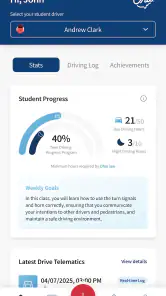
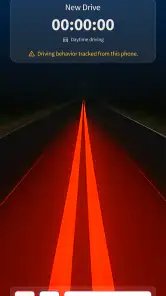
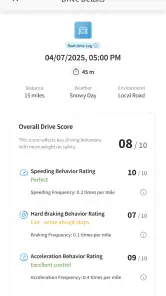
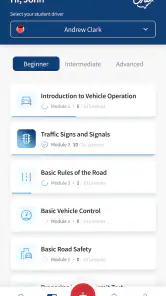
Analysis by Reviewed
Learning to drive is usually measured in miles, hours, and increasingly confident decisions, but families also need a practical way to keep track of that progress. RoadReady Ohio is built for that narrow but important job: recording teen driving practice during the learner’s permit stage. I found its purpose refreshingly focused. It is not trying to become a full navigation tool, a driving game, or a general vehicle-management app. It is an Auto & Vehicles app from Safe Roads Alliance, Inc., aimed at turning informal practice sessions into something easier to review.
That focus is also the key to deciding whether it belongs on your phone. If you are a teen in Ohio working toward more driving experience, or a parent who wants a clearer picture of practice time, the app has an obvious role. If you want live traffic, route planning, vehicle diagnostics, or a complete driving-school curriculum, you will need something else alongside it. My overall impression is that the app makes the most sense as a simple record-keeping companion, especially when both the learner and supervising adult agree to use it consistently.
How RoadReady Ohio feels during ordinary use
Speed expectations: quick enough for a practice log
The first thing I would expect from a driving-practice log is a short path between finishing a session and recording it. This is not the kind of app where I need elaborate visual effects or constant background activity. Its value comes from reducing the friction around documenting practice, so the experience should feel immediate rather than demanding.
In that context, the current version, 0.0.11, feels like an early-stage product rather than a mature all-purpose driving platform. That version label matters because I would approach the app with reasonable expectations: the core idea is clear, but small rough edges are more believable than the polish of a long-established service. I would not install it expecting a large ecosystem of connected tools. I would install it because I want a dedicated place for permit-phase practice records.
A useful habit is to log the session soon after parking, while the route, conditions, and learner’s performance are still fresh. Waiting until the end of the week makes any tracking app less useful, because memory turns several short drives into one vague block of practice. RoadReady Ohio is best treated as part of the driving routine, not as an occasional administrative task.
There is also a subtle speed advantage in having a purpose-built app instead of relying on a notes file. A note can hold a date and a few comments, but it quickly becomes inconsistent: one parent records duration, another writes only the destination, and a teen may forget which skills were practiced. A dedicated log encourages a repeatable process. That consistency is more valuable than flashy speed because it gives later conversations something concrete to work from.
Heavy-use moments: where the routine can become demanding
The busiest moment for this app is unlikely to be a single long session. It is more likely to be repeated use by a family that practices several times each week. A parent may open the app after work, a teen may check the record before the next lesson, and both may return to earlier entries when deciding what to practice next. That pattern tests organization more than raw processing power.
More From Our News Desk

Clash of Clans Is Won Between the Battles

Android Auto Makes the Case for Quieter Car Software

MobiOffice: Transforming Mobile Productivity with Seamless Integration

EA SPORTS FC™ Mobile Soccer: Redefining Mobile Sports Gaming

How Microsoft OneDrive Became a Mobile Productivity Giant

How Google Translate Breaks Language Barriers Effortlessly
I would use a simple workflow: open the app before leaving, decide what the session is meant to practice, complete the drive, and record it before switching to another task. For example, a weekday trip to a supermarket can become a low-pressure exercise in turns, parking, and awareness around pedestrians. A weekend drive can focus on busier roads or unfamiliar intersections. The important insight is to give each trip a purpose instead of treating every logged drive as interchangeable.
That approach also prevents a common weakness in practice logs: collecting entries without learning from them. A long list of drives is not automatically evidence of balanced experience. If most entries come from quiet neighborhood streets, the record may look active while leaving important situations untouched. I would periodically scan the history with a question in mind: what kind of driving has been repeated, and what still needs supervised practice?
Another practical use is coordinating between two supervising adults. When one person drives with the learner on Tuesday and another takes over on Saturday, a shared record can reduce guesswork about what was recently covered. It can also stop the family from repeating the easiest route simply because nobody remembers the previous session clearly. This is where a focused log can be more useful than scattered text messages.
The trade-off is that the app depends on users maintaining the habit. It cannot make a family log a drive they forgot to record, and no record can fully describe how safely a learner handled a situation. I would treat the entries as prompts for discussion, not as a replacement for attentive supervision. The adult in the passenger seat still needs to judge readiness, manage risk, and decide when a situation is too difficult for the learner.
Reliability: useful when the record stays consistent
RoadReady Ohio has a reassuringly specific audience, and that can help reliability in everyday use. A narrow purpose is easier to understand than an app that tries to cover every part of motoring. The developer, Safe Roads Alliance, Inc., has positioned it around teen practice during the learner’s permit phase, so I know what problem it is supposed to solve before opening it.
The public response is encouraging but still modest. The app carries a 4.2 average from around 301 ratings, with 72 written reviews, and it has passed 10K+ installs. I read those figures as signs of genuine interest rather than proof that every family will have a flawless experience. A smaller user base can mean less accumulated feedback and a less established support ecosystem than the biggest driving or navigation apps.
For reliability, my advice is simple: make the record part of the end-of-drive checklist and occasionally confirm that recent entries appear as expected. That is not a criticism unique to this app; it is a sensible precaution whenever a digital log is being used to support an important milestone. If a family is relying on practice history for a formal conversation, it is wise to keep the habit orderly rather than trying to reconstruct months of driving later.
One non-obvious strength of a dedicated record is accountability between sessions. A learner can look back and see whether practice is happening regularly, while a parent can identify gaps without turning every conversation into a debate about memory. The app does not need to judge the driver to be helpful. Sometimes simply making the pattern visible is enough to encourage more deliberate practice.
Still, I would not confuse a clean log with a complete assessment. A record can show that a drive happened, but the supervising adult provides the context: whether lane positioning improved, whether braking was smooth, or whether the learner became overwhelmed in traffic. The best use is collaborative. After a session, add a brief mental note about one success and one next step, then use the next drive to revisit that next step.
Device constraints: a practical fit, not a demanding one
The app is free and carries an Everyone content rating, which makes it approachable for families who want to try it without adding a purchase decision to the learner-driver process. Its minimum operating-system requirement is 7.1, so compatibility should be checked against the specific phone before planning around it. That requirement is not especially demanding for many devices, but older phones can still behave differently depending on storage, system condition, and how much else is installed.
Because this is a logging tool rather than a graphics-heavy game, I would expect its biggest device constraint to be convenience. A phone with a small screen, a nearly full storage drive, or an aging battery can make any record-keeping task annoying even when the app itself is lightweight. If the phone belongs to the teen and is often used while travelling, keeping enough free space and maintaining a reliable charging routine will matter more than chasing high-end hardware.
There is an important safety boundary here: the app should be handled while parked, not while the vehicle is moving. The most sensible workflow is to prepare before departure and finish the record after stopping. A passenger can help, but the driver should not be tapping through screens during a lesson. That small discipline protects the usefulness of the log without allowing the tracking process to distract from the road.
I would also avoid making the app the only place where the family remembers important milestones. A phone can be lost, replaced, or unavailable at the exact moment someone wants to review practice. Keeping the broader learning plan in conversation with the supervising adult is more dependable than assuming one app can carry the entire process. RoadReady Ohio works best as a convenient record, not as the sole authority on readiness.
The Ohio focus is another practical constraint and a reason to think about audience carefully. For a learner in Ohio, that specificity is an advantage because the app speaks to the permit-stage context that prompted the installation. For someone in another state, the name itself signals that the experience may not match their local process or expectations. I would choose a more broadly designed alternative if the main need is nationwide driving education rather than Ohio-oriented practice logging.
What it does better than the usual alternatives
The most obvious alternative is a paper notebook. Paper is flexible, works without a charged phone, and can include detailed comments in any format. It is also easy to misplace and difficult to summarize after many sessions. RoadReady Ohio offers a more structured digital habit, which is especially useful when several people supervise the same learner.
A notes app is more adaptable than a specialist tool, but that flexibility can become a weakness. Without a fixed routine, entries drift into different styles. One might say “evening drive,” another might include a route, and a third might contain only a number. A purpose-built permit-practice app has a better chance of keeping the record coherent, even if it cannot replace the personal observations that make a driving lesson meaningful.
Navigation apps solve a different problem. They are excellent when I need directions, traffic awareness, or a route to an unfamiliar place, but they are not designed around the rhythm of learner practice. Using one as a driving log would be like using a map as a diary: possible in a limited sense, but not a natural fit. RoadReady Ohio is preferable when the question is “What practice have we completed?” rather than “How do we get there?”
Driving-school platforms may be a better choice for families seeking lessons, instructional material, formal progress checks, or communication with an instructor. Their broader scope can justify a more involved interface. I would choose RoadReady Ohio instead when the teaching is already happening with a parent or another supervising adult and the missing piece is simply a dependable practice record.
That distinction helps answer whether the app is worth installing. It is not a substitute for professional instruction when a learner needs structured teaching or struggles with a specific skill. It is also not the right pick for someone who only wants a navigation tool. Its strongest case is narrower: an Ohio permit learner and family who want practice sessions to become visible, regular, and easier to discuss.
A realistic family workflow
Imagine a teenager who has mostly practiced in a familiar neighborhood. On a Saturday, the parent decides to introduce a busier shopping area. Before leaving, they agree that the goal is not simply to complete the trip, but to work on lane changes, scanning, and parking. After returning home, they record the session while the details are still clear. At the next practice, they review that focus and choose one element to repeat in a calmer setting.
This is where I see the app providing more value than a passive history. The record can become a lightweight learning loop: plan a skill, practice it, reflect on it, and choose the next situation. That loop is a concrete use case that a short store description cannot show. It also keeps the parent from judging progress only by whether the learner reached a destination without an obvious mistake.
A second scenario involves a busy household. One adult supervises early-morning drives, while another handles weekend practice. Without a shared routine, each adult may assume the other has covered certain situations. A central log can reveal that the learner has plenty of short local trips but little experience with evening conditions or larger parking areas. The record does not make the decision for them, but it improves the conversation.
My tip is to resist the temptation to chase quantity. A shorter drive with a clear objective can be more educational than a long, unfocused trip. If the app makes it easy to capture regular practice, use that convenience to build variety and reflection rather than merely accumulating entries. The best record is not necessarily the longest one; it is the one that helps the next supervised drive become more intentional.
Who should use it, and who should skip it
I would recommend it to Ohio families in the learner’s permit phase who want a dedicated log and are willing to record sessions consistently. It is particularly suitable when more than one adult supervises the teen, when practice is spread across different kinds of roads, or when the learner benefits from seeing progress become a routine rather than an occasional conversation.
I would be more cautious if you expect the app to teach driving by itself. Logging is not instruction. It will not replace a calm adult, good judgment, or professional help when a learner needs correction. I would also skip it if your main goal is live navigation, vehicle maintenance information, or an extensive educational course. Those needs point toward different categories of tools.
Families who dislike phone-based record keeping may prefer paper, especially if they want long written observations or a record that can be used without a device. The digital option becomes worthwhile when convenience, shared access, and a repeatable structure matter more than free-form notes. In my experience, the deciding factor is not technical enthusiasm; it is whether everyone involved will actually use the same process after each drive.
Final performance verdict
RoadReady Ohio is a focused, free Auto & Vehicles app with a sensible place in the permit-learning routine. Its perceived speed should be judged by how quickly it lets a family complete a simple record, not by the standards of entertainment or navigation software. Its resource demands appear suited to ordinary phone use, while the more important constraints are behavioral: remembering to log sessions, keeping the phone out of the driver’s hands, and interpreting records with human judgment.
The app’s early version status and relatively modest community footprint make me view it as a practical tool to evaluate rather than an unquestioned replacement for every alternative. Even so, the concept is useful. A paper notebook is more flexible, a notes app is more general, and a driving-school platform may be more comprehensive. None of those options is automatically better when the specific need is an Ohio-focused digital practice log.
My recommendation is therefore conditional but positive. Try it if you want to turn scattered learner drives into a clear routine, especially when a parent and teen are ready to review practice together. Use it after parking, keep expectations realistic, and let the record guide the next lesson rather than pretending it can measure readiness alone. For that particular job, the strongest benefit is not complexity but consistency.
With its 4.2 average, over 10K+ installs, free availability, and Everyone rating, it has enough visible traction to merit attention without giving me a reason to oversell it. I would describe it to a friend as a useful companion for Ohio permit practice: focused, approachable, and most valuable when the family turns each entry into a better plan for the next drive.
RoadReady Ohio Frequently Asked Questions
Who is RoadReady Ohio intended for?
RoadReady Ohio is aimed at teen drivers in Ohio who are practicing with a learner’s permit, along with the adults supervising them. The app’s focus is logging practice during the learner’s permit phase, so it may be useful for families who want to keep driving sessions organized. It is a free Auto & Vehicles app developed by Safe Roads Alliance, Inc.
What is RoadReady Ohio used for?
RoadReady Ohio is designed to help Ohio teen drivers and their supervising adults organize and document supervised driving practice. It can be used to record trips, track driving time, note conditions and skills practiced, and monitor progress toward the experience required before applying for an Ohio driver license. It is best treated as a practice log and planning tool, not as a replacement for official Ohio BMV requirements or legal advice.
Does RoadReady Ohio replace the official Ohio driving-hours form or BMV paperwork?
No. RoadReady Ohio should not automatically be considered a substitute for forms, signatures, verification, or other documents required by the Ohio Bureau of Motor Vehicles. Before relying on information stored in the app, users should compare it with the latest instructions from the Ohio BMV and their driver-training provider. Keep any required paper records and make sure a parent, guardian, or qualified supervising driver completes every required certification.
What information can be recorded in the app?
Depending on the version and device, RoadReady Ohio may allow users to enter practice-trip details such as the date, duration, driving conditions, locations, and skills worked on. Some features may also summarize total practice time or show progress. Users should review each entry before saving it, because manually entered information can contain mistakes. Avoid adding unnecessary sensitive details, especially when recording trips involving minors.
Can parents or driving instructors use RoadReady Ohio with a student?
Yes, the app is intended to support communication between a student driver and the adult supervising practice. A parent, guardian, or instructor can use the recorded information to discuss strengths, identify skills that need more practice, and plan varied driving sessions. However, the app does not replace hands-on supervision, professional instruction, or the adult’s responsibility to confirm that the student is driving legally and safely.
Pros
- Covers Ohio-specific road rules and licensing requirements
- Useful practice before taking the Ohio driving test
- Simple lessons are easy for new drivers to follow
- Can help parents structure supervised driving practice
- Focuses on practical
- real-world driving situations
Cons
- Primarily useful only for learners driving in Ohio
- May not replace official Ohio BMV materials or testing
- Some information may require updates after rule changes
- Limited value for experienced drivers seeking advanced skills
- Practice content may not fully reflect every test question
- Category
- Auto & Vehicles
- Version
- 0.0.11