Rewards Arcade: Earn Cash
- 0.00
- 0.0
- Installs
- 10.00K
- Price
- Free

Screenshots





Analysis by Reviewed
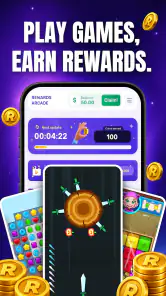
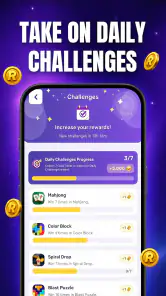
Rewards Arcade: Earn Cash is an entertainment app built around short gaming sessions and reward collecting. I approached it as something to open during spare moments rather than as a replacement for a full game, and that distinction matters. Its appeal is the simple loop of playing quick activities, building points over time, and exchanging those points for cash or gift cards.
The app is developed by PIXELPRIZE LIMITED and is available free of charge. It is aimed at mature users aged 17 and over, so it is not a suitable pick for younger players. The current release is version 2.0.17, and it supports devices running Android 7.1 or later. With more than ten thousand installs, it is still a relatively small rewards-focused entertainment app rather than a widely established mainstream platform.
How the rewards arcade feels in everyday use
My first impression is that the concept is easy to understand. You are not being asked to learn a complicated economy before starting. The central idea is to spend a little time with quick games, collect points, and work toward a reward. That makes the app approachable for someone who wants a lightweight distraction with a visible goal attached.
I would use it in the same situations where I might normally scroll through short videos or play a few rounds of a casual game: while waiting for an appointment, during a quiet break, or at the end of the day when I do not want to commit to a long session. The reward angle gives those spare minutes more structure, although it should not be confused with a dependable income source. The entertainment comes first; the rewards are an added incentive.
The most important practical point is that the experience is shaped by connectivity. A rewards app needs to keep track of progress and present redemption choices, so I would treat a reliable internet connection as part of the normal setup. When the connection is weak, the frustrating part is not necessarily the game itself. It is the uncertainty around whether a completed action has been recorded, whether points have updated, or whether a reward screen will load correctly.
For that reason, I prefer using it when my phone has a stable connection instead of opening it in a moving vehicle, a crowded venue, or a basement with inconsistent reception. That small habit makes the experience feel more predictable and avoids the temptation to repeat an action simply because the app has not refreshed yet.
Short sessions work better than long grinding
Rewards Arcade is best approached as a small daily routine, not as a marathon. Quick games suit a few minutes of attention, and I found that this format is easier to fit around real life than an app that expects a long uninterrupted session. It also reduces the risk of turning the reward system into a chore.
A useful workflow is to open the app only when you have a clear window, play for a reasonable amount of time, then check that the points display has caught up before leaving. I would avoid repeatedly closing and reopening the app in a hurry. With any connected rewards service, giving the account a moment to synchronize is more sensible than assuming every screen change represents a completed update.
This is one of the less obvious trade-offs. A short session can be convenient, but it may also make progress feel gradual. If you expect every few minutes to produce a meaningful payout, the app may feel slow. If you see the points as a bonus attached to casual play, the same pace is easier to accept.
Where the phone setting changes the experience
The app makes the most sense on a personal phone that you use regularly and can keep connected. A stable home or workplace connection is more comfortable than relying on uncertain mobile reception, especially when moving between areas. I would also avoid beginning a reward-focused session just before boarding transport or entering a place where the connection is likely to disappear.
That recommendation is not about demanding high-end hardware. The stated minimum is Android 7.1, which includes older devices, and the app’s quick-session concept is naturally less demanding than a large, graphics-heavy game. Still, an older phone may have its own limitations: a tired battery, limited free storage, or aggressive background management can make any connected app feel less responsive.
On a smaller screen, the benefit is portability. You can check in during a brief pause without setting aside a large block of time. The drawback is that cramped controls or frequent switching between the game area and reward information can feel less comfortable than on a larger display. I would choose a phone with a responsive touch screen and enough battery for casual use, rather than installing it on a device that is already struggling.
A realistic example would be a commuter waiting for a delayed bus. With a dependable connection, a short session can fill the gap without requiring headphones or a long story to follow. If the signal keeps dropping, however, a conventional offline puzzle game is the better choice because it removes the question of whether progress has been saved.
What happens when the connection fails
Connectivity problems are where I would be most cautious. If a game round appears to finish but the points do not change, I would not immediately replay it. First, I would wait, check the connection, and reopen the relevant screen once. Repeating actions before the account has updated can create confusion about which activity counted.
If the app stops responding, my recovery routine would be simple: move to a stronger connection, close and relaunch the app, and look for the latest visible points total before continuing. I would keep screenshots of an unusual error or a reward screen that behaves unexpectedly, particularly if the issue appears during redemption. That is not a guarantee of a particular support outcome, but it gives me a clear record instead of relying on memory.
The same caution applies before exchanging points. I would avoid starting a redemption attempt while the connection is unstable or the phone is about to lose power. A reward request is a moment when clarity matters more than speed. Letting the screen load fully and confirming the displayed status is a better habit than tapping repeatedly because nothing seems to happen.
This is also why I would not judge the app solely by how entertaining the quick games feel. The complete experience includes the transition from play to points and from points to a selected reward. A casual game can survive a brief interruption with little consequence; a rewards app has more room for uncertainty because the user is tracking progress toward something.
Using it without wasting mobile data
I would use Rewards Arcade with a little data awareness, especially if my mobile plan is limited. The safest approach is to reserve longer sessions for a trusted connection and use mobile data only for brief checks or short play. Even without measuring consumption, this habit prevents a rewards app from quietly becoming part of an unexpected monthly data bill.
It is also worth remembering that network use is not only about the visible game. Screens that load reward information, account progress, or redemption choices may also need a connection. For that reason, I would not assume that a quick-looking screen is completely disconnected from online activity. If you are traveling, a local connection is preferable to casually opening the app whenever reception appears for a moment.
Battery awareness matters for the same reason. A phone searching for a weak signal can drain power faster than one connected steadily, and a rewards session is not important enough to justify risking the battery you need for navigation or communication. My practical rule would be to use it after essential phone tasks are covered, rather than during a long day when every percentage of battery counts.
Another useful habit is to keep expectations modest when traveling. The app can be a pleasant way to fill time in a hotel, café, or waiting area, but the quality of that experience depends heavily on the local connection. A standard offline game, downloaded video, or reading app is more dependable when you know the network will be unreliable.
Who will enjoy it, and who should skip it
I would recommend this app to adults who already enjoy quick casual games and like having a points target in the background. It suits people who can treat rewards as a small extra rather than a promised financial solution. It is also a reasonable option for someone who prefers several short sessions over one deep game with a complex storyline.
The mature age rating is an important filter. Anyone under seventeen should choose something intended for their age group instead. I would also skip it if your main goal is serious gaming depth, competitive progression, or a guaranteed return for your time. A dedicated mobile game will usually offer richer mechanics, while a conventional loyalty program may be more appropriate if you care mainly about predictable rewards rather than entertainment.
Users with unreliable connectivity should think carefully before installing it. The app’s central appeal depends on the relationship between play, points, and redemption, and that relationship is harder to enjoy when screens fail to refresh. If you spend most of your time offline, an offline-first game is a better match. If you have a stable connection but only occasional free minutes, this format is much more convincing.
I would also avoid making decisions based on the reward promise alone. The right question is whether you would still enjoy the short games without the points. If the answer is no, the app may feel like work, particularly when progress is slow or a connection delay interrupts the routine. If you would happily play the activities anyway, the reward system can add a useful sense of purpose.
How it compares with familiar alternatives
Compared with ordinary casual games, Rewards Arcade adds a goal outside the game itself. That can make a brief session feel more purposeful, but it also introduces more dependence on account progress and connected screens. A normal puzzle or arcade title is often simpler when you want instant play with no concern about points updating.
Compared with survey or cashback services, this app puts entertainment at the center. Someone who dislikes answering questions or browsing offers may prefer the gaming approach. On the other hand, a cashback service may suit a user who already shops regularly and wants rewards tied to purchases rather than time spent playing.
Compared with a full console-style mobile game, the advantage is convenience. You do not need to invest in a long campaign or remember a complicated control system. The compromise is depth: quick rewards-oriented play is unlikely to provide the same sense of mastery, narrative, or long-term challenge as a purpose-built game.
That comparison helped me place the app correctly. It is not the best tool for maximizing earnings, and it is not the best game for someone searching for deep content. Its strongest position is between those categories: a lightweight entertainment app for adults who enjoy short activities and appreciate the possibility of exchanging accumulated points for cash or gift cards.
Small habits that make the experience smoother
I would start by choosing a regular time and connection rather than opening it randomly throughout the day. This makes it easier to notice whether progress is updating normally and prevents the app from becoming a constant distraction. A short, deliberate session is more enjoyable than checking it repeatedly whenever you have a spare second.
Before leaving a session, I would confirm the latest visible points total and avoid assuming that a partially loaded screen is final. If the connection is unstable, I would postpone redemption until the phone is online again. These are simple steps, but they address the most important friction point: uncertainty created by network delays.
I would also keep the reward goal realistic. Treating the points as a small bonus helps protect the entertainment value. Chasing a target too aggressively can turn quick games into repetitive labor, especially if you are comparing the time spent with what you could earn elsewhere. The app works better when it complements your downtime instead of taking over your schedule.
Finally, I would keep an alternative ready for disconnected moments. An offline game, saved article, or downloaded show gives you something dependable when reception fails. That way, a connection problem does not turn a short break into repeated loading screens, and you can return to Rewards Arcade when the conditions are better.
My final connectivity verdict
Rewards Arcade: Earn Cash has a clear, approachable idea: casual entertainment with points that can be exchanged for cash or gift cards. I like it most as a small add-on to everyday downtime, particularly for adults who already enjoy quick games and do not expect the reward system to replace regular income.
Its main weakness is also clear. The connected nature of the experience makes a stable network more important than it would be in a typical casual game. Delays around progress or redemption can make the app feel less trustworthy in the moment, even when the underlying idea remains appealing. Careful timing, a reliable connection, and patience after completing an activity go a long way toward reducing that friction.
PIXELPRIZE LIMITED has positioned this as an entertainment app rather than a heavyweight gaming platform, and that is the standard I would use to judge it. At no cost, it is worth considering if you want short sessions with a reward-oriented twist and your device meets the Android 7.1 requirement. I would pass if you need offline reliability, deep gameplay, or a predictable financial return.
My recommendation is conditional but positive: install it if you are comfortable treating the rewards as a bonus, use it on a dependable connection, and keep an ordinary offline alternative for travel or weak-signal situations. In that role, it can make small idle moments more engaging without asking for a major commitment.
Pros
- Simple arcade games make it easy to start earning points quickly.
- The app offers a variety of games to reduce repetition.
- Rewards can provide extra motivation for casual gaming sessions.
- Progress and point totals are generally easy to monitor.
- Suitable for short play sessions when you have spare time.
Cons
- Earnings are typically small and may require considerable playtime.
- Reward availability can vary by location and user account.
- Ads may interrupt gameplay and make longer sessions frustrating.
- Some games may feel repetitive after extended use.
- Cash-out requirements can delay access to your rewards.

- Category
- Entertainment
- Version
- 2.0.17