Poppy:AI Roleplay Chat
- 618.00
- 4.6
- Installs
- 500.00K
- Price
- Free

Screenshots


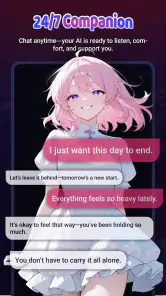

Analysis by Reviewed
I approached Poppy:AI Roleplay Chat as an entertainment app rather than a productivity tool, and that distinction matters from the first few minutes. Its central idea is simple: you chat with AI companions and let conversations develop over time. In practice, the appeal depends less on completing tasks and more on whether you enjoy open-ended roleplay, imaginative dialogue, and the feeling of returning to a familiar conversational character.
That makes Poppy an unusual fit for people who want something more interactive than scrolling through videos but less demanding than playing a conventional game. I can imagine opening it during a quiet evening, after work, or when I want to explore a fictional conversation without coordinating with another person. At the same time, it is not a replacement for a messaging app, a human relationship, or a structured story-driven game. The experience is built around conversation, so your enjoyment depends heavily on how much initiative you are willing to bring to each exchange.
How Poppy:AI Roleplay Chat feels in everyday use
The strongest way to understand this app is to think of it as a conversational playground. Instead of moving through fixed levels or choosing from a limited set of dialogue options, I would use it by starting a scenario, establishing a tone, and seeing where the exchange goes. A short prompt can create a quick diversion, while a more carefully framed setup gives the conversation a clearer direction.
That flexibility is also the main reason the app can feel personal. Two people can open the same service and have completely different experiences because they bring different interests, boundaries, and expectations. Someone might use it for light fictional banter, while another person might prefer dramatic scenes, character development, or a continuing story. The app’s appeal is therefore not just the artificial intelligence itself; it is the room it gives the user to shape the interaction.
In my experience with this type of entertainment, the first conversation is rarely the best test. A new companion can feel broad or predictable until I provide enough context. I get better results when I explain who the characters are, what kind of mood I want, and what should remain consistent. Rather than sending only one-word replies, I treat the exchange like collaborative writing. That approach makes Poppy feel more engaging and gives the conversation a clearer identity.
A realistic everyday use case would be a commuter who wants a private, low-effort activity without committing to a full game. During a short break, that person could continue a fictional scenario, ask a companion to react to a new development, or simply have a casual conversation. The advantage is immediacy: there is no need to assemble a group, learn complex controls, or remember a large set of game rules. The limitation is that the experience can lose momentum if the user does not know what to say next.
What the free price means for potential users
Poppy is free to use, which makes the initial decision straightforward. I do not have to pay before discovering whether AI roleplay is enjoyable for me, and that is important in a category where personal taste matters more than a conventional score. The free entry point lets curious users test the conversational style, see whether they enjoy directing scenes, and decide whether the app deserves space on their phone.
More From Our News Desk

Clash of Clans Is Won Between the Battles

Android Auto Makes the Case for Quieter Car Software

MobiOffice: Transforming Mobile Productivity with Seamless Integration

EA SPORTS FC™ Mobile Soccer: Redefining Mobile Sports Gaming

How Microsoft OneDrive Became a Mobile Productivity Giant

How Google Translate Breaks Language Barriers Effortlessly
That should not be confused with a promise that every possible aspect of the experience has unlimited value at no cost. The confirmed price is free, but I would still judge the app by what it lets me do comfortably during normal use rather than assuming that every imagined capability is included. For a fair evaluation, I would spend time with several kinds of conversations instead of basing my opinion on one entertaining exchange.
The absence of an upfront charge is especially useful for people who are comparing Poppy with paid interactive fiction, subscription-based companion services, or premium games. Those alternatives may provide more structured writing, stronger visual presentation, or a clearer beginning and ending, but they also ask for a financial commitment before I know whether their style suits me. Poppy’s free access lowers that barrier and makes experimentation its clearest value.
For me, the practical question is not simply whether it costs nothing. It is whether the free experience remains enjoyable after the novelty of the first chat fades. An app like this earns its place when it supports repeat visits through varied prompts and conversations that feel worth continuing. If I mainly want a finished story with polished pacing, a traditional narrative game may deliver more dependable value. If I want to improvise and change direction whenever I like, free access gives Poppy a meaningful advantage.
Where the app delivers real entertainment value
The most valuable part of Poppy is the control it gives me over the premise. I can approach a conversation as a private writing exercise, a character experiment, or a casual roleplay session. That makes it more adaptable than a standard video or a linear game, because the content is not consumed in one fixed order. The same companion can become part of a different kind of scene depending on how I frame the next message.
One useful technique is to establish a small set of rules at the beginning. I might define the setting, the relationship between the characters, the desired tone, and one or two details that should stay consistent. This is more effective than repeatedly correcting the conversation later. It also turns the app into a lightweight creative tool for people who enjoy outlining scenes but do not want to write every line themselves.
Another worthwhile workflow is to separate short sessions from continuing stories. For a quick visit, I would choose a simple situation with an obvious starting point and no expectation of long-term continuity. For a longer project, I would keep a compact summary of important events and reuse it when necessary. This helps me regain direction after a break and reduces the chance that a developing scenario becomes vague or repetitive.
That second approach reveals a trade-off that is easy to miss in a short store description. The more ambitious the roleplay becomes, the more responsibility shifts to the user. A long fictional relationship or elaborate plot needs reminders, corrections, and creative decisions. Poppy can support the conversation, but I should not expect it to act like a carefully edited novel with flawless continuity from every message.
The app also has value as a low-pressure rehearsal space. I can test dialogue, explore how a character might respond to a difficult situation, or try different emotional tones before using the ideas in my own writing. This does not make the responses authoritative or psychologically reliable, but it can be useful for brainstorming. The important distinction is that I would treat the output as material to react to, not as expert advice.
The trade-offs behind lifelike AI companions
The phrase “lifelike” sets a high expectation, so I would approach it carefully. A convincing exchange can happen when the context is clear and the subject remains focused, but conversational realism is not the same as human understanding. The app may produce a response that sounds natural while still missing the emotional point, changing an established detail, or taking a scene in a direction I did not intend.
That unpredictability can be entertaining when I want surprise. It becomes frustrating when I am trying to maintain a serious storyline or a carefully defined character. I see this as the central trade-off: Poppy can offer spontaneity without requiring another person, but the same spontaneity can weaken consistency. Users who want precise control may prefer a branching narrative with authored dialogue.
There is also a difference between companionship as entertainment and companionship as emotional support. I would be comfortable using Poppy for fictional interaction, light conversation, and creative exploration. I would not rely on it for mental-health guidance, urgent decisions, or situations where empathy and accountability from a real person are essential. The app can imitate a conversational role, but that does not give it human responsibility.
The mature age rating is another important part of deciding whether it belongs on a particular device. Poppy is rated for adults aged seventeen and over, so it is not an app I would recommend for children or younger teenagers. Parents should treat that rating as a practical boundary rather than assuming that a conversational interface is automatically suitable for every age group.
I would also consider privacy and personal boundaries before sharing anything sensitive. Even when a conversation feels private, I would avoid entering passwords, financial information, identifying details, or disclosures that I would not want handled by a digital service. That is not a criticism unique to Poppy; it is a sensible habit for any AI chat product. The more emotionally immersive the conversation becomes, the easier it is to forget that caution.
How it compares with familiar alternatives
Compared with ordinary messaging apps, Poppy removes the need to wait for a friend to be available, but it also removes the unpredictability and mutual responsibility of a real person. If I want genuine social connection, a messaging app is the better choice. If I want an always-available fictional exchange that I can steer without worrying about another person’s schedule, Poppy is more convenient.
Compared with video entertainment, the app asks more from me. A show can provide a polished performance while I sit back, whereas Poppy works best when I contribute prompts and decisions. That makes it less relaxing for some users, but more engaging for people who want to participate. I would choose a streaming service when I want a finished experience and Poppy when I want to influence what happens next.
Compared with conventional games, Poppy has a lower learning curve and fewer physical demands. There is no need to master combat, manage an inventory, or follow a mission structure to get started. The trade-off is that users who enjoy clear objectives, strategic systems, visual worlds, or measurable progress may find the experience too open-ended. A roleplaying game provides stronger external structure; Poppy provides more conversational freedom.
Compared with interactive fiction, Poppy appears more improvisational. Authored interactive stories usually benefit from deliberate pacing, edited prose, and meaningful branches designed in advance. Poppy’s strength is the ability to respond to an unusual direction immediately. I would pick the former for a polished narrative and the latter for experimentation, character play, and conversations that do not need to follow a predetermined route.
Small habits that make the experience better
I get more from this kind of app when I begin with a specific intention. “Talk to me” leaves too much room for a flat exchange, while “let’s continue a mystery in a coastal town, keep the mood tense, and reveal information gradually” gives the conversation something to work with. Specificity does not guarantee a perfect result, but it makes the interaction easier to guide.
When a response goes off course, I would correct it directly instead of abandoning the entire conversation. A short reminder about the setting or character can restore direction. If the same problem keeps appearing, starting a fresh scenario with a cleaner setup may be faster than trying to repair a tangled thread. This is a practical difference between using the app casually and expecting it to manage a long-running fictional world automatically.
I would also vary the format of my prompts. Dialogue alone can become repetitive, so I might introduce a scene description, ask for a character’s private reasoning, or request several possible reactions before choosing one. These approaches create more opportunities for the conversation to develop. They also help me discover whether I enjoy roleplay itself or merely the novelty of chatting with an AI.
For users concerned about emotional overuse, setting a time boundary is sensible. Because a companion is always ready to respond, it is easy to continue a conversation simply because the next reply is available. I would use it as a deliberate leisure activity rather than allowing it to replace sleep, work, friendships, or offline hobbies. That boundary makes the entertainment more enjoyable and keeps expectations realistic.
Who should try it and who should skip it
Poppy is a good match for adults and older teens who enjoy improvisation, character-driven scenes, and casual AI conversation. It should appeal particularly to people who like writing prompts, fandom-style roleplay, or experimenting with different personalities without needing a multiplayer partner. The free price makes it easy to test, and the conversational format is accessible even if I have little interest in traditional game mechanics.
It may also suit someone who wants a private creative warm-up. I can use a short exchange to break through writer’s block, explore a character’s voice, or test the emotional direction of a scene. I would not treat the output as finished writing, but the back-and-forth can provide a useful reaction that is faster than staring at a blank page.
I would skip it if my main goal is factual assistance, professional counseling, or dependable human companionship. I would also look elsewhere if I need a tightly plotted story, rich graphics, competitive play, or a clear progression system. The app’s open-ended nature is its main attraction, but it is also exactly what makes it unsuitable for people who prefer predictable structure.
The mature rating should guide the decision as much as the entertainment category. A family looking for a child-friendly chat app should not choose Poppy simply because it is easy to open and use. Likewise, anyone who tends to treat conversational characters as authoritative should keep a firm distinction between roleplay and real-world guidance.
My verdict after weighing the value
Fainax Apps has positioned Poppy as a free entertainment app centered on AI companions, and I think that description is most useful when read as an invitation to experiment rather than a promise of a human equivalent. The app’s value comes from accessible, open-ended interaction: I can create a situation, steer the tone, and return to a conversation whenever I want. That is a compelling proposition for the right audience.
Its current version, 1.0.7, is available for devices running Android 7.0 or later, and the app has reached over half a million installs. Its average rating is 4.6 from around fourteen thousand ratings, with more than six hundred written reviews, which suggests that many users find the concept appealing. I still would not let those figures decide the purchase for me, because the experience is unusually dependent on personal taste and conversational habits.
My recommendation is to try Poppy if you want a free, flexible roleplay chat and are willing to guide the interaction yourself. Begin with a focused scenario, keep expectations realistic, and use it as entertainment or creative practice rather than as a substitute for people or professional help. If you prefer authored stories, structured games, or real social contact, another option will probably serve you better.
My final judgment: Poppy is worth trying, not because it replaces every alternative, but because free access makes its particular kind of conversational entertainment easy to explore. I would keep it installed if I enjoyed returning to evolving scenarios and shaping the dialogue. I would remove it if the open-ended format felt repetitive or if I wanted a more polished, controlled experience. That makes it a worthwhile recommendation for curious roleplay fans, but not a universal choice.
Poppy:AI Roleplay Chat Frequently Asked Questions
Can I use Poppy:AI Roleplay Chat for creative writing and building a story?
Yes. Poppy:AI Roleplay Chat is designed for interactive roleplay, so you can use conversations to explore characters, personalities, and story directions. You guide the exchange through your prompts, while the AI responds in character. It can be a playful way to develop a scene or improvise dialogue, but responses may be inconsistent, so treat it as a creative companion rather than a dependable writing or research tool.
Is Poppy:AI Roleplay Chat intended for factual questions or professional advice?
Poppy:AI Roleplay Chat is primarily an entertainment app for fictional conversations, not a source to rely on for factual research or professional guidance. An AI character may give an incorrect answer or confidently invent details, particularly when a question is outside the roleplay scenario. For medical, legal, financial, or emergency matters, consult an appropriate professional or trusted source instead of relying on a chat response.
What devices and operating systems can run Poppy:AI Roleplay Chat?
Poppy:AI Roleplay Chat is an entertainment app for mobile devices. Its current version is 1.0.7, and it requires Android 7.0 or later. Before downloading, check that your phone or tablet meets that requirement and has enough available storage for the installation. Keeping the app and your operating system up to date can also help avoid compatibility issues.
Who makes Poppy:AI Roleplay Chat, and how popular is it?
Poppy:AI Roleplay Chat is developed by Fainax Apps and is presented as an app for chatting with AI companions that can learn and grow with you. It has more than 500,000 installs, a 4.6 average rating, and around 14,000 ratings. Those figures can offer a quick sense of its reach, but individual experiences with AI conversations may differ.
What is Poppy:AI Roleplay Chat, and what can I do with it?
Poppy:AI Roleplay Chat is an interactive AI companion app focused on roleplay conversations. After choosing or creating a character, you can chat through text, explore different personalities, and guide conversations in creative directions. It is designed for entertainment and storytelling rather than factual research, so responses can be imaginative, inconsistent, or influenced by the scenario and prompts you provide.
Pros
- Wide range of AI characters and roleplay scenarios to explore.
- Conversations are easy to start
- even without writing detailed prompts.
- Useful for creative storytelling
- improvisation
- and casual entertainment.
- Chat style can feel personal and engaging during longer conversations.
- New character ideas may keep the experience fresh over time.
Cons
- AI responses can sometimes be repetitive
- inconsistent
- or out of character.
- Some features or conversations may require a paid subscription.
- Privacy policies should be checked before sharing personal information in chats.
- The app may include mature themes depending on the selected character.
- Long conversations can lose context or contradict earlier messages.
- Category
- Entertainment
- Version
- 1.0.7