Polly.com: Magical Shopping
- 415.00
- 4.9
- Installs
- 100.00K
- Price
- Free

Screenshots




Analysis by Reviewed
I approached Polly.com: Magical Shopping as a shopping app rather than as a simple product catalogue. Its focus is on fast-moving offers and auctions across beauty, fashion, home items, and related categories, so the experience is built around discovering something interesting at the right moment. That makes it appealing when browsing is part of the fun, but it also means I would not use it in exactly the same way as a conventional retailer with a quiet, search-first catalogue.
The app is free, aimed at Everyone, and comes from Shop Polly LLC. It has reached over one hundred thousand installs and holds a 4.9 average from around two and a half thousand ratings, with roughly four hundred reviews. Those figures suggest that the service has found a committed audience, although they are better treated as a starting point than as proof that every shopper will have the same experience. Shopping apps can feel very different depending on whether you enjoy live discovery, auctions, and limited-time decisions.
How the shopping experience builds trust
My first impression is that Polly.com is most useful when I already know what kind of browsing mood I am in. If I want to explore beauty products, fashion finds, or home goods without opening several separate retailer apps, the themed selection gives me a more focused place to start. The daily-drop approach creates a sense of movement: there is a reason to return and see what has changed rather than simply checking the same saved catalogue.
That same design deserves a little caution. A changing feed can encourage impulse decisions, particularly when an auction or a short-lived offer makes waiting feel like a mistake. I found it more sensible to decide my spending limit before I start browsing. This is not a criticism of the app alone; it is a practical rule for any marketplace built around discovery and urgency. The better question is not whether an item looks exciting, but whether I would still want it after comparing its total value with ordinary shopping alternatives.
The developer identity is visible as Shop Polly LLC, which gives the app a clear point of responsibility at the product level. I also look for the same clarity when moving from browsing to buying: who is presenting the item, what the checkout screen says, and whether the final amount is easy to understand before confirming. Those are the moments that matter more to me than polished visuals, because they determine whether the service feels manageable when something goes wrong or simply does not meet expectations.
One useful habit is to separate three decisions that can blur together in an auction environment: whether I like the item, whether the current price is sensible, and whether I am prepared to complete the purchase. Treating them separately reduces the chance that the excitement of winning becomes the only reason to continue. Polly.com works best for me when it is a discovery tool with boundaries, not when it replaces all of my normal price-checking.
What the ratings tell me, and what they do not
The 4.9 average is encouraging, and the volume of feedback is large enough to show that the app is not being judged by only a handful of people. Still, a high average cannot answer practical questions such as how well a particular product suits me, how an individual order will go, or how comfortable I will be with the app’s account and purchase flow. I would read recent comments for recurring details before making Polly.com my main shopping destination.
More From Our News Desk

Clash of Clans Is Won Between the Battles

Android Auto Makes the Case for Quieter Car Software

MobiOffice: Transforming Mobile Productivity with Seamless Integration

EA SPORTS FC™ Mobile Soccer: Redefining Mobile Sports Gaming

How Microsoft OneDrive Became a Mobile Productivity Giant

How Google Translate Breaks Language Barriers Effortlessly
I also would not confuse popularity with suitability. Someone who enjoys browsing daily drops may find the app much more engaging than a standard retailer. Someone who wants exact specifications, predictable stock, and a slow comparison process may prefer a traditional store or a specialist retailer instead. The rating supports confidence in the overall experience, but personal shopping habits remain important.
Controls, account choices, and privacy-sensitive moments
When I review a shopping app through a trust lens, I pay attention to the choices visible on the screen rather than guessing about hidden behaviour. Polly.com should be judged by the permission prompts it actually presents, the account settings it exposes, and the explanations shown when personal or payment-related information is involved. I would grant only the access that matches a clear purpose, and I would pause if a request appeared unrelated to browsing or purchasing.
That approach is especially useful for an app built around returning users and changing offers. Notifications can be helpful when they point me toward a drop I genuinely want to follow, but they can also turn casual browsing into a constant stream of prompts. I prefer to begin with restrained notification choices and increase them only if they prove useful. A shopping app earns more trust when I can make that adjustment without feeling that I must accept every alert to use the core service.
Account creation is another point where I would slow down. I would check which details are required to browse, which are needed only at checkout, and whether the app gives a clear route to manage or remove account information. I would also use a unique password rather than reusing the one from email or banking. That is simple advice, but it matters more in shopping apps because an account may connect identity, order history, addresses, and payment decisions.
Payment is the most data-sensitive moment for me. Before confirming an order or auction result, I want the final screen to be readable and the purchase action to be deliberate. I would avoid saving payment details unless the convenience is worth the trade-off for my own situation, and I would review the account after buying rather than assuming every choice is permanent or obvious. The important point is to use the controls that are visible and make decisions consciously, not to rely on assumptions about how the service handles information.
How I would use it without losing control
My preferred workflow starts with a narrow purpose. I might open the app to look for a home item, browse beauty offers for a gift, or check a fashion auction I have already decided to follow. I would then note the item, seller or offer details shown in the app, and the maximum amount I am willing to spend before interacting with the bidding controls. This prevents the feed itself from setting my budget.
A second useful step is to take a short pause before checkout. I would confirm the selected item, quantity, delivery information, and total shown on the final screen. If the purchase is for a gift, I would also check whether the timing makes sense rather than assuming a daily drop is automatically suitable for a deadline. This small routine is more valuable than endlessly scrolling because it focuses attention on the parts of the transaction that are difficult to undo.
For recurring use, I would keep Polly.com as one part of my shopping process. I could discover an item there, then compare the description and overall value with a familiar retailer or specialist store. That does not remove the app’s appeal; it uses its strongest feature, discovery, while keeping my final decision grounded. The trade-off is a few extra minutes, but that is worthwhile for higher-cost purchases, skincare products I have not tried, or anything where specifications matter.
I would also keep my account tidy. If I stop using the app, I would review saved details, notification choices, and any active shopping activity rather than leaving everything untouched. If I share a device, I would be particularly careful about account access and checkout screens. These are ordinary controls, yet they give me more agency than treating the app as an endless stream of tempting offers.
Where the app fits better than ordinary alternatives
Compared with a standard retailer, Polly.com is more attractive when I want surprise and variety. A conventional store is usually better for searching an exact model, checking a stable product page, or reordering something familiar. Polly.com has a different rhythm: I open it to see what is happening now, not only to retrieve an item I have already chosen.
Compared with a broad marketplace, its emphasis on beauty, fashion, home, and related discoveries can make browsing feel less scattered. The benefit is a more curated sense of direction. The cost is that I may not find a precise product immediately, and I may need to return later if the current selection does not match my needs. For urgent purchases, that uncertainty makes a conventional retailer the safer choice.
Compared with social shopping, the app’s appeal comes from the shopping activity itself rather than from relying on a friend’s recommendation. I still would not treat an attractive presentation as a substitute for checking the practical details. A product can be visually convincing and still be wrong for my budget, room, skin type, size, or delivery schedule. The app is strongest at opening possibilities; I remain responsible for narrowing them down.
Everyday situations where it makes sense
Imagine I have a free evening and need a small home gift, but I do not have a particular brand in mind. Polly.com could be useful because I can browse several relevant categories and notice items I would not have searched for directly. I would save the promising options mentally or through the app’s visible choices, compare the final cost, and buy only after deciding that the item fits the recipient rather than merely matching the mood of the feed.
For beauty shopping, I would be more selective. Discovery is useful for finding ideas, but I would pay close attention to ingredients, shade information, suitability, and return conditions wherever those details are shown. I would not let an auction format pressure me into buying a product I cannot evaluate properly. In this case, a specialist beauty retailer may be better when I need detailed filters or a dependable repeat purchase.
For fashion, I would use the app when I am comfortable with some uncertainty and have time to check sizing and purchase terms. If I need an outfit for a fixed date, I would favour a retailer with predictable availability and delivery information. For home items, the app may be a pleasant source of inspiration, but I would verify dimensions and practical constraints before ordering anything that must fit a particular space.
Limitations I would keep in mind
The biggest limitation is the tension between discovery and deliberate shopping. Daily drops and auctions can make the experience lively, but they can also make it harder to compare calmly. If I dislike countdown-style decisions, prefer a stable catalogue, or want to plan a complete basket in one session, the app may feel more distracting than helpful.
Another limitation is that the quality of the experience depends on the individual offer. The app can bring categories together, but that does not mean every item will suit every shopper. I would still inspect the information presented for each product and avoid assuming that a strong overall rating guarantees a perfect match for a particular purchase.
I would also be cautious about making Polly.com my only shopping account. Keeping alternatives available gives me a reference point for prices, product information, delivery expectations, and customer support. That is particularly important for expensive items or purchases with personal requirements. The app is easier to trust when I use it intentionally and retain the ability to compare elsewhere.
My cautious verdict after using it
Polly.com: Magical Shopping is a good fit for people who enjoy discovering beauty, fashion, home, and other products through changing offers and auctions. I like its potential as a focused browsing destination, especially when I want ideas rather than a single predetermined item. The free entry and Everyone age rating make it approachable, while the strong average rating and growing install base indicate that many users find the experience worthwhile.
My recommendation comes with clear boundaries. I would set a budget before browsing, review every checkout screen, keep notifications under control, and compare important purchases with ordinary retailers. I would also treat account and payment choices as decisions worth checking, not as background details. The strongest way to use Polly.com is with curiosity at the discovery stage and caution at the purchase stage.
The current version is 7.13.16, and it supports Android 7.0 or later, so compatibility is worth checking before installing on an older device. Shop Polly LLC has built an app for shoppers who enjoy the feeling of finding something new, but that style will not suit everyone. If you want a calm, specification-heavy catalogue, a specialist store is likely better. If you like browsing with a firm personal limit and are willing to verify the details before buying, Polly.com is a worthwhile addition to a shopping routine rather than a replacement for good judgement.
Polly.com: Magical Shopping Frequently Asked Questions
What kinds of products can I discover in Polly.com: Magical Shopping?
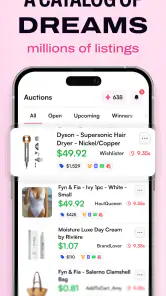
Polly.com: Magical Shopping focuses on shopping, with daily drops and auctions featuring trending beauty, fashion, home products, and more. That mix may suit users who enjoy browsing changing collections and discovering items across different categories. Before deciding whether a particular product is right for you, read its listing carefully and check the details shown in the app.
Who makes Polly.com: Magical Shopping, and what age rating does it have?
Polly.com: Magical Shopping is developed by Shop Polly LLC and is rated Everyone. It is a shopping app, so anyone considering it should still use good judgment when browsing products and making purchases. Parents and guardians may wish to guide younger users around spending and account activity, as with any app that can lead to purchases.
What is Polly.com: Magical Shopping?
Polly.com: Magical Shopping is a shopping-focused app designed to help users discover products, browse collections, and explore deals in a visually engaging way. Its experience is aimed at making online shopping feel more interactive and convenient, with product information and purchasing options available from a mobile device. Its daily drops and auctions cover trending beauty, fashion, home products, and more. Availability of specific items, sellers, prices, and delivery services may vary by region.
Is Polly.com: Magical Shopping free to download and use?
The app is free to download, but products, services, or optional features may require payment. The final cost depends on the items you choose, shipping fees, taxes, and any applicable seller charges. Before confirming an order, users should carefully review the complete price breakdown, return conditions, and payment details displayed in the app.
Is Polly.com: Magical Shopping safe for shopping and payments?
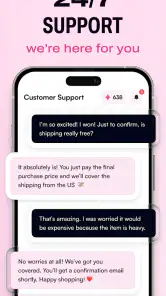
As with any shopping platform, users should download Polly.com: Magical Shopping only from an official app store and keep the application updated. Check that product listings, seller information, reviews, and checkout details appear legitimate before making a purchase. Use a trusted payment method, avoid sharing unnecessary personal information, and contact official support if an order or payment seems suspicious.
Pros
- Personalized shopping recommendations can make product discovery feel more engaging.
- A playful interface gives the app a distinctive experience compared with standard marketplaces.
- Useful for browsing gift ideas when you are unsure what to buy.
- The visual presentation helps products stand out while scrolling.
- Can save time by bringing different shopping categories into one place.
Cons
- Product availability and delivery options may vary by location.
- Some recommendations may feel too broad or miss your personal preferences.
- Prices and promotions can change before you complete a purchase.
- The app may require account access for saving items or receiving tailored results.
- Shopping-focused features can make the experience feel less useful for casual browsing.
- Category
- Shopping
- Version
- 7.13.16