PlayZone: Play & Earn Money
- 410.00
- 4.5
- Installs
- 500.00K
- Price
- Free
Screenshots


Analysis by Reviewed
I approached PlayZone: Play & Earn Money as an entertainment app with a practical question in mind: is it enjoyable enough to keep using when the reward is not the only reason to open it? That is the right way to judge this kind of app. The promise of playing games, finishing tasks, and receiving cash or gift cards sounds attractive, but the real experience depends on how naturally those activities fit into your spare time and how much patience you have for the reward process.
PlayZone is made by Money Turn and is available as a free Android app. It sits in the entertainment category, although its earning angle makes it feel different from a conventional game hub. The app has reached over 500 thousand installs and holds a 4.5 average from around 2.9 thousand ratings, which suggests that many users find the basic concept appealing. I would still treat those figures as a reason to investigate, not as a guarantee that every task will suit every person.
Its mature age rating is important before you install it. This is not an app I would casually hand to a child simply because games are involved. It is aimed at adults who understand that rewards apps require attention to conditions, patience with progress, and sensible expectations about what “earning” means in practice.
How I Would Decide Whether PlayZone Fits
The first question is what you want from your spare time
If you want a focused game with a deep story, competitive ranking, or carefully designed controls, PlayZone is probably not the best starting point. Its appeal is broader: it gives you a place to explore games and tasks while keeping the possibility of a reward in view. I see it as a casual entertainment option for short sessions rather than a replacement for a dedicated game.
That distinction matters because the reward changes how you judge the experience. With a normal free game, a few minutes of experimentation cost you only time. In PlayZone, you will also be watching progress and wondering whether a task is worth completing. I found that the most comfortable mindset is to choose activities I might enjoy anyway, then regard any eventual payout as an extra rather than as payment for a fixed hourly effort.
People who already spend small gaps in the day trying casual games may find the format easy to understand. A commute, a waiting room, or a quiet break can become an opportunity to test an activity. On the other hand, anyone looking for dependable income should be cautious. A rewards app is not a substitute for employment, freelancing, or a structured side business, and the time-to-reward trade-off may not suit someone who values every minute.
What I check before committing time
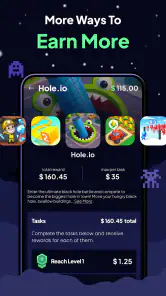
My first practical habit is to read the task wording carefully before starting. In this type of app, the attractive part is often the headline reward, while the less obvious part is the effort required to reach the qualifying point. I would look for the actual completion condition, whether progress has to be made within a particular activity, and whether the task seems realistic for the amount of free time I have.
More From Our News Desk

Clash of Clans Is Won Between the Battles

Android Auto Makes the Case for Quieter Car Software

MobiOffice: Transforming Mobile Productivity with Seamless Integration

EA SPORTS FC™ Mobile Soccer: Redefining Mobile Sports Gaming

How Microsoft OneDrive Became a Mobile Productivity Giant

How Google Translate Breaks Language Barriers Effortlessly
A useful approach is to begin with the smallest, clearest activity rather than immediately choosing the most ambitious-looking one. That gives you a feel for the navigation, the way PlayZone records progress, and the general rhythm of its tasks without tying up a long session. This is one of the most important tips I can offer: test the workflow before investing serious time.
I would also keep a simple note of what I started and when. That may sound excessive for a casual app, but it helps separate genuine progress from a task that merely feels busy. A note can include the activity name, the starting point, and the condition you are trying to reach. If something later seems unclear, you have a much better personal record than relying on memory.
The payout method affects the decision
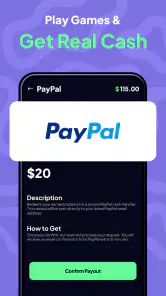
PlayZone presents PayPal and gift cards as its reward routes. That gives it more practical appeal than an app that offers only abstract points, but the best option depends on how you normally use rewards. PayPal is more flexible for many people, while a gift card can be convenient if you already shop with the relevant retailer. I would choose the route that matches an expense I already expect to make rather than letting the reward encourage unnecessary spending.
Before treating a balance as money I can use, I would check the redemption screen and read its instructions closely. The important questions are whether the amount I have is enough to redeem, how the request is submitted, and whether I need to verify anything during the process. I am not suggesting that every user will face difficulty; I am saying that redemption deserves the same attention as task completion.
Another practical trade-off is privacy and account management. Any app connected with rewards deserves a careful look at the information it asks you to provide and the accounts you choose to connect. I would avoid creating extra accounts simply to chase a small reward, and I would never share a payment password inside a task or message. Keeping the app, the payment service, and your email account protected separately is a sensible precaution.
Where PlayZone Feels Strongest
It combines discovery and motivation in one place
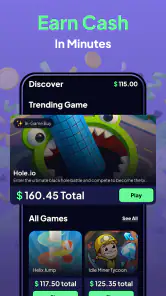
The clearest strength is the way PlayZone joins two activities that people already understand: trying games and completing tasks. Instead of opening a game purely for entertainment and then moving to a separate rewards service, you can use one app as the starting point for both. That makes the concept approachable, especially for someone who does not want to compare a long list of unrelated reward platforms.
I also like the fact that the app does not limit its idea to playing alone. The inclusion of tasks gives users another route when they are not in the mood for a game. That variety can prevent the experience from becoming repetitive, provided the available activities genuinely feel distinct and the user remains selective about what is worth doing.
For a realistic everyday scenario, imagine having fifteen quiet minutes before an appointment. You could open PlayZone, review the available activities, choose something with a clear objective, and stop when the appointment time approaches. The sensible goal is not to force a reward out of every short break. It is to use the app as a structured menu of casual options, with progress as a possible benefit.
The free entry point lowers the risk
Because the app is free, trying it does not require an upfront purchase. That makes experimentation easier than with entertainment products that ask for a subscription before you can decide whether they belong in your routine. I would still count the cost of mobile data, battery, and time, but the lack of an entry fee is helpful for cautious users.
The current version is 1.1.5, and the minimum requirement is Android 7.0. That gives the app a relatively broad device range, although compatibility is not the same as a smooth experience on every phone. Older hardware may handle casual activities differently from a recent device, so I would pay attention to responsiveness during the first few sessions instead of assuming that the app will feel identical everywhere.
The free model also changes how I recommend using it. There is no reason to rush into a long commitment. Install it, inspect the available tasks, try one modest activity, and decide whether the process feels clear. If the interface makes you work too hard to understand the next step, the fact that it costs nothing does not automatically make it worthwhile.
Its audience feedback is encouraging but not decisive
A 4.5 average from around 2.9 thousand ratings is a positive signal, and the presence of roughly 410 written reviews gives prospective users more than a completely empty feedback page to consider. Still, ratings for reward apps can reflect different expectations. One person may care most about game variety, another about redemption, and another about how quickly a task becomes available.
I would read recent comments with a specific purpose: look for descriptions of the actual user journey rather than relying on short praise. Useful comments usually explain what the person did, how they tracked progress, and whether the reward process was understandable. That kind of detail is more valuable than a simple high score because it helps you compare the experience with your own priorities.
Where a Different Option May Be Better
Dedicated games win on depth
If your main objective is quality gameplay, a dedicated game will usually be the better choice. A specialist title can focus on controls, level design, narrative, sound, or multiplayer balance without asking you to think about tasks and rewards. PlayZone is more useful when you want variety and a possible incentive; it is less convincing when you want one polished game to master.
The same applies to people who dislike interruptions in their entertainment. A rewards-oriented routine naturally asks you to monitor progress and conditions. That extra layer may be motivating for some users, but it can make the session feel less relaxing for others. I would skip PlayZone if the thought of tracking objectives makes casual play feel like another chore.
Structured earning platforms may suit serious earners
Someone seeking predictable income should compare PlayZone with options designed for work, surveys, freelancing, or cashback. Those categories have their own compromises, but they may provide a clearer connection between an action and its financial purpose. PlayZone’s entertainment-first approach is better suited to incidental rewards than to a dependable monthly target.
This is also where expectations can become misleading. The word “cash” may make the app sound like a direct earning tool, but the value of each activity depends on the effort involved and on whether you would have chosen that activity without the incentive. I would not calculate an expected wage from the app until I had personally observed how long a complete task takes and how easily I can redeem the result.
Other rewards apps may fit a narrower routine
A person who wants only shopping savings may prefer a cashback service. Someone who wants only surveys may prefer a survey-focused platform. Someone who wants only games may prefer a normal game store. PlayZone’s advantage is its mixed format, but that is also its limitation: it may not be the most efficient tool when your goal is very specific.
There is a hidden cost to switching between categories as well. A specialist service can be easier to judge because its purpose is narrow. With PlayZone, you need to decide whether a game, a task, and the reward path all make sense together. That extra decision-making is manageable, but it is part of the product experience and should not be ignored.
What Switching Involves in Everyday Use
Give yourself a short trial instead of a long promise
I would use a staged trial. During the first session, I would learn the layout and identify the clearest activity. During the next few sessions, I would compare the time spent with the progress shown. Only after that would I decide whether PlayZone deserves a regular place on my phone.
This approach avoids a common mistake: starting several activities at once and then forgetting which conditions belong to which one. A single active goal is easier to monitor, easier to finish, and easier to evaluate. If you do choose more than one, write down the exact next step for each rather than assuming the app’s progress display will always be enough for your memory.
I would also set a personal stopping rule. For example, if an activity stops being enjoyable or becomes too confusing, I would leave it rather than continuing simply because I have already spent time on it. That is the sunk-cost trap in miniature. The fact that you have invested ten minutes does not mean another thirty will make the choice worthwhile.
Keep redemption expectations practical
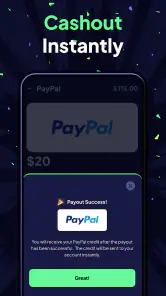
When you are ready to redeem, treat the process as a separate stage rather than an automatic conclusion. Confirm that your progress has been credited, select the payment route that genuinely suits you, and save any confirmation details that appear. If the balance is close to a threshold, I would avoid adding unnecessary tasks just to reach it unless the remaining effort is clearly reasonable.
Gift cards can be useful when they match something already on your shopping list, but they are less flexible than cash in a payment account. PayPal can be more broadly useful, yet some users may prefer not to connect another service for small rewards. Neither choice is universally better; the right route depends on how much flexibility you need and how comfortable you are managing another account.
Know when to stop using it
A good decision guide must include the exit decision. I would stop using PlayZone if I found myself opening it only to chase a target I no longer enjoyed, if the tasks repeatedly failed to match my available time, or if the reward process felt too difficult to understand. Free apps still consume attention, and attention is a real cost.
I would also move to a different category if my goal changed. If I wanted deeper gameplay, I would choose a dedicated title. If I wanted reliable work, I would look at a work-oriented service. If I wanted shopping savings, I would use cashback. PlayZone makes the most sense when entertainment and occasional rewards are both part of the plan.
My Recommendation for the Right User
I recommend PlayZone to adults who enjoy sampling casual games, do not mind completing structured tasks, and can treat rewards as a bonus rather than guaranteed income. The free entry point, broad Android support, and choice between PayPal and gift cards make it easy to test without making a large commitment. Its current 1.1.5 release also gives users a clear version point when checking that they have the intended app.
I would not recommend it to children because of the mature rating, and I would not recommend it to anyone expecting a predictable paycheck. I would also steer away users who become frustrated by progress tracking or who want uninterrupted, premium-style gameplay. For those people, a conventional game or a more focused earning service is likely to feel better.
My strongest recommendation is to use it deliberately: start with one understandable activity, record what you are trying to complete, compare the time with the progress, and choose a redemption method that fits a real need. That workflow reveals the app’s value much faster than simply collecting activities and hoping the balance grows.
Overall, PlayZone is an appealing hybrid rather than a universal solution. Money Turn has created an entertainment app with a reward-focused reason to return, and its strong public rating indicates that the idea connects with many users. In my experience, its success depends less on chasing every available task and more on choosing only the ones that fit naturally into your day. If you want casual play with a possible financial extra, it is worth a careful trial; if you want either serious gaming or dependable earnings, choose a specialist alternative instead.
PlayZone: Play & Earn Money Frequently Asked Questions
Is PlayZone free, and what devices can run it?
PlayZone is free to download, and its current version is 1.1.5. It requires Android 7.0 or later, so check your device’s operating system before installing. The app is listed for users aged 17 and older. Compatibility and availability can still vary by device and region, so confirm that it appears in your app store before you decide to install it.
What is PlayZone: Play & Earn Money?
PlayZone: Play & Earn Money is a rewards app that lets users discover and play selected mobile games while collecting points or credits for their activity. Depending on the available offers, rewards may be linked to reaching milestones, completing tasks, or spending a certain amount of time in a game. The exact earning options can vary by country, device, and current promotions. PlayZone is an entertainment app from Money Turn, with a store summary focused on playing games, completing tasks, and earning cash or gift cards.
Can you really earn money with PlayZone?
PlayZone may provide redeemable rewards, but it should not be considered a reliable source of income. Earnings are generally modest and depend on the games available, the requirements of each offer, and how consistently you complete them. The app’s stated reward options include PayPal or gift cards, but what is available can depend on your location. Before downloading, check the current payout rules, minimum withdrawal threshold, supported reward methods, and whether your region is eligible.
How do rewards and withdrawals work in PlayZone?
After completing eligible activities, the app typically records progress and adds points or credits to your account. Once you reach the required balance, you may be able to request a payout through the methods supported in your location. Processing times, verification requirements, and available options can differ, so users should read the withdrawal conditions carefully and keep their account information accurate. PayPal and gift cards are described as reward options, though availability may vary.
Is PlayZone: Play & Earn Money safe to use?
The app may require permissions, account details, advertising identifiers, and information about installed or played games in order to track offers and activity. Before accepting access, review the privacy policy and Android or iOS permissions, and avoid providing unnecessary sensitive information. Downloading only from an official app store and checking recent user reviews are also sensible precautions. The app is rated Mature 17+, which is worth considering before installing.
Pros
- Wide selection of casual games in one app
- Simple interface makes games easy to find and start
- Rewards can make short gaming sessions feel more engaging
- Suitable for users who enjoy trying different game genres
- Regular challenges may encourage consistent play
Cons
- Earnings are usually small and may require significant time
- Reward availability can vary by country or region
- Some games may require watching frequent advertisements
- Withdrawal rules and minimum thresholds may limit flexibility
- Privacy and permissions should be checked before creating an account
- Category
- Entertainment
- Version
- 1.1.5