Playback: Get Paid to Play
- 729.00
- 4.3
- Installs
- 500.00K
- Price
- Free

Screenshots
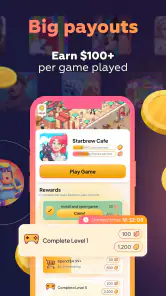
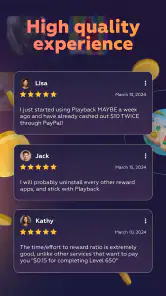

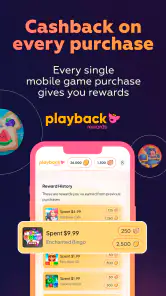
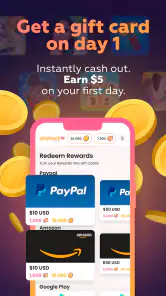
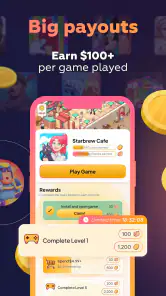
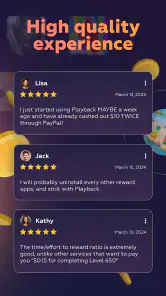

Analysis by Reviewed
I approached Playback: Get Paid to Play as an entertainment app for the small gaps in a normal day: waiting for an appointment, riding as a passenger, or taking a short break when I want something more engaging than scrolling. Its basic idea is easy to understand: play supported games, build up rewards, and exchange them for options such as PayPal, Amazon, or Visa. The important distinction is that this is not a replacement for a job or a dependable income stream. I see it as a rewards layer around casual play.
That framing made my experience much more realistic. I was not judging it by how quickly it could pay for a bill. I was judging whether the path from opening the app to receiving a useful reward felt clear enough to justify the attention, battery, and time involved. Developed by Adwake, it sits in the entertainment category and is free to install. The app is intended for mature users aged 17 and over, so it is not something I would hand to a younger player simply because the games themselves may look casual.
From an empty moment to a possible reward
What I would do before playing
My first recommendation is to decide what kind of session you are willing to give it. If you already enjoy trying mobile games and would otherwise play them for free, the reward system can feel like a pleasant extra. If your only goal is to earn money as efficiently as possible, the experience is much less convincing. The value comes from combining entertainment with rewards, not from treating every minute as paid work.
I would also begin with a small test rather than immediately changing my whole gaming routine. I would look through the available offers, choose something that genuinely interests me, and pay attention to the conditions attached to that particular activity. That is a more sensible starting point than installing several games at once and then forgetting which one led to which progress. A simple note on my phone can help track the game, the starting point, and the reward target.
The free price lowers the barrier to trying it, but “free” does not mean costless in practice. My time has value, and mobile games can use battery, storage, data, and attention. I would avoid beginning a long offer on a day when I know I will not have time to play consistently. The best fit is someone who already wants casual game time and is comfortable letting the reward accumulate gradually.
Choosing the right game matters more than it first appears
The most important choice happens before the first serious session. A game that looks attractive but becomes repetitive after a few minutes may be a poor match, even if its reward path appears appealing. I would favor an offer whose normal gameplay I can tolerate without constantly checking the reward counter. That makes the experience feel like entertainment first, rather than a chore disguised as a game.
There is also a useful trade-off between variety and follow-through. Trying many games can keep the app fresh, but switching too often may make it harder to complete any individual reward path. Focusing on one title at a time is easier to manage, especially when I want to know whether my progress is being recognized correctly. On the other hand, staying with a game I dislike just because I have already started it is not sensible. The reward should not pressure me into wasting an evening.
More From Our News Desk

Clash of Clans Is Won Between the Battles

Android Auto Makes the Case for Quieter Car Software

MobiOffice: Transforming Mobile Productivity with Seamless Integration

EA SPORTS FC™ Mobile Soccer: Redefining Mobile Sports Gaming

How Microsoft OneDrive Became a Mobile Productivity Giant

How Google Translate Breaks Language Barriers Effortlessly
This is where Playback differs from a standard game-discovery app. A normal entertainment catalog asks which game I want to play. Here, I am also asking what outcome I am working toward and whether the route is worth my time. That extra layer gives the app its appeal, but it also adds decision-making that would not exist if I simply downloaded a game from the usual app store and played it.
The playing stage: treat progress like a handoff
Once I choose an offer, I think of the process as a handoff between Playback and the selected game. Playback is the place where I begin and where the reward relationship is presented; the game is where the actual activity takes place. That separation is easy to overlook. If I launch a game without following the intended route, or if I assume that any play session will automatically count, I may create confusion later.
My practical habit would be to start each offer from inside the rewards app, then play the selected game normally. I would avoid uninstalling and reinstalling it halfway through, changing devices during an important stretch, or opening it through an unrelated shortcut unless I had a good reason. These are not exciting tips, but they reduce the number of variables when I later check whether progress has been credited.
I would also check the reward screen before beginning a long session. The useful question is not only “How much can I earn?” but “What action is being recognized?” A target based on reaching a particular point in a game is different from one based on time, level progress, or another milestone. I would not assume that simply leaving a game open is equivalent to active progress. Reading the offer’s wording first is one of the few minutes that can save a great deal of frustration later.
For an everyday example, imagine that I have half an hour after dinner while waiting for a friend to arrive. I could choose one game, start it through Playback, and play during that window. If the game is enjoyable, the session has already served its main purpose even if the reward takes longer to arrive. If I spend the entire time watching a counter and feeling impatient, that is a sign the particular offer is not a good fit for me.
Keeping the reward trail organized
The less obvious challenge is remembering what happened between the initial offer and the eventual reward. I would take a quick screenshot of the offer details at the beginning, not because I expect trouble every time, but because it gives me a reference if the wording or progress display later feels unclear. I would record the date in a note and keep the game associated with the correct offer. This is especially useful if I am testing more than one title.
I would not treat the displayed balance as spendable money until it has reached the stage where I can actually select a redemption option. The app’s appeal depends on converting play into a reward, but those are separate steps. Watching the balance grow can be motivating, yet the meaningful outcome is the completed handoff into a chosen gift card or payment route. Keeping that distinction in mind prevents me from overvaluing an early number on the screen.
This workflow also answers a common practical concern: can I play casually without planning? Yes, but planning improves the experience. A few minutes spent selecting one suitable game and noting its starting conditions can make the rest of the process easier to understand. Without that preparation, I may confuse normal game progress with reward progress, especially when I return after several days.
Turning progress into a usable reward
When I reach the point of redeeming, I would choose the option that fits my actual spending habits rather than selecting the most familiar brand automatically. PayPal may be more flexible for someone who prefers a digital payment account, while Amazon may be more useful for a person who already shops there. A Visa option can appeal to someone who wants broader spending flexibility. The best choice depends on what I can use, not merely what sounds attractive.
This stage is the clearest test of whether the app works for my needs. Playing is the enjoyable part, but redemption is the outcome I care about. I would review the selected destination carefully before confirming anything and make sure I am using the correct account details where required. A reward that arrives in an account I rarely use is less valuable to me than one that fits naturally into my everyday spending.
I also prefer to redeem in smaller, realistic steps when the app makes that possible, rather than mentally counting on one large future reward. That approach keeps expectations grounded and lets me judge the entire process earlier. It is easier to decide whether I want to continue after experiencing one complete cycle from game selection to redemption.
Where the experience is genuinely convenient
The strongest part of Playback is the way it gives casual play a second purpose. I can discover a game, spend time with it, and work toward a reward without paying an entry fee for the rewards app itself. For someone who already plays on a phone, that can feel more satisfying than playing a random title with no objective beyond passing time.
The range of redemption destinations also makes the result more practical than a reward that works only inside one closed ecosystem. PayPal, Amazon, and Visa cover different spending habits, so I can think about the reward as something useful outside the app. That flexibility is especially helpful when I do not want another game-related item or an in-app bonus.
The app’s public reception suggests that many people find the concept appealing: it has an average rating of 4.3 from around 3.4 thousand ratings, with over 500 thousand installs. I treat those figures as a sign of interest rather than a promise that every user will have the same experience. Rewards apps are particularly sensitive to individual habits, offer availability, device behavior, and patience, so a positive overall impression cannot replace testing the workflow personally.
Where the flow breaks down
The main weakness is that the reward is not the same thing as immediate cash. The user must move through several stages: choose an offer, launch it correctly, play long enough to meet its conditions, wait for progress to register, and then redeem through a selected destination. Every handoff creates an opportunity for uncertainty. If I want a simple, instant transaction, this is more complicated than buying a game or using a conventional cashback service.
Another limitation is motivation. A game that is fun for its own sake can remain enjoyable while the reward develops slowly. A game I do not like becomes tiring quickly, and the reward may not compensate for that feeling. I would skip the app if I tend to abandon mobile games after a few sessions or if I dislike tracking milestones. The system works best for people who can enjoy the activity even when the payoff is delayed.
I would also be cautious about multitasking. Playing while distracted, switching rapidly between apps, or treating the game as background noise may make it harder to tell whether I am making meaningful progress. A focused short session is more useful than a long session where I am unsure what I actually accomplished. This is an important difference from ordinary passive entertainment, where missing a few minutes usually does not matter.
Privacy and account comfort are another personal consideration. Because the experience connects play with redemption destinations, I would read each screen carefully before entering any information and use an account I can manage confidently. I would not create extra accounts simply to chase rewards, and I would avoid sharing details casually. The mature age classification is a reminder that this is a rewards-oriented entertainment product for adults, not a children’s game platform.
How it compares with ordinary alternatives
Compared with simply downloading free games, Playback adds a possible financial or gift-card outcome, but it also adds tracking and a more deliberate starting process. A normal game may offer a smoother first five minutes because I can install it and play immediately. Playback is more appealing when I value the possibility of a reward and do not mind following the offer path carefully.
Compared with conventional cashback apps, the activity is more interactive but less passive. Cashback usually follows a purchase or another qualifying action, whereas this app centers on playing. That makes it a better match for someone who wants entertainment and dislikes shopping-based reward systems. It is a weaker choice for someone who wants rewards without spending much time actively using a game.
Compared with survey or task apps, the experience may feel less like filling out forms and more like a normal leisure activity. The trade-off is that games can require more sustained attention. I would choose Playback over a survey app when I already want to play, but I would choose a simpler task-based alternative when I need a predictable, short activity and do not want to learn another game.
Who should try it, and who should skip it
I think Playback is worth trying for casual mobile players who enjoy experimenting with new games, want rewards that can move beyond the app, and are willing to follow a clear start-to-finish process. It is particularly suitable for spare moments that would otherwise disappear into aimless scrolling. The free entry makes a small trial reasonable, provided I keep my expectations modest.
I would skip it if I need guaranteed income, dislike advertising or reward conditions, have very limited storage or battery capacity, or become frustrated when a redemption process involves several steps. I would also avoid recommending it to anyone under the stated mature age classification. For children, a conventional age-appropriate game with no financial-reward workflow is the safer and clearer choice.
The current version is 1.0.77, and the app supports Android 7.0 and later. That broad compatibility makes it approachable for people using older Android phones, although compatibility alone does not guarantee that every game offer will feel equally comfortable on every device. I would still begin with a short session and watch how smoothly the game, progress tracking, and redemption screens work on my particular phone.
My final take after following the whole route
Playback succeeds when I treat it as casual gaming with a possible bonus, not as a shortcut to dependable earnings. The complete workflow is understandable: I select a game, begin through the rewards app, play with the offer in mind, keep track of the handoff, and eventually choose a useful redemption destination. The process has more friction than ordinary gaming, but that friction is connected to the reward structure rather than being pointless complexity.
My best advice is to test one offer from beginning to end before committing serious time. Choose a game you might enjoy anyway, note the starting conditions, play consistently, and judge the result only after considering the full redemption path. That method reveals much more than watching the balance rise during the first session.
For the right person, Adwake’s app turns idle gaming time into a small, potentially useful outcome. For the wrong person, it can feel like too much tracking for too little return. I would recommend it to a patient casual player who values choice between PayPal, Amazon, and Visa rewards, while being honest that the entertainment has to carry the experience when the reward takes time. That is the point at which Playback: Get Paid to Play feels worthwhile: when I would have played anyway, and the reward is a welcome result rather than the only reason to start.
Playback: Get Paid to Play Frequently Asked Questions
Who is Playback: Get Paid to Play intended for?
Playback: Get Paid to Play is an entertainment app for people interested in playing games while working toward rewards. It is rated Mature 17+, so it is not intended for younger users. Before installing, consider whether you are comfortable with a rewards-based experience and with reviewing offer requirements as you go; activities and available incentives can vary by location and campaign.
What is Playback: Get Paid to Play?
Playback: Get Paid to Play is a rewards app that lets users earn points or other incentives by participating in eligible gaming-related activities. Depending on your location and the current offers, this may include playing supported games, completing challenges, watching content, or taking part in promotional events. The available opportunities and reward values can change, so it is worth checking the in-app terms before committing time.
How do you earn rewards with Playback?
After installing the app, you generally need to create an account, review the available offers, and follow the instructions for each activity. Rewards may depend on reaching specific milestones, spending a required amount of time in a game, or completing an offer correctly. Tracking is not always instant, and some activities may require permissions or links to be opened through Playback for progress to register.
Can Playback rewards be converted into real money?
Playback may allow eligible users to redeem accumulated rewards for available prizes, gift cards, cash-equivalent options, or other benefits, but the exact choices depend on the country, account status, and current program rules. Redemption thresholds, processing times, and fees can vary. Before downloading, review the rewards catalog and withdrawal conditions, since advertised earning potential should not be treated as guaranteed income.
Is Playback: Get Paid to Play free and safe to use?
The app can generally be downloaded without an upfront purchase, although some featured games or offers may include optional in-app purchases. As with any rewards platform, use a unique password and avoid sharing unnecessary personal information. Read the requested permissions and privacy policy carefully, particularly if the app uses usage tracking, advertising identifiers, or account connections to verify completed activities.
Pros
- Rewards can be earned while playing games you already enjoy.
- The app offers a simple way to discover new mobile games.
- Progress toward rewards is easy to track within the app.
- A variety of game genres gives users multiple earning options.
- No advanced gaming skills are required to start collecting points.
Cons
- Reward rates may vary significantly between available games.
- Some offers can have strict completion or time requirements.
- Cash-out options and minimum thresholds may limit flexibility.
- The app may require usage tracking or other device permissions.
- Earnings are generally modest and unlikely to replace regular income.
- Category
- Entertainment
- Version
- 1.0.77