Payday Cash Advance TriceLoans
- 199.00
- 4.7
- Installs
- 50.00K
- Price
- Free
Screenshots

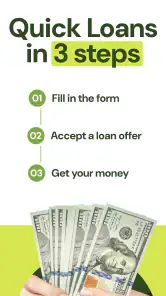

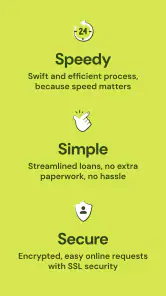
Analysis by Reviewed
When an unexpected bill lands between paydays, the hardest part is often not finding an app but deciding whether a cash advance is sensible at all. I approached Payday Cash Advance TriceLoans as a short-term borrowing tool rather than treating it like a normal budgeting or banking app. That distinction matters: its appeal is speed and convenience, while the trade-off is that any advance still needs a careful repayment plan.
The app sits in the finance category and is developed by Trice Loans. It is free to install, aimed at Everyone, and currently listed as version 1.1.6 for devices running Android 7.0 or later. The app has built a 4.7 average from around 7,200 ratings, with more than 50,000 installs. Those figures suggest that it has attracted meaningful attention, but they should not replace your own check of the offer shown during your application.
How I would decide whether TriceLoans fits
I would begin with the reason for borrowing, not with the promise of quick money. A small, one-off gap for an essential expense is a different situation from using an advance to cover another advance, an ongoing rent shortfall, or regular overspending. The app’s core proposition is a payday cash advance with no credit check, so it may appeal to people who have limited credit history or do not want a traditional lender’s credit-based process.
That convenience can be useful, but “no credit check” should not be read as “no cost” or “no responsibility.” Before accepting anything, I would look closely at the amount offered, the total repayment, the due date, and any service or optional charges displayed in the app. If those details do not fit comfortably into my next income cycle, I would stop rather than borrow simply because the application feels easy.
I would also consider how urgent the need really is. For a bill that can be delayed without a penalty, contacting the provider may be cheaper than borrowing. For an essential purchase that cannot wait, a cash advance may be more practical than an overdraft or a rejected conventional loan application. The right decision depends on the complete repayment picture, not just the amount that arrives today.
The first-use experience and what to check carefully
My practical advice is to treat the application screen like a contract summary. Read every figure before moving forward, especially the repayment date and the total amount that will leave your account. A fast flow can make it tempting to tap through quickly, yet the most important information is usually the information that determines whether the advance is affordable.
I would keep a simple note on my phone with four items: the amount received, the amount to repay, the date it is due, and the money already committed to rent, utilities, food, transport, and other essentials. This small habit is particularly useful with short-term borrowing because the repayment deadline can arrive before the original emergency feels resolved.
Another point worth checking is whether the amount shown is the amount you actually receive or whether any charge is deducted before disbursement. I would not assume that a displayed advance and the money reaching my account are identical. The same caution applies to any in-app purchase prompt. The application is free, but its listing includes in-app purchases ranging from $1.99 to $4.99 per item, so I would review each charge and avoid adding anything that is not necessary for the borrowing decision.
Where the app is strongest
The clearest strength is access. Someone who is unlikely to qualify for a conventional personal loan may find a no-credit-check route easier to explore. That does not make it automatically cheaper, but it can make the app relevant when the usual bank process is too slow, unavailable, or unsuitable for a thin credit file.
I also like the fact that the product is focused on one specific problem instead of presenting a crowded collection of unrelated financial tools. If I open it because I need to investigate a short-term cash gap, the purpose is immediately clear. That focus can reduce the time spent comparing general banking menus or filling out a long loan application that is unlikely to succeed.
For a realistic example, imagine that a necessary car repair appears two days before payday and the vehicle is needed for work. I would first ask the repair shop about a payment arrangement, then check whether a trusted person or an existing bank facility could cover the gap at a lower cost. If those routes were unavailable, I would use TriceLoans to examine the advance terms and compare the repayment date with my next paycheck. The app could be useful in that narrow situation, provided the repair is essential and the repayment will not jeopardize groceries or housing.
A less obvious advantage is that the app can serve as a quick comparison checkpoint even if I do not ultimately borrow. Opening the application can clarify what a short-term advance would require, which gives me something concrete to compare with a bank overdraft, a credit-card cash withdrawal, or a payment arrangement. I would still judge the final terms rather than assuming that the fastest option is the best one.
Useful habits that make the decision safer
One practical workflow is to take a screenshot or write down the final repayment details before confirming. I would do this only for my own records and would keep the information private. It gives me a clear reference if I later need to check what I agreed to, rather than relying on memory after a rushed application.
A second useful habit is to calculate the repayment against money that is genuinely available, not against the full amount of the next paycheck. If my next income is already assigned to bills, then the advance is not really affordable even if the paycheck looks large. I would subtract fixed commitments and basic living costs first, then see whether the repayment still leaves a reasonable buffer.
A third is to avoid treating a successful application as evidence that borrowing is sustainable. Approval answers whether the product can offer an advance; it does not answer whether my household budget can absorb the repayment. I would be especially cautious if I needed to borrow again before the previous amount was cleared. That pattern is a sign to look for a longer-term solution, such as negotiating bills, seeking free debt advice, or rebuilding an emergency fund.
I would also review the app after the immediate problem is solved. If the advance helped with a genuine one-time emergency, I might remove temptation by disabling notifications or uninstalling it until it is needed again. If I found myself checking it repeatedly for routine expenses, I would take that as a reason to stop using short-term borrowing and switch to a budgeting approach instead.
How it compares with the usual alternatives
TriceLoans belongs to a different group from budgeting apps, bank accounts, and conventional personal-loan services. A budgeting app is better when the main problem is seeing where money goes and planning ahead. It will not solve an immediate cash shortage, but it can reduce the chance of needing one later. A bank overdraft may be preferable for an existing customer if its terms are clearer or less expensive, although that depends on the account agreement.
A credit card can offer more flexibility for people who already have available credit and can repay promptly. However, cash withdrawals and balances can carry their own costs, so I would compare the total repayment rather than assuming a familiar product is automatically cheaper. A traditional personal loan may make more sense for a larger, planned expense that can be repaid over a longer period, but its application process and eligibility requirements may not suit an urgent, small shortfall.
Payment plans are another important alternative. For medical, utility, education, or repair bills, asking the provider for extra time can avoid borrowing altogether. I would always try this before accepting an advance when the provider is likely to be flexible. The disadvantage is that it may take a conversation and may not be available, whereas an app feels immediate.
This is where the product’s category shapes its usefulness. It is not a replacement for an emergency fund, a bank account, or debt counseling. It is a specialized option for a short-term gap. If I needed a tool for tracking spending, setting savings goals, or managing recurring bills, I would choose a dedicated finance app instead. If I needed a substantial amount over many months, I would compare regulated lending options with transparent annual costs rather than relying on a payday-style solution.
Who should be cautious or choose something else
I would not recommend this type of app to someone whose income date is uncertain, whose next paycheck is already fully committed, or who is currently missing other repayments. A short deadline can turn a manageable emergency into a larger problem when the repayment competes with essentials. People who are already using several borrowing services should also pause and calculate their total obligations before adding another one.
It may also be the wrong choice for anyone who wants predictable long-term financing. The convenience of a quick advance does not provide the same planning horizon as a structured loan. For a recurring expense, the better answer is usually to reduce the expense, negotiate the bill, increase income, or seek professional debt guidance.
Privacy and account security deserve ordinary caution as well. I would install the app only from the official app marketplace, keep my device protected, and read permission or account-access prompts before agreeing. I would never share verification codes or banking credentials with another person claiming to help. These habits are important for any finance app, but the urgency surrounding emergency borrowing makes them especially easy to overlook.
The real cost of switching from another option
Moving from a bank, credit card, or another advance service to TriceLoans is not just a matter of installing a new application. I would first compare the complete repayment amount, timing, and consequences of a late payment. A lower-looking fee can still be less attractive if the due date creates a cash-flow problem, while a familiar product may be more expensive than expected when interest or withdrawal charges are included.
I would also avoid taking a new advance to repay an old one unless I had fully mapped the combined obligations. That approach can make the immediate balance look tidy while increasing the total pressure. If I already had an outstanding commitment elsewhere, I would write down both dates and amounts before deciding. The goal should be to replace an unsuitable arrangement, not stack another repayment on top of it.
The free installation lowers the barrier to trying the app, but it should not lower the standard I use to evaluate the borrowing terms. I would regard the listed in-app purchase range as a reminder to inspect the checkout screens carefully and distinguish any optional paid item from the advance itself. If I could not understand what I was paying for, I would not continue.
My recommendation after weighing the trade-offs
I see TriceLoans as a narrowly useful emergency option, not as a general money-management solution. Its strongest case is a genuine, short-lived cash gap where the repayment is certain, the expense is important, and the displayed terms are clear enough to compare with other choices. The no-credit-check approach may be relevant to people who cannot use conventional lending, but that access should be balanced with a strict affordability check.
I would recommend trying the application only after checking payment arrangements, existing bank options, and other lower-cost possibilities. I would read the final terms slowly, record the repayment details, and reject the advance if it would leave essentials uncovered. That process takes only a few minutes and is more valuable than focusing on how quickly the application can be completed.
For someone who needs a budgeting tool, a long-term loan, or help escaping repeated borrowing, I would choose a different category entirely. For an isolated emergency and a clearly manageable repayment, this finance app can be worth considering. My final view is therefore cautious but positive: use it as a last-resort bridge, never as a routine extension of your income.
Trice Loans has made a focused product that is easy to understand at a glance, and the current version 1.1.6 supports its role as a straightforward option to investigate. The most important feature, however, is not the speed of access. It is the discipline to compare the full cost, protect the next paycheck, and walk away when the numbers do not work.
Pros
- Fast application process with minimal paperwork required.
- May help cover urgent expenses between paychecks.
- Clear repayment terms are shown before accepting an offer.
- Online access makes managing the loan convenient.
- Useful for borrowers with limited traditional credit options.
Cons
- Cash advances can carry high fees and interest rates.
- Repayment may be due very soon after receiving the funds.
- Late payments could lead to additional charges or collection activity.
- Loan availability and terms may vary by state and eligibility.
- Repeated borrowing can make it harder to manage monthly finances.
- Category
- Finance
- Version
- 1.1.6