Payday Advance Borrow Money
- 194.00
- 4.7
- Installs
- 100.00K
- Price
- Free

Screenshots

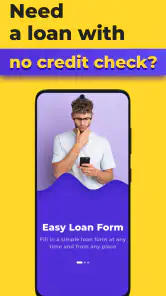

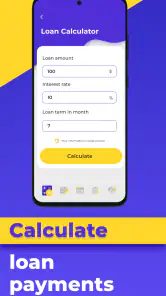
Analysis by Reviewed
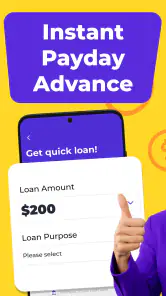
When an unexpected bill lands before payday, the hardest part is often not opening a finance app but understanding what it can actually do for you. Payday Advance Borrow Money is aimed at that exact moment: it is a free finance app built around finding a suitable payday cash advance. I approached it as a first-time user would, looking for a clear route from installation to a useful result rather than expecting it to behave like a full banking service.
My main impression is that it works best as a starting point for comparing or locating a short-term borrowing option, not as a replacement for a bank account, budgeting tool, or long-term credit plan. That distinction matters. A payday advance can solve a timing problem, but it can also create a more expensive repayment problem if I treat available borrowing as spare income. The app makes sense when I already know why I need a small bridge and have a realistic plan for paying it back.
What to expect before you begin
Payday Advance Borrow Money is listed in the Finance category and is developed by Shpuryk Sergii. It is free to install, carries an Everyone age rating, and has reached over one hundred thousand installs. Its average rating is 4.7 from around three thousand ratings, which suggests that many people find the basic experience useful, although a rating alone cannot tell me whether a particular advance will suit my circumstances.
The app’s purpose is narrower than the broad label “finance” might suggest. I would not open it expecting bill tracking, savings goals, investment tools, or a complete personal finance dashboard. The useful question is simpler: can it help me find a payday cash advance that matches my immediate need and situation?
That focus is helpful for a first-time user because it reduces wandering through unrelated features. At the same time, it means I need to bring my own judgment. The app may help me explore an option, but I remain responsible for checking the repayment amount, due date, eligibility conditions, and any charges shown during the process. I would never assume that “free” refers to borrowing itself; it refers to getting the app.
For someone facing a one-off gap between an unavoidable expense and the next paycheck, the app may be worth exploring. For someone already juggling several loans, using one advance to cover another, or unsure how repayment will fit into the next month, I would be much more cautious. In that situation, speaking with a bank, employer, debt adviser, or trusted financial counselor may be a better next step than applying for more short-term credit.
Who is likely to get the most from it
I see three practical groups that may find this app relevant. The first is a person who has a defined, urgent expense and expects income soon. The second is someone who wants to compare a payday advance with other short-term options before committing. The third is a first-time borrower who needs a guided place to begin, provided they are willing to read the terms instead of tapping through quickly.
It is less suitable for people seeking long-term financing. A payday advance is designed around a short repayment window, so it is not the natural choice for tuition, a major repair, a large purchase, or an ongoing monthly shortfall. A personal loan from a bank or credit union may be slower to arrange, but it can be more appropriate when the amount or repayment period is larger.
The app is also not the right answer if my main problem is poor visibility over spending. A budgeting application would help me understand where money is going; this app addresses access to short-term borrowing instead. Confusing those roles is one of the easiest ways to use a cash-advance tool poorly.
Getting from installation to a meaningful result
Start with the purpose, not the application form
Before opening the app, I would write down three things: the exact amount needed, the date the expense must be paid, and the date and amount of income expected afterward. This small preparation makes the experience more useful because I can judge an offer against a real need instead of browsing based on the largest amount I might be shown.
For example, imagine that a necessary car repair is due today and my paycheck arrives next week. I would first ask whether the repair can be delayed, whether the mechanic offers a payment arrangement, or whether a trusted person can help without borrowing costs. Only after those options would I use the app to investigate a short-term advance. If I proceed, I would look for the smallest amount that solves the repair rather than treating the maximum available amount as a recommendation.
This is an important workflow improvement that is easy to miss: separate the decision to borrow from the process of searching for a lender. Once I am inside an application flow, urgency can make every option feel necessary. Defining the target amount beforehand gives me a stopping point.
What the first setup should accomplish
After installing Payday Advance Borrow Money, I would move through the opening screens slowly and look for the app’s basic route to finding an advance. I would expect to provide information relevant to the search or application, but I would review each field before submitting it. A first-time user should check that personal details, employment information, income figures, and contact information are accurate wherever they appear.
Accuracy is not just a formality. A mistaken income amount or an old contact detail can lead to an unsuitable result or force me to repeat the process. I would also avoid entering information on a shared device and would make sure I understand which organization is requesting each detail before continuing.
The current version is 1.2.1, and the app supports Android devices running version 5.0 or later. That broad compatibility is useful for people using an older phone, but I would still keep the operating system updated where possible. Finance-related activity deserves the same basic care as mobile banking: use a screen lock, avoid public Wi-Fi for sensitive submissions, and do not share verification codes with anyone who contacts me unexpectedly.
The first successful action is a suitable match
For me, a successful first session would not be simply reaching an approval screen. It would be identifying an option whose amount and repayment timing fit the original need, then understanding the full cost before accepting anything. That is the point at which the app becomes useful rather than merely busy.
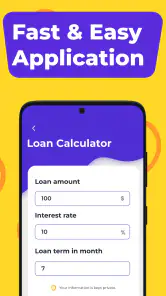
I would compare the amount requested with the amount actually repayable. I would also check whether the repayment is due in one payment or through scheduled payments, whether the due date aligns with my income, and whether any fee is included in the total. If the figures are difficult to understand, I would stop and seek clarification instead of relying on a reassuring headline amount.
A good practical habit is to take a note of the final repayment figure and due date in a separate calendar or budgeting tool. I would set a reminder several days beforehand and keep the money aside as soon as the paycheck arrives. This is one of the app’s real trade-offs: it can help me locate an advance quickly, but it does not remove the need for my own repayment system.
I would also save the name of the lender or provider associated with the option I choose, along with the agreement details. That makes later support conversations easier and prevents confusion if I use more than one financial service. The app is the discovery point; the eventual agreement is what governs the borrowing relationship.
Where first-time users can become confused
The phrase “payday advance” can sound straightforward, but several different ideas may appear close together: eligibility, an estimated amount, an application, approval, and the actual transfer of funds. I would treat these as separate stages. Seeing a potentially suitable option does not necessarily mean the money is available immediately, and starting an application is not the same as accepting a loan.
Another point of confusion is the difference between a search result and a guaranteed offer. I would read the wording on every screen and look for the conditions attached to the amount, repayment date, and total cost. If the app presents several possibilities, I would compare them using the amount I repay, not just the amount I receive.
I would also be careful with repeated applications. Submitting forms to several providers in a rush can make it harder to track what I have agreed to and may create unnecessary credit-related activity, depending on the provider’s process. A better approach is to pause after each result, record the terms, and decide whether the option actually solves the original problem.
Finally, I would watch for impersonation. A finance app should not make me comfortable with sharing passwords, one-time codes, or remote access to my phone. If a message claims to be connected to an advance and asks for unusual information, I would verify it through the official channel rather than replying directly.
How it compares with familiar alternatives
Compared with visiting a bank branch, a dedicated payday-advance app can feel more direct and convenient for a short-term need. It is available on a phone and is focused on this particular type of borrowing rather than a broad menu of banking products. That focus may help when speed and simplicity matter.
Compared with a bank overdraft or an existing credit-card facility, however, the better option depends on the actual cost and repayment date. An option I already understand may be easier to manage, while a new advance can introduce another account and another deadline. I would compare the total repayment, not choose based on whichever screen looks fastest.
Compared with borrowing from friends or family, the app offers a more formal route but may cost more and require an application. Compared with a budgeting app, it offers access to a possible short-term solution but does nothing to diagnose the spending pattern behind the emergency. These are not interchangeable tools, and the right choice depends on whether my problem is timing, affordability, or organization.
When I would stop and choose something else
I would stop using the app if the repayment would leave me short for rent, food, utilities, or another essential obligation. I would also stop if I needed to borrow again to cover the first advance. That pattern is a warning that the underlying income and expenses do not currently balance, and another short-term loan is unlikely to fix it.
I would choose a different route when I have time to negotiate. A utility provider may offer a payment arrangement, a mechanic may accept staged payments, and an employer may provide a suitable payroll option. A credit union or bank may also be worth considering for a larger or longer-term need. Those alternatives can involve more paperwork, but paperwork is preferable to accepting terms I cannot comfortably meet.
People under eighteen should not use it for borrowing, even though the app has an Everyone content rating. The age label describes the app’s content, not an automatic guarantee that every person can qualify for or legally enter a credit agreement. Anyone considering an advance should check the eligibility requirements and local rules that apply to them.
The next step after finding an option
Once I find a suitable possibility, I would resist the urge to treat the app as finished business. I would read the agreement supplied by the relevant provider, check the total repayment and due date again, and keep a copy of the details. If anything differs from the earlier summary, the final agreement is the point that deserves attention.
After accepting, I would place the repayment date beside my normal bills and calculate what remains from the next paycheck. If the numbers are tight, I would reconsider before confirming. The most useful outcome may sometimes be discovering that the advance is not affordable and looking for a payment arrangement instead.
It is also worth reviewing why the emergency happened once the immediate pressure has passed. I might create a small buffer, move a recurring bill date, or cancel an unused subscription. Payday Advance Borrow Money can help with the immediate search, but those follow-up actions are what reduce the chance of needing another advance.
My final view for a first-time user
Payday Advance Borrow Money is a focused, free finance app for people investigating short-term payday borrowing. In my view, its strongest quality is the clear purpose: it points me toward a cash-advance route instead of pretending to be a complete financial management system. The combination of a 4.7 average and a substantial user base makes it a reasonable app to examine, while the developer, Shpuryk Sergii, keeps the product identity straightforward.
I would recommend it to a careful user with a specific, temporary cash gap, a known repayment date, and the discipline to compare the final cost. I would not recommend opening it simply because money feels tight or using it as a routine way to reach the end of every month. The app can make the search more convenient, but convenience should never replace reading the agreement.
My practical advice is simple: decide the smallest amount you need, compare the total repayment, record the due date, and stop if the advance would put essential expenses at risk. Used with that discipline, Payday Advance Borrow Money can be a useful first step toward investigating a short-term option. Used without it, the speed that makes the app attractive can also make an expensive decision easier to accept.
Pros
- Quick application process with a simple
- user-friendly interface.
- May help cover urgent expenses before your next paycheck.
- Clear repayment dates can make short-term planning easier.
- Useful eligibility information is available before applying.
- Digital account management makes tracking your loan convenient.
Cons
- Advance fees can make borrowing expensive compared with other options.
- Repayment may be due quickly
- leaving little time to recover financially.
- Late payments could lead to additional charges or account restrictions.
- Approval and loan amounts may vary based on your financial profile.
- Availability and terms may differ by state or region.

- Category
- Finance
- Version
- 1.2.1