Opera: Private Web Browser
- 98.49K
- 4.7
- Installs
- 100.00M
- Price
- Free

Screenshots






Analysis by Reviewed
When I’m out and need to look something up quickly, I want a browser that gets me from a question to a useful page without making privacy an afterthought. That is the everyday job I’d give Opera: Private Web Browser: it is a free communication app from Opera, and its appeal is the combination of familiar web browsing with tools aimed at making that browsing feel more convenient and private. I’d consider it if I wanted an alternative to the browser already on my phone, rather than a completely different way to use the web.
A browser for the gaps in a busy day
I find a second browser most useful when a search has a clear purpose: checking a shop’s opening hours, following a link from a group chat, or looking up an ingredient while I’m already in a supermarket aisle. Opera is designed for that kind of mobile browsing, where I may jump from a search to a page, switch to another app, then return to finish reading. Its privacy focus is appealing, but I would still treat browser protections as one layer of care, not a promise that every online action is anonymous or risk-free.
That distinction also helps decide whether it is worth switching. If your current browser handles everyday pages comfortably and fits the devices and services you already use, there may be little benefit in changing everything. Opera makes more sense when you want to try a different browsing setup, or when you would rather keep casual searches apart from the browser you use for other routines.
From a quick search to a useful result
My practical workflow starts with a simple task: checking a recipe while shopping, comparing a product, or opening a link someone sent me. I search or enter the address, scan the page, and keep moving between tabs as needed. In that sort of routine, the advantage of a mobile browser is not a dramatic new way to browse; it is having the things I use repeatedly close at hand. Opera’s privacy focus is a reason to try it, but I would still treat privacy tools as a helpful layer rather than a guarantee that every site or online activity is anonymous.
A useful habit is to separate casual browsing from sensitive tasks. Before entering account details or payment information, I check that I’m on the right site and that the connection and page look legitimate. A browser can help make browsing more comfortable, but it cannot make a careless click safe. For someone who mainly wants a straightforward browser, this distinction matters more than any promise of effortless security.
Moving through pages without losing the thread
In a realistic errand, I might open a store page, check a second source, then return to the first to compare details. Keeping the original page available avoids repeating the search, though too many open tabs can make a small screen feel cluttered. I find it easier to close pages once I’ve made a decision instead of treating the browser as a place to store every link indefinitely. That small habit is more useful than expecting any browser to organize a messy session for me.
Opera has a 4.7 average from around 5.3 million ratings, and it has passed 100 million installs. Those figures suggest it is a well-established choice, but popularity alone does not tell me whether its way of browsing suits your routine. It is free to install, rated for Everyone, and its current version is 93.2.4906.86283. Optional in-app purchases range from about $8 to $48 per item, so I would check what a purchase covers before deciding it is relevant to my use.
More From Our News Desk

Weather by Xiaomi Review: Clear at a Glance, Less Clear Up Close

X Under Pressure: Can It Recover When Posting Goes Wrong?

Clash of Clans Is Won Between the Battles

Android Auto Makes the Case for Quieter Car Software

MobiOffice: Transforming Mobile Productivity with Seamless Integration

EA SPORTS FC™ Mobile Soccer: Redefining Mobile Sports Gaming
Passing a page along without losing context
A practical browser session often involves a handoff: I find a useful page, then send it to someone, copy a detail into a message, or switch apps to act on what I found. I would keep the destination and the purpose clear—send the exact page rather than a vague search term, and add a short note about what the other person should check. This is especially helpful when comparing products or arranging a pickup, because the recipient can see the same information instead of recreating my search.
There is a trade-off here. A browser can make it easy to move between pages and other apps, but every switch creates a chance of losing my place or opening the wrong tab when I return. For a longer task, I find it sensible to finish one comparison at a time and close pages that no longer matter. If I need a lasting record, I save the relevant information in the tool I normally use for notes or bookmarks rather than relying on a crowded browsing session as storage.
Where it fits among mobile browsers
Compared with the browser that comes preinstalled on a phone, Opera is worth considering if you want to try a different set of privacy and convenience features in one app. If your priority is staying within a familiar ecosystem or syncing closely with other devices and services you already use, your default browser may be the less-friction choice. Switching also means getting used to a different interface and moving your everyday habits over; I would test it with ordinary searches first rather than changing everything at once.
It is a particularly sensible trial for people who browse often on mobile and want privacy-minded tools without paying an upfront price. It is less compelling if you rarely use a browser beyond opening a few trusted links, or if you depend on a specific browser’s established workflow. I’d also avoid assuming that a privacy-focused label removes the need to review site permissions, account settings, and the information I choose to share.
What to check before making it your default
Before committing, I would try the tasks I actually do: open a link from a message, search for a nearby service, revisit a page after switching apps, and see whether the controls feel comfortable on my phone. This reveals more than a quick glance at the home screen. I’d also decide whether I want one browser for everything or a separate one for casual searches; keeping that boundary can make it easier to manage logins and browsing habits.
If an unfamiliar page asks for personal details, I pause and verify the address rather than relying on the browser to judge the request for me. And if a page behaves oddly, I retry it in my usual browser before blaming Opera; sites can work differently across browsers. That is a practical way to test compatibility without abandoning the app after one frustrating page.
Choosing the right balance of convenience and control
One question I would ask before switching is whether I want a browser that simply opens pages or one that also offers a broader set of tools around browsing. Opera’s appeal is the latter: the app aims to bring privacy-minded options and other conveniences into the same place. That can save app-hopping for some people, but it also means the interface may feel busier than a stripped-back browser. I would spend a few days using it for searches and links before deciding whether those extras make the routine easier or just add controls I don’t need.
For a household or shared-device situation, I would be cautious about treating any browser as a substitute for separate accounts and sensible sign-in habits. A browser is where pages open; it does not decide who should have access to an email, shopping account, or payment service. If several people use the same device, signing out of personal services and being deliberate about saved information matters more than choosing a particular browser brand.
AI-Powered Browsing Experience
First things first, the AI integration in Opera is not just a gimmick. It genuinely enhances the browsing experience. I noticed that it adapts to my browsing habits, suggesting articles and content that are actually relevant to me, which is a huge time-saver. No more endless scrolling through irrelevant stuff!
Speed and Efficiency
One of the standout features of Opera has always been its speed, and with the AI enhancements, it’s like they’ve put things into overdrive. Pages load quickly, and the browser itself feels very lightweight. Whether I’m opening multiple tabs or streaming videos, the performance remains smooth. The AI also helps in managing resources, so my device doesn’t get bogged down.
Privacy and Security
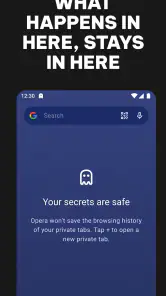
Privacy is a big talking point these days, and Opera doesn’t disappoint. With built-in ad blockers and a free VPN, I feel more secure knowing my data isn’t being tracked all over the web. Plus, the AI helps in identifying and blocking suspicious sites, which adds an extra layer of security. It’s like having a little digital bodyguard with you.
Customizable Features
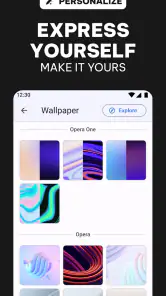
I'm a sucker for customization, and Opera lets you tweak the browser to your heart’s content. The AI suggests themes and layouts based on your preferences, which is a nice touch. It even offers personalized news feeds, so I get the latest updates on topics I care about without having to lift a finger.
Another cool feature is the sidebar integration, where I can access my social media, messaging apps, and even Spotify without leaving the browser. The AI optimizes these tools to run smoothly alongside your main browsing activities.
When another browser is the better call
I would not make Opera my only browser just because it has privacy-focused features. If my work depends on a particular browser’s saved passwords, extensions, or carefully arranged tabs, moving that setup may cost more time than the change is worth. Likewise, if I mainly want the simplest possible way to open links, my phone’s built-in browser is likely enough. The sensible approach is to compare the parts I actually use, not to assume a larger feature set automatically means a better fit.
For a quick decision, I would test three things over several ordinary sessions: whether pages I rely on behave as expected, whether I can return to interrupted searches without confusion, and whether Opera’s extra tools feel useful rather than distracting. If those checks go well, it may earn a place as my everyday mobile browser. If they do not, keeping it for occasional searches—or sticking with my current choice—is a perfectly reasonable outcome.
A practical trial before you switch
For a low-risk test, I’d use Opera for one complete task rather than judging it from a single search. Imagine I’m planning a quick meal: I open a recipe from a message, check whether a substitute ingredient will work, compare a nearby shop’s details, then send the useful page to someone who is picking things up. That sequence tests reading, returning to a page, moving between apps, and handing information off. If I can complete it without repeatedly hunting for tabs, the browser is helping; if the controls distract me, that is useful evidence too.
I would also decide in advance what “private browsing” means for my needs. It can be a reason to choose a browser with privacy-oriented tools, but it is not the same as hiding every action from websites, accounts, or networks. I still avoid entering sensitive information through links I cannot verify, and I do not treat a browser’s protections as a replacement for careful account security. That distinction is especially useful for people choosing Opera because of its privacy emphasis.
Who is likely to get the most from it
Opera seems best suited to someone who does a lot of quick, varied browsing on a phone and likes having extra tools nearby. A student checking sources while composing a message, a commuter opening links during a short break, or a shopper comparing details in a store may appreciate keeping those steps in one browsing routine. Its large audience—about 98,000 written reviews alongside its millions of ratings—makes it easy to see that it is widely used, though individual preferences still matter more than popularity.
I’d be more hesitant to recommend it to someone who already relies on another browser’s passwords, bookmarks, extensions, and cross-device habits. The practical question is not whether Opera offers more, but whether those additions outweigh the effort of rebuilding a familiar setup. If all you need is a dependable way to open links, the browser already on your phone may remain the better everyday choice.
Small choices that make browsing smoother
When I compare several pages, I try to keep one tab for each serious option instead of opening every search result. I also send a page with a short explanation of why it matters, then close it once the decision is made. These habits are modest, but they reduce the two common sources of mobile browsing friction: losing the page I meant to revisit and passing along a link without enough context.
Opera is free to download, while some optional purchases are available. I would treat those as separate from the basic decision to try the browser: start with the ordinary browsing tasks you care about, and only consider a purchase if its stated purpose solves a real problem for you. That keeps the choice grounded in your routine rather than in the assumption that every extra option is necessary.
My final take on Opera
Overall, if you’re in the market for a browser that’s not just fast and secure but also smart and intuitive, the Opera browser with AI is definitely worth a try. It’s like having a personal assistant right inside your browser, ready to make your online life a whole lot easier. Give it a whirl and see how it changes your browsing game!
My recommendation is a little more practical: try it as a second browser first, especially if you want to compare its privacy-minded approach and extra conveniences with the setup you already know. Opera is a free app from Opera, released on November 8, 2010, and its current version is 93.2.4906.86283. If its controls and tools make everyday searches easier without adding friction, you can consider making it your default. If they do not, keeping your existing browser is a sensible outcome.
Opera: Private Web Browser Frequently Asked Questions
Is Opera suitable for someone who wants a browser for everyday browsing?
Opera is a mobile web browser for opening and browsing websites. Its store description also highlights privacy, so it may suit people looking for a browser with more than basic page loading. Before downloading, consider which features you actually want to use and explore the settings after installation; you can focus on the options that fit your browsing habits.
How much does Opera cost, and are there optional purchases?
Opera is free to download, and its core browser can be tried without paying upfront. Optional in-app purchases are available, ranging from $8 to $48 per item, so a charge applies only if you choose to buy something. If you are deciding whether to install it, the free download lets you try the browser without committing to a purchase.
Is Opera intended for a general audience?
Opera is a communication app developed by Opera and is rated Everyone, making it suitable for a broad audience. It is designed for general web browsing, with additional features such as an ad blocker, a VPN, and personalized recommendations. Whether those extras suit you depends on your preferences, so you can review the available settings and use the features that are useful to you.
How long has Opera been available?
Opera was released on November 8, 2010, and has developed into a widely used mobile browser. It has more than 100 million installs and an average rating of 4.7 from around 5.3 million ratings. These figures indicate a broad user base, but your own experience will depend on how you browse and which of Opera’s features you choose to use.
What is Opera’s current version?
The current version is 93.2.4906.86283. Opera is a browser that aims to do more than simply load pages, with privacy protection among its stated purposes. If you are checking the app before downloading, the version number can help you identify the release you are considering, while the browser’s main role remains straightforward: browsing the web.
Pros
- Fast browsing experience
- Built-in ad blocker
- Free VPN service
- Data saver mode
- Customizable UI
Cons
- Limited extension support
- Occasional website compatibility issues
- Not as widely used as competitors
- VPN has limited locations
- May use more RAM than other browsers
- Category
- Communication
- Version
- 93.2.4906.86283