Nudge:The Casual Dating App
- 105.00
- 4.6
- Installs
- 10.00K
- Price
- Free

Screenshots



Analysis by Reviewed
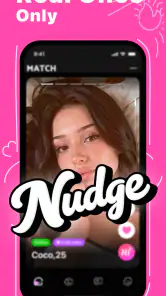
I approached Nudge as someone looking for a social app that could sit between dating and making new friends. Its central idea is easy to understand: connect with open-minded singles through a swipe-and-match flow, then move from a digital introduction toward an actual conversation or meetup. That makes it more focused than a general social network, but less narrowly defined than an app built only around serious relationships.
My first impression is that Nudge is best understood as a starting point rather than a complete dating solution. It can help create an opening, but the quality of the experience depends heavily on how thoughtfully I present myself, how carefully I read other profiles, and how quickly I move a promising match into a comfortable conversation. The app does not remove the uncertainty that comes with meeting someone new; it simply gives that uncertainty a more manageable first step.
From wanting a connection to deciding whether Nudge fits
The app belongs to the social category and is developed by Matthew Peter Nicholson. It is free to install, with optional in-app purchases ranging from $3.99 to $99.99 per item. That pricing detail matters because I would treat the free experience as the sensible place to begin, rather than assuming that paying will automatically produce better conversations or more compatible matches.
Nudge is aimed at adults, with a Mature 17+ content rating. I would not recommend approaching it as a casual children’s social app or as a harmless place to browse without thinking about personal boundaries. The people using it are there for social or dating possibilities, and that means ordinary online-safety habits are important from the first swipe through the first meeting.
The app runs on Android devices using version 7.0 or later. Its current version is 1.0.0, so I would keep expectations realistic about polish and long-term refinement. A newer app can feel appealing because the experience is still focused, but it may also have rough edges that a mature competitor has already smoothed out. In my view, that makes Nudge worth trying for curious users, but not something I would make my only route to meeting people.
Its store presence shows a 4.6 average from around 794 ratings, along with over 10K installs and 105 written reviews. Those figures suggest that Nudge has attracted a modest but positive early audience. I would read that as encouraging rather than conclusive: a smaller community can feel more approachable, but it can also mean fewer potential matches in a particular location or age group.
Starting with the right expectation
The most useful decision happens before opening the app: I need to know whether I want dating, friendship, or simply a low-pressure social introduction. Nudge can serve people who are open to more than one outcome, but that flexibility can also create confusion. If I want a highly structured search for a long-term partner, an established dating service with detailed filters and relationship-focused prompts may suit me better.
More From Our News Desk

Clash of Clans Is Won Between the Battles

Android Auto Makes the Case for Quieter Car Software

MobiOffice: Transforming Mobile Productivity with Seamless Integration

EA SPORTS FC™ Mobile Soccer: Redefining Mobile Sports Gaming

How Microsoft OneDrive Became a Mobile Productivity Giant

How Google Translate Breaks Language Barriers Effortlessly
On the other hand, if I dislike rigid labels and would rather see whether a conversation develops naturally, Nudge’s broader social angle is more attractive. I would describe it to a friend as a place for meeting possibilities, not as a guarantee of romance. That distinction prevents a lot of disappointment and makes the swipe stage feel less like a test I have to pass.
Before creating a profile, I would also decide how much personal information I am comfortable sharing. A clear first photo, a short description of interests, and an honest explanation of what kind of connection I am open to are more useful than trying to appear universally appealing. A profile that says nothing may receive attention but gives a match very little to respond to.
Building a profile that gives the other person a handoff
The profile is the first handoff in the workflow: I am passing a small amount of information to a stranger and hoping they can turn it into a reason to start talking. I would make that handoff easy by including one or two specific conversation hooks. Mentioning a favorite weekend activity, a type of food I enjoy, or a hobby I genuinely practice gives someone a natural opening.
I would avoid making the profile sound like a list of demands. On an app that welcomes both dating and friendship, a rigid checklist can work against the relaxed atmosphere. A better approach is to communicate boundaries and intentions without turning the profile into an application form. For example, saying that I prefer a conversation before meeting is more useful than presenting a long set of rules.
One practical tip is to prepare a different first message for different profile types instead of copying the same greeting. A general “hi” places all the work on the other person. A short question connected to something visible in their profile creates a smoother handoff from matching to conversation. This is a small change, but it is one of the clearest ways to improve the app’s usefulness without spending money.
Swiping with a purpose instead of treating it like a game
The swipe mechanic is familiar, which makes Nudge easy to understand quickly. I can review a profile, decide whether I would like to connect, and continue through the available choices. The danger is that the speed of swiping can make people feel interchangeable. I found it more useful to slow down when a profile gave me a genuine reason to talk, rather than judging every person only by a photo.
That slower approach also helps with the app’s social purpose. If I am open to friendship as well as dating, I can look for signals of shared interests and communication style instead of narrowing my decision to appearance. This does not eliminate mismatches, but it makes the process more aligned with what Nudge is trying to facilitate: a possible meeting between people who are willing to explore a connection.
I would not use every available interaction as an invitation to meet immediately. A match is only permission to begin a conversation, not evidence that the person is trustworthy or compatible. Keeping that difference clear is an important trade-off. Nudge can make the first contact feel simple, but the responsibility for pacing still belongs to the people involved.
Turning a match into an actual conversation
The match is the second handoff. The app has helped two people signal interest, but now the interaction has to survive outside the swipe decision. This is where many dating apps become repetitive, and Nudge is not magically protected from that problem. If both people send vague messages, the match can become another silent item in a list.
I would use a three-part opening: refer to something specific, ask one easy question, and offer a small detail about myself. That keeps the message from feeling like an interview. It also gives the other person several ways to respond. If the reply is warm and specific, I can continue. If it is dismissive, inconsistent, or immediately pushes for sensitive information, I can end the exchange without feeling that I owe the match more time.
A realistic everyday example would be opening Nudge after work on a quiet evening, finding a match who mentions enjoying local walks, and asking what kind of route they prefer while mentioning a nearby park I like. If the conversation develops, the next step might be a short daytime coffee or walk in a public place. If the replies remain one-word answers, I would let the connection go rather than forcing an outcome simply because we matched.
That example highlights a useful strength: Nudge can support a gradual path from browsing to meeting. It is not necessary to decide the entire future of a connection at the first message. The better workflow is to use the app for discovery, messaging for basic compatibility, and an in-person meeting only after both people are comfortable.
Managing the move from chat to meeting
The handoff from app conversation to real life is where careful judgment matters most. I would avoid sharing my home address, workplace details, financial information, or anything else that could identify my routine too early. A public location, independent transport, and a friend who knows the plan are simple precautions that make the first meeting less stressful.
I would also keep the first meetup deliberately easy to end. A short coffee, a public walk in a busy area, or another brief activity is better than committing to an entire evening with someone I have never met. If the interaction feels good, there will be opportunities to continue. If it feels uncomfortable, a limited plan gives me a clear exit.
This is also the point where Nudge may be less suitable than a service with more extensive identity or compatibility tools. Users who need stronger screening before meeting should look for an alternative that places more emphasis on verification, detailed preferences, or structured relationship goals. Nudge’s appeal is its openness and simplicity, but those qualities mean I have to do more of the evaluation myself.
What the result feels like in practice
A successful Nudge session does not necessarily end with a date. For me, a useful result could be a respectful conversation, a new friend, or a clear understanding that a particular connection is not right. That broader definition of success fits the app better than measuring everything by how quickly a match becomes romantic.
The free entry point makes experimentation straightforward. I can learn whether the local community feels active, whether the tone suits me, and whether I enjoy the swipe-and-chat rhythm before considering any purchase. I would be especially cautious about paying for optional items until I had used the app long enough to understand what problem the purchase is supposed to solve.
The current version, 1.0.0, also affects how I judge the result. I would pay attention to whether the app feels stable on my device, whether conversations remain easy to manage, and whether the available audience matches my needs. Early use should be treated as a trial of fit, not as a commitment to a platform simply because the concept sounds appealing.
Compared with a general social network, Nudge gives the interaction a clearer purpose. I do not have to guess whether everyone is there to post publicly, follow creators, or maintain existing friendships. Compared with a traditional dating app, it appears more relaxed in its invitation to meet people for dating or friendship. The trade-off is that users seeking highly specific matchmaking may find the experience too open-ended.
Where the workflow breaks down
The first weak point is the size of the community. With over 10K installs, Nudge has a real audience, but it is still much smaller than the most established dating platforms. In a densely populated area, that may not matter. In a smaller town, or for someone with very specific preferences, the available pool could feel limited. I would test local activity before deciding that the app is not useful.
The second weak point is the gap between a match and a meaningful exchange. Swiping makes initial interest easy, but it cannot ensure that both people are ready to communicate. This is not a flaw unique to Nudge, yet the app’s simple concept makes personal effort especially important. If I want extensive prompts or more structured conversation support, another dating app may give me more guidance.
The third issue is the possibility of mismatched intentions. One person may be seeking a date while another is mainly interested in friendship. That flexibility is part of Nudge’s identity, but it requires direct communication. I would ask early what the other person hopes to find, without treating the answer as a promise. If the goals are incompatible, ending the conversation politely is better than trying to persuade someone into a different type of connection.
There is also a financial consideration. The app is free, but optional purchases can cost from $3.99 to $99.99 per item. I would not assume that a paid option can fix an inactive local audience, improve someone’s communication habits, or guarantee a safe meeting. Before spending anything, I would first improve my profile, use more thoughtful messages, and see whether the basic experience produces worthwhile interactions.
Privacy and safety are another reason some users may prefer a different service. Anyone who wants extensive controls, visible verification, or a heavily moderated environment should compare Nudge with platforms known for those specific strengths. I would use Nudge conservatively: keep early conversations inside the app, watch for pressure or inconsistent stories, and report or block behavior that crosses my boundaries.
Who I would recommend it to
I would recommend Nudge to an adult who wants a straightforward way to meet open-minded singles and is comfortable taking an active role in judging compatibility. It makes sense for someone who does not want to define every connection in advance and who can enjoy a conversation even when it does not become a date.
It is also a reasonable option for a person who is tired of the formality of serious dating platforms. The combination of social discovery and dating possibility can feel less pressured, especially when the user is honest about intentions. The app’s free starting point makes it easy to explore without making an immediate financial commitment.
I would skip it if I wanted a guaranteed local dating pool, detailed compatibility scoring, or a highly managed path toward a long-term relationship. I would also look elsewhere if I was uncomfortable taking responsibility for profile judgment, conversation pacing, and meeting safety. Nudge can open a door, but it does not act as a personal matchmaker or chaperone.
My recommendation after following the complete flow
Nudge works best when I treat it as a tool for creating a first opportunity, not as a shortcut around the difficult parts of meeting people. The strongest workflow is simple: write a profile with a real conversation hook, swipe selectively, send a message that proves I paid attention, clarify intentions before making plans, and choose a short public meeting if the exchange feels consistent.
Its positive early reception, free access, and clear social-dating focus make it worth trying for the right audience. The experience is less convincing for users who need a large, highly filtered community or a more structured relationship process. I also would not spend on optional purchases until the basic version has shown that it connects me with people I genuinely want to meet.
My honest verdict is that Nudge is a promising, low-pressure starting point for adults who want dating and friendship possibilities in the same space. Its real value comes from the quality of the handoff from swipe to conversation, and that depends as much on user judgment as on the app itself. If you are patient, clear about your boundaries, and willing to put effort into the messages, I think it is worth exploring. If you want a tightly controlled matchmaking service, a more established alternative will probably serve you better.
Nudge:The Casual Dating App Frequently Asked Questions
Is Nudge: The Casual Dating App free to download, and are there optional purchases?
Nudge is free to download, so you can try the app without paying an upfront purchase price. It also offers in-app purchases, which may unlock paid options or additional features. Before buying anything, review the price and terms shown in the app store, and check whether a purchase renews automatically or can be cancelled. You can decide whether the free experience meets your needs before spending money.
Who is Nudge intended for, and is there an age requirement?
Nudge is a social app for people interested in dating or making friends, with a focus on connecting open-minded singles. Its content rating is Mature 17+, so it is intended for adults rather than younger users. Consider whether casual dating and meeting new people match what you are looking for before downloading. As with any dating app, take time to set your expectations and use good judgment when interacting with people you have not met.
What is Nudge: The Casual Dating App, and how does it work?
Nudge: The Casual Dating App is designed for people who want to meet others in a relaxed, low-pressure way. After creating a profile, you can browse or discover nearby users, review their photos and information, and show interest when someone catches your attention. Depending on the app’s current features, matching or mutual interest may be required before messaging. The exact experience can vary by location and account type.
Is Nudge suitable for serious relationships or only casual dating?
Nudge appears to focus on casual, spontaneous connections rather than presenting itself exclusively as a traditional matchmaking service. That does not mean users cannot find a meaningful relationship, but expectations may differ from person to person. Before downloading, it is worth reading profiles carefully and communicating clearly about intentions. Users should also remember that the available audience and dating culture can vary significantly depending on their city or region.
Does Nudge: The Casual Dating App cost money to use?
The app may offer free access to basic features while reserving certain functions for paid upgrades, subscriptions, or in-app purchases. These restricted features can include enhanced visibility, extra interactions, advanced discovery tools, or other convenience options. Pricing and available plans may change over time, so check the official App Store or Google Play listing before subscribing. Carefully review renewal terms, cancellation instructions, and trial conditions.
Pros
- Simple interface makes browsing profiles quick and easy.
- Casual matching can feel less pressured than traditional dating apps.
- Profile prompts help reveal personality beyond basic photos.
- Useful for meeting people with similar dating expectations.
- Lightweight design generally feels smooth on modern phones.
Cons
- The user pool may be limited outside larger cities.
- Some features may require a paid subscription or in-app purchases.
- Profile quality can vary widely between users.
- Casual dating may not suit people seeking long-term relationships.
- Privacy settings should be checked carefully before sharing personal details.
- Category
- Social
- Version
- 1.0.0