Novelvio - Read & Earn
- 30.00
- 4.5
- Installs
- 50.00K
- Price
- Free

Screenshots


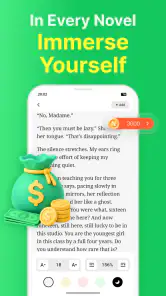


Analysis by Reviewed
I spent time with Novelvio as an entertainment app built around reading popular novels, completing tasks, and earning rewards. That combination gives it a different rhythm from a conventional ebook reader: you are not only opening a book and reading at your own pace, but also moving through an experience where reading and app activity are connected. I found that approach interesting because it can make short reading sessions feel more purposeful, especially when I want something lighter than a full-length reading platform.
At the same time, Novelvio is not automatically the best choice for every reader. Its appeal depends on whether you enjoy the idea of pairing fiction with tasks and rewards. Someone who wants a clean, distraction-free library may prefer a traditional reading app, while someone who likes discovering serialized entertainment and having another reason to return may find more value here. My overall impression is that it is most useful when treated as a casual reading companion rather than a replacement for every serious reading tool.
How Novelvio turns reading into a repeatable routine
The app comes from Feel Refreshed Studio Limited and sits in the entertainment category. Its central promise is easy to understand: choose novels, read them, complete tasks, and earn rewards along the way. What makes that structure worth examining is the way it changes the question from “Do I have enough time to read?” to “Can I complete one small step now?” That can be helpful for people who struggle to begin a book after a busy day.
In my experience, the task-based format encourages a more deliberate routine. Instead of opening a novel only when I have a long uninterrupted block, I can approach the app in smaller visits. A short break, a commute, or a quiet moment before bed becomes enough time to make progress. The trade-off is that the experience can feel less calm than a dedicated reader because the reward layer gives the session an additional purpose.
The app is free, which matters when judging its value. I can try the reading experience without paying an entry fee, so the decision is mainly about whether the format suits my habits rather than whether the initial purchase is worthwhile. Free access does not guarantee that every reader will enjoy the content or the reward structure, but it does make experimentation straightforward: install it, read for a while, and decide based on actual use rather than a promise of long-term value.
Novelvio has an average rating of 4.5 from around 1.4 thousand ratings, and it has passed 50 thousand installs. Those figures suggest that the concept has found an audience, although they should not be treated as proof that every novel or task will match my personal taste. I use them as a sign that the app is established enough to be worth trying, not as a substitute for checking how its reading flow feels on my own device.
The reading side is best for short, consistent sessions
I would approach the novel catalog with the mindset of sampling rather than committing immediately. The phrase “popular novels” sounds broad, but popularity does not tell me whether a particular story will have the tone, pacing, or genre I want. My practical advice is to test several openings before settling into one title. The first few pages usually tell me more about whether the writing holds my attention than a general description can.
More From Our News Desk

Clash of Clans Is Won Between the Battles

Android Auto Makes the Case for Quieter Car Software

MobiOffice: Transforming Mobile Productivity with Seamless Integration

EA SPORTS FC™ Mobile Soccer: Redefining Mobile Sports Gaming

How Microsoft OneDrive Became a Mobile Productivity Giant

How Google Translate Breaks Language Barriers Effortlessly
A useful workflow is to reserve Novelvio for a specific kind of reading: a few chapters during low-pressure moments, rather than the only place where I keep my most important books. That separation makes the app easier to enjoy. If I am looking for a quiet, focused reading session, I can use a conventional ebook reader. If I want a more interactive reason to return to a story, Novelvio has a clearer role.
The reward element can also change how I choose what to read. With a normal reader, I usually select a book entirely on subject and writing style. Here, I may be tempted to follow the path that makes task completion easiest. That is not necessarily bad, but it means I need to watch my own priorities. If the goal is discovering stories I genuinely enjoy, I should choose based on interest first and rewards second.
What the task-and-reward layer adds
The strongest idea in Novelvio is the connection between entertainment and progress. Tasks can give a session a beginning and an end, which is useful when an open-ended reading list feels overwhelming. I like this especially for casual readers who enjoy visible milestones. Completing a small objective can provide enough momentum to return later, even when the novel itself is still building toward its main conflict.
There is also a psychological trade-off. Rewards can make reading feel more active, but they can also pull attention away from the story. I would avoid rushing through pages simply to reach the next objective. That approach may technically advance a task while weakening the reason I opened a novel in the first place. The best balance is to use tasks as a gentle prompt, not as a demand to read at a speed that makes the experience less enjoyable.
Another practical tip is to decide before opening the app whether I am reading for the story or checking progress. If I want to relax, I focus on the novel and let the task sit in the background. If I have only a few minutes, I can use the task structure to choose a manageable session. This simple distinction prevents the reward system from turning every visit into a hurried checklist.
Novelvio is rated for Teen users, so families should consider that when deciding whether it is suitable for a younger reader. An age label is a useful starting point, not a replacement for personal judgment about individual stories. I would still encourage parents or guardians to look at the titles being read and discuss what kind of fiction is appropriate for the person using the app.
Where the free model delivers value
Because Novelvio is free, its clearest value is low-risk access to a reading-and-reward format. I do not need to justify a purchase before learning whether I enjoy the combination. That makes it a sensible option for someone who is curious about serialized entertainment, wants a new way to fill short breaks, or likes apps that turn repeated activity into a sense of progress.
Free access is particularly useful in an everyday scenario. Imagine finishing work or school with ten minutes before dinner. A full ebook may feel too demanding, while scrolling through unrelated feeds may leave me feeling that I spent the time without doing anything memorable. Novelvio can occupy that middle ground: I can read part of a story, complete a small task if one fits naturally, and close the app without needing a long session.
The app can also suit readers who have trouble maintaining momentum. A standalone novel depends entirely on personal discipline; Novelvio adds an external nudge through tasks and rewards. That does not make the writing better, but it can make the habit easier to restart. For a reader who often abandons books after a few chapters, this structure may be more valuable than another large library that offers no reason to return.
Its current version is 1.3.3, and it supports Android 7.0 or later. That broad compatibility makes it approachable for people who do not use a recent phone. Still, compatibility alone does not guarantee a perfect experience on every older device. I would pay attention to how smoothly pages, menus, and task screens behave during the first few sessions, especially if my phone is several generations old.
The trade-offs I would consider before settling in
The first limitation is focus. A dedicated ebook app usually keeps the reader’s attention on the page, while Novelvio combines reading with tasks and rewards. That extra layer is the reason to choose it, but it is also the reason some readers may find it less peaceful. If I want to disappear into a long literary novel without any surrounding motivation system, another app is likely to feel more natural.
The second limitation is that the reward concept can create expectations that the app may not satisfy in the same way for every person. Earning rewards sounds attractive, but the practical value depends on how the tasks fit my routine and what the rewards mean to me. I would not choose Novelvio solely because of the word “earn.” I would choose it if I already like the novels and find the task structure enjoyable; the rewards should be an extra benefit, not the only reason to stay.
There is also a risk of optimizing for completion instead of quality. When an app gives me objectives, I can start treating reading like a list of chores. That is especially unhelpful with fiction, where pacing and mood matter. My workaround is to stop after a natural scene or chapter rather than forcing myself to continue just because a task remains. This keeps the app from dictating the way I read.
Novelvio may also be a poor fit for readers who already have a carefully organized ebook collection and want advanced control over that library. The app’s distinct value is its entertainment loop, not simply the act of displaying text. If I mainly care about managing personal files, preserving a particular reading workflow, or keeping every title in one established library, a traditional ebook solution would probably be more efficient.
Another trade-off is discovery. A broad entertainment catalog can be exciting, but it can also make it harder to decide where to start. I would avoid opening the app with no plan and browsing indefinitely. A better method is to choose one story that genuinely interests me, give it a fair trial, and move on quickly if its voice or pacing does not work. The reward system should not persuade me to continue a novel I would otherwise abandon.
Who is most likely to get real value?
I think Novelvio is strongest for casual fiction readers, people building a reading habit, and users who enjoy light gamification around everyday entertainment. It can be a good match if I like short sessions, appreciate clear progress, and do not mind having tasks alongside the reading experience. It is also appealing when I want something more intentional than passive scrolling but less demanding than sitting down with a long book.
It may work well for someone who repeatedly says, “I want to read more,” but rarely finds the motivation to begin. The app’s structure provides a small starting point. Instead of promising myself an entire evening with a novel, I can aim for one manageable visit. Over time, that lower barrier may matter more than the size of the catalog.
Novelvio is less suitable for a reader who dislikes reward mechanics, prefers uninterrupted concentration, or wants complete control over a personal ebook library. I would also skip it if I am searching for a specific professional, academic, or reference-reading tool. Its purpose is entertainment, and its value comes from the combination of stories and repeatable app activity rather than from specialized reading functions.
For households, the Teen content rating deserves attention before sharing the app with younger users. I would not assume that a free entertainment app is automatically suitable for every member of a family. The right approach is to consider the reader’s age, review the available fiction together when appropriate, and treat the rating as part of the decision rather than an afterthought.
How it compares with ordinary reading alternatives
Compared with a standard ebook reader, Novelvio offers a more active loop. A normal reader is usually better when I already know what I want to read and simply need a comfortable place to do it. Novelvio is more interesting when I want discovery, recurring tasks, and a reason to revisit the app. The choice is less about which one is universally superior and more about whether I want reading to remain solitary and streamlined or become part of a broader entertainment routine.
Compared with social feeds and short-form video, Novelvio asks more sustained attention but gives that attention a clearer narrative direction. I still need to be willing to read, so it will not replace quick visual entertainment for everyone. However, when I am tired of endlessly switching between posts, a novel can feel more satisfying because it carries continuity from one visit to the next.
Compared with a paid reading service, the free price removes the initial financial barrier. That is meaningful for occasional readers who do not want another subscription or one-time purchase. The trade-off is that paid alternatives may feel more predictable for people who already know the exact books, tools, or reading controls they want. I would judge Novelvio on the experience it actually provides, not assume that free automatically means better value.
One non-obvious advantage is that Novelvio can serve as a testing ground for my own reading behavior. I can learn whether tasks help me return to fiction or merely distract me. That answer is useful even if I eventually move to another app. If the reward layer improves consistency, Novelvio has delivered something practical; if it makes reading feel pressured, I have learned that a simpler reader suits me better.
My verdict on trying Novelvio
I would recommend trying Novelvio if I wanted a free entertainment app that combines novels with tasks and rewards. The absence of an upfront price makes the experiment easy, and the format has a genuine use case for readers who need a small push to build consistency. Its rating of 4.5 and audience of over 50 thousand installs make it look established enough to explore, while the Teen rating helps set an appropriate expectation for families.
I would not recommend it as the only reading app for everyone. Readers who value silence, deep concentration, or a personal library workflow will probably be happier with a dedicated ebook reader. I would also avoid choosing it purely for the promise of rewards. The real test is whether the stories hold my attention and whether the tasks support my routine instead of taking it over.
My practical recommendation is to give it a focused trial: choose a novel that genuinely interests you, use the task system without rushing, and notice whether you return because you want to read or only because you feel obligated to complete something. If the former happens, Novelvio has found its place on your phone. If the latter becomes the pattern, a simpler reading alternative will likely offer better value even though Novelvio itself costs nothing.
Overall, I see Novelvio as a useful middle option between a conventional ebook reader and a purely passive entertainment feed. It gives casual reading a bit of structure without requiring a purchase to get started. The best value comes from the habit it may help create, not from treating rewards as a substitute for a good story. For the right reader, that is a worthwhile reason to install it; for everyone else, the free access at least makes skipping it an informed and inexpensive choice.
Novelvio - Read & Earn Frequently Asked Questions
Who developed Novelvio - Read & Earn, and what is its general focus?
Novelvio - Read & Earn is an entertainment app developed by Feel Refreshed Studio Limited. Its central idea is to combine reading popular novels with tasks and rewards, so it may appeal to people who enjoy fiction and want activities alongside their reading. The app is intended for a Teen audience, making it sensible for younger readers and parents to consider that rating before installing.
What devices and operating systems can run Novelvio - Read & Earn?
Novelvio is available for Android devices that meet its minimum operating system requirement of Android 7.0. Before downloading, check your device’s software version and make sure there is enough room for the app and its content. Compatibility can also depend on the particular device and app-store availability, so use the relevant store page on your phone to confirm that installation is offered for your device.
What is Novelvio - Read & Earn, and how does it work?
Novelvio - Read & Earn is a mobile reading platform that lets users discover and read serialized stories, novels, and other written content while participating in reward-based activities. After creating an account, you can browse available titles, open chapters, and follow stories over time. The earning system may depend on reading activity, daily tasks, bonuses, or other in-app requirements, so rewards should be viewed as an extra feature rather than guaranteed income.
Can I really earn money or rewards by reading on Novelvio?
Novelvio promotes a read-and-earn experience, but the exact value and availability of rewards can vary depending on your location, account status, promotional campaigns, and current app rules. Some rewards may be points, coins, vouchers, or other redeemable benefits instead of direct cash. Before investing significant time, review the requirements, minimum withdrawal threshold, supported payment methods, and any expiration conditions shown inside the application.
Is Novelvio - Read & Earn free to download and use?
The application is free to download, allowing users to install it and explore its reading and task-based features without an upfront download charge. However, free access can include advertisements, locked chapters, limited daily reading, virtual coins, or optional purchases. Certain stories or features may require payment or watching promotional content. Check the app store listing and in-app pricing carefully before confirming any purchase.
Pros
- Earn rewards while reading selected novels and stories.
- Simple interface makes browsing and starting books straightforward.
- Progress tracking helps you continue reading where you left off.
- Regular content updates can keep the library feeling fresh.
- Suitable for casual readers looking for extra motivation to read.
Cons
- Reward availability may vary by region
- account
- or promotional campaign.
- Earnings can be small and may require considerable reading time.
- The catalog may not include popular mainstream titles.
- Some features or rewards may depend on watching ads.
- Withdrawal rules and minimum thresholds may limit quick payouts.
- Category
- Entertainment
- Version
- 1.3.3