Nellis Auction
- 180.00
- 3.5
- Installs
- 100.00K
- Price
- Free

Screenshots

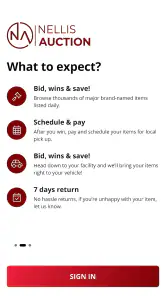
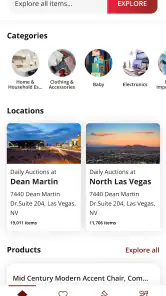
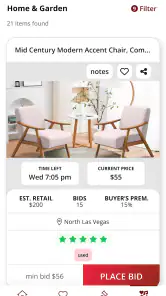
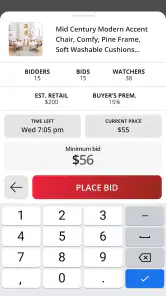
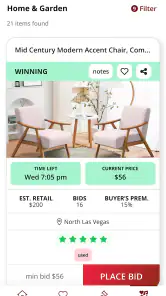
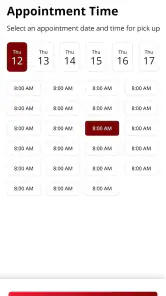
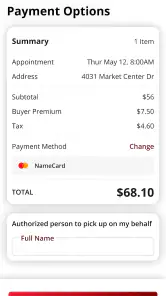
Analysis by Reviewed
I approached Nellis Auction as a practical shopping tool rather than as another general marketplace. Its purpose is clear: it connects shoppers with name-brand items sold through an auction format, with collection available at six locations. That immediately makes it different from an ordinary retail app, where I choose an item, pay a fixed price, and wait for delivery or visit a store.
My first impression is that this app makes the most sense for people who enjoy searching for bargains and are comfortable with a little uncertainty. It is free to download, aimed at Everyone, and available for Android devices running version 7.0 or later. The developer is Nellis Auction, and the app sits in the shopping category rather than trying to be a broad social marketplace or a conventional online department store.
The important question is not simply whether the app works. It is whether the auction model fits the way you shop. If you need a specific product at a guaranteed final price, a normal retailer may be less stressful. If you are willing to compare listings, set a firm spending limit, and arrange pickup, this app can open a different route to discounted purchases.
How I would decide whether this shopping app fits
The auction format changes the shopping habit
With fixed-price shopping, the main decisions are usually brand, condition, delivery speed, and total cost. An auction app adds timing and discipline to that list. I have to decide how much an item is worth before I become emotionally attached to winning it, then remember that a low visible price is not automatically the same as a low final cost.
That is the first decision criterion I would give a friend: use the app when you enjoy the search itself. Browsing can be rewarding because the inventory is likely to feel less predictable than a standard catalog. The trade-off is that I cannot approach every product as though it were guaranteed to remain available. The value comes from finding a suitable opportunity, not from expecting one exact item to be waiting whenever I open the app.
A second criterion is pickup. The app promotes collection through six locations, so location matters before bidding becomes serious. I would check whether one of those pickup points is genuinely convenient for my routine. A bargain can lose its appeal if collecting it requires an awkward trip, special planning, or transporting something too large for my vehicle.
This is where the app demands more attention than a typical delivery retailer. I would treat the pickup journey as part of the purchase decision, not as an afterthought. For small items, that may be easy. For furniture, appliances, or bulky household goods, the practical cost can include time, help from another person, and suitable transport.
More From Our News Desk

Clash of Clans Is Won Between the Battles

Android Auto Makes the Case for Quieter Car Software

MobiOffice: Transforming Mobile Productivity with Seamless Integration

EA SPORTS FC™ Mobile Soccer: Redefining Mobile Sports Gaming

How Microsoft OneDrive Became a Mobile Productivity Giant

How Google Translate Breaks Language Barriers Effortlessly
What I would inspect before committing
I would read each listing carefully and avoid bidding based only on the product photograph or recognizable brand name. The useful questions are simple: Is this the exact model I need? Is the condition acceptable for my purpose? Can I collect it comfortably? What would I pay elsewhere for a comparable item? The app is most useful when I answer those questions before the auction pressure starts.
My strongest tip is to keep a short personal ceiling for every item. I would write down the maximum amount I am willing to spend, then stop when the bidding reaches it. This sounds obvious, but auction interfaces are designed around momentum: seeing another person compete can make an ordinary purchase feel like a challenge. A disciplined limit protects the main reason for using the app in the first place.
I would also group browsing by real needs instead of opening the app whenever I am bored. For example, I might look for household replacements during one session, compare several suitable options, and then leave the app rather than chasing unrelated deals. That workflow reduces impulse buying and makes it easier to judge whether the result is actually cheaper than a normal purchase.
Who will get the most from it
I see the best match in shoppers who live near a pickup location, have flexible schedules, and are comfortable making decisions from available inventory. It can also suit someone furnishing a home, replacing several everyday items, or looking for branded goods without insisting on a particular color or exact model.
The app is less suitable for a person who needs a guaranteed delivery date, a precise replacement part, or a product immediately. It may also frustrate shoppers who dislike checking auction progress or arranging collection. In those cases, a fixed-price retailer is not necessarily more exciting, but it is often the better tool because certainty matters more than the possibility of a deal.
Where the app stands out
The clearest strength is the combination of auction discovery and local pickup. I do not have to think of the service as a normal online store with a slightly different layout. Its appeal is that the purchasing process can uncover items at prices that may be below ordinary retail, while the pickup model gives the transaction a local, practical endpoint.
That combination can be especially useful when delivery would be inconvenient. A local pickup option may make sense for an item that is expensive or awkward to ship, provided I have checked the size and my own ability to move it. It also changes the rhythm of shopping: instead of ordering from a huge permanent catalog, I watch for an opportunity and decide whether it is worth acting on.
The app’s reach is also meaningful. It has passed one hundred thousand installs, and its average rating is three and a half from roughly three hundred ratings, alongside around one hundred eighty written reviews. I read that as a sign of a real but mixed user experience: enough adoption to show that the concept attracts shoppers, but not a reason to assume every person will find the process effortless.
In my view, the mixed rating is not automatically a problem for an auction service. People judge these apps on more than screen design. They judge the listing experience, bidding expectations, pickup logistics, and whether the final purchase felt worthwhile. Someone who understands that complete process may be happier than someone expecting the simplicity of a one-tap retail order.
A realistic shopping situation
Imagine I am setting up a home office and need a desk lamp, storage, and a chair. With a normal retailer, I would filter by price, choose a model, and arrange delivery. With this app, I would first decide which of those items I can collect without difficulty. I might browse several lamps, compare their likely value with retail alternatives, and bid only when the condition and pickup plan make sense.
For the chair, I would be more cautious. A chair is something I may want to inspect closely, and its size can create a transport problem. I would not assume that a familiar brand guarantees comfort or suitability. The auction format may help with price, but it does not remove the need to think about fit, condition, and moving the item from the pickup location.
For storage, the app could be more attractive if I am flexible about appearance. I might accept a different finish or style if the item meets the practical need. That is an important advantage of browsing auctions: I can discover alternatives I had not planned to search for. The matching disadvantage is that I need patience. The exact item I imagine may not appear at the moment I want it.
Small habits that improve the experience
I would create a simple pre-bid checklist and use it every time. First, I would identify the item’s purpose. Second, I would estimate its normal retail value without treating the brand name as proof of a bargain. Third, I would consider pickup distance and transport. Finally, I would set my absolute limit before taking part.
Another useful habit is separating “interesting” from “useful.” Auction browsing can produce many tempting discoveries, but a low price does not make an unnecessary item valuable. I would save my attention for products that solve a real problem, replace something worn out, or fit a planned purchase. This keeps the app from turning bargain hunting into clutter accumulation.
I would also avoid making a rushed decision near the end of an auction period. Even if the app makes participation convenient, convenience can encourage last-minute reactions. My rule would be to decide in advance whether the item is worth pursuing and to accept losing it when the price crosses my limit. The ability to walk away is more important here than winning frequently.
Where ordinary shopping alternatives may fit better
A fixed-price retailer is the stronger choice when certainty is the priority. If I need a replacement before a particular day, want a clear returns process, or require a precise specification, I would usually choose the conventional route. The extra money can be worthwhile because it buys a more predictable transaction.
A broad marketplace may suit shoppers who want to compare many sellers, read extensive product histories, or arrange delivery directly to their home. I would choose that kind of service when I already know the exact model and do not want to monitor an auction. The benefit is control over the product and timing; the drawback may be fewer opportunities for local bargain hunting.
A physical store remains useful when inspection matters. For furniture, clothing, or anything where size and condition are difficult to judge from a listing, seeing the item in person can prevent disappointment. Nellis Auction can still be worth considering, but I would not treat the app as a replacement for physical inspection in every category.
These alternatives are not necessarily competitors in the same practical sense. They solve different shopping problems. Nellis Auction is strongest when I am flexible, price-aware, and able to collect. A standard retailer is stronger when I need certainty. A marketplace is stronger when I need broad seller choice. A physical store is stronger when touch, fit, or immediate inspection matters.
The real cost of changing from fixed-price shopping
Switching to an auction workflow costs more than downloading a free app. The first cost is attention. I need to read listings, compare value, remember auction timing, and keep track of pickup. If I normally buy something in a few minutes, this service may feel slower even when the eventual price is attractive.
The second cost is flexibility. In a normal store, I can decide that I want a particular item and search until I find it. Here, I may need to accept a different brand, design, or timing. That flexibility can produce excellent finds, but it requires a different mindset. I am not always selecting from a complete shelf; I am evaluating opportunities as they appear.
The third cost is logistical. Pickup can be convenient when a location sits along my normal route, but it can become a burden when it does not. Before I bid on anything large, I would plan the journey, confirm that I can carry or load it, and decide whether I need assistance. I would never calculate savings using the auction amount alone.
There is also a psychological switching cost. Losing an auction can be irritating, while winning can create pressure to justify the purchase. I would remind myself that the goal is not to win; the goal is to obtain something useful at a sensible overall cost. That distinction makes the service feel more like controlled shopping and less like a contest.
What the version and access details mean in practice
The current version is 1.9.1, and the app was released on November 22, 2024. For someone deciding whether to try it, the practical takeaway is that this is a relatively recent shopping app with an established install base rather than an old, forgotten listing. I would still judge it by how smoothly it handles my browsing and pickup routine on my own device.
Because the minimum operating system is Android 7.0, owners of older Android phones should check compatibility before planning around the app. The age rating is Everyone, which fits its role as a general shopping service rather than an entertainment app aimed at a restricted audience. It is free, so the main commitment is the time and logistics involved in using the auction process, not an upfront download charge.
I would not confuse free access with a guaranteed bargain. The app removes the price of trying the service, but the purchases themselves still require careful judgment. My recommendation would be to install it, browse without bidding first, and learn whether the available inventory and pickup locations match my needs.
My recommendation for different kinds of shoppers
I recommend giving Nellis Auction a serious try if you enjoy bargain hunting, live within practical reach of one of its six pickup locations, and can tolerate flexible product selection. It is particularly promising for planned household shopping where I can wait for a suitable listing and where a local collection trip is manageable.
I would recommend caution for anyone who tends to make impulse purchases. The auction format can make a modest discount feel more important than it is. Set limits, calculate the journey, and compare the item with a fixed-price alternative before committing. Those steps turn the app from a source of tempting listings into a more controlled shopping tool.
I would skip it for urgent purchases or exact-match shopping. If I need one specific model, a dependable arrival date, or a simple return-to-store experience, I would choose a conventional retailer or another fixed-price option instead. The app’s strengths do not compensate for a mismatch between its auction process and my immediate requirements.
Overall, I see this as a useful specialist addition to my shopping routine, not a universal replacement for every retailer. Its value comes from combining name-brand bargain hunting with local pickup, but that value depends on patience, preparation, and realistic transport planning. My clear advice is to use it when flexibility is your advantage, and choose fixed-price shopping when certainty is worth more than the possibility of a deal.
Nellis Auction Frequently Asked Questions
Is Nellis Auction available for both Android and iPhone?
Nellis Auction is a shopping app for browsing auction listings and managing purchases. Before downloading, check that your phone’s operating system is compatible with the version offered in its app store; the listed minimum OS is 7.0. The app is free to download, while bids and purchases can involve real costs. You can also use the service’s website to browse or participate if that suits your device better.
Who is the Nellis Auction app for, and what can I shop for?
The app is designed for shoppers interested in bidding on name-brand merchandise at a fraction of retail prices. Listings can cover items such as electronics, furniture, appliances, tools, clothing, and household goods, with availability varying by auction. It may suit bargain hunters who are comfortable checking each item’s condition and arranging collection. The app is rated for Everyone, but purchases and bidding are intended for people able to meet the auction’s payment and pickup requirements.
What is Nellis Auction, and how does it work?
Nellis Auction is an online marketplace where users can browse and bid on returned, overstocked, and liquidation merchandise. Listings may include electronics, furniture, appliances, tools, clothing, and household items. Each product has its own auction deadline, current bid, condition description, and pickup or collection information. After winning, you generally need to complete payment and collect the item within the stated timeframe.
Is the Nellis Auction app free to download and use?
The Nellis Auction app is free to download, although placing bids and purchasing products involves real financial commitments. Depending on the listing and your location, additional buyer fees, taxes, deposits, or handling charges may apply. Before confirming a bid, carefully review the final price, service charges, payment rules, and pickup requirements so you understand the total cost.
Are products sold through Nellis Auction new or used?
Items available through Nellis Auction can be new, open-box, returned, refurbished, incomplete, damaged, or used. The condition varies from one listing to another, so it is important to read the description and inspect every available photograph before bidding. Some products may not include original packaging, accessories, manuals, or warranties, and auction purchases are commonly sold as-is.
Pros
- Wide range of auction categories
- from household items to electronics.
- Local pickup options can save money compared with shipping.
- New listings are added regularly
- keeping the marketplace fresh.
- Bidding may reveal bargains below typical retail prices.
- Account tools make it easy to track bids and auction activity.
Cons
- Pickup windows can be strict and inconvenient for some buyers.
- Item condition may vary
- so listings require careful inspection.
- Winning bids can increase quickly near the auction deadline.
- Some purchases may involve additional buyer or service fees.
- Availability and pickup locations are limited to supported regions.
- Category
- Shopping
- Version
- 1.9.1