Myrelle
- 26.00
- 1.1
- Installs
- 50.00K
- Price
- Free

Screenshots

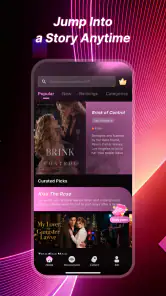



Analysis by Reviewed
Myrelle is a free entertainment app from BaihuiJiade built around short-form drama viewing. My first impression is mixed: the idea is easy to understand and potentially useful for people who want quick episodes during spare moments, but the very low user response makes it difficult to recommend without reservations. With an average rating of 1.1 from around 86 ratings, this is an app I would approach cautiously rather than install expecting a polished replacement for a better-known streaming service.
That does not automatically make it useless. Short dramas can fit neatly into a busy day, especially when I only have a few minutes on a commute, during a lunch break, or before bed. The question is whether Myrelle makes that habit convenient enough to justify adding another entertainment app to my phone. In my experience, its appeal depends less on the broad promise of short dramas and more on how patient I am with an app that has a sharply divided reception.
What using Myrelle feels like in everyday entertainment
The app sits in the entertainment category and presents itself as a destination for short drama content. That focus matters because it suggests a different viewing rhythm from traditional television applications. Instead of committing to a long film or a full-length episode, I can approach the service in small sessions. A few minutes of free time becomes enough to start a story, continue a cliffhanger, or decide whether a series is worth following.
I find that format most useful when I want something lighter than a full streaming session. For example, if I am waiting for an appointment, I would rather open a short-drama app than begin a film I cannot finish. The compact format also works for viewers who prefer frequent story turns and quick progression. Myrelle’s central concept is therefore sensible, even if the execution deserves careful scrutiny.
The developer is listed as BaihuiJiade, and the app is available at no upfront cost. That removes the first barrier to trying it. A free download is particularly helpful here because the rating is so poor: I can test the experience without paying at the door. However, free access should not be confused with a completely cost-free viewing experience. The application includes in-app purchases ranging from $0.49 to $219.99 per item, so I would pay close attention before confirming any purchase.
That wide purchase range changes how I would use the app. I would treat it as a trial-first service, not something to hand to a child or use casually with payment details already available. The age classification is Everyone, but an Everyone label does not remove the need for sensible spending controls. If I were setting it up on a family device, I would review purchase protections before letting someone browse independently.
The short-drama format is the clearest reason to try it
The strongest case for Myrelle is convenience. Short drama apps can turn fragmented time into a regular viewing routine, and that is more practical than it sounds. I might watch one installment while having coffee, another while waiting for a friend, and a final one during a quiet evening break. This approach is less demanding than opening a conventional streaming platform and searching through a large catalog of films and long series.
More From Our News Desk

Clash of Clans Is Won Between the Battles

Android Auto Makes the Case for Quieter Car Software

MobiOffice: Transforming Mobile Productivity with Seamless Integration

EA SPORTS FC™ Mobile Soccer: Redefining Mobile Sports Gaming

How Microsoft OneDrive Became a Mobile Productivity Giant

How Google Translate Breaks Language Barriers Effortlessly
There is also a psychological advantage to short episodes: starting does not feel like a major commitment. When I am tired, I often do not want to choose between dozens of serious viewing options. A focused app can reduce that decision fatigue. Myrelle’s narrow entertainment purpose may appeal to someone who already knows they enjoy quick dramatic stories and wants that format in one place.
Still, I would not assume that the app’s short description, “Myrelle,” tells a prospective user much about the actual viewing experience. The broader store summary describes it as an entertainment app centered on short dramas, but a slogan cannot answer practical questions such as how easy it is to discover a suitable series, how smoothly episodes continue, or how often payment prompts appear. Those are the details I would judge during the first session.
How I would test it before becoming a regular viewer
My recommendation is to use a deliberate trial instead of browsing aimlessly. I would begin by checking whether the opening screen makes the available dramas understandable at a glance. Then I would start one title and observe how the app handles moving from one installment to the next. That workflow tells me more than the promotional wording because short-drama services live or die by the transition between episodes.
I would also note whether the app makes it clear which content is immediately available and which action may lead to a purchase. This is one of the most important practical checks in Myrelle. A free download with optional purchases can be perfectly reasonable, but the viewer should be able to understand the cost before tapping through a locked episode or continuing a story.
A useful habit is to stop after the first short session and decide whether I genuinely enjoyed the storytelling or simply kept tapping because each installment ended with a hook. That distinction is easy to miss in serialized short content. If the story feels satisfying and the payment flow is transparent, the app may earn a place in my entertainment rotation. If the experience feels like constant prompting, I would uninstall it quickly.
Where the app’s reception affects my confidence
The rating is the biggest warning sign. An average of 1.1 is not a minor blemish that I would brush aside, especially when it comes from dozens of ratings and is accompanied by 26 written reviews. Ratings are imperfect, and they do not explain every individual complaint, but such a low overall response tells me that many users had a disappointing experience.
That matters more for an entertainment app than it might for a simple utility. If I am installing a calculator, I can sometimes tolerate an unattractive interface if the basic function works. A short-drama application has to make browsing, watching, and continuing feel pleasant. Poor user satisfaction may point to friction in one or more of those moments, even though the rating alone cannot identify the exact cause.
I would therefore avoid putting Myrelle at the center of my viewing routine immediately. I would not delete my usual streaming options or spend money on a large purchase before seeing how the application behaves over several sessions. The sensible approach is to treat the rating as a reason for caution, not as proof that every part of the app is unusable.
Strengths, limitations, and the right kind of viewer
What makes Myrelle potentially useful
Myrelle’s first practical strength is its low entry cost. Since the app is free to install, someone curious about short dramas can inspect the experience without committing to a subscription at the outset. That is valuable for viewers who are unsure whether this format suits them. I would especially consider it for someone who wants brief, serialized entertainment rather than a large general-purpose catalog.
The second strength is focus. A conventional video platform may offer everything from documentaries to live content, but that variety can make it harder to find a quick dramatic story. Myrelle’s identity is much narrower. For the right viewer, that can feel more direct: open the app, look for a story, and begin watching without turning the search itself into the evening’s main activity.
The third strength is flexibility in daily use. I can imagine using it in short windows where a longer program would be awkward. A person who rides public transport, takes frequent breaks, or prefers episodic storytelling may find the format easier to fit around real life. The key benefit is not simply that episodes are short; it is that the viewing commitment feels manageable.
There is also a useful discovery angle. If I am bored with familiar films and series, a short-drama catalog can offer a different style of storytelling. The compressed format often encourages immediate conflict and fast developments. That will not appeal to everyone, but viewers who like stories that get moving quickly may find the structure more engaging than a slow opening in a conventional series.
The most important weaknesses to consider
The low rating cannot be separated from the recommendation. I would be comfortable describing Myrelle as worth a cautious test, but not as a dependable first choice. The app has around 50 thousand installs, which shows that people have tried it, yet reach alone does not establish quality. In this case, the user response is the more meaningful signal for my decision.
The purchase structure is another serious consideration. Individual items range from $0.49 to $219.99, an unusually broad span for a casual entertainment experience. I would not tap through payment screens just to keep a story moving. Instead, I would identify the free portion, check the wording around each purchase, and make sure a single impulse decision cannot create an unwanted charge.
This is also where Myrelle differs from many familiar alternatives. Large streaming services usually organize their value around a subscription or a clearly defined catalog, while short-drama platforms may make the viewer think about individual unlocks. The lower-priced items may seem harmless, but repeated small purchases can become expensive over time. A viewer who wants predictable monthly spending may prefer a service with a straightforward subscription model.
On the other hand, a subscription service is not automatically better for everyone. If I only watch occasional short episodes, paying for a full month may be less attractive than making a small one-off purchase. The trade-off is control versus predictability: Myrelle may suit light users who monitor spending carefully, while a clearly priced subscription may suit frequent viewers who dislike decisions inside the app.
Another limitation is the uncertainty created by the sparse public identity around the product. The store short description is simply “Myrelle,” which does little to prepare a new user for the experience. That does not prove anything negative about the app itself, but it means I would rely more heavily on the first few minutes of actual use and on the written user feedback than on the store presentation.
Who should install it, and who should skip it
I would recommend trying Myrelle to a viewer who already enjoys short dramas, wants a free starting point, and is willing to inspect purchases carefully. This person is likely to understand the format quickly and judge the app on the quality of its available stories rather than expecting a full replacement for every other entertainment service. They should also be comfortable uninstalling it if the experience feels frustrating.
It may also suit someone with a very specific viewing pattern: short sessions, frequent breaks, and a preference for continuing one dramatic storyline in small pieces. In that situation, the app’s focus could be more useful than a broad platform filled with content the viewer does not want. I would use it as a secondary entertainment option rather than as my only video app.
I would tell budget-conscious users to be especially careful. Anyone who wants a completely predictable entertainment bill should probably choose a service with a transparent subscription price instead. Myrelle’s free installation is attractive, but the purchase range means that the real cost depends on how the viewer interacts with locked or premium content.
I would also steer away from it if I value a strong reputation above experimentation. An average rating of 1.1 is enough to make established alternatives the safer recommendation. The same applies to viewers who expect polished discovery tools, extensive account controls, or a mature streaming ecosystem. Myrelle may be interesting as a trial, but it does not currently inspire the confidence I would want from a primary entertainment platform.
How it compares with ordinary alternatives
Compared with a general streaming service, Myrelle’s likely advantage is immediacy. A broad platform is better when I want films, long episodes, documentaries, or a stable subscription arrangement. Myrelle is more narrowly aimed at short drama viewing, so it makes sense when that is exactly what I want and my available time is limited.
Compared with free video platforms, the decision is less straightforward. Free alternatives may offer a wider mix of creators and formats, while a focused short-drama app can make serialized viewing feel more organized. The trade-off is that free platforms usually train me to expect advertising or a less controlled catalog, whereas Myrelle’s in-app purchase model makes me more alert to what each viewing action may cost.
Compared with another dedicated short-drama service, I would choose based on transparency and user confidence rather than the category label alone. Myrelle’s format is appealing, but the low rating means a competing app with clearer pricing and stronger user satisfaction could be the better everyday choice. The best alternative is not necessarily the one with the most content; it is the one whose viewing and payment model matches my habits.
Practical setup advice before watching regularly
My first tip is to keep the initial test small. Install the app, explore without entering a purchase flow, and watch enough to understand whether the storytelling holds my attention. I would not preload a large balance or make a high-value purchase during that first visit. The free entry point gives me enough room to evaluate the basic experience before spending anything.
My second tip is to separate entertainment curiosity from payment commitment. If a cliffhanger makes me want the next installment immediately, I would pause and check the price rather than tapping automatically. This simple delay protects against the most common short-session trap: making several small decisions because the story is designed to keep momentum high.
My third tip is to use the app according to a defined purpose. I would decide whether I am testing it for occasional breaks, following one particular drama, or searching for a replacement for another service. That makes the verdict clearer. If Myrelle works for ten-minute gaps but not for a full evening, that is still useful information; it simply means the app belongs in a secondary role.
Finally, I would keep an eye on whether the experience remains enjoyable after the novelty fades. A short-drama app can feel exciting during the first few episodes because the format moves quickly. After several sessions, I would ask whether I am discovering stories I actually like, whether continuing is easy, and whether the cost remains comfortable. Those three checks are more valuable than judging the app from one dramatic opening.
My final recommendation
Myrelle has a clear idea behind it: make short drama easy to reach when I have only a small amount of time. That is a real use case, and the free installation makes experimentation straightforward. I can see why a viewer who enjoys fast-moving serialized stories might want to give it a chance.
However, I cannot recommend it broadly because the user response is extremely weak. The average rating of 1.1, combined with the broad in-app purchase range, means I would approach it as an unproven trial rather than a trusted entertainment choice. The app’s Everyone age classification makes it broadly accessible, but adults should still supervise spending on shared devices.
My verdict: try Myrelle only if short dramas are specifically what you want, and keep the first session free and cautious. For occasional viewers who enjoy experimenting, it may be worth a look. For anyone seeking a polished, predictable, and confidently recommended streaming experience, I would choose a better-established alternative instead.
The app is listed as version 1.1.5 and supports Android 7.0 or later, so compatibility should be reasonable for many older Android phones. That makes testing easier, but it does not change my central conclusion: the format is promising, while the current trust signals are not strong enough for an unconditional recommendation.
Myrelle Frequently Asked Questions
What does Myrelle offer as a short-drama app?
Myrelle is an entertainment app presented as a short-drama service, intended for people who want to watch short-form dramatic content on a mobile device. Its store description calls it an app for a short-drama entertainment experience. The app is free to download, while optional in-app purchases are available, so check the purchase details before choosing paid content or features.
Which devices can install Myrelle?
Myrelle requires Android 7.0 or later. Before downloading, check your device’s operating-system version and confirm that the app is available for your device in its official store. The version listed is 1.1.5, and keeping the app and your device software updated can help you use the current release. Myrelle is developed by BaihuiJiade.
What is Myrelle, and what can I use it for?
Myrelle is an entertainment app designed to give users access to short-drama content on a mobile device. Before downloading, it is worth checking the current app-store description because features, supported regions, and account requirements may change. The overall experience can also depend on your device, operating-system version, and internet connection.
Is Myrelle free to download and use?
Myrelle is free to download, but it offers in-app purchases priced from $0.49 to $219.99 per item. Review the purchase options carefully before paying, since the cost can vary by item. If payment options are offered, check their terms and cancellation details before confirming a transaction.
Does Myrelle require an account or personal information?
Depending on which features you want to use, Myrelle may request an account, contact details, or other information during registration. Users should read the privacy policy and permissions screen before accepting access. Pay particular attention to requests involving location, contacts, photos, notifications, or device identifiers, and only provide information that is necessary for the app’s intended functionality.
Pros
- Simple interface that is easy to understand from the first use.
- Useful features are organized clearly
- reducing unnecessary navigation.
- Runs smoothly on most modern Android and iOS devices.
- Suitable for users who prefer a focused and uncomplicated experience.
- Regular updates can improve stability and add useful refinements.
Cons
- Some features may require an account or personal information.
- The free experience may include advertisements or usage limitations.
- Performance can vary on older devices with limited storage or memory.
- Certain options may feel basic compared with more established alternatives.
- Support and available features may differ between Android and iOS.
- Category
- Entertainment
- Version
- 1.1.5