MoodWallet: Money Management
- 41.00
- 4.3
- Installs
- 10.00K
- Price
- Free

Screenshots

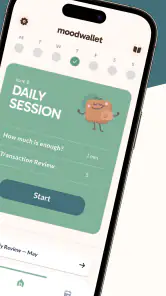
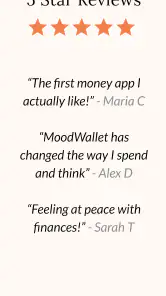

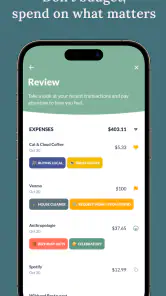
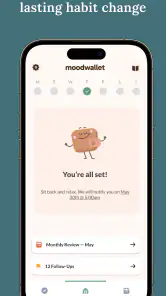
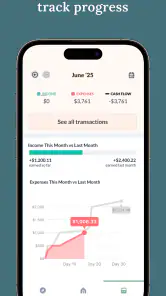

Analysis by Reviewed
I started using MoodWallet: Money Management because I wanted a calmer way to think about everyday spending, not another finance app that turns every purchase into a category, chart, or warning. Its approach is built around the connection between mood and money, which makes it especially interesting in a household where spending decisions are shared but emotions around those decisions are not. I found it more useful as a reflection tool than as a traditional budget manager.
The app comes from Jomo Labs and sits in the finance category. It is free to install, with optional in-app purchases ranging from $6.99 to $89.99 per item. The current version is 2.12.0, and it runs on Android 7.0 or later. Its age rating is Everyone, so the interface is suitable for a broad audience, although the way a household uses it still depends on maturity, privacy expectations, and how openly people discuss money.
How MoodWallet fits into a shared household
The most realistic way I can imagine using it with another person is not as a joint bank account or a replacement for a full household ledger. Instead, one person might use it after a tense shopping trip, an impulse purchase, or a surprisingly satisfying small expense, then notice what was happening emotionally at the time. That information can make a later conversation more useful than simply asking, “Why did you spend that?”
For example, imagine two people sharing a home. One comes back from work feeling drained and orders food, while the other sees only an unplanned expense. A mood-focused check-in can help separate the financial question from the emotional one. Was the purchase occasional relief, a repeated habit, or a sign that the household routine is putting too much pressure on one person? MoodWallet cannot solve that disagreement by itself, but it can give the person who uses it a clearer starting point.
I like this distinction because conventional budgeting tools are strongest when you need totals, categories, limits, and historical records. MoodWallet is more useful before or after the transaction, when you are trying to understand the decision. It encourages a pause rather than demanding a perfect financial system. That makes it approachable for someone who has repeatedly abandoned spreadsheets or detailed budgeting apps.
There is also a practical benefit for couples or housemates who do not want every personal purchase exposed. A shared device does not automatically make a shared financial record appropriate. If one person opens the app to reflect on a purchase, another person should not assume that the entry is a household report. I would treat individual entries as personal unless everyone has explicitly agreed on what is shared.
That boundary matters because the app’s central idea can feel personal. A spending amount is one thing; admitting that a purchase came from stress, boredom, loneliness, or the desire for a reward is another. In a household, emotional context should be offered voluntarily, not used as evidence in an argument. The app works best when it supports curiosity instead of surveillance.
More From Our News Desk

Clash of Clans Is Won Between the Battles

Android Auto Makes the Case for Quieter Car Software

MobiOffice: Transforming Mobile Productivity with Seamless Integration

EA SPORTS FC™ Mobile Soccer: Redefining Mobile Sports Gaming

How Microsoft OneDrive Became a Mobile Productivity Giant

How Google Translate Breaks Language Barriers Effortlessly
One device does not mean one account
If several people use the same phone or tablet, I would establish a simple rule before anyone begins: each person should know whose information is being entered, and nobody should record another person’s spending as if it were their own. This sounds obvious, but mood-based notes are easy to misunderstand when a device moves between family members.
I would also avoid treating the app as a communal notebook unless the household has deliberately chosen that arrangement. A parent, partner, or housemate may be comfortable discussing shared bills but not private discretionary spending. Keeping those subjects separate prevents a useful reflection exercise from becoming an unwanted inspection of someone’s habits.
The free starting point makes it easy to test this arrangement without committing immediately. I would spend time learning whether the app actually changes my decisions before considering an optional purchase. The presence of in-app purchases means users should pay attention during any upgrade flow and decide whether the extra value fits their needs, rather than assuming that every household member needs the same access.
This is one of the app’s less obvious trade-offs: a low-friction tool is easier to adopt, but it may not provide the formal structure that keeps shared finances consistent. If two people need a single authoritative record of rent, utilities, subscriptions, debt payments, and reimbursements, I would choose a dedicated household finance system instead. MoodWallet can sit beside that system as a personal awareness layer, not replace it.
Creating useful boundaries during setup
My advice is to decide what question the app is meant to answer before entering lots of information. Are you trying to notice emotional spending? Are you trying to slow down purchases? Are you trying to understand why certain expenses feel worthwhile while others create regret? A narrow purpose makes the app more helpful than collecting entries without knowing what you will do with them.
For shared households, I would separate three areas in my mind: personal spending, agreed household spending, and expenses that need a conversation. The first belongs to the individual. The second may be reviewed together. The third should not be interpreted from a single entry or a mood label. This separation avoids turning a momentary feeling into a permanent judgment about someone’s character.
A useful workflow is to check in briefly after a purchase rather than writing a long explanation. I would note the emotional state while it is still fresh, then revisit patterns later when I am calm. The important insight is not whether one purchase was “good” or “bad,” but whether the same trigger keeps appearing. That can reveal a practical change, such as preparing food before a late shift or setting a waiting period for nonessential purchases.
I would not use the app while angry with another household member. Entering a purchase immediately after an argument could produce a record that feels more like a complaint than self-reflection. Waiting until the emotional intensity drops gives the entry a better chance of describing the decision rather than the conflict surrounding it.
Another boundary concerns children and teenagers. The Everyone rating makes the app broadly age-appropriate from a content perspective, but that does not mean a child should be expected to disclose every feeling connected to money. A younger user may need help understanding that an emotional check-in is optional and should not be used to shame them. Adults should explain the purpose clearly and avoid presenting the app as a monitoring device.
Coordinating without turning reflection into control
Household coordination works best when the app leads to a conversation, not when it becomes the conversation. I would share patterns only after deciding what kind of help I want. Perhaps I need a practical change, such as a shared meal plan, or perhaps I only want someone to understand why a particular expense mattered to me. Those are different requests, and the app cannot decide between them.
One concrete technique is to bring one observation to a weekly household discussion. Instead of presenting a long list of purchases, I might say that I noticed I spend more readily when I am exhausted, then suggest one experiment for the coming week. This keeps the discussion focused and gives the other person a chance to contribute without feeling accused.
For couples, this can also expose different definitions of “waste.” One person may feel good about spending on convenience because it protects their time, while the other values saving more than comfort. MoodWallet is useful here because it makes room for the emotional benefit of an expense, not just its price. That does not make every purchase sensible, but it helps the household negotiate priorities more honestly.
For housemates, I would keep the app away from shared-bill administration unless everyone agrees on a process. A person who tracks their emotional response to grocery shopping may not be trying to calculate who owes what. Mixing those purposes can create confusion. A separate shared note or finance tool is better for reimbursements, while MoodWallet remains focused on the person’s relationship with spending.
The same principle applies on a shared device. If several people use one phone, coordination should happen through an agreed verbal routine rather than assumptions about what another person has entered. I would not leave the app open on a screen containing personal reflections, particularly in a busy home where children, guests, or roommates may pick up the device.
Trust, age, and the limits of shared access
The app’s Everyone rating is reassuring for general accessibility, but financial maturity is different from content suitability. A younger user may understand the interface while still needing guidance about purchases, privacy, and emotional language. I would introduce it as a way to notice choices, not as a test that produces a score for being responsible.
Trust is especially important because mood-related information can be sensitive even when the purchase itself is ordinary. A coffee, game, clothing item, or takeaway meal may represent comfort, celebration, stress relief, or social connection. If another person reads the entry without context, they may draw the wrong conclusion. Household use should therefore be based on consent and clear expectations.
I would also avoid using someone’s entries to diagnose their behavior. Repeated stress-related spending might suggest that a routine deserves attention, but it is not proof of a serious problem. The right response could be a conversation, a change in household responsibilities, or professional advice, depending on the situation. The app can support awareness, but it should not be treated as a clinical or financial authority.
For adults sharing finances, the strongest arrangement is usually selective openness. Share the pattern that affects the household, keep private reflections private, and discuss joint expenses using agreed records. That approach protects individual autonomy while still allowing the app to contribute something valuable to household planning.
What the app does better than a normal budget
Traditional finance apps usually ask me to organize money by amount, date, merchant, or category. That is excellent when I need to know where the money went. MoodWallet approaches the problem from the decision itself. It asks me to notice the state of mind around spending, which can reveal a trigger that a transaction list would never show.
This makes it a good companion for someone who already knows their totals but still feels confused by recurring choices. A budget may show frequent delivery orders; a mood reflection may reveal that they happen after particularly demanding days. The first observation is descriptive, while the second points toward an intervention.
It is also less intimidating for people who associate budgeting with restriction. The store summary presents it as a way to reduce stress and spend better without requiring a conventional budget, and that matches my experience of its appeal. The app’s value is in lowering the emotional barrier to looking at spending, not in replacing every financial tool.
Still, the comparison cuts both ways. If I need precise forecasting, account reconciliation, bill reminders, shared balances, or detailed reporting, I would not rely on MoodWallet alone. It is not the right choice for someone whose main problem is missing payment dates or managing multiple financial accounts. In those cases, a structured finance app, spreadsheet, or banking tool is more appropriate.
Who will get the most from it
I would recommend trying it to someone who makes occasional impulse purchases, feels guilty after spending, or repeatedly starts and abandons strict budgeting systems. It is also a good fit for a person who wants to understand the difference between spending that genuinely improves a day and spending that only provides a brief escape.
It may help couples who argue about purchases because they disagree about value rather than because either person lacks information. By identifying the emotional purpose of an expense, the discussion can move toward practical compromises. One person might accept a convenience purchase if it replaces an exhausting task, while the other may ask for a limit when the same pattern becomes frequent.
I would be more cautious recommending it to a household that needs centralized control. Families managing a tight monthly plan, shared debt, or complicated reimbursements need reliable numerical tools first. MoodWallet can add context, but it should not be the only place where important financial information lives.
I would also skip it if I wanted automatic, comprehensive transaction management and had no interest in reflecting on emotions. The app’s distinctive idea is also its narrowest one: if that perspective does not appeal to you, a standard expense tracker will probably feel more direct and efficient.
My household verdict
After using MoodWallet, I see it as a gentle finance companion rather than a complete money-management command center. Its strength is helping me pause and ask why a purchase felt necessary, comforting, exciting, or disappointing. That makes it particularly relevant in a household, where financial disagreements often involve stress, effort, fairness, and personal priorities as much as numbers.
The app has earned a 4.3 average from around 150 ratings, with more than 40 written reviews and over 10,000 installs. Those figures suggest a modest but engaged user base rather than a mass-market budgeting platform. I would interpret that as a reason to try it personally, not as proof that it will suit every financial situation.
My practical recommendation is to start privately, use it for a short period, and look for one repeated trigger rather than trying to document everything. Then decide whether sharing a pattern would improve household coordination or simply create tension. That small experiment tells you more than immediately treating the app as a family system.
MoodWallet: Money Management is at its best when it turns vague spending regret into a specific observation that can guide a small change. It is free to begin, available for a broad age range, and developed by Jomo Labs, but its real value depends on honest and respectful use. For a household that wants better conversations about spending without imposing a rigid budget, I think it is worth exploring. For precise shared accounting, I would pair it with a more conventional finance tool rather than asking it to do a job it was not designed to handle.
MoodWallet: Money Management Frequently Asked Questions
What does MoodWallet’s approach to money management feel like?
MoodWallet’s message is to help reduce stress and spend better without requiring a traditional budgeting routine. That may appeal if you would rather build awareness of your habits than manage a detailed set of categories and rules. It is a finance app from Jomo Labs, so consider whether its simpler, habit-focused approach matches the way you want to keep track of your money.
Is MoodWallet compatible with my phone?
MoodWallet is available for Android and requires Android 7.0 or later. The app’s current version is 2.12.0, and it is rated for Everyone. If you use an iPhone or iPad, check the relevant app store listing for compatibility with your specific device and operating system before downloading, since requirements can differ between platforms.
What is MoodWallet: Money Management used for?
MoodWallet: Money Management is designed to help you organize and understand your personal finances in one place. You can use it to record income and expenses, review spending patterns, set budgets, and monitor your financial habits. Its focus is on making money management easier to follow, especially for users who want a simple overview rather than complex accounting tools.
Is MoodWallet: Money Management free to download and use?
MoodWallet is free to download, but it offers in-app purchases priced from $6.99 to $89.99 per item. Check the purchase details shown in your app store before buying, and make sure any paid option suits your needs. The app’s core download price does not mean every feature or service is necessarily included at no additional cost.
Does MoodWallet connect directly to my bank accounts?
Whether MoodWallet supports bank synchronization depends on the version, region, and services currently integrated into the app. Some users may need to enter transactions manually, while other versions could offer connection features through supported financial providers. Review the app permissions and its privacy information before linking any account, and avoid entering sensitive banking credentials unless the connection method is clearly explained.
Pros
- Clean interface makes everyday spending easy to review.
- Custom categories help organize purchases around personal habits.
- Budget tracking can encourage more mindful financial decisions.
- Useful summaries provide a quick view of spending patterns.
- Suitable for users who prefer simple money management tools.
Cons
- Some advanced features may require a paid subscription.
- Manual transaction entry can become tedious over time.
- Limited banking support may vary by country or financial institution.
- Users may need to configure categories and budgets before seeing value.
- Financial data privacy policies should be reviewed before adding sensitive details.
- Category
- Finance
- Version
- 2.12.0