MingloTalk: AI Character Chat
- 1.17K
- 4.7
- Installs
- 1.00M
- Price
- Free

Screenshots



Analysis by Reviewed
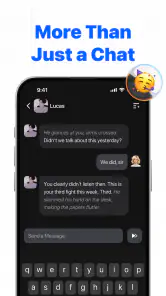
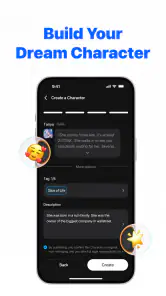
I approached MingloTalk: AI Character Chat expecting a familiar conversational entertainment app, but its appeal is a little broader than simply sending messages to an artificial character. It is built around chatting, playing, and shaping an AI-driven world of your own, which makes it feel closer to an interactive pastime than a standard chatbot. My overall impression is positive: it is most enjoyable when I treat it as a creative space for improvisation, role-play, and casual company rather than as a replacement for a search engine, a serious adviser, or a real social network.
The app comes from shopihi and sits in the entertainment category. It is free to install, with optional purchases ranging from $1.99 to $199.99 per item. That difference matters because the free entry point makes experimentation easy, while the broad purchase range means I would want to understand my own usage before spending anything. With a 4.7 average from around 21 thousand ratings and more than a million installs, it has already attracted a substantial audience. Those figures suggest that its basic idea is resonating, although popularity alone does not guarantee that every conversation style will suit every user.
What using MingloTalk feels like in practice
A conversational playground rather than a conventional messenger
The clearest way to understand this app is to stop comparing it too closely with ordinary messaging services. In a normal messenger, the value comes from reaching another person. Here, the value comes from the interaction itself: the character, the direction of the conversation, and the little choices I make about what kind of exchange I want to create. That shift makes the experience more personal and more imaginative, but it also means the quality depends heavily on how much effort I put into guiding it.
I found that short, vague prompts tend to produce a flatter experience than a message with a clear situation attached. Instead of writing something like “What should we do?”, I get more from describing a setting, a mood, and a small objective. For example, I might establish that two characters are waiting out a storm in a quiet train station and need to decide whether to trust a mysterious announcement. That gives the conversation somewhere to go without forcing it into a rigid script. This is one of the app’s most useful practical lessons: the quality of the world often begins with the quality of the setup.
That approach also makes MingloTalk accessible to people who do not consider themselves writers. I do not need a polished story outline. A few concrete details are enough to create momentum, and I can adjust the direction through ordinary replies. The app’s entertainment value comes from that low-pressure back-and-forth. I can play for a few minutes, return later to a different idea, or let a conversation develop into something more elaborate when I have time.
Where the creative side is strongest
The strongest use case is casual role-play with a clear premise. I can use a character conversation to test dialogue, explore a fictional relationship, rehearse a difficult social situation, or simply pass time with an unusual scenario. For someone who enjoys interactive fiction but does not want to learn a full game system, this is a lighter and more immediate option. There is no need to understand a complicated ruleset before starting; the conversation itself becomes the interface.
I also see value for people who keep abandoning creative projects because the blank page feels intimidating. MingloTalk gives me a responsive starting point. I can ask a character to challenge an idea, introduce a complication, or react to a decision, then use that response as material for my own writing. I would not treat the generated exchange as finished literature, but it can be a useful spark. The important distinction is that the app works best as a collaborator for brainstorming, not as an author whose output should be accepted without judgment.
A less obvious use is practicing tone. I can try the same situation with a playful, formal, suspicious, or dramatic approach and see how the exchange changes. That makes the app useful for exploring how wording affects a conversation. It is not a substitute for professional communication training, but it can help me notice whether a prompt is too vague, too aggressive, or missing the context needed for a meaningful reply.
A realistic everyday scenario
Imagine I have twenty minutes after dinner and want something more engaging than scrolling through short videos. I can open the app, choose a conversational direction, and begin with a small scenario rather than committing to a long session. Perhaps I ask the character to help me plan a fictional expedition, then turn the planning into a playful disagreement about which route is safest. If the exchange becomes repetitive, I can introduce a new problem or stop and return another day.
That kind of use suits the app well because it does not demand a large block of uninterrupted attention. It can fill a short break, but it also has enough imaginative room for a longer session. I would keep expectations realistic, though. If I want a tightly designed story with carefully balanced challenges, a traditional narrative game will probably feel more satisfying. MingloTalk offers flexibility in exchange for less structure.
How it compares with familiar alternatives
Compared with a standard chatbot, MingloTalk is more clearly aimed at entertainment and character-centered interaction. A general assistant is usually better for direct explanations, organized tasks, and practical answers. I would not open this app first to compare products, calculate a budget, or verify an important fact. Its strength is the feeling of entering an imagined exchange rather than receiving a utility response.
Compared with social media, it removes much of the pressure associated with public posting, audience reaction, and maintaining a visible profile. That can make experimentation feel easier. At the same time, it lacks the unpredictability and genuine mutuality of talking with another person. If my goal is friendship, community, or a real exchange of lived experience, a social platform or private messenger remains the better choice.
Compared with interactive fiction and story games, the app is more open-ended. I can steer the conversation in directions that a prewritten game might not anticipate. The trade-off is that a dedicated game generally provides stronger pacing, clearer consequences, and more polished narrative control. I see MingloTalk as a flexible improvisation tool, while a traditional story game is usually a more finished entertainment product.
Small techniques that improve the experience
My first practical tip is to give the conversation a simple goal. “Make this interesting” is too broad, while “convince me to enter the abandoned theater before midnight” creates a useful direction. A goal gives the exchange tension and makes it easier to recognize when the conversation is drifting.
My second tip is to introduce constraints deliberately. Limiting the setting, mood, or available choices can make the interaction more coherent. For example, requiring the characters to solve a problem without leaving one room encourages more inventive replies than allowing the scenario to expand without boundaries. This is a meaningful trade-off: freedom is attractive, but too much freedom can make the exchange lose its shape.
My third tip is to treat the character as a scene partner, not an unquestionable authority. If a reply contradicts an earlier detail, I would correct it directly and restate the important context. I would also avoid assuming that a confident response is necessarily accurate, especially if the conversation touches on health, money, law, or personal safety. The app is designed for entertainment, and that framing should guide how seriously I take its answers.
A fourth useful habit is to end a session with a clear stopping point. I might ask for a brief recap of the fictional situation or state what should happen next time. That gives me a cleaner way to resume than relying on memory alone. It also prevents a casual conversation from turning into an endless stream of disconnected replies.
The meaningful limitations
The biggest weakness is the same quality that makes the app appealing: openness. Without a strong premise, the experience can feel directionless. I have to provide enough creative steering to keep the exchange lively, and not every user will enjoy doing that. Someone looking for instant, polished entertainment may prefer a game with defined levels, objectives, and rewards.
Consistency is another concern inherent in this kind of experience. A character may respond well to one idea and then handle a later detail less convincingly. When continuity matters, I need to repeat key information or gently correct the direction. That interruption can break immersion, particularly in a serious role-playing scenario. The app is more forgiving when I approach it as improvisation instead of expecting a perfectly maintained fictional world.
The mature rating is also important. At 17+, this is not an app I would recommend casually to younger users, and adults should still think about whether its themes and conversational possibilities match their comfort level. I would be especially careful before allowing a teenager to use it without understanding the nature of AI character interactions. The age label should be treated as a real part of the decision, not as a minor store detail.
The purchase model deserves attention as well. The app is free, which lowers the barrier to trying it, but optional items can cost from $1.99 up to $199.99. I would not buy anything impulsively. A sensible approach is to use the free experience first, decide whether the conversations genuinely fit my routine, and then set a personal spending limit. The presence of a high-priced option does not automatically make the app poor value, but it does make deliberate purchasing more important.
Device compatibility is relatively broad because the app supports Android 7.0 and later. That helps people using older phones, although the experience can still vary depending on the device and the demands of the current version. The version available now is 1.0.8, so I would keep the app updated through the normal store process rather than assuming an older installation will behave identically.
Who should use it and who should skip it
I would recommend MingloTalk to adults who enjoy character chat, improvisation, and creating scenarios from a few ideas. It is particularly suitable for someone who wants a flexible entertainment app that can shift between playful conversation, fictional problem-solving, and creative brainstorming. Writers, role-playing fans, and people who like experimenting with dialogue may find more depth here than a casual user expecting a simple question-and-answer tool.
I would also recommend it to people who prefer private, low-pressure interaction over public social platforms. It can be a comfortable place to explore an idea without worrying about likes, followers, or an audience. That does not make it a replacement for human connection, but it can serve a different purpose: a responsive creative companion for moments when I want interaction without social obligations.
I would skip it if I mainly want reliable factual research, professional advice, or a structured game with measurable progression. A search tool, a specialist app, or a conventional narrative game would be a better fit in those situations. I would also skip it if I dislike guiding conversations myself. The app rewards participation; it is not at its best when I expect it to entertain me perfectly with no input.
My final assessment
After spending time with it, I see MingloTalk as a promising entertainment app with a clear identity: it turns AI conversation into a flexible space for character interaction and personal world-building. Its strongest moments come from a good premise, a little creative direction, and a willingness to treat the exchange as play rather than as a formal service. That combination makes it more engaging than a generic chatbot for imaginative use, even though it is less dependable for practical tasks and less polished than a fully authored game.
The free starting point, broad device support, and strong user response make it easy to try, while the mature age rating and optional spending range call for sensible boundaries. I would begin with short sessions, use specific prompts, avoid treating replies as authoritative information, and decide on purchases only after seeing whether the app adds real value to my routine.
My verdict is favorable with a clear condition: MingloTalk is worth trying if you want an AI character playground, not if you want a universal assistant or a complete story game. For the right audience, its freedom is the main attraction. For everyone else, that same freedom may feel like work. I would recommend it to adults who enjoy shaping conversations and fictional worlds, provided they approach it with curiosity, realistic expectations, and control over their spending.
Pros
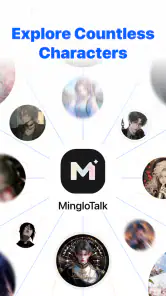
- Wide range of AI characters with different personalities and conversation styles.
- Simple interface makes it easy to start chats without a complicated setup.
- Useful for casual entertainment
- roleplay
- and creative conversation ideas.
- Conversations can feel more personalized as characters adapt to your messages.
- New users can quickly explore the app and test several chat experiences.
Cons
- Some characters or features may require in-app purchases or a subscription.
- AI replies can occasionally feel repetitive
- inaccurate
- or out of character.
- Chat quality depends heavily on the clarity and creativity of your prompts.
- Long conversations may lose context or produce inconsistent responses.
- Privacy-conscious users should review how chat data and personal details are handled.

- Category
- Entertainment
- Version
- 1.0.8