Magic: Fantasy Roleplay Chat
- 5.55K
- 4.6
- Installs
- 1.00M
- Price
- Free

Screenshots



Analysis by Reviewed
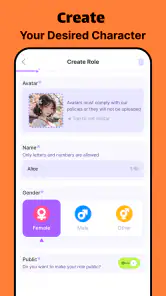
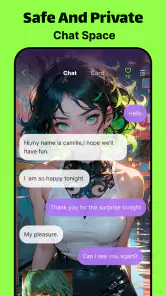
I approached Magic: Fantasy Roleplay Chat as an entertainment app rather than a conventional game. Its appeal is not about beating levels or collecting a high score. It is about stepping into fantasy conversations and seeing where an exchange can lead. That makes the choice quite personal: if you enjoy imagination, character-driven scenes, and interactive storytelling, it can be an easy app to pick up. If you want a structured adventure with clear objectives, it may feel too open-ended.
The app is free to install, carries a Mature 17+ rating, and comes from Digital Fun LLC. It has built a sizeable audience, with more than a million installs and an average rating of 4.6 from roughly thirty-nine thousand ratings. Those figures suggest that the concept has found a real audience, but they do not remove the need to decide whether conversational fantasy is actually your kind of entertainment.
What to consider before choosing a fantasy chat app
The first question I would ask is what you want to do during a short session. With a traditional fantasy game, I usually expect controls, progression, missions, and some kind of win condition. Here, the main activity is conversation. The enjoyment comes from writing a prompt, responding to a character or situation, and shaping the tone of the exchange yourself.
That difference matters more than the fantasy theme. Someone looking for a relaxing creative outlet may find the open format liberating. Someone who prefers a carefully written campaign may instead feel that the app asks too much of the user. You are not simply consuming a finished story; you are helping create the direction, mood, and pace of one.
I also considered how much effort the experience demands. A chat-based fantasy app is easy to start, but a good session often depends on giving the conversation useful direction. A vague opening can lead to a bland exchange, while a prompt with a setting, a goal, and a relationship between characters gives the scene more shape. In practice, the app rewards users who enjoy experimenting with wording.
Another decision point is age suitability. The Mature 17+ label is important here. I would not treat this as a general-audience fantasy app for children or younger teenagers, and I would be careful about handing it to someone without explaining that its themes and conversations are intended for adults. That rating alone should be part of the download decision, not an afterthought.
The current release is version 2.3.5 and supports Android 7.0 or later. That gives the app a fairly broad compatibility range for Android users, although anyone with an older device should check the operating system before expecting to install it. Since the app is also available in the wider mobile-app space, iPhone users should make their decision from the relevant platform listing rather than assuming Android requirements apply to them.
How I found the strongest use cases
My favorite way to approach this kind of app is with a small, specific scenario instead of a huge story outline. For example, I might begin with a tired courier arriving at a city gate after sunset, carrying a letter that could start a political crisis. That gives the conversation several immediate hooks: who is watching, whether the guard believes the courier, and what happens if the letter is opened.
This workflow is more effective than typing something broad such as “start a fantasy adventure.” The narrower opening creates a problem that can develop naturally. I can then decide whether to negotiate, lie, investigate, or leave. The practical insight is that the app works best when I treat each message as a scene choice rather than a request for a complete novel.
A second useful approach is to set boundaries early. I can establish the character’s personality, the desired tone, and the kind of story I want to avoid. That helps when I am looking for light banter, mystery, dramatic tension, or a more serious roleplay session. Without those signals, the conversation may drift away from the mood I had in mind.
I also found that short prompts are easier to manage than long instructions packed with rules. A concise message containing the location, immediate goal, and emotional tone gives me room to react. Overloading the opening can make the exchange feel more like filling out a form than entering a fantasy scene.
Where the app is most enjoyable
The biggest strength is immediacy. I do not need to learn a complicated control scheme or understand a large fictional universe before beginning. I can open the app, choose an imaginative direction, and start shaping a conversation. That makes it well suited to short breaks, especially when I want something more engaging than passively scrolling through entertainment feeds.
It is also useful for people who enjoy writing but do not always have the energy to create an entire story alone. The conversational format gives me something to react to. I can test a character voice, explore a conflict, or see whether a setting has enough potential to become a longer piece of fiction. In that sense, it can function as a low-pressure creative playground.
Another advantage is the flexibility of the roleplay format. I am not locked into one type of fantasy experience. One session can lean toward exploration, another toward dialogue, and another toward a tense decision at the center of a fictional conflict. The value comes from how much control I want to exercise. I can guide the exchange closely or allow it to surprise me.
This makes the app particularly appealing to readers who like interactive fiction but want more freedom than a branching story usually provides. In a standard choice-based adventure, the available options are written in advance. Here, the pleasure is trying an unexpected response and seeing how the scene develops. That freedom is the reason I would recommend it to a friend who enjoys improvisation.
It can also work as a social icebreaker for friends who enjoy collaborative storytelling. One person can suggest a setting, another can introduce a complication, and both can compare how they would respond to the same fictional situation. I would still keep the Mature 17+ rating in mind, but among adults it can turn a quiet evening into a shared creative exercise without requiring a board, dice, or a lengthy setup.
Practical habits that improve the experience
I recommend keeping a simple mental “story anchor” during a longer session. That anchor might be the character’s main objective, a promise they made, or a secret they are protecting. Whenever the conversation starts wandering, I can bring the next message back to that anchor. This prevents the roleplay from becoming a collection of disconnected fantasy moments.
It also helps to introduce only one major complication at a time. If I add a haunted forest, a royal conspiracy, a missing companion, and a magical artifact in the same message, the scene has too many directions competing for attention. A slower rhythm gives each development more weight and makes my choices feel more meaningful.
For a quick everyday scenario, I could use the app during a commute or while waiting for an appointment. I might create a ten-minute scene in which a traveler has to decide whether to trust a stranger at a roadside inn. I would set one objective, play through a few exchanges, and stop at a natural turning point. This is a better fit for the app than expecting a complete epic in one sitting.
Another tip is to change the role I play when a session feels repetitive. Instead of always being the heroic adventurer, I might become a reluctant witness, a suspicious archivist, or a minor official caught between two factions. Smaller roles often create more interesting conversations because they depend on observation, persuasion, and difficult compromises rather than constant action.
Finally, I would treat the app as a place to experiment, not as an authority on fantasy lore. If I want a precise, established setting with carefully researched rules, I would use a dedicated source or a traditional roleplaying system alongside it. The conversational experience is strongest when I value invention and responsiveness over strict continuity.
Where other entertainment options may fit better
The usual alternatives in this category divide into a few different experiences. Interactive fiction gives you authored branches and a stronger sense of literary pacing. Story-heavy role-playing games offer defined mechanics, visual worlds, and progression. Multiplayer roleplay communities provide human unpredictability and social connection. A conversational fantasy app sits between these options: more open than a fixed story, less mechanically structured than a full game, and usually less socially demanding than joining other players.
That middle position is both its appeal and its limitation. If I want a polished campaign with memorable set pieces, a conventional role-playing game is probably the better choice. If I want to read a carefully edited narrative, interactive fiction may feel more satisfying. If the main attraction is meeting real people and building an ongoing group story, a community-based alternative will offer something this app cannot replace.
I would also skip it if I dislike improvising. Some users want the app to provide a clear objective every time they open it. Here, the creative responsibility remains part of the experience. Even when the conversation is enjoyable, I may need to redirect it, clarify what I want, or decide which thread deserves attention.
People who are sensitive to mature themes should also think carefully before installing. The 17+ rating makes this unsuitable as a casual recommendation for younger users. Parents looking for a safe fantasy activity for children should choose a clearly age-appropriate alternative instead of relying on the magical setting alone.
There is a further trade-off with conversational entertainment: the quality of a session can vary more than it does in a fixed game. A scripted adventure has been arranged by its creators, while an open exchange can become brilliant, ordinary, or awkward depending on the direction of the conversation. I see that variability as part of the experiment, but users who want consistent production value may prefer an authored experience.
Free access, purchases, and the cost of changing apps
The free entry point makes trying the concept straightforward. I can decide whether fantasy conversation suits me without committing to an upfront purchase. That is useful because this is a preference-driven category; a person may know within a few sessions whether they enjoy shaping scenes through dialogue.
There are in-app purchases ranging from $1.99 to $49.99 per item. I would therefore test the free experience first and decide whether the app has become part of my regular entertainment before spending anything. The broad price range means it is especially important to understand my own usage pattern rather than buying impulsively during an enthusiastic session.
Switching to another app is easy in one sense: the basic skill of writing prompts and guiding scenes transfers well to other conversational or interactive storytelling tools. The harder part is losing momentum. If I have developed a favorite character, a particular tone, or a continuing scenario, moving elsewhere may require rebuilding that context from the beginning.
That is why I would keep a short personal note with the essentials of any roleplay I genuinely want to continue: the setting, the character’s goal, important relationships, and unresolved questions. This is a practical safeguard, not a feature claim. It makes changing platforms less frustrating and helps me return to a session after a break without having to reconstruct the whole idea from memory.
I would also avoid judging the app from one rushed conversation. The format depends on how deliberately I frame the opening and how willing I am to steer the exchange. A fair trial would involve several different approaches: a short mystery, a character-focused dialogue, and a more adventurous scene. If none of those feels engaging, another category of entertainment is likely a better investment of time.
My recommendation for the right kind of user
After weighing the alternatives, I see Magic: Fantasy Roleplay Chat as a focused choice for adults who want interactive fantasy without the commitment of a full game. Its strongest audience is made up of curious, imaginative users who enjoy writing responses, testing personalities, and letting a scene evolve through conversation.
I would recommend it to a friend who wants a creative break, especially someone who likes fantasy but does not always want combat systems, maps, inventories, or a long campaign. I would suggest starting with a compact scenario, giving the conversation a clear emotional direction, and judging the experience by how much control and improvisation feel enjoyable.
I would not recommend it to a child, to someone seeking a strictly authored story, or to a player who needs measurable progression in every session. Those users are likely to be happier with an age-appropriate interactive novel, a traditional role-playing game, or a social roleplay platform built around real participants.
For everyone else, the free download makes experimentation reasonable, while the Mature 17+ rating and optional purchases deserve attention before settling in. Digital Fun LLC has built an app around a simple but flexible idea: fantasy becomes the setting, and the conversation becomes the game. My clear advice is to try it when you want to create a scene, not when you are looking for a finished adventure.
Pros
- Interactive roleplay chats make fantasy scenarios feel personal.
- A broad range of magical settings supports different storytelling styles.
- Character-driven conversations can inspire creative writing ideas.
- Easy to experiment with choices without risking a game-over.
- Suitable for short sessions when you want quick fantasy entertainment.
Cons
- AI responses may occasionally break character or contradict earlier details.
- Some conversations can become repetitive during longer roleplay sessions.
- The quality of stories depends heavily on how clearly prompts are written.
- Fantasy content may not appeal to users seeking structured gameplay.
- Certain features or extended usage may require in-app purchases.

- Category
- Entertainment
- Version
- 2.3.5