Local Date – Flirt, Chat, Meet
- 194.00
- 4.6
- Installs
- 50.00K
- Price
- Free

Screenshots







Analysis by Reviewed
Choosing a social app for meeting people nearby is less about collecting another profile and more about deciding what kind of interaction you actually want. Local Date is aimed at people who would rather move from browsing to a real-time conversation than spend days exchanging carefully edited introductions. I found that focus useful, but it also makes the app a more specific choice than a general-purpose social network or a traditional dating service.
It is a free social app from eGame Lix, with optional in-app purchases ranging from $1.99 to $39.99 per item. The app is intended for mature users aged 17 and over, and it requires Android 5.0 or later. Its current version is 1.1.0, and it was released on November 20, 2025. Those details matter because this is not something I would recommend casually to a younger user or to someone who wants a completely feature-free experience.
How I would decide whether Local Date fits
The real question is how quickly you want to connect
My first decision criterion would be pace. Some dating and social apps are built around long profiles, filters, and extended messaging. That can be comfortable when I want time to assess someone before replying. Local Date takes a more immediate approach. Its appeal is strongest when I am open to meeting people in the moment and do not want every interaction to begin with the same small talk.
That does not automatically make faster better. A quick conversation can feel natural, but it can also leave less room to understand someone’s intentions. I would use this app when I am comfortable making an early judgment about whether a conversation feels respectful and worthwhile. If I prefer a slow, highly structured introduction, another category of app may suit me more.
Location and timing change the experience
The idea of meeting real people in real time works best when there are enough active users around me. In a busy area, the local focus can make the app feel more relevant than a large service showing people from far away. In a smaller town, during quiet hours, or while travelling, the same focus may make the available pool feel limited.
This is an important trade-off that I would consider before paying for anything. A purchase cannot create a lively local community where few people are using the app. I would first spend time checking whether conversations appear active at the hours I normally use social apps. That simple test tells me more than the app’s overall popularity.
What I want from a profile matters too
Local Date is a better match for someone who can communicate clearly in a short exchange. If my profile or opening message is vague, the app’s faster rhythm does not solve the problem; it simply makes the conversation easier to abandon. I would prepare a brief, specific introduction that gives another person something to respond to, rather than relying on a generic greeting.
More From Our News Desk

Clash of Clans Is Won Between the Battles

Android Auto Makes the Case for Quieter Car Software

MobiOffice: Transforming Mobile Productivity with Seamless Integration

EA SPORTS FC™ Mobile Soccer: Redefining Mobile Sports Gaming

How Microsoft OneDrive Became a Mobile Productivity Giant

How Google Translate Breaks Language Barriers Effortlessly
For example, if I were using it after work, I might mention that I am looking for a relaxed conversation nearby rather than pretending I already know exactly what kind of relationship I want. That approach keeps the interaction honest and helps separate people who are interested in the same type of contact from people who are not.
Safety should be part of the decision
Because the app is designed around meeting people, I would treat the first chat as a screening step, not as proof that someone is trustworthy. I would avoid sharing my home address, financial details, or identifying documents. If I decided to meet, I would choose a public place, tell someone I trust where I am going, and keep my own transport or exit plan.
The mature age rating is another reason I would not present this as a casual app for everyone in a household. Parents looking for a general friendship platform for teenagers should choose a service designed for that audience instead. Local Date makes more sense for adults who understand the difference between online chemistry and real-world trust.
Where the app feels strongest
The clearest strength is its focus. I did not approach it expecting a complete replacement for every social platform. I saw it as a tool for reducing the distance between discovering someone and starting a live interaction. That narrow purpose gives the experience a more direct character than a feed-based network, where meeting someone can be buried beneath posts, reactions, and unrelated content.
The best reason to try Local Date is its local, immediate style. If I am tired of writing elaborate introductions that never lead anywhere, the app’s concept feels refreshing. It encourages me to judge the quality of a conversation rather than the amount of information packed into a profile.
A realistic everyday use case
Imagine finishing work on a Friday and wanting to talk with someone nearby before deciding whether to make evening plans. With a conventional dating service, I might scroll through profiles, send several messages, and wait for replies. With Local Date, I would open it with a more modest goal: find one respectful conversation, see whether the exchange feels natural, and only then consider meeting.
That workflow is useful because it keeps the commitment small. I am not promising a date simply because I started chatting. I am testing whether there is enough shared interest to continue. If the conversation is flat or uncomfortable, I can leave without having invested an entire evening in it.
Three practical habits that improve the experience
First, I would use the app when I actually have time to respond. Real-time interaction loses much of its value if I open a conversation while rushing between appointments and then disappear. Even a short message explaining that I will reply later is better than creating confusion.
Second, I would treat the first few exchanges as a compatibility check rather than an interview. Asking one concrete question about a person’s plans or interests is more useful than sending a string of generic compliments. This also reveals whether the other person responds to what I say or simply pushes the conversation toward their own agenda.
Third, I would set a personal limit before exploring paid options. Since the app is free to start but includes purchases from $1.99 to $39.99 per item, I would not buy anything just because a conversation feels promising. I would first confirm that the local activity and interaction quality justify spending money. This is a better safeguard than assuming paid access will fix an uninteresting experience.
What the rating and adoption suggest
The app holds a 4.6 average from around 2.3 thousand ratings, with roughly 194 written reviews. It has passed 50 thousand installs. I read those figures as encouraging signs of interest, but not as a guarantee that it will feel equally active in every location.
Ratings are especially easy to misread for a location-dependent social app. A person may enjoy the interface while living somewhere with a strong user base, whereas another person may find fewer useful connections in a quieter area. I would use the rating as a reason to investigate, not as a substitute for checking whether the app fits my own routine.
Where a traditional dating service may be better
A conventional dating app may be the better choice if I want detailed profiles, extensive search controls, or a slower path to conversation. Those services often make it easier to compare preferences before sending a message. That structure can reduce uncertainty for people who dislike spontaneous interaction.
The trade-off is that a detailed profile can encourage endless browsing. I may become focused on finding the perfect match on paper instead of learning whether I can hold a comfortable conversation with a real person. Local Date is more appealing when I value immediacy over exhaustive comparison.
Where a general social network may be better
A general social network is usually more suitable for maintaining existing friendships, following communities, and sharing ongoing updates. I would choose that category if my main goal were group discussion or a broad social feed rather than meeting nearby people through direct interaction.
Local Date has a clearer purpose, but that clarity can also feel limiting. It is not the app I would open when I want news from friends, hobby groups, or a public timeline. Its value depends on whether I want a focused social encounter instead of a wide online environment.
Where anonymous chat services may be better—and worse
Anonymous chat platforms can offer a lower-pressure way to talk because users may reveal less about themselves. That can be attractive when I want casual conversation with no expectation of meeting. However, anonymity can make it harder to judge intentions and easier for people to behave carelessly.
Local Date’s local-meeting angle gives conversations a more practical direction, but I would not confuse that with built-in trust. If I want completely casual, consequence-free chatting, an anonymous service may fit better. If I want the possibility of a genuine nearby connection, Local Date has the more relevant purpose, provided I keep sensible boundaries.
What switching really costs
Moving to Local Date does not only mean installing another app. It means changing how I evaluate people. Instead of spending most of my effort refining filters and profiles, I need to become better at noticing conversational quality early. That can feel efficient, but it requires confidence and a willingness to end interactions that do not feel right.
There is also a time cost. A real-time service can encourage me to check repeatedly, especially if I am hoping to catch someone active nearby. I would avoid turning that into a habit by choosing specific times to use it. If I cannot resist constant checking, a slower service with less immediate feedback may be healthier for my routine.
The financial cost is easier to control because the app is free to download and use at its basic level. Still, the range of optional purchases means I would decide in advance what I am willing to spend. I would never treat a purchase as a way to obtain attention or guarantee a meeting. The useful question is whether the free experience already shows enough local activity to justify any extra convenience.
Who should skip it
I would skip Local Date if I am looking for a carefully managed matchmaking process, a professional networking tool, or a private journal-like social space. It is also a poor fit if I dislike meeting people from online conversations or if I expect every nearby user to be available exactly when I am.
I would be cautious about recommending it to someone who tends to share personal information too quickly. The app’s direct style can make interactions feel familiar before real trust exists. A person who needs strong structure, extensive identity context, or a long decision period may feel more comfortable elsewhere.
Who is most likely to enjoy it
I think it is best for an adult who wants to meet people in the same area, prefers short and active conversations, and is comfortable deciding quickly whether to continue. It can also suit someone who has become frustrated with matches that never progress beyond polite messaging.
The strongest users will bring their own judgment and boundaries. They will use the app to open a door, not to outsource every decision about compatibility or safety. That mindset makes the local focus useful without expecting it to perform miracles.
My recommendation after weighing the alternatives
Local Date – Flirt, Chat, Meet is worth trying if the idea of nearby, real-time conversation matches the way I naturally socialize. I like that it has a distinct purpose rather than trying to be an entire online life. The free starting point also makes it reasonable to test the local activity before considering optional purchases.
I would not recommend paying immediately. I would first use the app at the times I am most likely to meet someone, assess whether conversations feel genuine, and decide whether the pace suits me. If the local pool is quiet or I want more detailed compatibility tools, a traditional dating service is likely the better investment of my attention.
My final view is positive but conditional. This is a focused social app, not a universal answer to dating or friendship. Its 4.6 average and growing install base make it interesting enough to explore, while its mature audience, location dependence, and paid extras call for a measured approach. If I wanted a direct route to meeting people nearby, I would give it a fair trial. If I wanted maximum control, slower introductions, or broad community features, I would choose a different category instead.
Local Date – Flirt, Chat, Meet Frequently Asked Questions
Is Local Date – Flirt, Chat, Meet available for my device?
Local Date is an app for Android devices running version 5.0 or later. Before downloading, check that your device meets this requirement and has enough available storage. The app is in the Social category, and its mature dating focus is reflected in its 17+ age rating, so it may not be suitable for younger users.
Who is Local Date designed for, and what should users expect?
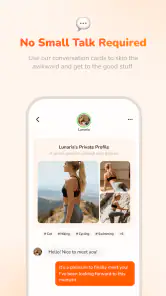
Local Date is aimed at adults interested in flirting, chatting, and discovering people nearby. Its focus is on making local connections and helping users move beyond small talk toward real-time conversations. As with any dating app, your experience will depend on who is active in your area and how comfortable you are sharing information and interacting with new people.
What is Local Date – Flirt, Chat, Meet?
Local Date – Flirt, Chat, Meet is a dating and social discovery app designed to help users connect with people nearby. After creating a profile, you can browse potential matches, exchange messages, and decide whether you would like to meet in person. The experience generally focuses on location-based connections, so the number and quality of available profiles may vary depending on your area.
How does matching and chatting work in Local Date?
The app typically allows you to view member profiles and show interest in people you find appealing. Depending on the available features and your account type, communication may begin after mutual interest or may include other interaction options. Before downloading, check the current in-app rules, messaging limits, and subscription details, as these can change with updates and may differ between free and premium users.
Is Local Date – Flirt, Chat, Meet free to use?
You can usually download Local Date without paying, and some basic profile-browsing or interaction features may be available at no cost. However, dating apps commonly reserve advanced tools, unlimited messaging, visibility boosts, or other benefits for paid plans or virtual credits. Review the pricing page carefully before subscribing, including renewal terms, trial conditions, and how to cancel recurring payments. Optional in-app purchases range from $1.99 to $39.99 per item, so check the displayed price before confirming a purchase.
Pros
- Simple interface makes browsing profiles quick and easy.
- Location-based matching helps find people nearby.
- Chat features support conversations after mutual interest.
- Useful filters can narrow down potential matches.
- Suitable for casual dating and meeting new people.
Cons
- Some features may require a paid subscription or in-app purchases.
- The quality of profiles can vary by location.
- You may encounter inactive or incomplete user accounts.
- Location access may raise privacy concerns for some users.
- Safety depends on verifying matches before meeting in person.
- Category
- Social
- Version
- 1.1.0