Joyflix Plus
- 282.00
- 4.5
- Installs
- 100.00K
- Price
- Free

Screenshots
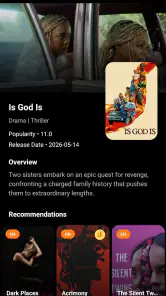

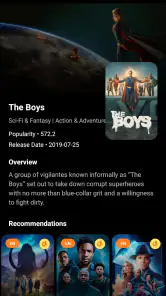
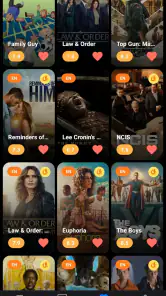

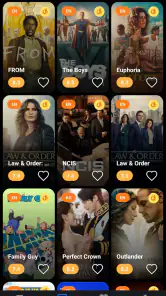
Analysis by Reviewed
I approached Joyflix Plus as a lightweight entertainment companion rather than a full streaming service. Its purpose is to give me basic information about movies and TV shows, so the useful question is not whether it replaces a streaming platform—it does not—but whether it remains handy after the first few curious visits. My experience is that its appeal comes from reducing the effort involved in deciding what to investigate next, while its long-term value depends heavily on how often I want a simple reference point instead of a complete viewing experience.
That distinction matters. I did not use it expecting playback, a large personal library, or the depth of a dedicated film database. I used it when I wanted to orient myself around entertainment choices: remembering the name of a show, checking what a movie is about, or getting a quick starting point before choosing where to watch. For that narrow job, the app is easy to understand. For anything more ambitious, I found myself reaching for other tools.
What Joyflix Plus feels like during the first week
The first few sessions are naturally the most satisfying because the app fits a familiar moment: someone mentions a movie, I recognize only part of the title, and I want basic context without opening several unrelated services. Its store short description is simply “Joyflix Plus,” while the practical role is clearer once I use it as a compact movie and TV information app. The entertainment category is appropriate, but I would think of it more as a discovery and reference utility than as entertainment in the same way as a video platform.
During an initial week, I can imagine using it in several small bursts. I might check a title before adding it to an evening shortlist, look up a series while discussing it with a friend, or use it to settle a quick question before deciding whether to search for the program elsewhere. These are modest tasks, but they are exactly the kind of tasks where a focused app can be more comfortable than a general web search.
The strongest early impression is simplicity. Basic information is a useful promise because it sets a reasonable expectation: I am not opening the app to manage every part of my viewing life. I am opening it to get oriented. That makes the first-week experience approachable for people who dislike complicated entertainment dashboards or who do not want to create a detailed catalog of everything they have watched.
It is also free, which removes the most obvious barrier to trying it. I can install it, inspect its usefulness, and decide whether it deserves a place on my phone without committing to a subscription. That is particularly helpful for occasional viewers. Someone who watches only a few movies each month may appreciate a free reference tool more than a feature-heavy service designed around daily engagement.
The app has a Teen content rating, so I would still treat it as an entertainment reference app for an older audience rather than assume it is designed for young children. Parents looking for a child-focused movie guide should make their own judgment about whether the content and presentation suit their household. The rating is a reminder that “basic information” does not automatically mean “appropriate for every age.”
More From Our News Desk

Clash of Clans Is Won Between the Battles

Android Auto Makes the Case for Quieter Car Software

MobiOffice: Transforming Mobile Productivity with Seamless Integration

EA SPORTS FC™ Mobile Soccer: Redefining Mobile Sports Gaming

How Microsoft OneDrive Became a Mobile Productivity Giant

How Google Translate Breaks Language Barriers Effortlessly
One useful habit appeared quickly: I found it better to use the app before I had already committed to a title. If I open it after choosing a movie, it has less to contribute because my decision is mostly made. If I use it earlier—when I have a vague mood but no firm choice—it can help turn an uncertain search into a smaller set of possibilities. That is a more valuable workflow than repeatedly checking titles I already know I will watch.
Another practical use is conversation. When a friend recommends a series using an incomplete title or a detail from its plot, a basic information app can act as a quick confirmation step. I do not need a full review essay at that moment. I need enough context to recognize the title and decide whether it is worth investigating further. Joyflix Plus makes more sense in that situation than as a replacement for critics, fan communities, or streaming search.
The first-week weakness is equally clear: novelty can make any simple catalog feel more useful than it will become. I can browse with interest for a while, but browsing alone is not a lasting reason to return. If the app does not become part of a real routine—planning a movie night, checking recommendations, or keeping a short list—my visits become occasional and reactive. The initial convenience is real, but it needs a repeated use case to survive.
Who benefits most from the simple approach
I think Joyflix Plus suits casual viewers, households that regularly debate what to watch, and people who want a quick layer of information before moving to a streaming service. It may also help someone who finds broad web searches distracting. Instead of sorting through unrelated pages, the user begins with an entertainment-focused destination and then decides what to do next.
I would be less enthusiastic about it for a serious film enthusiast who wants detailed credits, extensive editorial commentary, technical viewing information, or a carefully organized personal archive. A specialist database or a mature watchlist service will usually be a better fit for those needs. The app’s value is not that it covers every angle; its value is that it keeps the first step uncomplicated.
It is also not the right choice if the main goal is watching content inside the same app. Joyflix Plus should be treated as an information layer, not as a substitute for the streaming subscriptions, rental stores, or broadcaster apps that actually deliver movies and shows. That boundary prevents disappointment and makes the app easier to judge fairly.
Does it keep earning space after the first month?
Long-term usefulness comes down to repetition. A movie information app earns a permanent place on my phone only if it saves enough time to justify another icon and another habit. With Joyflix Plus, the recurring value is strongest for people who frequently make viewing decisions with incomplete information. If I often ask “What is this?” or “Is this the show someone just mentioned?”, the app can remain useful. If I already know exactly what I want to watch, I have fewer reasons to open it.
I would build a small routine around it rather than browse without a purpose. For example, before the weekend, I could collect a few possible titles from conversations, use the app to refresh my memory about them, and then move to the appropriate viewing service. This turns a vague search into a repeatable three-step process: gather possibilities, check basic information, and choose where to watch. The app is most valuable in the middle of that process.
A second routine would be useful for shared households. One person can suggest a movie, another can check it, and the group can make a faster decision without everyone searching separately. The benefit is not dramatic on a single evening, but small reductions in friction can matter when the larger problem is indecision. In my view, this is a more believable long-term use case than opening the app every day simply to browse.
There is a trade-off between convenience and depth. Basic information is quick to consume, but it may not answer the questions that become important after the initial identification stage. I may still need another source for availability, detailed reviews, age guidance, cast research, or technical viewing details. That does not make Joyflix Plus ineffective; it means I should use it as the first stop rather than expect it to be the entire journey.
The app comes from Jayhawk Pipeline, L.L.C., and its current version is 1.0.7. That version detail is relevant to anyone deciding whether to form a long-term habit: a newer or early-stage product can feel clean and focused, but its lasting usefulness depends on how consistently the experience stays dependable over time. I would keep my expectations practical and judge it by whether it continues to answer quick questions without adding unnecessary work.
Its audience size suggests that it is not an obscure experiment. The app has over one hundred thousand installs, an average rating of 4.5 from around one thousand ratings, and around two hundred eighty reviews. Those figures make it easier for me to take the product seriously as a usable entertainment tool, although popularity alone cannot tell me whether it matches my habits. A casual reference app can satisfy many people while still being too limited for a power user.
One of the less obvious benefits is that the app can help me separate discovery from commitment. When I search directly inside a streaming service, the service naturally emphasizes what it can play, promote, or place in front of me. A separate information-focused app can give me a moment to think about the title itself before I decide which platform, if any, deserves my attention. That extra pause is useful when I want to avoid choosing something merely because it appeared first.
There is a cost to that separation, though. Moving from Joyflix Plus to another service creates an extra step, and users who prefer an all-in-one experience may see that as needless friction. I would accept the extra step when I am comparing possibilities, but not when I am already certain about my evening choice. This is the kind of trade-off that determines whether the app becomes a weekly tool or an occasional lookup option.
The maintenance question
Maintenance is not only about updates. It is also about whether I need to organize information manually, revisit old entries, or repeat searches every time I use the app. A simple experience can be refreshing because it avoids the work associated with building a large personal library. At the same time, if I want a lasting record of what I plan to watch, I may need a separate watchlist system or note-taking habit.
That makes my ideal workflow deliberately modest. I would not rely on Joyflix Plus as my only memory of recommendations. Instead, I would use it to confirm and understand a title, then keep only the genuinely important choices elsewhere. This prevents the app from becoming another catalog that I must maintain. The less administrative work it creates, the more likely I am to keep using it.
For someone who wants a structured archive, this limitation may become tiring. Dedicated movie trackers generally make more sense when the user wants progress indicators, personal ratings, lists, filters, or a long-term history. Joyflix Plus is better suited to the moment before that organization begins. It helps me decide what deserves attention, but I would not choose it solely because I want a permanent record of my entertainment life.
Compatibility is straightforward for many Android users because the minimum operating system is Android 8.0. That covers a broad range of devices, including phones that are not recent. Still, I would check the phone’s software version before planning to install it on an older device. Compatibility is part of maintenance: an app that works comfortably on the phone I already own is easier to keep around than one that requires a device change.
The free price also changes the maintenance calculation. I do not have to justify a recurring payment if I use the app only when a question arises. That makes occasional use perfectly reasonable. On the other hand, because there is no financial commitment pushing me back, the app must earn repeat visits through convenience alone. If it becomes slower than searching elsewhere or fails to fit my routine, uninstalling it costs me very little.
Where repeated use can become tiring
The main source of fatigue is repetition without progression. If every visit consists of looking up one title and leaving, the experience may remain useful but not especially memorable. I would not expect a basic information app to create a deep sense of discovery by itself. Its job is narrower, and users should decide whether that narrow job occurs often enough in their lives.
Another possible frustration is the handoff to other services. After learning the basic details, I may still need to search multiple platforms to find where a title is available. That is normal for an information reference tool, but it means the app cannot eliminate the full decision process. People who want one search box that identifies a title, explains it, and immediately plays it will probably prefer an integrated streaming ecosystem.
I can also see fatigue appearing when I use the app for questions it was never meant to answer. If I expect extensive criticism, deep production history, comprehensive cast research, or highly personalized recommendations, I am setting myself up for disappointment. The better approach is to use it for orientation, then move to a more specialized source when the question becomes more demanding.
There is a subtle advantage in accepting that boundary. Because I do not expect Joyflix Plus to be everything, I can judge it on speed, clarity, and usefulness in short sessions. That makes the app easier to keep in rotation. The problem begins when a user interprets a focused tool as an incomplete version of a much larger product. It is not necessarily incomplete; it is simply aimed at a smaller task.
My practical tip is to open it with a question in mind. “What is this title?” “Is this the series my friend described?” and “Which of these possibilities should I investigate?” are good prompts. Opening it with no purpose and scrolling indefinitely is less likely to produce lasting value. This small change in behavior makes the app feel more efficient and reduces the chance that the first-week novelty fades into aimless browsing.
I would also avoid using it as the only basis for sensitive viewing decisions. Basic entertainment information is useful for orientation, but families, educators, and viewers with specific content concerns may need more detailed guidance from a source designed for that purpose. The Teen rating is a helpful signal about the intended audience, not a substitute for personal judgment about every movie or show.
My long-term verdict
After looking beyond the initial curiosity, I see Joyflix Plus as a practical supporting app rather than a central entertainment destination. It earns space when I regularly need quick movie and TV information, especially before I move to another service to watch something. It does not earn that space by replacing streaming platforms, detailed databases, or personal watchlist tools.
I would recommend trying it to a friend who often receives vague recommendations, enjoys planning casual movie nights, or wants a free way to begin researching a title without committing to a particular streaming platform. The app’s focused purpose makes it approachable, and its broad Android compatibility makes testing it relatively easy for many users. The best results come from treating it as a short-session helper.
I would tell a serious catalog builder, a viewer seeking deep editorial analysis, or anyone who wants playback and discovery in one place to look elsewhere first. A more specialized alternative will be better when organization, availability, reviews, or viewing history matters more than quick identification. Installing Joyflix Plus alongside such a service can still make sense, but it should not be expected to replace it.
For me, the lasting verdict is conditional but positive: Joyflix Plus earns its place through repeated small conveniences, not through novelty. If those small questions appear in my week, the free app remains worthwhile. If they do not, it becomes an extra icon with little reason to stay. That is an honest limitation, but it is also a clear strength—users can understand exactly where it fits and avoid asking it to do a job better handled by a streaming service or a deeper entertainment database.
In the end, I would keep it available for quick checks and shared viewing decisions, while maintaining realistic expectations about its scope. It is a focused entertainment reference app from Jayhawk Pipeline, L.L.C., and its value is clearest when I need basic context before taking the next step. For the right routine, that is enough to make it useful month after month.
Joyflix Plus Frequently Asked Questions
What is Joyflix Plus and what kind of content does it offer?
Joyflix Plus is an entertainment streaming application designed for watching movies, series, and other video content on a mobile device. Its catalog, categories, language options, and availability may vary depending on your country and the version of the app. Before downloading, check the official store listing to confirm supported devices, current content, and whether the service matches your viewing preferences.
Is Joyflix Plus free to download and use?
The Joyflix Plus app may be free to download, but access to all of its content can depend on the service’s subscription model. Some titles or features may require an account, a paid plan, advertising support, or in-app purchases. Review the pricing information shown in the official Google Play Store or Apple App Store listing before registering, and check renewal terms carefully if a trial is offered.
Can I watch Joyflix Plus on Android and iPhone devices?
Joyflix Plus may be available for Android and iOS, although compatibility depends on the device model, operating system version, and regional availability. Older phones or tablets may not support the latest release. For the smoothest experience, install the application only from an official store, keep your operating system updated, and verify the listed requirements before starting the download.
Does Joyflix Plus require an internet connection, and can videos be downloaded offline?
Streaming on Joyflix Plus generally requires a stable internet connection, especially when watching high-resolution video. Mobile data usage can be considerable, so Wi-Fi is recommended for longer viewing sessions. Offline downloads are not guaranteed and depend on the app’s features, subscription plan, and licensing agreements. Look for a download button inside the official app rather than relying on unofficial copies.
Is Joyflix Plus safe to install and use?
The safest way to use Joyflix Plus is to download it from its verified Google Play Store or Apple App Store page and review the developer information, permissions, privacy policy, and recent user feedback. Avoid modified APK files or websites promising unlocked premium content, as they may contain malware or steal personal information. Use a strong password and avoid sharing account details with others.
Pros
- Simple interface makes browsing movies and shows quick.
- Personalized recommendations help users discover new entertainment.
- Supports multiple profiles for shared household viewing.
- Playback resumes smoothly across supported devices.
- Regular content updates keep the catalog feeling fresh.
Cons
- Catalog availability may vary by country or region.
- Some titles may require a separate premium subscription.
- Video quality can depend heavily on internet speed.
- The app may use considerable storage for offline downloads.
- Older devices may experience slower navigation or playback issues.
- Category
- Entertainment
- Version
- 1.0.7