Instant Borrow - Cash Now
- 902.00
- 4.7
- Installs
- 500.00K
- Price
- Free

Screenshots





Analysis by Reviewed
When an unexpected expense appears, the difficult part is often not the amount itself but the pressure to find an answer quickly. Instant Borrow - Cash Now is a finance app built around that situation, offering a borrowing-focused experience rather than trying to be a complete banking replacement. I approached it as a practical tool for urgent cash needs, paying particular attention to how clearly it presents choices, what the user can control, and where caution is still necessary before accepting any financial offer.
The app is free to install, has an Everyone age rating, and comes from LM GROUPS. It has reached over 500 thousand installs and holds a 4.7 average from around 26 thousand ratings, which suggests that many people find the basic experience useful. Those figures are encouraging, but they are not a substitute for reading the terms of an individual borrowing offer. A finance app can be easy to use and still lead to an expensive decision if someone rushes through the final steps.
What the borrowing experience feels like
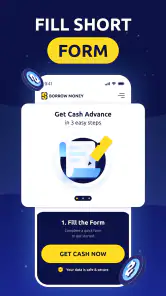
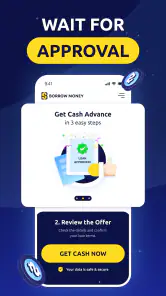
My first impression is that the app is aimed at speed and simplicity. Its short store label, “Instant Borrow,” sets the expectation clearly: this is for people who want to explore borrowing without a long, complicated journey. That focus can be helpful when a bill is due soon, but it also creates a behavioral risk. The faster a process feels, the easier it is to concentrate on receiving money and overlook repayment details.
I would use this app as a starting point for checking an urgent borrowing option, not as an automatic solution. The right question is not simply whether an application appears convenient. I would want to know the total amount to repay, the repayment schedule, any applicable charges, and what happens if payment is late. Those details matter more than a smooth opening screen or a quick application flow.
In everyday use, the most realistic scenario is a short-term gap between an essential expense and the next reliable income date. For example, someone might face an urgent household cost and be considering several ways to cover it. The app may be useful for organizing that search, but I would compare its final terms with a bank overdraft, a credit union option, an existing card facility, or a payment arrangement with the provider before committing.
Trust starts with the decision, not the download
A high rating and a large user base can make an app feel reassuring, and the current 4.7 average is a positive signal. Still, ratings usually describe the overall experience, not whether a particular offer suits every borrower. One person may value a fast application while another may care more about flexible repayment or lower overall cost. I treat the public response as background context rather than proof that borrowing through the app will be affordable for me.
The developer is listed as LM GROUPS, and the app is currently at version 1.0.5. It was released on March 13, 2025, so I would pay attention to update notes and the way the app explains changes over time. A relatively new product can improve quickly, but it is also sensible to review each screen carefully instead of assuming that a familiar interface means familiar financial rules.
The minimum operating system is Android 7.0, which makes the app accessible on many older Android phones. That is useful for people who do not upgrade devices frequently. At the same time, anyone using an older phone should keep the operating system and security tools maintained as far as possible, especially when dealing with personal and financial information.
What I would check before entering sensitive details
My trust test begins before an application is submitted. I look for clear explanations of why information is requested, whether a field is required, and whether there is an obvious way to stop or go back. I also watch for consent boxes that are already selected, vague wording around communications, or screens that make the “continue” action much more prominent than the alternatives.
Those checks are especially important with a borrowing service because the information involved can be sensitive. I would not enter details simply because the app says the process is fast. I would first read the privacy explanation and any consent language shown in the app, then decide whether the request makes sense for the service I am trying to use. If a permission or data request seems unrelated to borrowing, I would pause rather than approve it automatically.
Android’s permission controls can help with this review. I would inspect permissions before completing an application, deny anything that is not needed for the task, and revisit the permission manager afterward. This is not a guarantee about how information is handled, but it gives me a practical way to retain some control over access on my device.
I would also avoid entering financial information while connected to an unsecured public network. That is a simple precaution, but it is easy to forget when an urgent expense creates pressure. A private connection, a screen lock, and a device that is not shared with other people are sensible basics for this type of app.
Controls that matter during an application
The most useful control is the ability to slow down. If the app presents an offer, I would take a screenshot or make a private note of the repayment amount, dates, and conditions before moving ahead. That gives me something to compare with alternatives and reduces the chance of accepting a term I only glanced at.
I would also check whether the app lets me review or correct personal details before submission. A wrong phone number, income figure, or bank detail can create more trouble than a small delay. If an application cannot be edited easily, I would stop and use the available support route rather than submit inaccurate information just to keep the process moving.
Another practical step is to confirm what happens after an application is abandoned. I would look for a sign-out option, remove saved information where the app permits it, and check whether drafts remain accessible on the device. These are small actions, but they are worthwhile when a phone is shared, sold, repaired, or replaced.
After using any finance app, I review the Android app permissions again. I also check my email and bank notifications for activity I recognize. This does not mean assuming something is wrong; it is simply a good habit when a service involves identity and money. Fast access should never mean giving up the ability to review what happened.
Where data sensitivity becomes most important
The most sensitive moment is usually not installation. It is the point where the app asks for information connected to identity, income, contact details, or a payment account. I would read each request in context and avoid treating every prompt as routine. If the app asks me to connect another service, I would consider whether I can continue without doing so and whether the benefit is worth the additional exposure.
I would be particularly careful with contact access. A borrowing application should not automatically receive access to my address book simply because that permission is presented during setup. If a permission is optional, I would leave it disabled. If the app cannot continue without a request that feels excessive, that is a reason for me to reconsider using it.
Notifications deserve attention too. They can be useful reminders, but they may reveal financial activity on a lock screen. I would adjust notification previews so that sensitive details are not visible to anyone who can see my phone. This is a user-side setting rather than a special feature, but it is an important part of using a finance app responsibly.
I would never share a one-time security code, password, or banking login with another person claiming to represent the service. If a message asks me to move a conversation to an unfamiliar channel or to make a payment before I understand the agreement, I would stop and verify the request through an official in-app route. Urgency is often exactly what causes people to skip this check.
Comparing it with familiar alternatives
The main alternative is contacting a bank or credit union directly. That route may feel slower, but it can provide a relationship, established account controls, and a clearer view of how a new commitment fits alongside existing finances. If I already have an approved overdraft or a small emergency facility, I would compare its total cost and repayment rules before using a separate borrowing app.
A credit card can be more suitable for someone who can repay the balance quickly and already understands the interest terms. It can also be a poor choice if the balance will remain unpaid for a long period. The same principle applies here: the convenient option is not automatically the cheaper one. I would compare total repayment rather than focusing only on the amount arriving in my account.
For a modest bill, asking the provider for a payment arrangement may be better than taking a loan. Some expenses can also be delayed, reduced, or covered through an existing emergency fund. I know that these alternatives are not available to everyone, but checking them takes little time and may avoid creating a new repayment obligation.
This is where the app’s strongest appeal and its main limitation meet. It is designed for a quick borrowing search, while a bank app may offer a broader view of balances, scheduled payments, and existing commitments. I prefer the broader view when I am deciding whether I can truly afford another payment. I would use Instant Borrow - Cash Now only after making that calculation separately.
Who will get the most from it
I can see the app being useful for an adult who needs to investigate an urgent expense, understands basic borrowing terms, and is prepared to compare the final offer with other options. Its free availability removes an installation barrier, and the Everyone rating makes the app broadly accessible from an age-label perspective. That does not mean every borrowing product is suitable for every person, so the financial decision still requires adult judgment and careful reading.
It may also suit someone who wants a focused tool rather than a full banking application. A person with an older Android device may appreciate the Android 7.0 minimum requirement, provided the phone is kept secure. The app’s popularity indicates that it has attracted a substantial audience, which can make it worth considering when someone is beginning a search for short-term help.
I would not recommend it as a first choice for someone who is already struggling with several repayments, is unsure when income will arrive, or is borrowing to cover another loan. In that situation, adding another application can increase pressure rather than solve the underlying problem. Speaking with a debt adviser, a bank, or the relevant bill provider may be more appropriate.
I would also skip it if I could not clearly understand the repayment obligation before accepting. A borrowing service is not a good match for anyone who feels pushed to decide immediately, cannot verify the identity of the provider, or is uncomfortable with the information requested. No urgent expense makes it sensible to ignore those warning signs.
Small habits that make the app safer to use
My first tip is to calculate the repayment in the same budget where I track rent, utilities, food, and existing credit. I would not judge affordability by looking only at the next payday. A payment that seems manageable in isolation can become difficult when several regular bills arrive together.
My second tip is to save the agreement and key dates in a secure place after accepting an offer. I would set a reminder a few days before the due date and keep enough money available for the payment. This is more reliable than depending entirely on a notification, particularly if notifications are disabled or the phone is offline.
My third tip is to separate evaluation from application. I would first write down how much I actually need, then compare alternatives, and only afterward enter the app to see whether the available option fits. This prevents the amount shown by the app from becoming the amount I feel obliged to borrow.
Finally, I would review account and device access when I no longer need the service. I would sign out, remove unnecessary permissions, and check whether saved data or messages should be deleted. If I replace my phone, I would perform the same cleanup before handing the old device to someone else.
My cautious verdict
Instant Borrow - Cash Now is worth considering as a focused way to explore urgent borrowing, especially for someone who values a simple mobile starting point and is willing to inspect every term carefully. LM GROUPS has produced an app that has attracted strong public engagement, and its free installation, broad device support, and clear borrowing purpose make it easy to try.
My recommendation comes with a firm condition: treat it as a comparison tool and a possible application channel, not as a promise that borrowing is automatically fast, cheap, or appropriate. The app can help with the search, but it cannot decide whether a new repayment fits your life. That part remains yours.
Before using it, I would review permissions, read the privacy and consent screens, compare the complete repayment obligation with a bank or other alternative, and keep control of notifications and saved information. If the terms are clear and the payment fits a realistic budget, the app may be useful. If the offer creates uncertainty or adds to existing financial strain, I would close it and choose advice or a different arrangement instead.
Pros
- Quick application process with minimal paperwork required.
- Clear repayment schedule helps users plan their finances.
- Useful for covering unexpected short-term expenses.
- Application can be completed conveniently from a mobile device.
- Loan offers may be available outside traditional banking hours.
Cons
- Interest and service fees may make borrowing expensive.
- Approval and loan amounts can vary by applicant.
- Late payments may lead to additional fees or collection activity.
- Availability may be limited by location and eligibility requirements.
- Repeated borrowing can make it harder to manage personal finances.

- Category
- Finance
- Version
- 1.0.5