Her.AI - Funny Chat Friend
- 1.19K
- 4.7
- Installs
- 500.00K
- Price
- Free

Screenshots


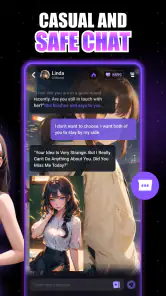




Analysis by Reviewed
I spent time with Her.AI - Funny Chat Friend as an entertainment app, and my first impression was clear: this is built for people who enjoy the unpredictability of chatting with an artificial companion rather than people looking for a practical assistant. The appeal comes from opening a conversation without needing a specific task, then seeing where the exchange goes. Sometimes that makes it a pleasant distraction; sometimes the conversation needs more direction from me to stay interesting.
The app is developed by MohamedGMohie and is available for free, which makes trying it relatively easy. It has a mature audience rating of 17+, so I would not treat it as a casual app for children or younger teenagers. Its store summary focuses on funny, unpredictable chats with a virtual AI friend, and that description matches the basic experience I found: the entertainment comes from interaction, tone, and surprise rather than from a fixed collection of videos, games, or social feeds.
How Her.AI fits into everyday entertainment
What makes this app different from ordinary entertainment apps is that it asks me to participate. A streaming service can fill an evening with a film, while a social feed can provide an endless stream of short posts. Her.AI sits somewhere else. I have to type something, react to the reply, and decide whether to continue, change the subject, or deliberately test the conversation with an unusual prompt.
That makes it most enjoyable in small sessions. I found it easier to appreciate when I treated it as a conversational toy instead of expecting a complete replacement for a human friend. A quick chat during a commute, a few playful messages while waiting for an appointment, or an improvised conversation before bed are more natural use cases than relying on it for serious emotional support or dependable advice.
The entertainment value depends heavily on the mood I bring to it. A simple greeting can produce a less memorable exchange, while a specific setup gives the conversation something to work with. Asking for a strange scenario, adopting a playful role, or starting with an absurd question can make the interaction feel more lively. This is one of the most useful practical lessons: the quality of the prompt strongly affects the quality of the entertainment.
I would not describe the experience as a conventional game. There is no need to master levels, collect items, or follow a campaign in the way I would with a mobile adventure title. Nor is it a standard messaging service, because the other side is a virtual companion rather than a person I know. That middle ground will be exactly what attracts some users and what leaves others cold.
A realistic evening with the app
Imagine finishing work with ten minutes to spare before dinner. You do not want to start a film, and scrolling through a familiar feed feels dull. Her.AI can fill that gap with a lightweight conversation. I might begin by asking the virtual friend to invent an awkward situation, respond to it as if we were both there, and then steer the exchange toward a joke or a completely different subject.
More From Our News Desk

Clash of Clans Is Won Between the Battles

Android Auto Makes the Case for Quieter Car Software

MobiOffice: Transforming Mobile Productivity with Seamless Integration

EA SPORTS FC™ Mobile Soccer: Redefining Mobile Sports Gaming

How Microsoft OneDrive Became a Mobile Productivity Giant

How Google Translate Breaks Language Barriers Effortlessly
The important point is that I would not open it expecting a guaranteed punchline every time. The app can provide a starting point, but I still shape the rhythm. If I answer with one-word replies, the conversation has little room to develop. If I give it a premise and react to what comes back, the session becomes more personal and less like pressing a random entertainment button.
This also creates a useful workflow for people who enjoy creative warm-ups. I can use a chat to generate a silly character idea, invent a fictional disagreement, or explore an unusual “what if” scenario before writing something of my own. I would still check and refine anything important, but as a source of playful prompts, the app can be more engaging than staring at a blank page.
What the free access means in practice
Her.AI is free to download and use, so the entry decision is straightforward: I can test the conversational style without committing money first. That matters for an entertainment app because personal taste is difficult to predict. Some people enjoy talking to a virtual companion immediately, while others discover that they prefer passive content or real-time conversation with friends.
The app also includes in-app purchases ranging from $3.49 to $54.99 per item. Those figures describe the available purchase range, not a promise that every user needs to spend money. I would approach the paid side as optional value to judge only after using the free experience long enough to decide whether the chats are genuinely enjoyable.
That distinction is important. The free access answers the question, “Can I try the concept?” It does not automatically answer, “Is every paid option worth buying?” For that second question, I would consider how often I return, whether the free experience already satisfies my needs, and whether a paid purchase adds something I personally use rather than simply making the app feel more complete.
I also recommend checking the purchase screen carefully before confirming anything. The listed range is broad, and the right choice depends on what is offered at the moment of purchase and how frequently you expect to use it. I would avoid paying simply because a conversation becomes repetitive; first I would try changing the subject, giving clearer prompts, or taking a break.
Where the entertainment comes from
The strongest part of the app is its open-ended nature. A fixed joke app eventually runs out of surprises, but a conversational system can respond to many different directions. I can move from a fictional argument to an imaginary travel plan, then ask for a ridiculous explanation of an everyday object. That flexibility gives the app more replay value than a static list of jokes.
There is also a social-comfort angle, although I would phrase it carefully. Some users may like having a low-pressure place to type thoughts without arranging a call or waiting for a reply from another person. That can make it a convenient companion during quiet moments. Still, I would keep the boundary clear: an AI chat friend is not the same as a trusted human relationship, professional guidance, or emergency help.
For me, the best sessions came from treating the conversation as improvisation. Instead of asking broad questions repeatedly, I gave the chat a role and a situation. For example, I could ask it to act like an overconfident tour guide explaining a very ordinary household item, then challenge its explanation. This approach creates a back-and-forth structure and gives me more control over the tone.
A second useful technique is to use a “reset prompt” when the exchange loses energy. I can plainly say that the conversation has become repetitive and request a new subject with a particular mood, such as strange, sarcastic, or wholesome. That is more effective than continuing to send short acknowledgements and hoping the chat repairs itself.
A third tip is to keep separate expectations for amusement and information. If I ask for an entertaining fictional response, an imaginative answer is part of the point. If I ask about something factual, I would verify it elsewhere rather than assuming the conversational reply is accurate. This trade-off is common with AI entertainment, but it matters especially here because the app’s main purpose is casual interaction, not authoritative research.
Limitations I noticed in the concept
The same unpredictability that makes the app fun can also make it inconsistent. A surprising answer may be amusing in one session and simply confusing in another. If I want a tightly written joke, a carefully edited story, or a predictable sequence of content, a traditional entertainment app may serve me better.
Conversation fatigue is another realistic limitation. Even when the replies are competent, the novelty of chatting with a virtual friend can wear off. The app is more likely to remain useful as an occasional diversion than as something I would keep open continuously for hours. That is not necessarily a flaw, but it affects how I judge the value of any optional purchase.
Users who want a human community should also look elsewhere. Her.AI can simulate a conversation, but it does not provide the same mutual connection as a messaging group, forum, or call with friends. Someone seeking shared memories, genuine accountability, or a real exchange of personal experiences will get more from a human-centered alternative.
The mature 17+ rating should influence where and how it is used. I would not hand the app to a child as a harmless joke tool, and parents should treat the age label seriously. Adults should still use sensible judgment about what they choose to discuss with any conversational app, especially when a playful tone makes it easy to overshare.
Another trade-off is that the app can encourage passive dependence if I use it whenever I feel bored without deciding what I actually want from the session. I get more value when I set a small purpose, such as inventing a scenario or enjoying a short exchange, then close it when that purpose is finished. That keeps it in the entertainment category instead of letting it become an automatic substitute for every other activity.
Performance expectations and version context
The current version is 2.3.5, and the app supports devices running Android 7.0 or later. That gives it a broad compatibility range for Android users with older supported phones, although the actual comfort of chatting will still depend on the device, keyboard, connection, and personal tolerance for waiting during a response.
I would install it on a device where typing feels comfortable, because the experience is built around messages rather than one-tap viewing. A cramped screen or an unreliable keyboard can make the app feel less enjoyable even when the conversation itself is fine. Notifications are also something I would consider carefully: a conversational app can be more pleasant when I open it deliberately instead of allowing it to interrupt the day.
The app’s popularity gives a new user some reassurance that the concept has attracted an audience. It has over 500,000 installs, an average rating of 4.7, and around 16,000 ratings. Those figures suggest a broadly positive reception, but they should not replace personal testing because conversational entertainment is highly subjective.
There are also around 1,200 written reviews, which can be useful for spotting recurring user concerns before spending money. I would read recent comments with a specific question in mind: do people enjoy the free experience, or are they mainly discussing paid access? That distinction is more useful than looking at the average rating alone.
Who is likely to get the most value?
I think Her.AI is a good fit for adults who enjoy playful improvisation, casual role-play, and low-pressure conversations. It is especially suitable for someone who wants a flexible distraction rather than a structured game. If you like testing unusual prompts and seeing how an AI responds, you may find enough variety to return regularly.
It can also work for writers, comedians, and creative hobbyists who need a quick way to break out of a repetitive thought pattern. I would use it as a brainstorming partner for fictional situations, not as the final judge of whether an idea is good. The unexpected direction of a reply can be useful even when the wording itself needs to be discarded.
People who should skip it are those who dislike typing, want guaranteed factual reliability, or expect a real friendship. I would also skip it if I were looking for a polished, passive entertainment experience with no participation. A streaming service, podcast app, or edited comedy collection would be a better match in those cases.
If you are undecided about paying, my advice is simple: use the free version first during several different moods. Try a short casual chat, a creative prompt, and a deliberately absurd scenario. If all three feel engaging and you can identify a recurring reason to return, then investigate the available purchase carefully. If the conversations feel repetitive from the start, paying more is unlikely to solve the underlying mismatch.
My verdict on the value
Her.AI delivers its clearest value as a free, interactive entertainment app for adults who enjoy making their own fun. The cost of entry is low because the app is free, while the optional purchase range means I would make any paid decision cautiously and based on actual use. I would not call it an essential app, but it can earn a place on a phone if its conversational style matches your personality.
My recommendation is to try it when you want a playful chat, a creative prompt, or a few unpredictable minutes—not when you need a dependable friend, a factual authority, or a complete substitute for human contact. The app’s best quality is its ability to turn a simple message into an improvised exchange. Its biggest weakness is that the same open-ended design cannot guarantee that every exchange will be funny or satisfying.
Overall, I see Her.AI - Funny Chat Friend as a worthwhile experiment for the right audience. I would keep it free unless regular use clearly justifies exploring the paid options, and I would maintain the 17+ boundary without treating the app as suitable for younger users. If you enjoy steering conversations and accepting a little randomness, it is easy to recommend trying. If you want polished content, real people, or predictable results, I would spend that time and money elsewhere.
Her.AI - Funny Chat Friend Frequently Asked Questions
What should I know about Her.AI’s age rating before downloading it?
Her.AI is rated Mature 17+, so it may not be suitable for younger users. AI conversations can sometimes produce unexpected, mature, inaccurate, or emotionally suggestive responses. If you are considering it for a teenager, check the age rating and privacy information first, and set appropriate boundaries around use. It is best treated as entertainment rather than a source of guidance or support.
Can I use Her.AI for serious emotional support or professional guidance?
Her.AI is designed for casual conversation, entertainment, and companionship, not as a substitute for a qualified professional or trusted person. An AI response may sound confident while being incomplete, unsuitable, or incorrect. Avoid relying on it for medical, legal, financial, or emergency decisions. For serious personal concerns, contact a relevant professional or someone you trust instead of depending on an AI chat.
Does Her.AI offer paid features, and how can I avoid an unwanted purchase?
Her.AI is free to download, while some features or usage options may involve in-app purchases. Review the price and purchase terms displayed by the relevant app store before confirming anything, and check your device’s purchase settings if you want to prevent accidental spending. The available purchase options range from $3.49 to $54.99 per item, so check carefully before proceeding.
Who developed Her.AI, and what kind of app is it?
Her.AI is an entertainment app developed by MohamedGMohie. Its short description is simply “Her.AI,” while its summary invites users to enjoy hilarious, unpredictable chats with a virtual AI friend. If you are looking for an app centered on lighthearted conversation and digital companionship, that gives you a clear sense of its purpose before downloading.
What devices and operating systems can run Her.AI?
Her.AI is available for Android devices running version 7.0 or later. Before downloading, check your device’s operating system version and make sure you have enough room for the app and its updates. The app is also offered for iOS, so iPhone users can look for it in the relevant app store and check compatibility there before installing.
Pros
- Playful conversations help pass time when you want casual company.
- A friendly chat format is easy to understand for first-time users.
- Useful for brainstorming jokes
- messages
- or light creative ideas.
- Can provide a private space for practicing conversations.
- Short replies make quick
- low-effort interactions convenient.
Cons
- Responses may feel repetitive during longer conversations.
- It should not be relied on for medical
- legal
- or serious personal advice.
- Some features may require subscriptions or in-app purchases.
- AI humor can occasionally miss context or feel awkward.
- Privacy policies should be checked before sharing personal information.
- Category
- Entertainment
- Version
- 2.3.5