Hayti: Black News and Podcasts
- 177.00
- 4.6
- Installs
- 10.00K
- Price
- Free

Screenshots
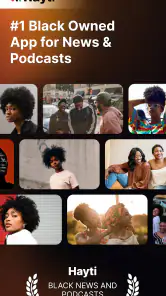
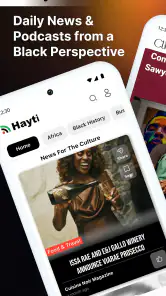
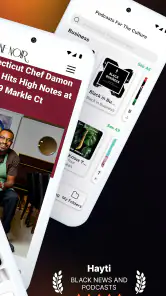
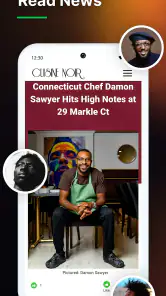
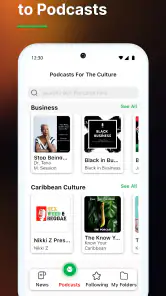
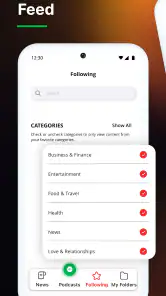

Analysis by Reviewed
I opened Hayti: Black News and Podcasts looking for a more focused way to follow Black voices without relying entirely on a general news feed. My starting point was familiar: too many headlines competing for attention, important stories disappearing quickly, and podcasts scattered across services that were not designed around this particular audience. Hayti takes a different route. It is a free News & Magazines app from Hayti that brings news and audio discovery into one place, with a strong emphasis on Black perspectives.
That focus is the reason to try it, but it is also the standard I used while reviewing it. A specialized feed is useful only when it helps me move from curiosity to a worthwhile article or episode without creating extra work. In everyday use, I found the app most valuable as a starting point for discovery: it helps surface voices and subjects I might miss in a broad mainstream feed, then lets me decide what deserves more of my time.
From a crowded news routine to a focused reading list
The app’s store summary points to more than 3,000 Black voices and an AI news feed. I would not treat that as a promise that every story will match my interests. Instead, it describes the app’s central idea: use a large pool of perspectives and automated selection to create a feed that feels more relevant than a generic headline stream.
My first useful habit was to enter with a question rather than simply scrolling. For example, I might want to understand a current community issue, find commentary from Black creators, or discover a podcast for a commute. That small change matters. When I opened the feed with no purpose, the experience could become another stream of headlines. When I used it to answer a specific need, the focused subject matter made the browsing session feel more intentional.
The application is rated for Everyone, which makes it approachable for a broad audience. That does not mean every news topic will be light or suitable for every moment; news naturally includes difficult subjects. It means the app is positioned as a general information and listening tool rather than an adult-only service. I would still use personal judgment when handing a news app to a younger reader, especially during major breaking-news cycles.
Hayti has earned a 4.6 average from around 1.9 thousand ratings, and it has passed 10 thousand installs. Those figures suggest that the concept has found a real audience, while also reminding me that this is a focused publication and discovery experience rather than one of the enormous universal news platforms. That distinction is important if you expect every major story, local outlet, or international source to appear immediately.
What I do before opening the feed
I get better results when I decide whether I am in reading mode or listening mode. If I have a few quiet minutes, I scan headlines and open the pieces that offer context. If I am walking or commuting, I look for a podcast instead of trying to read from a moving environment. This sounds obvious, but combining news and podcasts can otherwise make the app feel less directed.
A second useful approach is to treat the first pass as collection rather than consumption. I do not try to understand every headline in one sitting. I identify a small group of promising items, then spend time with the one that best fits my question. This reduces the common news-app problem of mistaking a high volume of headlines for actual understanding.
The AI element is helpful for discovery because it can bring related material into view without requiring me to know the exact publisher or creator beforehand. At the same time, automated selection should not replace my own judgment. I still check the headline, the source context, and the full article before forming an opinion. For me, the strongest workflow is human-led: Hayti widens the doorway, while I decide which room to enter.
Following a story from headline to useful context
My usual flow starts with a headline that catches my attention. I read enough of the preview to decide whether it is genuinely relevant or simply phrased to provoke a click. If it looks useful, I open it and slow down. The key benefit is not that every item becomes a complete briefing; it is that the surrounding selection can expose me to a broader range of Black commentary and reporting than my usual routine.
This is where the app differs from a general news aggregator. A mainstream aggregator is often better when I need a wide, rapidly changing overview across business, sport, technology, weather, and international events. Hayti is more useful when the perspective, community context, and identity of the source are central to what I want to discover.
I would not use it as my only source during a fast-moving emergency. For that job, I prefer checking official announcements and established outlets directly, then using Hayti to find additional perspectives and discussion. This is not a criticism of the app’s purpose; it is a sensible division of labor between a focused discovery tool and a broad breaking-news routine.
One practical tip is to separate “I want to know what happened” from “I want to understand how people are discussing it.” The first question may be better served by a direct news source. The second is where Hayti’s concentration on Black voices can add real value, especially when a general feed gives me only a narrow selection of commentary.
Switching from articles to podcasts without losing the purpose
The podcast side changes the rhythm of the app. Articles are useful when I want to compare details or return to a passage. Audio works better when my hands and eyes are occupied. I found the combination most useful when I began with a news topic and then looked for a longer conversation or episode that could provide a different pace and tone.
This handoff is more valuable than simply placing two media types beside each other. A headline gives me a reason to explore; a podcast can give the subject more room. The trade-off is that audio discovery requires more commitment. I can skim an article in moments, but I need to give an episode enough time to judge it fairly. I therefore avoid starting a podcast when I only have a short break.
Hayti is not automatically a replacement for a dedicated podcast app. A specialist audio service may offer a more familiar listening workflow for people who already manage subscriptions, queues, downloads, and playback across many shows. I would choose Hayti when discovery through a Black-focused lens matters more than maintaining one enormous personal podcast library.
Another useful habit is to note why I saved an episode mentally before pressing play: news analysis, culture, personal story, or a subject I want to understand better. Without that intention, the audio section can become background noise. With it, the podcast becomes the second stage of a research routine rather than an unrelated recommendation.
Where the handoffs need my attention
The most important handoff is from Hayti’s selection to my own verification. The app can help me find a voice, article, or episode, but I remain responsible for distinguishing reporting from commentary and a useful discussion from a quick reaction. I do not assume that a prominent placement means an item is more authoritative than everything else.
The next handoff is from discovery to sharing. If I find something worth sending to a friend, I first read or listen far enough to understand its main point. That prevents me from passing along a headline that sounds different from the actual content. This is especially important with news, where a short title can leave out the qualification that changes the meaning.
A third handoff happens when I leave the app to continue learning. Hayti can be the first stop, but I may still consult a primary source, an official statement, or another publication. I see that as a strength of the workflow rather than a failure. Focused discovery and independent checking serve different purposes, and combining them produces a more reliable result than either one alone.
The developer, Hayti, has kept the product’s identity clear: this is not trying to be every kind of media service at once. That clarity helps me decide when to open it. I reach for it when I want Black news, voices, and podcasts gathered around one discovery experience, not when I need a complete replacement for every app on my phone.
The everyday outcome: a better starting point, not instant certainty
A realistic use case is a weekday commute. Before leaving, I open the feed and look for one story connected to a subject I care about. I read the opening material, decide whether it deserves deeper attention, and then choose a podcast if I want a longer discussion while traveling. Later, I return to the story with a clearer question and check another source if the topic affects a decision or conversation.
The outcome is modest but useful: I spend less time wandering through unrelated headlines and more time encountering perspectives that fit the reason I opened a news app. Hayti does not remove the need to think critically, but it can improve the first stage of that process. It gives me a more relevant set of doors to open.
I also appreciate the app for deliberate discovery outside the news cycle. Someone who wants to find Black creators, commentators, and podcast voices beyond the names already appearing in their social feeds may get more value here than from a general recommendation engine. The focused scope makes browsing feel like an opportunity to expand a media diet rather than simply repeat familiar choices.
That benefit depends on patience. A specialized feed may not always provide the exact subject, local angle, or publication I want at the precise moment I want it. If my goal is a complete, highly customizable dashboard for every category of news, I would probably be happier with a larger aggregator. If my goal is to make Black perspectives a meaningful part of how I discover news and audio, the narrower focus is the reason to stay.
Where the workflow breaks down
The first point of friction is the possibility of feed fatigue. An AI-selected stream can make browsing easy, but easy browsing can become passive browsing. I have to interrupt the scroll, choose an item, and spend enough time with it to gain something. Users who want a strictly chronological or manually controlled feed may find this style less comfortable.
The second limitation is the boundary between discovery and depth. Finding a headline is quick; building a complete understanding still takes work. Hayti can point me toward relevant material, but it cannot turn every article or podcast into a balanced briefing. This matters most for complicated subjects where I need primary documents, multiple viewpoints, or local reporting.
The third issue is that the combined news-and-podcast concept may not suit people who want one highly specialized tool. Dedicated news readers can be better for intensive article organization, while dedicated podcast players can be better for managing a large listening queue. Hayti’s advantage is the connection between its two areas, so users who do not care about that connection may prefer separate apps.
I also would not recommend relying on it alone if your main need is instant coverage of every global event. Its value is not maximum breadth. It is the chance to encounter Black voices and subject matter through a more focused lens. That is a meaningful difference, but it should be understood before downloading it.
Who should make room for it
I would recommend Hayti to readers who feel that their normal news routine leaves out important Black perspectives, and to listeners who want podcast discovery connected to that same focus. It is also a good fit for someone building a more intentional media diet: open the app with a question, explore a few candidates, follow the most useful item, and verify important claims elsewhere.
I would be more cautious about recommending it to someone who wants a single universal news dashboard, exhaustive local coverage, or advanced podcast-library management. Those needs point toward broader or more specialized alternatives. Hayti works best when its editorial focus is not a side detail but the main reason you are using it.
The app is free, runs on Android versions from 7.0 onward, and is currently at version 10.2.0. It was released on February 19, 2021, so it has had time to establish a clear identity rather than arriving as an unexplained experiment. I would still judge it by the daily workflow: whether the feed helps me find something worthwhile, whether the audio discovery earns my listening time, and whether the focused perspective adds something my existing apps do not.
My final impression is positive, with a clear qualification. Hayti is strongest as a focused first stop for Black news voices and podcasts, not as a complete substitute for every news and audio service. Used that way, it helps me move from a crowded information environment to a more purposeful choice. I still need to read carefully, verify important details, and accept that a specialized feed will sometimes be narrower than a general alternative. For readers and listeners who value that focus, those trade-offs are reasonable, and the app deserves a place in the routine.
Pros
- Focused coverage of Black news
- culture
- and community stories
- Podcast content offers an alternative to reading articles
- Helps users discover perspectives often missed by mainstream media
- Useful source for diaspora and Haiti-related topics
- Simple format makes browsing news and audio content convenient
Cons
- Coverage may be narrower than that of large general-news apps
- Some podcast episodes may be published less frequently
- Audio playback depends on a stable internet connection
- Content may reflect a specific editorial or cultural viewpoint
- Limited features compared with larger news and podcast platforms

- Category
- News & Magazines
- Version
- 10.2.0