Flipped:Chat with AI Character
- 1.61K
- 4.3
- Installs
- 1.00M
- Price
- Free

Screenshots



Analysis by Reviewed
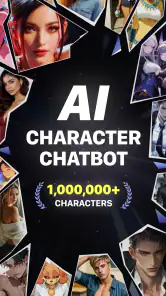
I spent time with Flipped:Chat with AI Character as an entertainment app, and my first impression is that it is more interesting when treated as a creative conversation space than as a conventional chatbot. The basic idea is simple: you create and chat with your own AI character. That sounds familiar, but the appeal comes from deciding what kind of personality you want to interact with and then returning to that character when you want a particular style of conversation.
That makes Flipped a different proposition from a general assistant. I would not open it first to check a fact, organize a work project, or replace a search engine. I would open it when I wanted an ongoing fictional voice, a playful exchange, or a more personal entertainment experience. The app is free to download, carries a Mature 17+ rating, and is developed by Flipped Chat. It has reached over a million installs, with an average rating of 4.3 from roughly twenty-seven thousand ratings, so it clearly has an audience beyond a small experiment.
How Flipped feels in everyday use
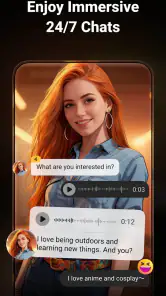
The most useful way to understand the app is to imagine building a conversation around a role rather than asking isolated questions. Instead of treating every chat as a blank page, I can shape a character with a recognizable attitude and use that identity as the center of the experience. A detective, rival, mentor, fictional companion, or dramatic storyteller would each make the same basic chat format feel different.
That character-first approach is Flipped’s strongest point. A normal AI assistant is usually judged by how quickly and accurately it handles a task. Here, the quality of the session depends more on whether the character feels consistent, engaging, and suited to the mood I had in mind. The app is therefore closer to interactive entertainment than to productivity software, even though the interface may look familiar to anyone who has used a chat app.
In a realistic everyday situation, I could use it during a short break when I want something more active than scrolling through videos. I might create a sarcastic fictional guide and ask it to help me think through a story idea, then switch to a calmer character for a reflective conversation later. The value is not that the app solves a practical problem faster than other tools. The value is that it gives me a repeatable setting for conversation and imagination.
That distinction matters before installing it. If I want dependable answers, current information, or a professional writing workflow, a conventional AI assistant is usually the better choice. If I want to experiment with personalities and return to a conversation that has a more theatrical or role-play-oriented feel, Flipped has a clearer reason to exist.
Creating a character is the real starting point
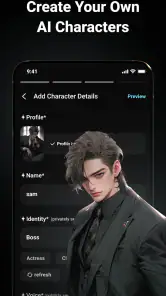
The creation step deserves more thought than simply choosing an amusing name. I get better results when I decide what the character wants, how it speaks, what it refuses to do, and what kind of relationship it has with me. A broad instruction such as “be funny” leaves too much room for the personality to drift. A more focused concept, such as a dry-witted editor who challenges weak ideas but explains why they fail, gives the conversation a stronger direction.
One practical tip is to define boundaries along with personality. If I only describe the character’s tone, the chat can become repetitive or overly agreeable. Adding a purpose gives it something to do. A fictional coach might ask follow-up questions, a rival might point out flaws, and a storyteller might prioritize atmosphere over concise answers. This is one of the less obvious ways to get more value from the app: I am not merely inventing a character; I am designing a conversation pattern.
I also found that shorter, clearer prompts are easier to maintain than a long block of elaborate backstory. A character with five strong traits is more usable than one with a dozen conflicting rules. When the personality begins to feel generic, I can restate the most important trait in the conversation rather than rebuilding everything immediately. That small habit helps preserve the intended mood and reduces the feeling that every chat has reset to the same neutral assistant.
Where the entertainment value comes from
Flipped works best when I approach it as an interactive performance. The enjoyment comes from seeing how a chosen character responds to a situation, not from receiving a single perfect answer. That makes it suitable for brainstorming scenes, testing dialogue, exploring fictional relationships, or simply passing time with a conversational premise.
It can also be useful for writers who want to challenge a draft from a particular angle. I can ask a skeptical character to criticize a scene, a historical-style narrator to reshape its tone, or an impatient audience member to identify where the idea loses momentum. The feedback should still be treated as creative input rather than expert editing, but the character framing can expose weaknesses that a neutral assistant might present too politely.
Another useful workflow is to create separate characters for separate tasks instead of forcing one personality to do everything. One can focus on brainstorming, another on debate, and another on light role-play. This separation makes it easier to recognize when I am asking for entertainment and when I am asking for useful criticism. It also prevents a single character from becoming overloaded with contradictory instructions.
The app’s entertainment category is important here. Flipped is not promising the same kind of value as a calendar, a language-learning tool, or a standard messaging service. Its success depends on whether conversation itself feels enjoyable. For some people, that will be enough to justify regular use. For others, the novelty may fade once the initial character-building experiment is over.
Free access and what paid value means
Flipped is free to download, which makes trying the core concept straightforward. I can explore whether character-based conversation appeals to me before committing money. That is a meaningful advantage because this type of app is highly personal: a polished interface cannot guarantee that I will enjoy spending time with an AI character.
The app includes in-app purchases ranging from ninety-nine cents to ninety-nine dollars and ninety-nine cents per item. Those are verified purchase ranges, but they should not be read as a promise that every user needs to spend within that range. My view is that the free access should be judged first on its own. If the available experience already supports the kind of character interaction I want, paid options become a question of extra convenience or expanded use rather than an entry fee.
I would be cautious about spending quickly. The right test is not whether a premium option sounds appealing in isolation, but whether I am returning to the same characters often enough for the additional value to matter. Someone who opens the app once for a novelty conversation has little reason to make a large purchase. Someone who uses it as a regular creative pastime may see more value, provided the paid elements fit the way they actually use the service.
This is also where the Mature 17+ rating affects the decision. I would not treat Flipped as a general family entertainment app or hand it to a younger user simply because the basic idea resembles ordinary chat. Adults should be comfortable with the app’s intended audience before creating an account or starting extended conversations. The rating is not a minor label; it changes who I would recommend it to.
The tradeoffs I noticed
The biggest tradeoff is control versus spontaneity. Detailed character instructions can produce a more distinctive personality, but they can also make the interaction feel constrained. Loose instructions create surprising replies, yet the character may quickly lose its identity. I prefer starting with a clear premise and leaving some room for the character to improvise. That balance keeps the conversation recognizable without turning it into a script.
There is also a difference between emotional immersion and reliability. A character may respond in a convincing tone while still giving an answer that I would not trust for an important real-world decision. I would never use a fictional persona as the final authority for medical, legal, financial, or safety matters. The role-play layer can make a response feel persuasive, which is precisely why I need to separate entertainment from dependable advice.
Conversation quality can vary with the prompt and the direction of the exchange. A character that feels vivid in one scenario may seem flat in another. I found that asking for a specific action or reaction usually works better than asking the character to “be interesting.” For example, giving the character a dilemma, a goal, or a disagreement creates more material to work with than requesting a general mood.
Another friction point is the possibility of spending more than intended. A free app with purchase options can be easy to explore casually, but the listed purchase range reaches from a very small amount to a substantially larger one. I would decide in advance whether I am only testing the free experience or whether I am willing to pay for continued use. That simple boundary protects the entertainment value from becoming an impulse purchase.
Privacy and personal boundaries also deserve common sense. I would avoid placing sensitive personal details into an entertainment chatbot, especially when a fictional character does not need them to be engaging. The best conversations can usually be created with invented situations, general feelings, and fictional names. That approach keeps the experience playful while reducing the temptation to treat the app like a private confidant for information that should be handled more carefully.
Who is likely to get the most from it
I think Flipped is a good fit for adults who enjoy role-play, character writing, interactive fiction, or imaginative conversations. It may also appeal to people who have tried ordinary chatbots but found them too neutral. The ability to create a personality gives the interaction a stronger theme and can make a short session feel more like an activity than a question-and-answer exchange.
Writers and artists may find a particularly practical use for it. I can use a character to pressure-test dialogue, generate opposing viewpoints, or explore how a fictional personality reacts under stress. The important limitation is that the app should support my creative process rather than replace judgment. I would keep the strongest ideas, rewrite weak ones, and verify anything that moves beyond fiction.
It is also suitable for someone who wants a low-pressure way to experiment with conversational design. Building a character teaches me to think about voice, motivation, consistency, and boundaries. That is a more interesting creative exercise than repeatedly asking a generic assistant for random prompts. The app becomes more rewarding when I treat character creation as the activity, not just as setup before the “real” chat begins.
I would recommend skipping it if I wanted a work-focused assistant, a factual research tool, or a predictable productivity routine. People who dislike role-play may find the central concept unnecessary, while users seeking a traditional social network may expect features that are not the point of this experience. It is also not the right choice for children, given the Mature 17+ rating.
How it compares with familiar alternatives
Compared with a general-purpose AI assistant, Flipped puts more emphasis on the identity of the conversational partner. A broad assistant is usually better when I want one tool to switch between research, drafting, planning, and quick explanations. Flipped is more focused: I use it when the personality and fictional framing are part of the reason I am chatting.
Compared with ordinary entertainment apps such as short-video platforms, it asks more from me. I am not just consuming a finished stream; I am creating the premise and steering the exchange. That can feel more rewarding when I want participation, but it can also feel like work if I only want to relax without making decisions. The app’s value therefore depends on whether I want interactive entertainment or passive distraction at that moment.
Compared with writing a character in a notebook, Flipped offers immediate replies and keeps the idea conversational. A notebook gives me total control and a more deliberate creative process, while the app supplies unpredictability. I would use both differently: the notebook for developing a precise character and Flipped for testing how that character might respond in motion.
The best alternative is ultimately the one that matches my purpose. If consistency, factual accuracy, and task completion matter most, I would choose a conventional assistant. If I want a character to challenge, entertain, or accompany a fictional scenario, Flipped has a more distinctive role.
Device details and practical expectations
The current version is 2.0.3, and the app supports Android 8.0 and later. That makes it accessible to many Android users, although I would still keep expectations realistic about performance on older hardware. A chat app can feel simple on the surface, but the experience depends on the device handling conversations smoothly and on the user having a comfortable way to type longer prompts.
Because Flipped is free to install, I would use the first session as a structured trial rather than immediately judging it from one random exchange. I would create one character with a clear goal, try a normal conversation, then deliberately introduce a disagreement or change of mood. If the personality remains engaging across those situations, the app may have lasting appeal. If every reply quickly feels interchangeable, paying for more would not solve the underlying problem for me.
I would also decide how I want to use it before building several characters. One carefully designed character is easier to evaluate than a collection of half-finished ideas. After a few sessions, I could compare which setup produces the most enjoyable conversations and whether I am using the app for storytelling, creative criticism, or casual companionship. That small experiment gives me a better basis for deciding whether any purchase is worthwhile.
My verdict on whether to install or pay
My overall view is positive, with a clear condition: Flipped is worth trying for adults who genuinely enjoy AI character conversations, not for people looking for a universal assistant. The free download lowers the risk of finding out which group I belong to. I would install it, create one focused character, and spend enough time testing different situations before considering any in-app purchase.
The app delivers its strongest value through personalization. It gives me a framework for turning a chatbot into a recurring character with a tone, purpose, and point of view. That can make brainstorming more lively and entertainment more interactive. The tradeoff is that I have to contribute imagination and direction; the app cannot guarantee that every personality will remain compelling without thoughtful prompts.
I would skip paid spending unless I had already developed a regular habit and understood exactly what the purchase adds to my own use. The range from ninety-nine cents to ninety-nine dollars and ninety-nine cents makes that restraint especially sensible. Free access is enough to test the concept, while paid value depends on sustained personal enjoyment rather than on a universal need.
For me, the final recommendation is simple: try Flipped if you want to create characters and talk with them, and keep a conventional assistant nearby for serious information or practical tasks. It is a focused entertainment app with creative potential, a mature audience, and enough flexibility to reward experimentation. Its best feature is not merely chatting with AI; it is deciding who is on the other side of the conversation.
Pros
- Large selection of AI characters with different personalities
- Character creation lets you personalize conversations
- Chat history makes it easy to continue previous roleplays
- Useful for creative writing
- brainstorming
- and casual entertainment
- Simple interface makes starting a conversation quick
Cons
- Some characters may give repetitive or generic replies
- Advanced features can require a paid subscription
- AI responses may occasionally be inaccurate or inconsistent
- Long conversations can consume messages or credits quickly
- Privacy terms should be checked before sharing personal information

- Category
- Entertainment
- Version
- 2.0.3